
Moonlight Pulse – Review
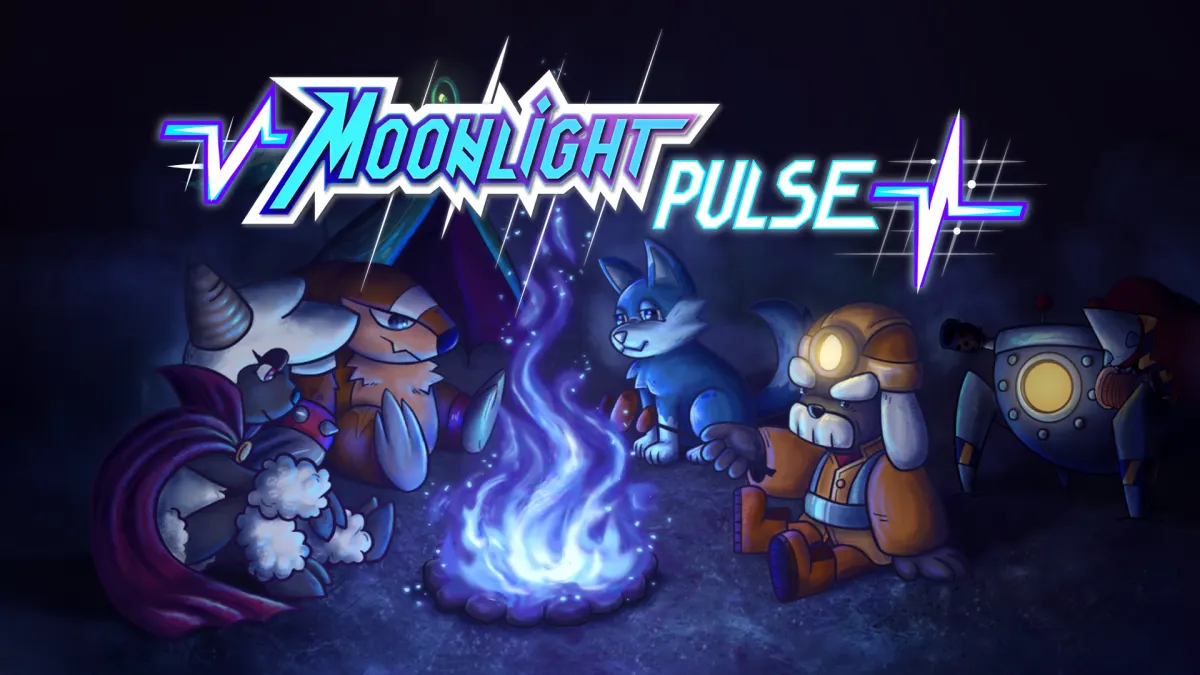
Four Metroidvania characters walk into a bar…
No, it’s not a joke, but it is about Moonlight Pulse – a game developed and published by Seafloor Games at the end of April. I was lucky enough to interview the game’s creator and better understand what their plans for the game were and how they managed to achieve them. Now it’s time to scrutinise all these aspects and put them to the practical test.
The most striking aspect is that you can acquire up to four characters that you can control as you progress through the story, each with a distinct set of abilities for both combat and movement. Are there other interesting concepts and mechanics the game explores? Absolutely. Are they all as useful as they want to be? We’ll see.

Life inside a planet-sized creature you must protect
The game's premise goes something like this: you are part of the Curative Agents group tasked with protecting Aorasque, the gigantic space creature you live inside. The first character you'll have access to is Silex, the pride of the Curative Agents and the most capable fighter the organisation has at its disposal. Your job is to figure out what's going on with a viral infection that's affecting Aorasque and slowly degrading it. As you play and uncover the secrets behind this infection, you'll meet three more Curative Agents – you'll be able to switch between them and Silex as playable characters. I like that switching the character you control doesn't just have combat applications, but also offers new dialogue options – depending on which character interacts with the various NPCs in the game, they will have unique dialogues and interactions.
The concept of living inside a creature seems quite novel in a world where Metroidvania games tend to increasingly copy what Hollow Knight did. As usual, I'm happy to see main characters given the right to speak, so you can discover their personality, what makes them happy, what they fear, or their relationships with those around them. I'm even happier that we can discover fragments of our main characters' past and thoughts at different moments throughout the story, when they gather at night to warm themselves by the campfires that serve as save points.
I was impressed by the fluidity of the dialogue. No line feels dragged out; it successfully delivers the message to the player and conveys the emotions and mental state of the speaking characters. It feels even better that you can adjust the text speed in dialogue sequences or tick the option to instantly receive text for lines before pressing the "Next" button, depending on how fast or slow a reader you are. I also appreciate that we can skip entire dialogue sections and scenes – this is usually useful when you have an arena fight or dialogue before a boss fight, because you might want to kick their arses more than listen to their evil plans you've already heard. Just one note about the option to skip these scenes – it should be made clear that it exists from the start; I only realised it was an option by accident.
The way the story is delivered offers a cool experience about the journey and process of growth and maturation for both experienced agents and the young cadets who form your group of heroes. Each character will have their moment of glory. The story is largely well-structured, and by the end of the game, you'll understand the meaning behind the events that unfolded throughout. I liked how they created the main antagonist, as they portrayed them in a way that inspires fear and worry every time you meet. There are also a few moments when the story feels a bit far-fetched, such as arguments where a character is super determined to be against everyone, but suddenly comes to their senses and agrees with the rest of the characters.
Without giving too many spoilers, keep your eyes peeled and you might find some story-related secrets if you're attentive and explore. The game also offers plausible reasons to play through it multiple times, as you get varied endings depending on what happens at the end of the game. How many? I can't spoil the surprise for you. You'll have to find out for yourselves what I'm talking about. Plus, you also get an achievement if you manage to finish the game in under 70 minutes.

Sick or healthy gameplay?
Speaking of healing a dying creature, I like how they managed to convey this through the UI elements: you have an indicator in the bottom-right of the screen that adjusts according to different in-game events. Destroy a virus infecting Aorasque's blood vessels? It will regain a percentage of its vitality. Encounter an enemy that mocks Aorasque's health and then legs it? Its vitality will decrease. It's a cool feedback loop between actions and consequences.
Movement is generally fluid throughout the game. Adding to the normal abilities you unlock to traverse the game environment is an interesting aspect related to having access to a group of characters, namely that these abilities can only be used by certain characters, encouraging you to switch between them frequently. For example, even if Silex can jump a certain distance in the air, it might not be enough to reach certain areas – you'll have to unlock another character who can get there. Or simply needs to unlock an ability they don't currently possess.
The same aspect related to the group of characters also adds to the diversity of moves you can perform during confrontations. The attacks of different characters are associated with different elements of nature. Thus, besides having to be surgically precise in combat, it's important to select the right character to combat enemies. Each character has different attacks and ranges. The developers have also added synergies between the different attacks that characters can perform, creating a flexible combat system that encourages you to switch between the characters you control. For example, you can trap an enemy in a water bubble using one character's attack, and then switch to a character with electric attacks to deal more significant damage. It's worth mentioning that there's also a mechanic that saves you from death: when the active character would suffer a fatal blow, one of the characters on the bench will jump in to help and automatically take their place. You'll be able to select that character again after a short recovery period – but be careful, as they will only have one vitality point left. This can be repeated a maximum of five times, depending on how far you've advanced in the story and how many characters you've unlocked.
In addition to vitality and damage upgrades that characters can find scattered throughout the game world, you can also find different items to equip. Some will improve characters' offensive abilities, others their survivability, and still others offer more utility during combat. You only have one slot to equip such items for each character, so use it wisely. What bothered me about them is the inventory menu where you can find them and how you navigate through it. As you can see below, the menu is quite large for the number of items you can find throughout the game – and no, you won't fill all the slots you see by the end of the game. Some of them offer a passive bonus without needing to be equipped, which makes me wonder why they should occupy an inventory slot. It also takes a very long time to swap them between characters or between what you have in your inventory and what a character has equipped, because you have to select the equipment you want a character to use, go step by step through each inventory slot until you reach the character, press the button to equip it, and then you have to manually move the equipment you no longer need back into the inventory.

As you might expect, certain limitations arise when you have a group of characters you can switch between during battles, as you might get hit too much by fate and enemies before the switch animation takes place and gives you access to the right character for that set of enemies. I didn't encounter this problem when I had to switch between them to traverse the game environment, but hey, it's easier to do that when you don't have enemies trying to kill you.
My big problem and pain point with Moonlight Pulse lies in how you're guided through the game. It's extremely easy to get lost and fumble for hours until you figure out where to go. There are many restricted access paths that you might not know how to unlock, you might run around in circles for a while, or the path you want to access might be very well hidden by the game's graphics. Of the 15 hours I spent trying to achieve everything possible in the game, I'd say 5 of them consisted of me wandering around like a headless chicken, not knowing where to go. NPCs who should tell you to go to region X, region Y, etc. give ambiguous instructions. Most of the time, mission locations are not marked on the map, nor do you have a journal where you can check what you were told and try to figure out where it might be. At one point I gave up and looked on YouTube for where I should go. And surprise… the people on YouTube were just as confused as I was. Also, it's very difficult to revisit locations where you want to collect certain upgrades if you don't have a very good memory, because there are no pins you can place on the map – you can do this a bit more easily towards the end of the game. In my opinion, having map pins is an element that every modern Metroidvania should include.
The game offers a unique way of fast-travel – you can jump into Aorasque's blood vessels and let the bloodstream carry you where you need to go. You can press a button to increase travel speed while inside the blood vessels to save some time. Unfortunately, as cool as it sounds on paper, it's not always very efficient. Most vessels are blocked by parasites that you need to find and destroy to fully utilise the fast-travel network – which isn't very exciting when you don't really know where to go, as I mentioned in the previous paragraph. It's even less exciting when you're forced to leave the vessels prematurely because a parasite blocks your path, you realise you can't advance, and you have to walk back and figure out where to go. There's another issue with fast-travel – the flow in the blood vessels is unidirectional; it's enough to take a wrong path once and you'll have to walk to correct things. Sure, I appreciate the accuracy in portraying blood vessels, as that's how veins and arteries work in reality. What I don't appreciate is the time lost with the fast-travel mechanism until it no longer feels "fast". It would have been much more efficient if you could switch between the save points you discover – it wouldn't hurt to have access to both transport options.
We're not always told how to use our abilities to move around and reach new areas. It's great that there's an exploration component in this sense, but sometimes this can block you. For example, in a certain region you can encapsulate certain platforms to jump on them, but you have to figure out that's what you need to do.
A few final notes on gameplay:
- Depending on how you like to access the map, you can set it in the options to be displayed if you continuously press the designated button or to activate/deactivate it with a single button press.
- I encountered an enemy whose vitality points seem to be random, meaning you don't know how many hits it takes to destroy it. This wouldn't be a problem if it didn't launch an attack in almost all directions when destroyed, making it very difficult to know when to dodge. I tried attacking with different characters to see if this had any influence, but it seems not.
- Some arenas allow you to transition to the left side if you go through the wall on the right side and vice versa. But some enemies can get stuck in the transition zone when trying to follow you, as if suspended. This blocks you from progressing and you have to restart the game.
- Speaking of arenas, it feels like the game doesn't offer enough save points before throwing you into such a fight. You usually have to walk a considerable distance if you've been defeated to try to win the confrontation again.
- Even though enemies deal damage when you touch them, it seems the first boss doesn't hurt the main character when touched. What a nice guy.

A mix of pixel and modern art. Lo-fi synth-wave beats that keep you engaged
The game's aesthetic stands out. I'm a big fan of the blend of traditional and organic architecture, combining elements from a living organism's biology with elements like platforms and buildings you'd encounter in the modern world. Thus, the developers clearly highlight which body part you're traversing while ensuring you can navigate it without a hitch. However, I do have some concerns that fire and smoke aren't exactly the best things to have inside an organism.
Each main character, NPC, and boss has a unique design that matches their personality. This is also reflected through the different facial expressions and emotions they display during dialogue – even if what they say and how their model reacts doesn't always perfectly match. What impressed me most about the character design are the bosses – you have to see them to believe me.
The music is relaxing and calm most of the time, reminding me of the lo-fi playlists I try to listen to when focusing on important tasks. Each area has a distinct sound identity, each boss has its own soundtrack, and the rhythm becomes increasingly fast-paced during battles, similar to arcade game sounds of old.

Final Verdict
Moonlight Pulse presents a compact and very well-written story – no narrative thread is left hanging, each character feels alive and real, and the characters' journey of becoming warms your soul no matter how insensitive you might be. It brings a new creative breath to the Metroidvania space, as it includes four main characters you can switch between and a new fast-travel method. Movement and combat controls are mostly responsive and fluid, and you have access to various upgrades and equipment that make the characters even stronger. The enemy variety is decent for a game that was, in any case, intended to be short. The art and music create an atmosphere where you can peacefully lose yourself for a few hours. Unfortunately, the game loses points when it comes to player guidance and directions, mechanics and environmental interactions are not always explained properly, and errors can creep into enemy battles that prevent you from progressing. Even though transport through blood vessels is unique, it takes more time to get from point A to point B than if you used a traditional fast-travel mechanism. Even if the bosses stand out visually, the fact that defeating them boils down to repeating one or two tricks isn't that thrilling.
The game gets 7/10 from me. It could easily be an 8/10 game if it resolved the issues related to the lack of directions for objectives you need to reach, as well as offering the possibility to add pins to the map for locations you want to revisit.

Played on: PC
Release date: 26 April 2024
Developer: Seafloor Games LLC
Publisher: Seafloor Games LLC

0 votes
Scroll down here and stay on the page for at least 30 seconds to vote.
Pick a score from 0 to 10 (halves are allowed).