
STAR WARS: Galactic Racer – Review

INTERGALACTIC HOTROD!
George Lucas grew up in Modesto in the 60s, profoundly shaped by the hot rod culture of the day, when you could pick up a Ford chassis from a breaker's yard, slap a state-of-the-art engine into it and tear along at dizzying speeds in an unroadworthy, wheeled warhead. Before Star Wars, he made American Graffiti, a film about the custom car scene and the generation for whom those machines meant everything.
In 1999, with Star Wars Episode I: The Phantom Menace, Lucas reworked that passion as pod racing, one of the prequel trilogy's most emblematic set pieces. It proved so popular that it even spawned its own video game, Star Wars Episode I: Racer, devoted entirely to the film's ship races.
That was 27 years ago. The franchise is now in Mickey Mouse's hands, and he has decided it's time we caught up with legends of the galactic racing scene such as Quadinaros and Gasgano. Developed by Fuse, a new studio formed by former Criterion staff, STAR WARS: Galactic Racer isn't just a simple arcade racer with hovering cars, because it layers the strategic structure of a roguelike over the high-speed action. Against the backdrop of a galactic tournament, you'll collect components, upgrades and abilities for one of three available vehicles and take your first steps into a championship where every race could be your last.
Ramjet’s Revenge
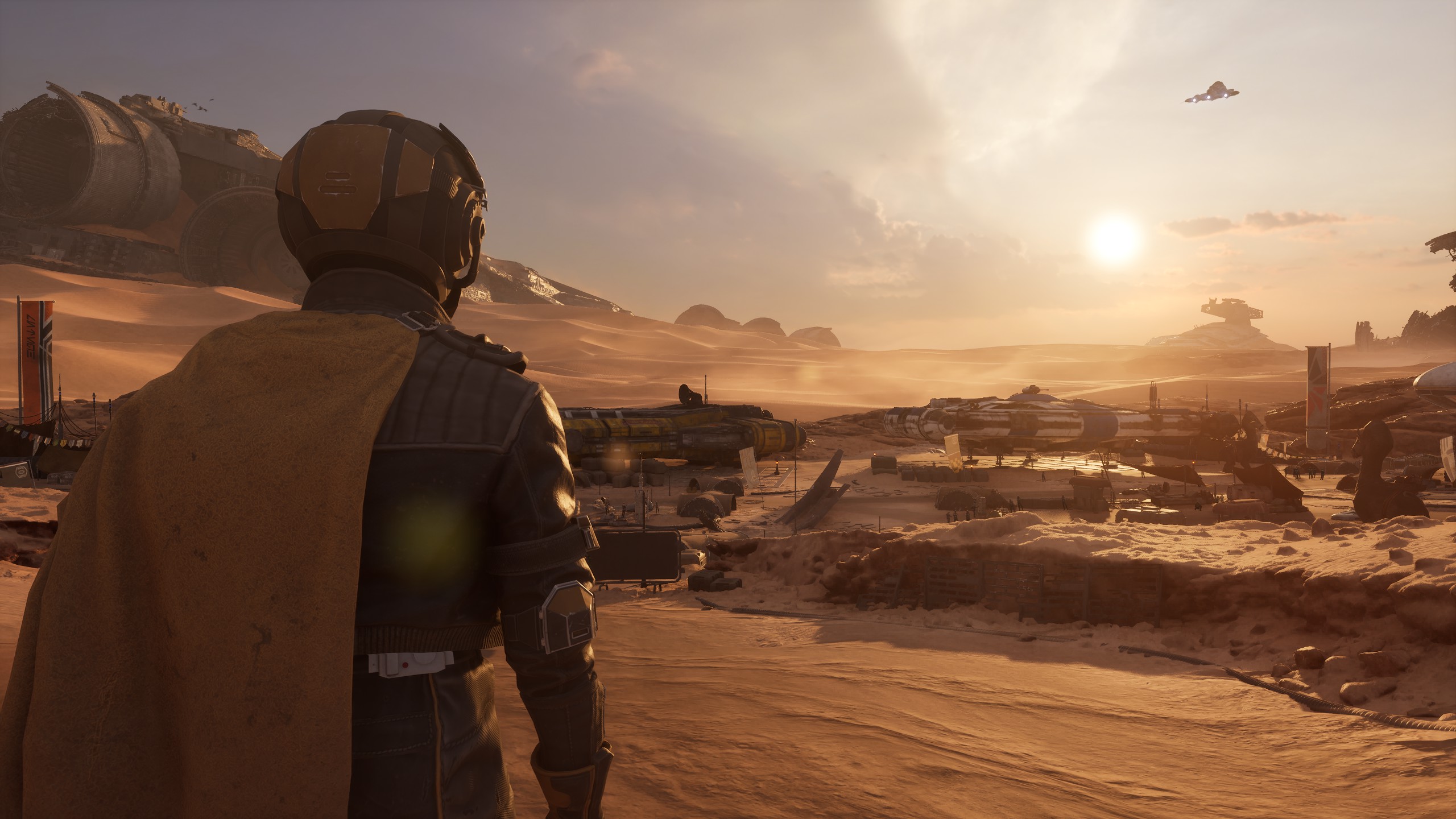
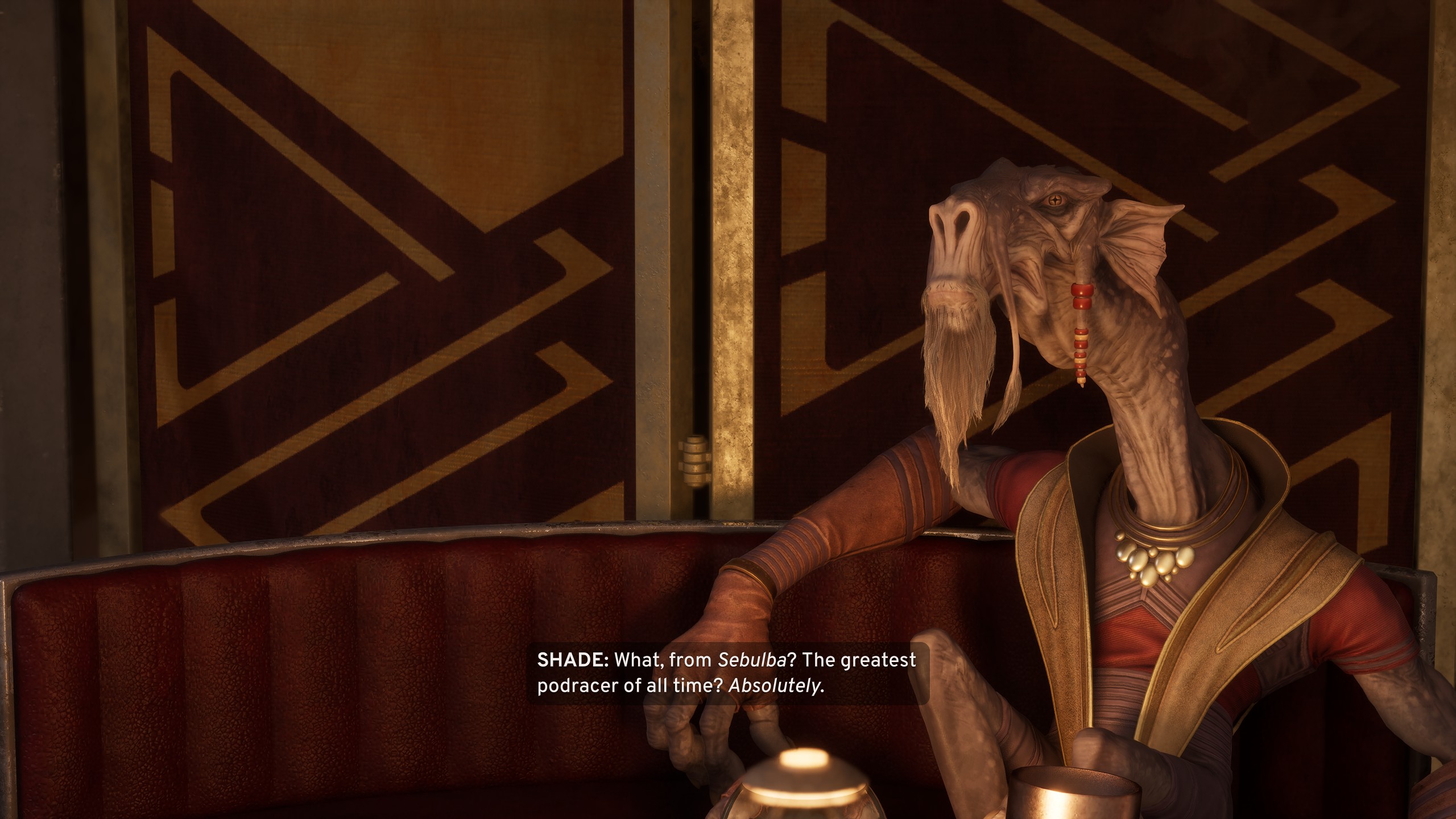
The protagonist is Shade, a speeder pilot fresh to the amateur ranks of the Galactic Tournament. He starts out sponsored by Darius Pax, the competition's organiser, and, like any classic racing story, there's a rival who also happens to be the favourite, Kestar Bool.
The story is split into three acts and largely follows the structure and tropes you'd expect from a motorsport film, with a Star Wars flavour, naturally. The social world orbiting a story like this (sponsors, side bets, sabotage and unexpected saviours) forms the thin threads of a roguelike narrative: you unlock favours and explore side activities between the sequences that make up the game's central subject, the races themselves.
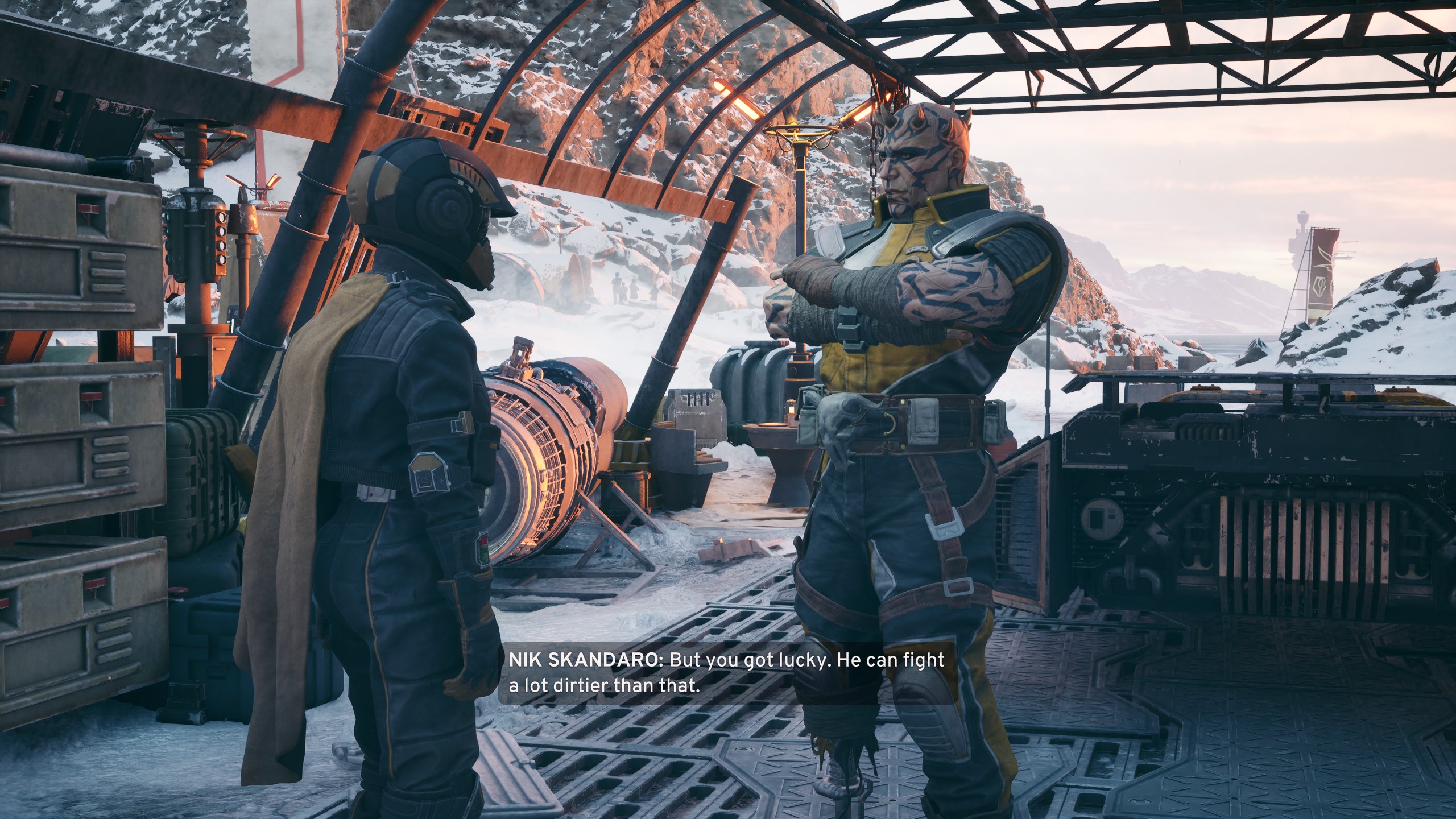
The other participants are mostly faces we saw in the podracing scene, led by Sebulba, whom I confess I'd missed. He's the same arrogant, contemptuous mollusc from The Phantom Menace, but here he plays a sort of corrupt mentor. Through the missions he recounts like memories of his glory days (Tales of Podracing), Sebulba introduces you to every ability you can use to wreck your opponents on the track.
Between the planets you visit over the course of a tournament, you get access to a kind of antechamber with NPCs, where you can repair components, buy upgrades or take on contracts. It's all very minimalist, necessary and sufficient for making progression decisions, but the consequences of what you choose in these moments can be decisive for what comes next.
The components you buy are synergistic and, under the right conditions, allow some absolutely ridiculous effects, from infinite boost to cutting all your cooldowns by up to 200%. Experimenting with different passive bonuses (Racing Styles), the perks from NPCs whose favours you've unlocked and the various progression trees makes every tournament feel radically different, but never dull.
This ain’t podracing
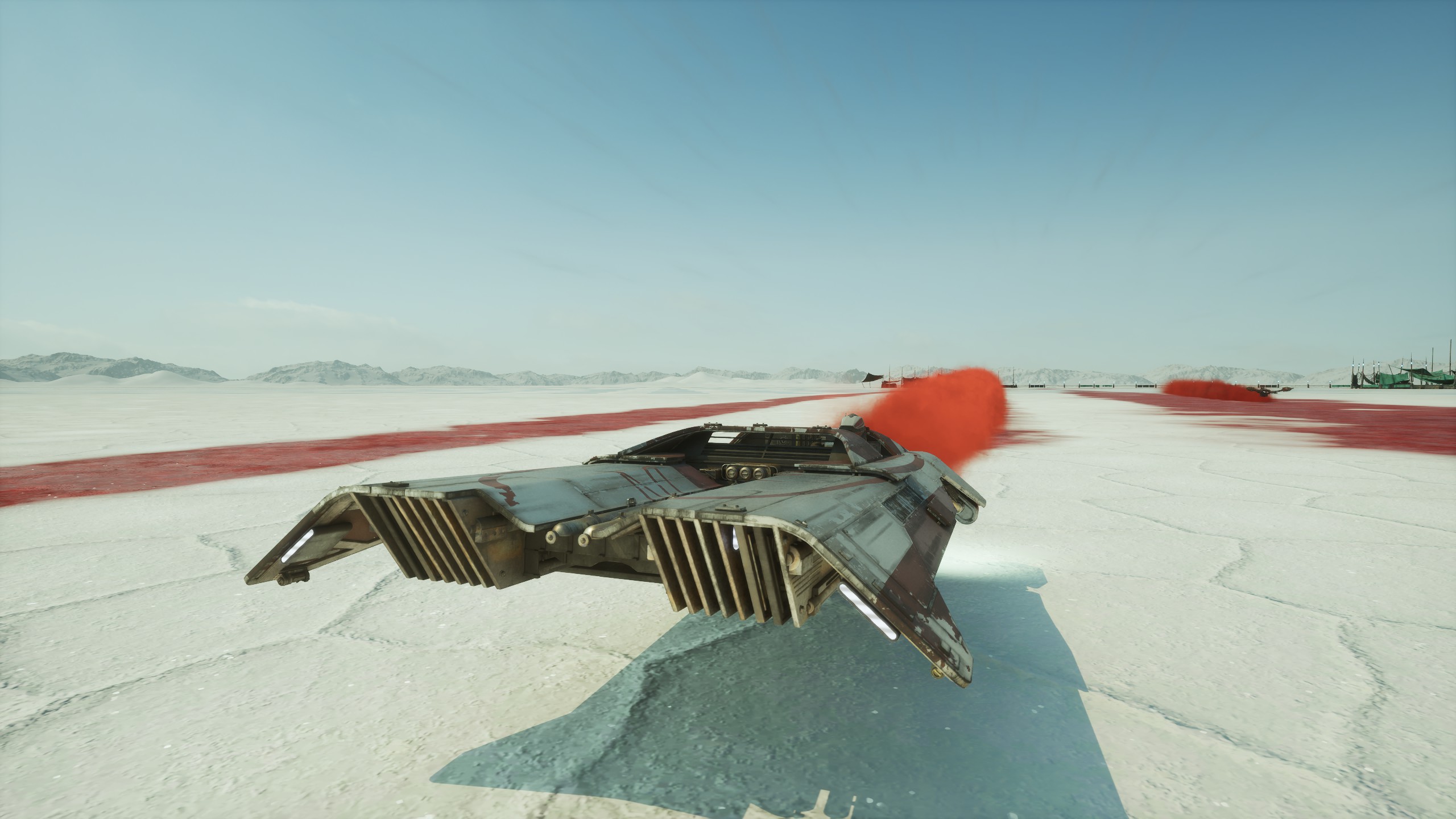
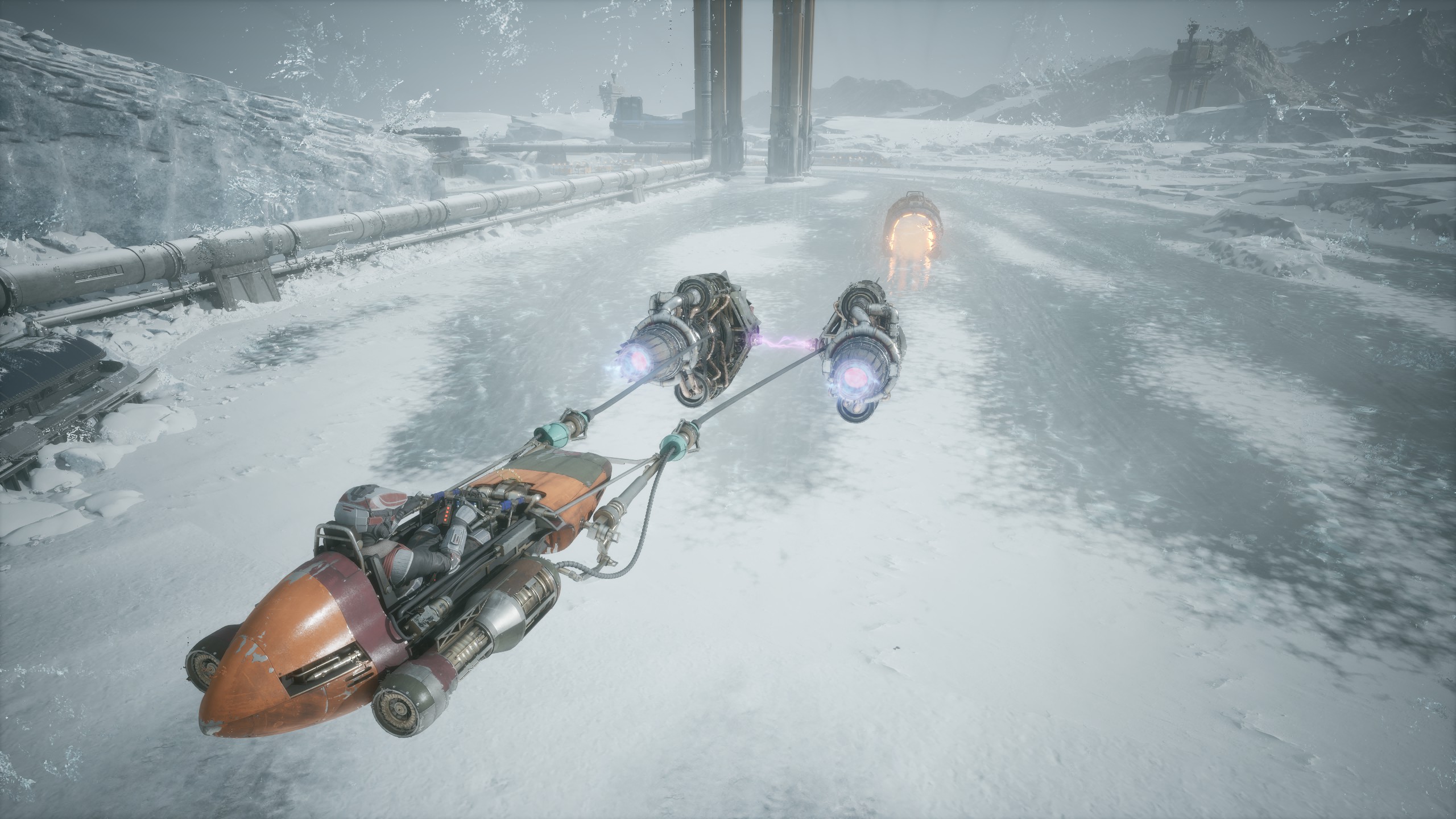
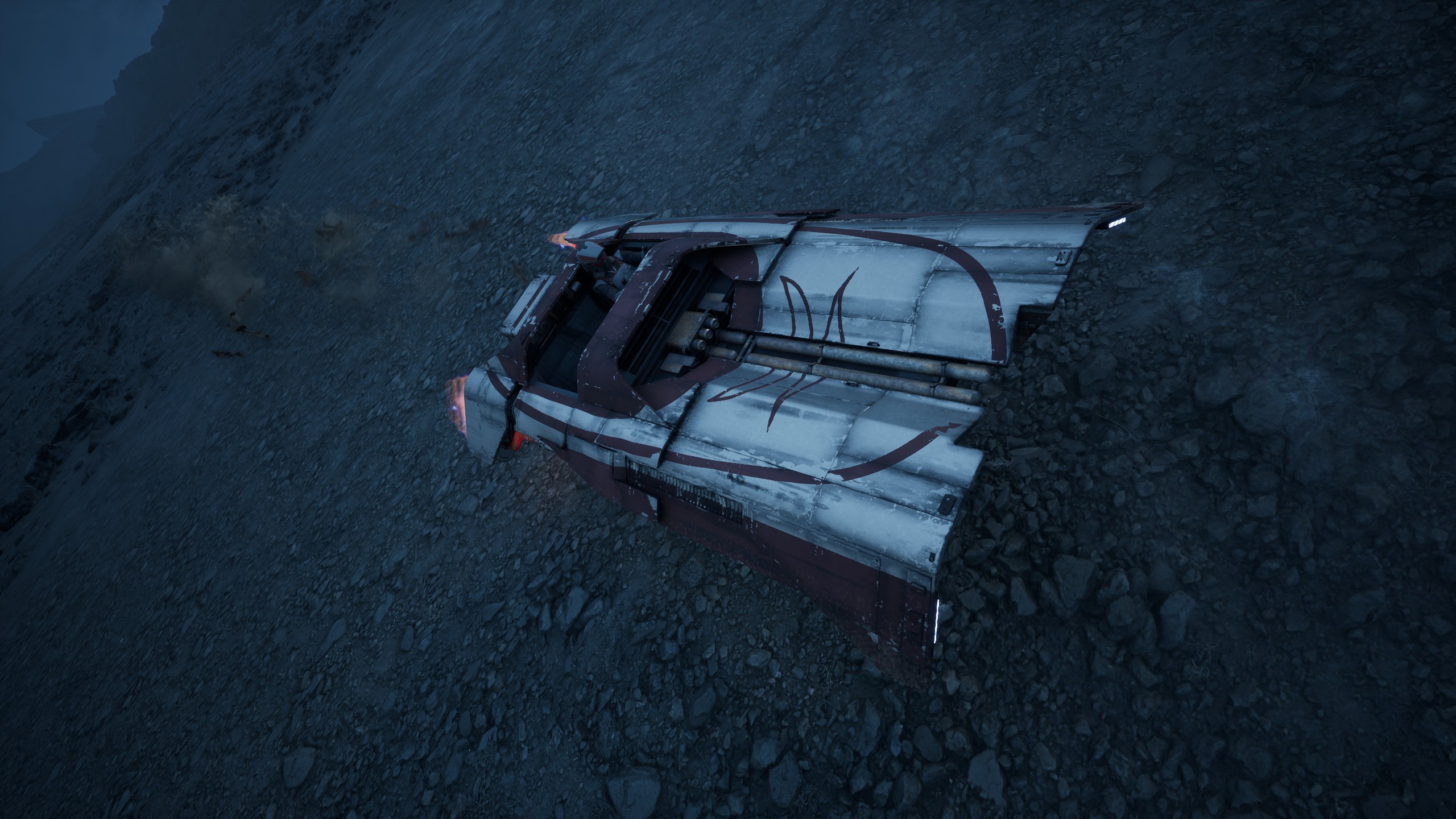
At the start of each run you pick your vehicle, one of three. The land speeder is the closest to a proper race car, sturdy and relatively easy to drive, ideal for getting to grips with the physics and basics of Galactic Racer. The speeder bike is the classic Star Wars repulsor bike, noticeably more fragile than the other two but able to fling itself forward after every drift, Mario Kart-style. The third is the skim speeder, whose ability to rotate vertically lets it take the tightest corners of the lot.
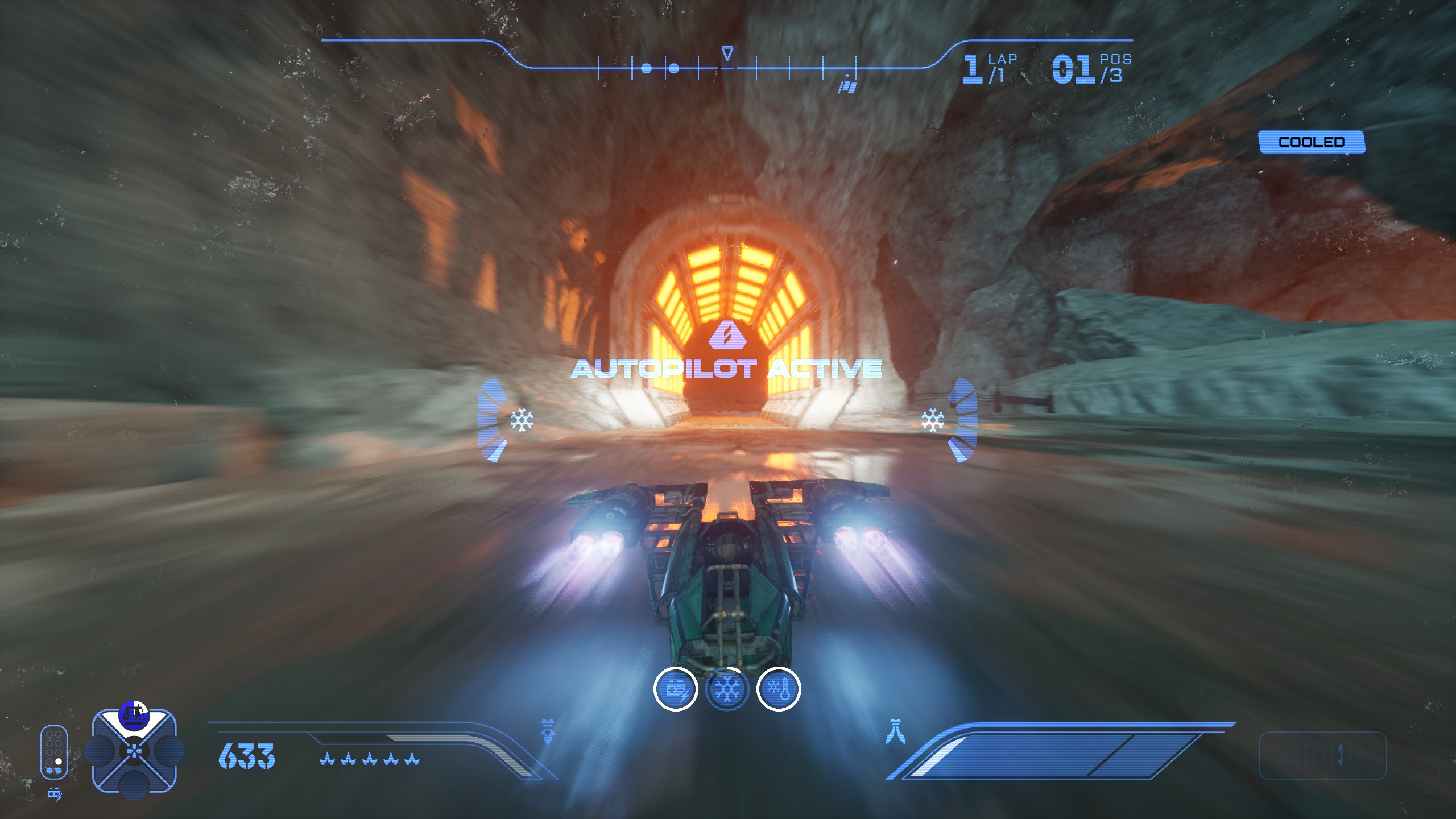
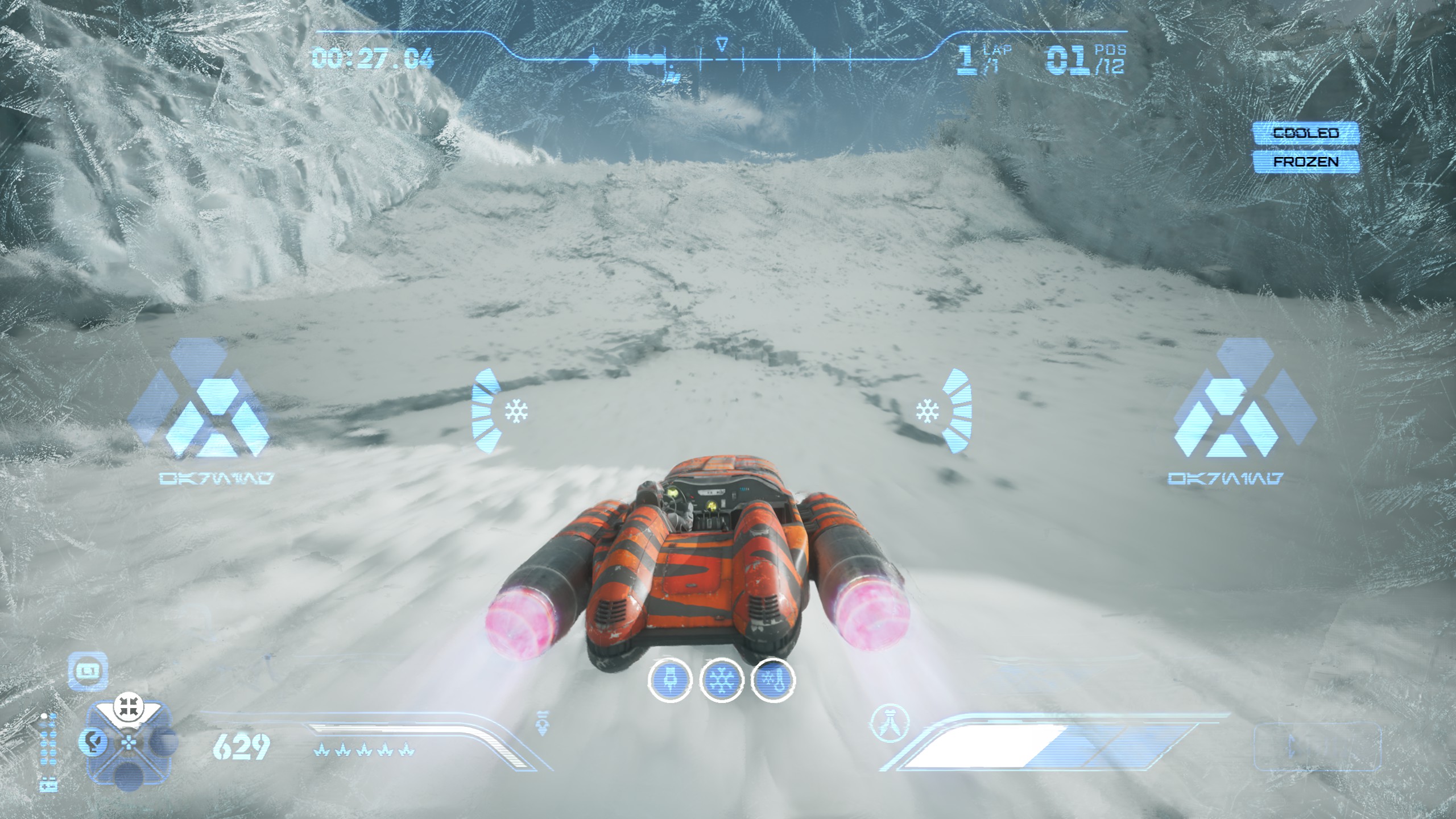
Whichever vehicle you choose, the main tool you need to master if you want a chance at the higher difficulty levels is the Ramjet, an extremely powerful thruster that you must remember to shut off before it blows. The tracks are wide enough to allow high-speed drifting lines, but on top of that you have to manage the Ramjet's temperature, ability cooldowns, a second nitro system called Afterburn and the occasional quick-time event triggered by onboard faults, not to mention your opponents, who, on Champion at least, try to kill you at every corner.
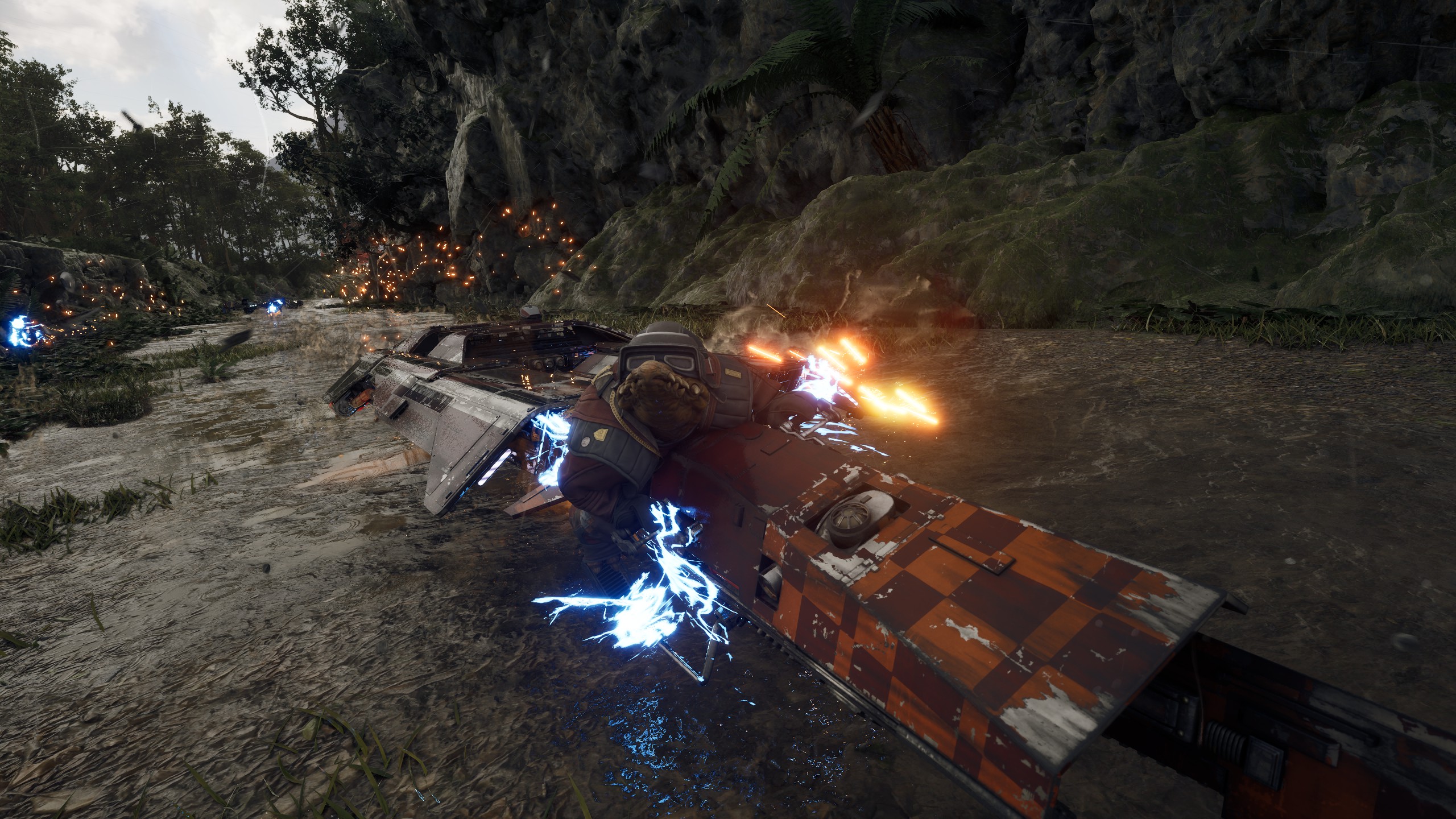
To hold your own against them, you have weapons of your own: an ion cannon, mines you can lay along the track or an electromagnetic pulse are just a few of those you can install (or be handed, depending on your Racing Style). The game encourages the most aggressive style possible, with parallel lines converging in tight spaces and, depending on your build, all sorts of bonuses triggered when you shove your rivals off the track and into the barriers.
Like any self-respecting arcade game, Galactic Racer rewards aggressive driving, shunts and collisions of every kind. At the same time, you have a limited number of lives per race (or, on the highest difficulty, per planet), and if you crash too many times, the tournament ends on the spot.
There's also a killcam (which I switched off in the menu, because it sometimes returned to my POV just in time for me to plough head-on into a wall) and other flourishes that amplify the chaos and action. The sound design is remarkable here, prioritising and clarifying certain noises and alerts in a very distinct, clean way on a screen where ten things can be happening at once.
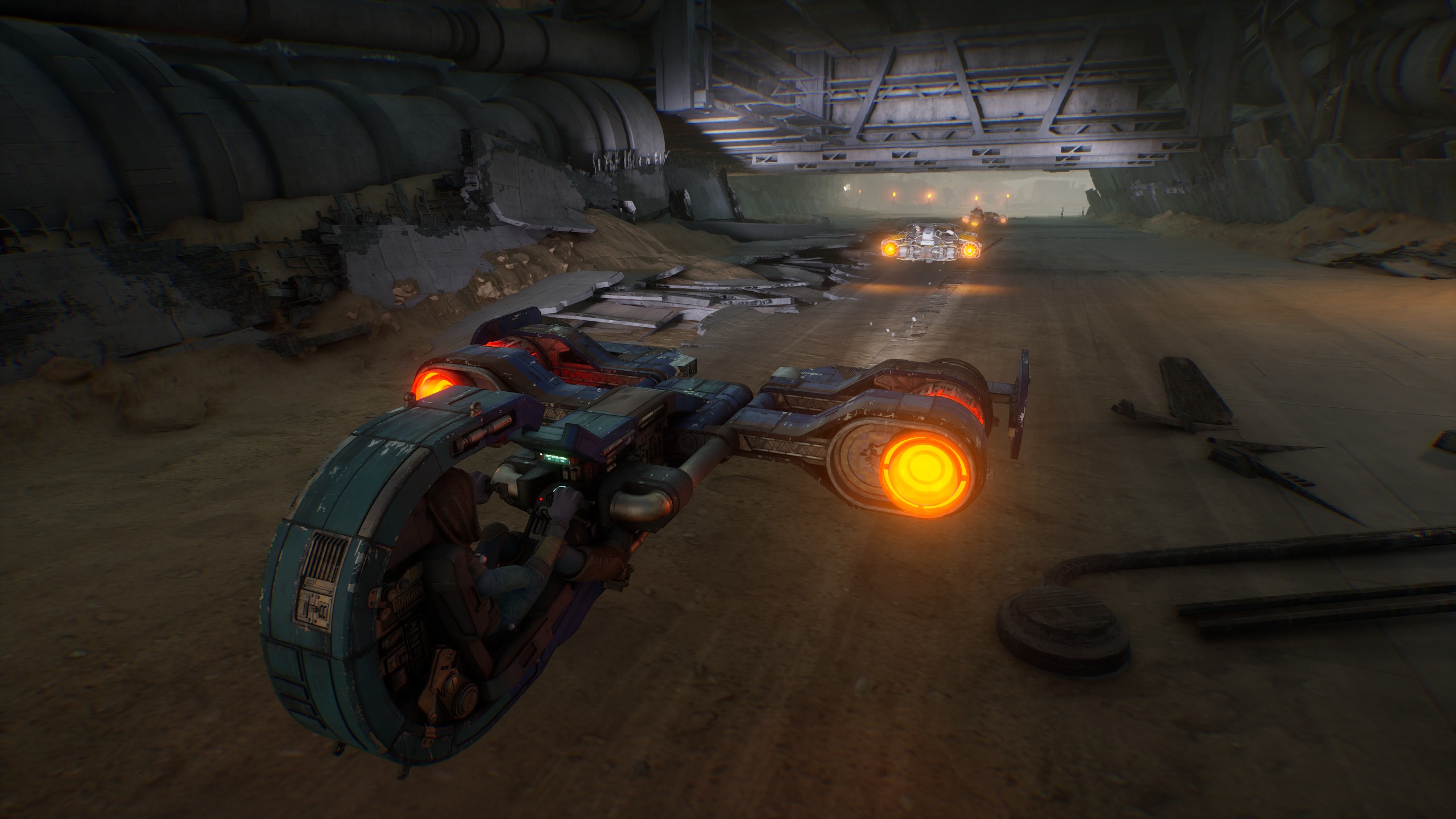
The orchestral score is in the same register as John Williams's work and swells in moments of tension without showing its seams. The voice acting carries the franchise's stamp too, and I'd missed that side of schmoozing with all manner of pot-bellied reptiles and creatures with personality. Even if the story is just a facade (which ends a bit abruptly and anticlimactically, in my opinion), it's a convention that adds a little colour and context to the string of races you take part in.
In special events and Sebulba's missions, you get the chance to drive a pod racer, which is, incidentally, the fastest and most manoeuvrable vehicle, which makes it understandable why it isn't allowed in speeder races. The sense of speed and danger from the film is present more than ever in these segments, which often take place right on Mos Espa Speedway, the track from Episode I: The Phantom Menace. Canyons wind towards open deserts, and razor-close drifts, boosts used at key moments and fast reflexes are absolutely critical at the dizzying speeds you reach.
There are only two race formats: regular and elimination. In a regular race, it doesn't matter where you finish (as long as you don't crash too often), because you can't be knocked out. The only thing that changes is the payout, with the top three places earning significantly more credits than the rest. In an elimination race, whoever is in last place gets booted, one by one, until only three are left, at which point there's one more lap to settle the podium order.
Beyond that, we get a sort of time trial with experimental vehicles or the pod racer, random events (typical roguelike fare, with positive or negative effects) and visits to the scrap yard, where we can repair broken components or buy legendary parts that come with a handicap.
In the Shadow of the Great Sebulba
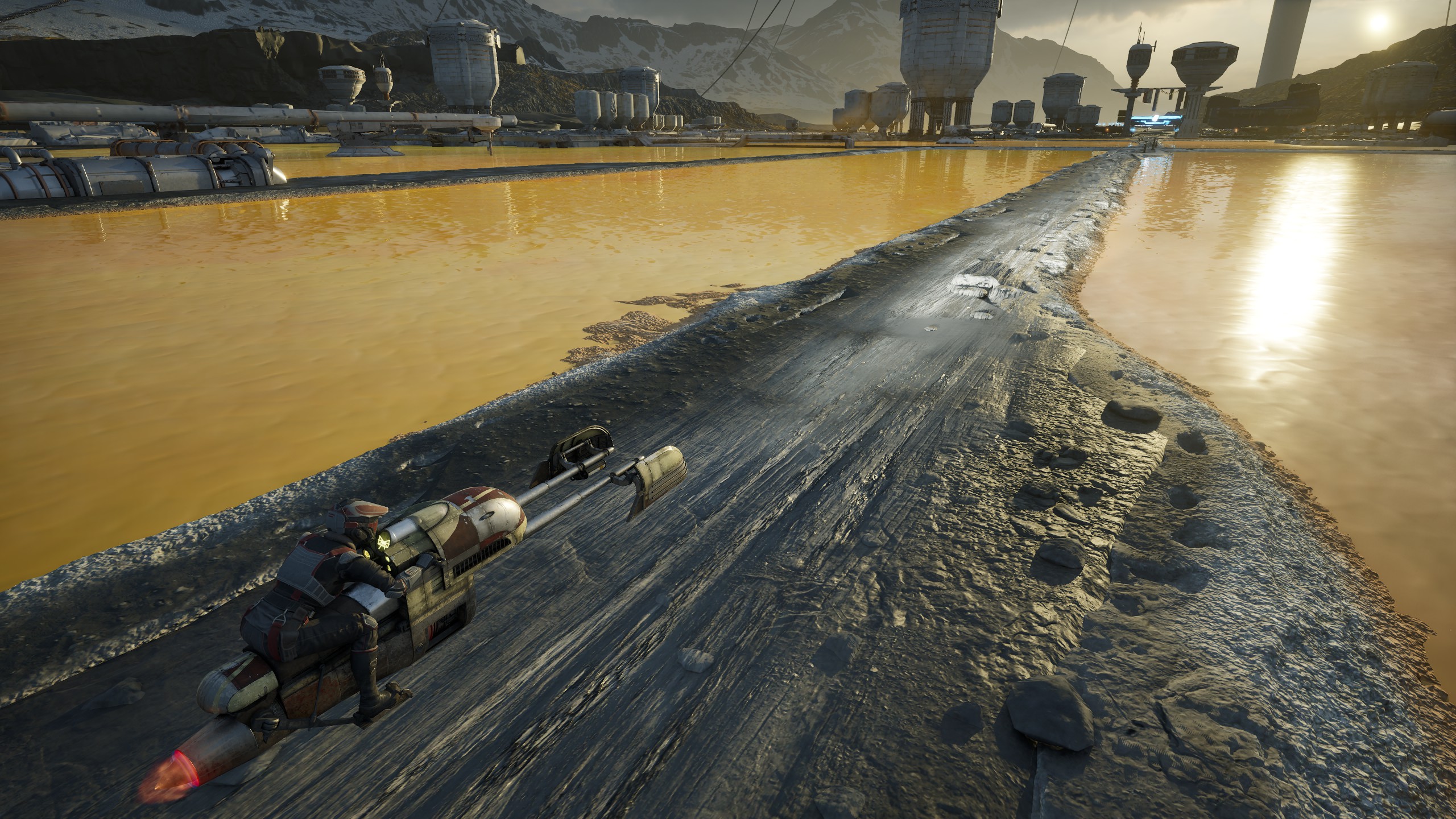
There are seven planets, each with a handful of tracks and variations. In total that comes to 36 different layouts, but the roguelike format makes them feel far fewer, simply because repetition is almost impossible to avoid across the dozens of races in each championship.
Each planet has its own hazards (acid on Sentinel I, lava on Laanata, ice on Ando Prime), and their effect on your engine can make your Ramjet last longer or shorter, depending on the temperature of the surface you're tearing across. Shortcuts, open stretches and ramps scattered across every track force you to keep making choices, sometimes in a split second, which leads to countless moments where your knuckles go white with tension as you scrape past disaster.
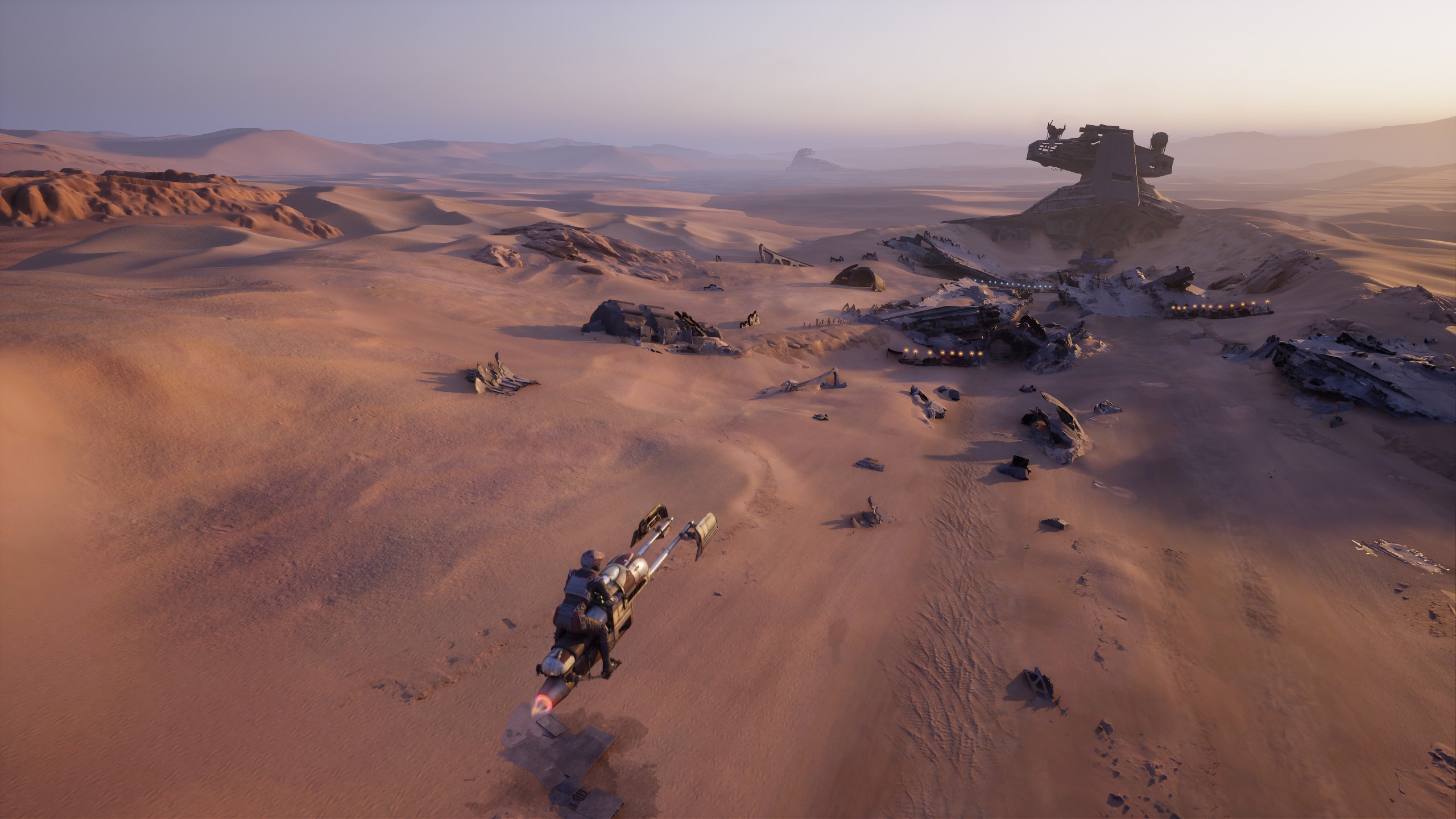
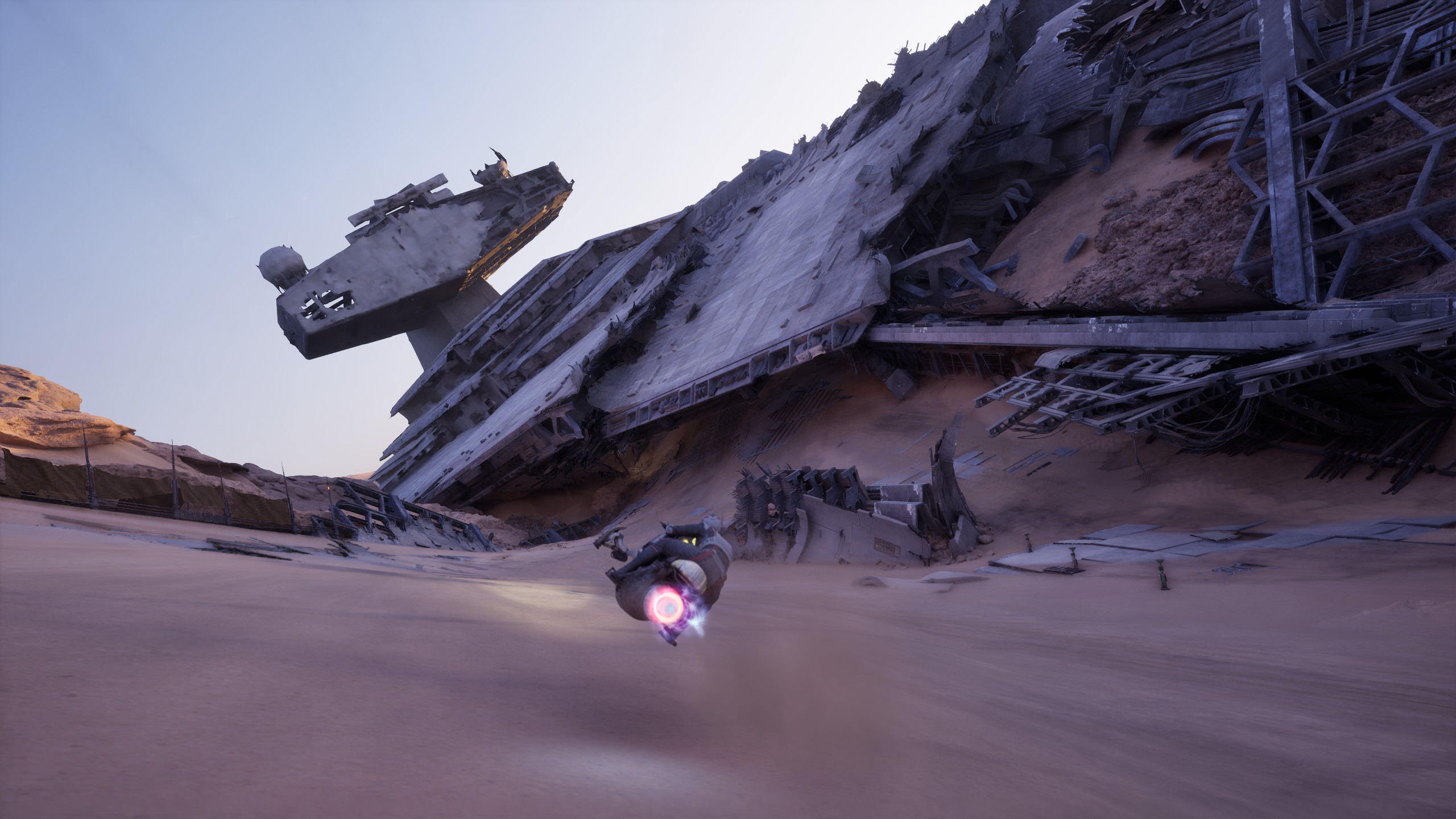
I appreciated the details, like the Star Destroyer graveyard on Jakku or the winding tunnels full of red crystals on Crait, but something is missing to add variety, some random events to complicate matters. After a few dozen races I started to feel a kind of danger withdrawal. Once you've learned to nail the corners without losing time or wrapping yourself round a wall, there are no real hills left to climb, and the fight comes down to how efficiently you manage your Ramjet and how you use your build; in other words, perfecting the routine.
The difficulty does climb with your upgrades, of course, because the same bend you used to whistle through at 500 mph becomes almost impossible to hit once you've doubled your speed. But at some point you've taken that corner so many times that you know exactly which frame to start your drift on to come out where you need to. It's hugely satisfying, once you know the maps, to blast through them at full speed hunting for the perfect line, especially if you've just shoved Bool into a stalagmite on the way out of a tunnel. That's probably why I'd have liked a bit more: Tusken Raiders taking potshots at pod racers on Tatooine, say, or the odd shortcut blocked off, small permutations that would have made the track selection feel more substantial.
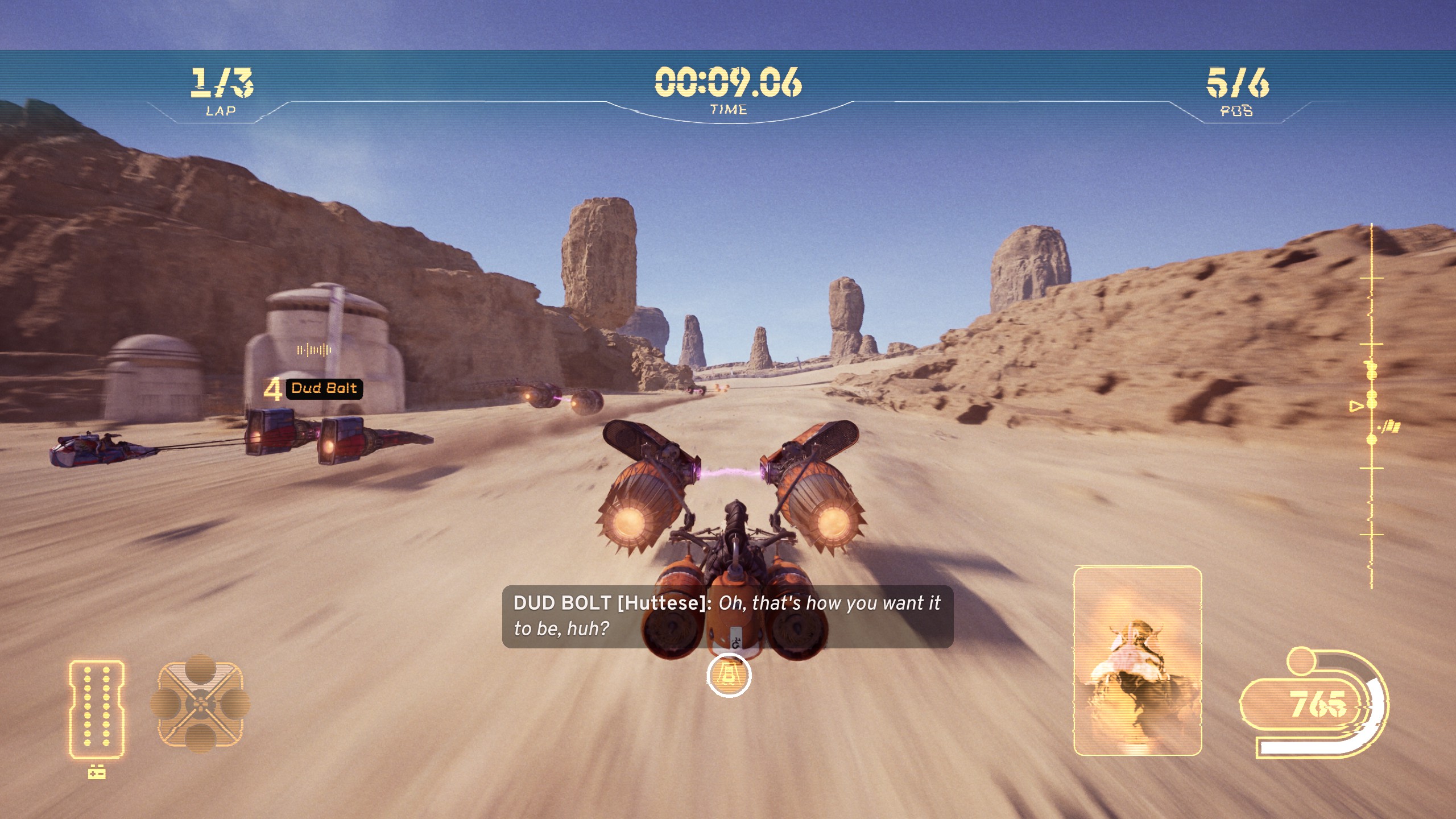
For an arcade game, thirty-six tracks sounds more than decent, but I'll be honest: in this roguelike format, you'll have seen every one of them within three championships. What's more, Tatooine isn't part of the regular planet rotation, turning up only in the special pod racing events.
Outside the campaign there's a set of scenarios (mini-campaigns) and 50 time trials that test the player's grasp of the systems, the physics and the piloting techniques to the limit, plus a few multiplayer modes with or without upgrades. Right now, finding a match takes a few seconds, crossplay is included, and it's more brutal and intense than any single-player race.
Successfully completing every race on a planet earns you cosmetic points, which you can spend on new models, colour palettes or liveries. The models are mostly interesting, full of detail and clever design touches, but the liveries struck me as bland and devoid of any creativity, and on some vehicle models they don't fit at all.
The Most Dangerous Racing in the Galaxy
STAR WARS: Galactic Racer is a distinctive and genuinely special arcade racer, even if the roguelike side doesn't have enough content to make it complete. From the ritual of pre-checks that bring your systems online before every race to the moments when you turn your rivals into screaming accordions as you plough through them like skittles, the game is built to keep you in a constant state of tension, and it manages that without resorting to cheap tricks like rubberbanding or cheating AI.
I'd perhaps have liked more content, more builds and more exotic abilities, maybe twice as many planets to justify the asking price. Even so, in its current form the galactic tournament offers plenty of replayability and fuses the two genres more convincingly than the racing games that have tried this experiment before (I'm looking at you, Rogue Shift).
While it's not the most ambitious title in the franchise, it's a standalone adventure in which reflexes and strategic thinking work together perhaps more than in any other racing game. The track design is intuitive and clear, and the variety of side effects pushes you to experiment with different approaches in every championship.

Available on: PlayStation 5, Xbox Series X/S, PC
Played on: PC
Release date: 6 October 2026
Developer: Fuse Games
Publisher: Secret Mode
Plus
- Gripping arcade racer that blends speed with trackside brutality
- Detailed graphics and efficient optimisation
- Every run feels fresh
Minus
- The roguelike has few permutations, and there are only seven planets
- Pod racing is its own separate section, more modest than the chances to drive the other vehicle types
- Not enough content for the asking price
0 votes
Scroll down here and stay on the page for at least 30 seconds to vote.
Pick a score from 0 to 10 (halves are allowed).