
The Rogue: Prince of Persia – Review

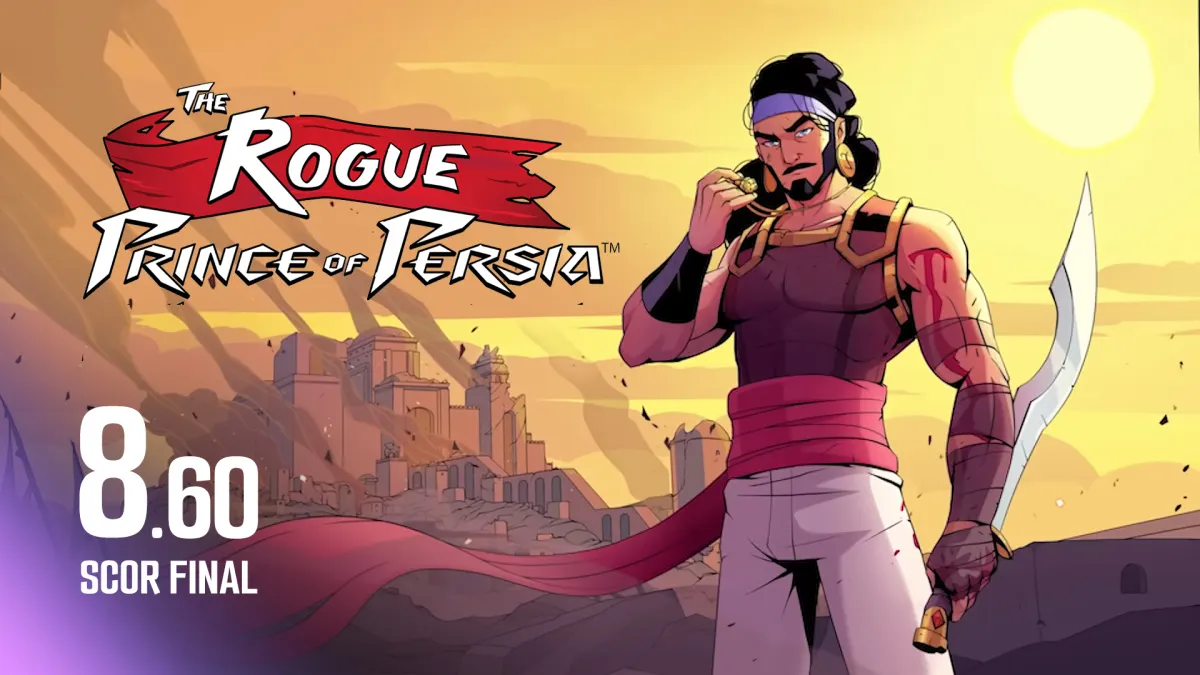
In the distant lands of Persia…
It’s been a while since the first Prince of Persia. Anyone who’s studied a bit of ancient history of the region will remember the rotoscoped pyjamas and blonde mop of the first, a pixelated boy whose simple mission (escape the dungeon and save the princess in under 60 minutes) was peppered with traps, sword duels, and a cursed mirror. His story continued in The Shadow and the Flame (my favourite of the original trilogy) and Prince of Persia 3D, which put the franchise on ice for over ten years, also being the first title not directly involving Jordan Mechner.
Then came the Sands of Time revival in 2003, for most fans the entry point into the series given the number of copies sold. The Warrior Within, The Two Thrones, and The Forgotten Sands expanded the world and story of the Prince from Sands of Time, with varied results depending on how you feel about the edgier aesthetic and violent, darker turn of the sequels.
Alternative formulas, such as the 2008 reboot with a touch of Zoroastrianism and a bold design (which, I confess, I didn't appreciate at its true value upon release) or Ubi's latest title, The Lost Crown, keep the PoP spirit alive in other game architectures (and their own universes/narratives), specifically, Metroidvania.
A new continuity joins the family – by my count, the fifth – with The Rogue Prince of Persia, a roguelike platformer that borrows a little from all the formulas tried so far to deliver a more modest adventure in scope and production than the mainline titles, but as faithful as can be to the chemistry between platforming, reflex-based combat, and the story of a kingdom in peril.
Huns upon Huns
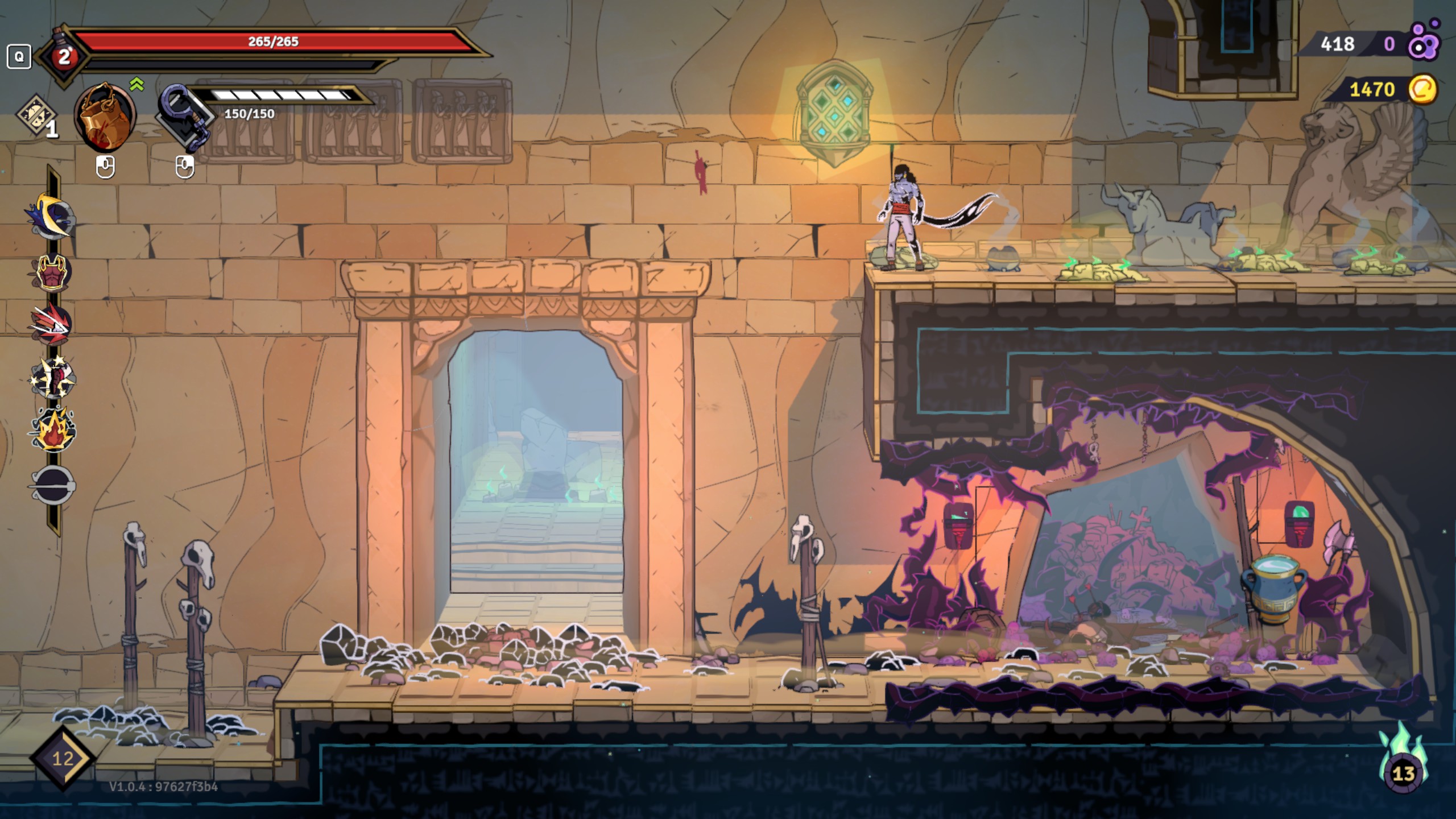
The Huns are to oriental stories what the Russians are to any 20th-century political thriller: you can always count on them to do bad things and burn civilisations to ashes in the name of absolute evil. So it is here – Ctesiphon is invaded by the moustachioed hordes, led by Nogai (inspired by the 13th-century general of the same name, great-great-great-grandson of Genghis Khan), and the Prince must traverse the palace to defeat the chieftain and prevent the destruction of the kingdom.
Naturally, as the game's title suggests, we're dealing with a roguelike (or, to be technical, more of a Metroidvania/roguelite hybrid), which means that every time you die, you have to restart the adventure from the beginning (explained, in-universe, by the Prince's magic bola, which keeps him trapped in a time loop) and that as you accumulate knowledge, new areas open up that you can integrate into subsequent runs.
The structure of a run is always the same: after a few ordinary areas, where you collect weapons, artefacts, and build synergies, you encounter a mini-boss, and the rotation repeats three times in each run, with a few crossroads where you have to choose one of up to three biomes to advance in.
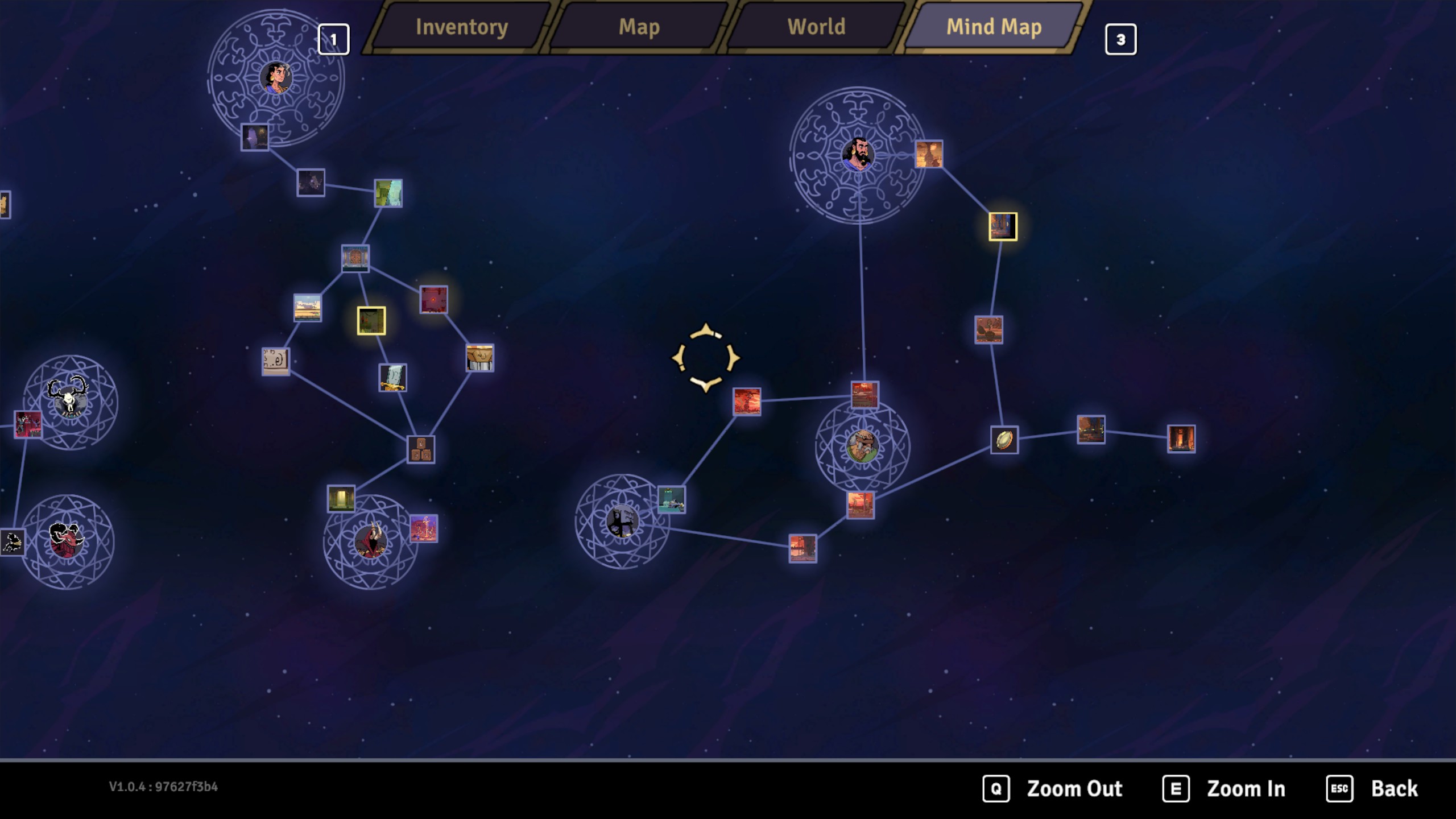
Once you finally manage to kill Nogai, you'll find it's not enough: you have a mental map of the clues you've discovered in previous adventures. The clues allow you to unlock new areas, rescue family members who, in turn, give you clues, and so on.
Swords, Lamps, and Other Weapons
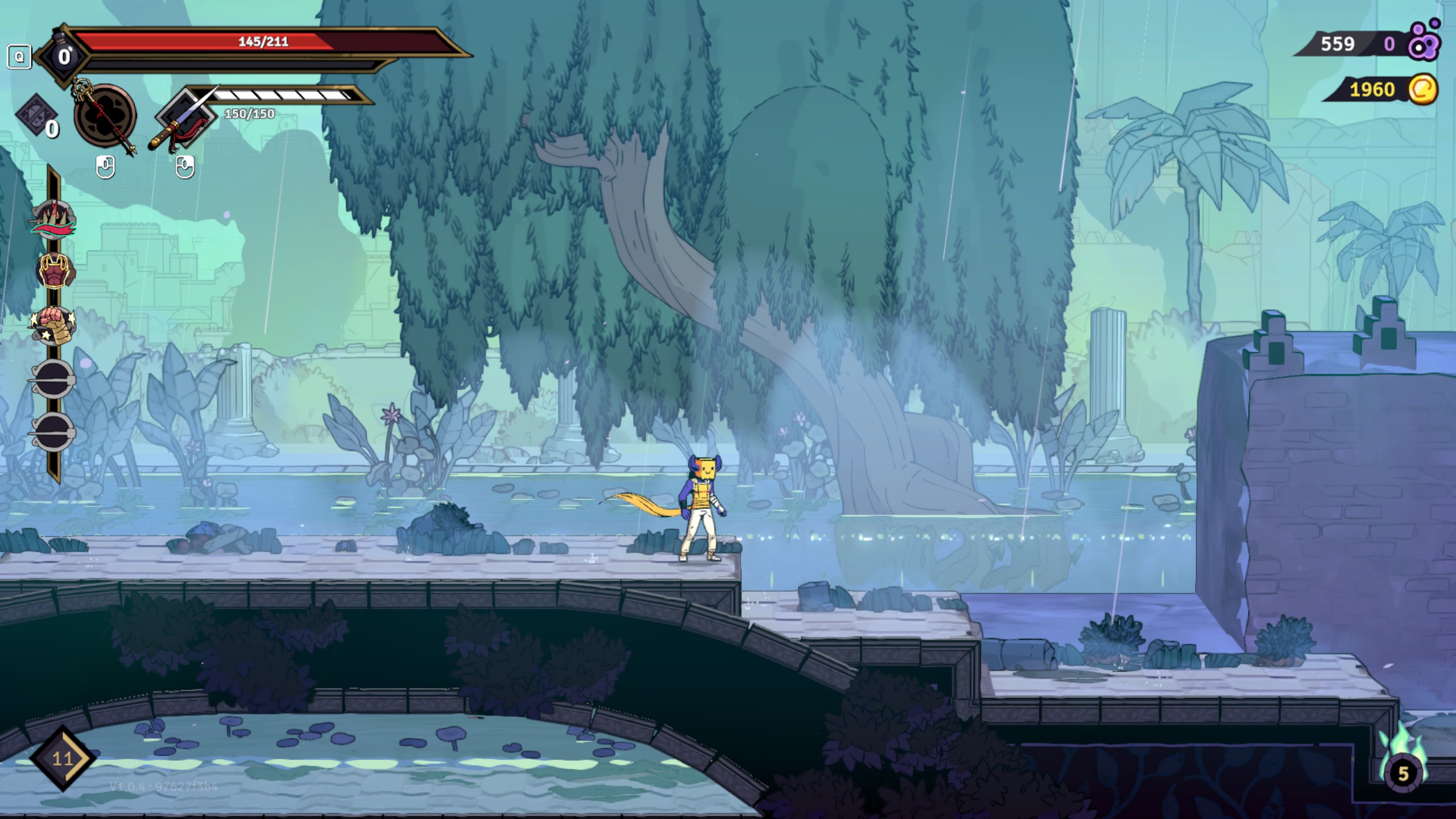
The combat system works more like a ballet: enemy attacks are telegraphed so you can dodge them, and combos must be integrated into this dance to land as many secondary effects as possible before you have to leap to safety.
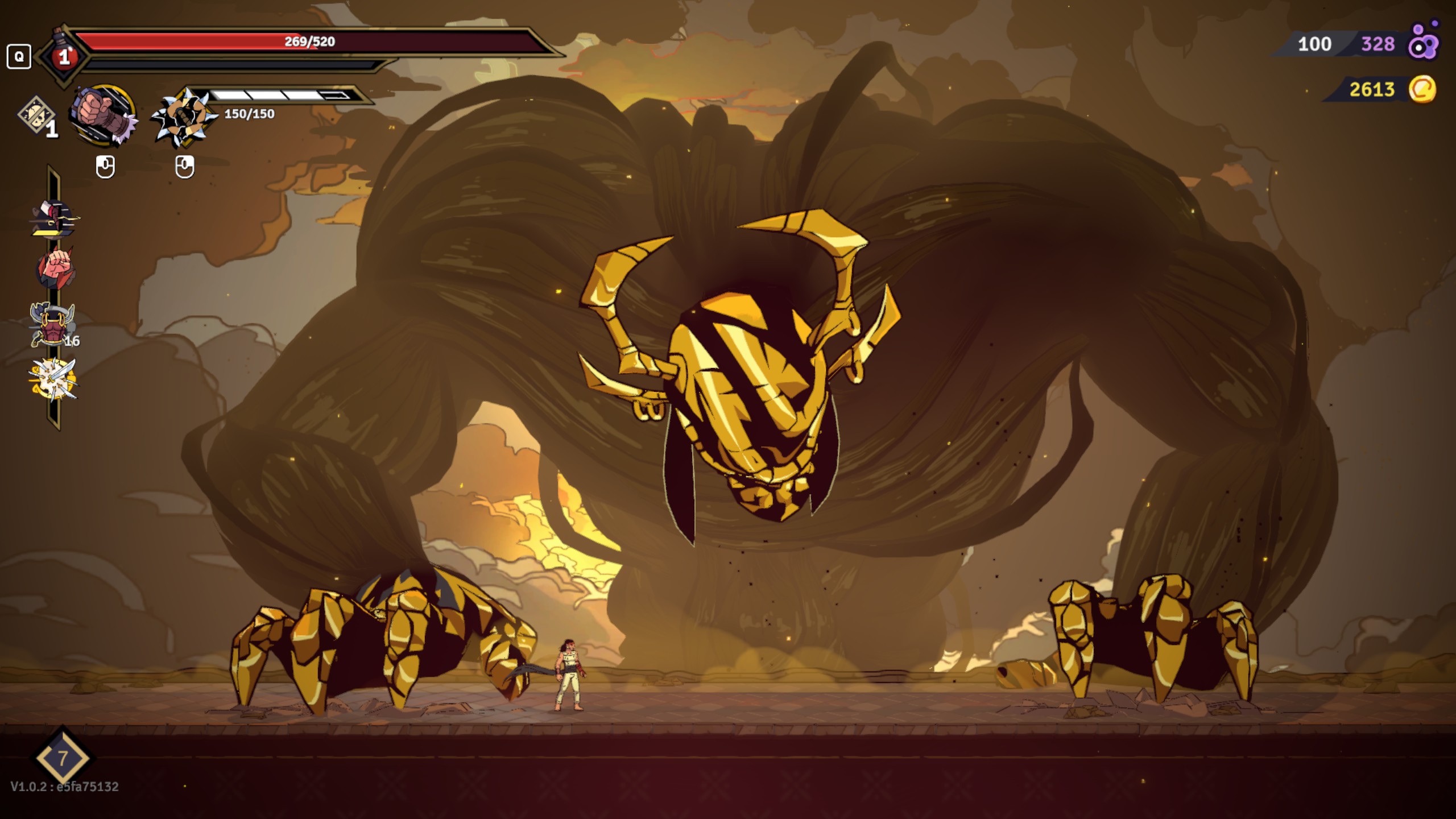
The arsenal is composed of a multitude of melee weapons, each with its own special attack and various attributes that have a minor impact on playstyle, but the essence remains dance and movement. The Rogue Prince of Persia is first and foremost a platformer, and even in the most intense battles – those with bosses – there are beams, chains, and all sorts of platforms that you must master to avoid death. Later, you unlock corrupted weapons and medallions, which are significantly more powerful than those without this trait but come with commensurate penalties.
Secondary weapons, such as the bow or blowgun, consume energy that you accumulate in combat, and the various shops and NPCs you may encounter can replace or upgrade either of them. The synergies you can build by combining medallions (artefacts you collect, with cumulative passive effects) with rare tools and weapons will significantly reduce the time spent in boss fights, where the enemy's health pool can reach tens of thousands of points.
Weapons can also be swapped during a run: coins dropped by defeated enemies and found in various chests can be spent at randomly distributed shops in the game world. The Prince's ever-present potion gives you another swig of life when you need it, and you can always refill it at the fountain at the start of the next level.
Successfully chaining dodges, wallruns, and other acrobatics without stopping fills a secondary resource called Vayu’s Breath, which grants you extra speed, stronger attacks, and other benefits, depending on which medallions you have equipped.
Combat experience translates into points that you can freely distribute among several trees, whose rewards range from accumulating more Soul Cinders in each run (the main resource that unlocks new skins, weapons, and medallions) to advantages such as extra potions or more gold to start each run.
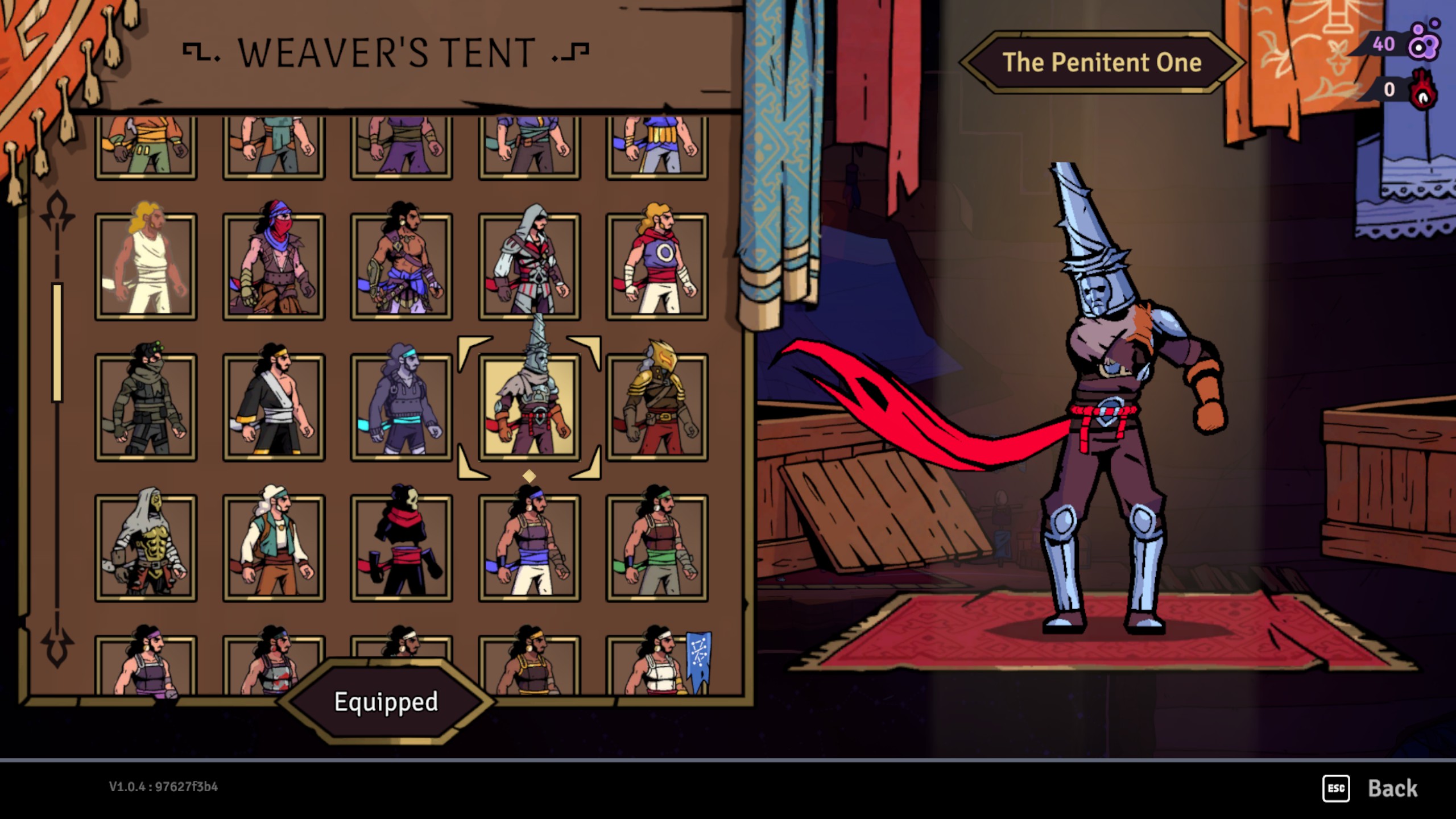
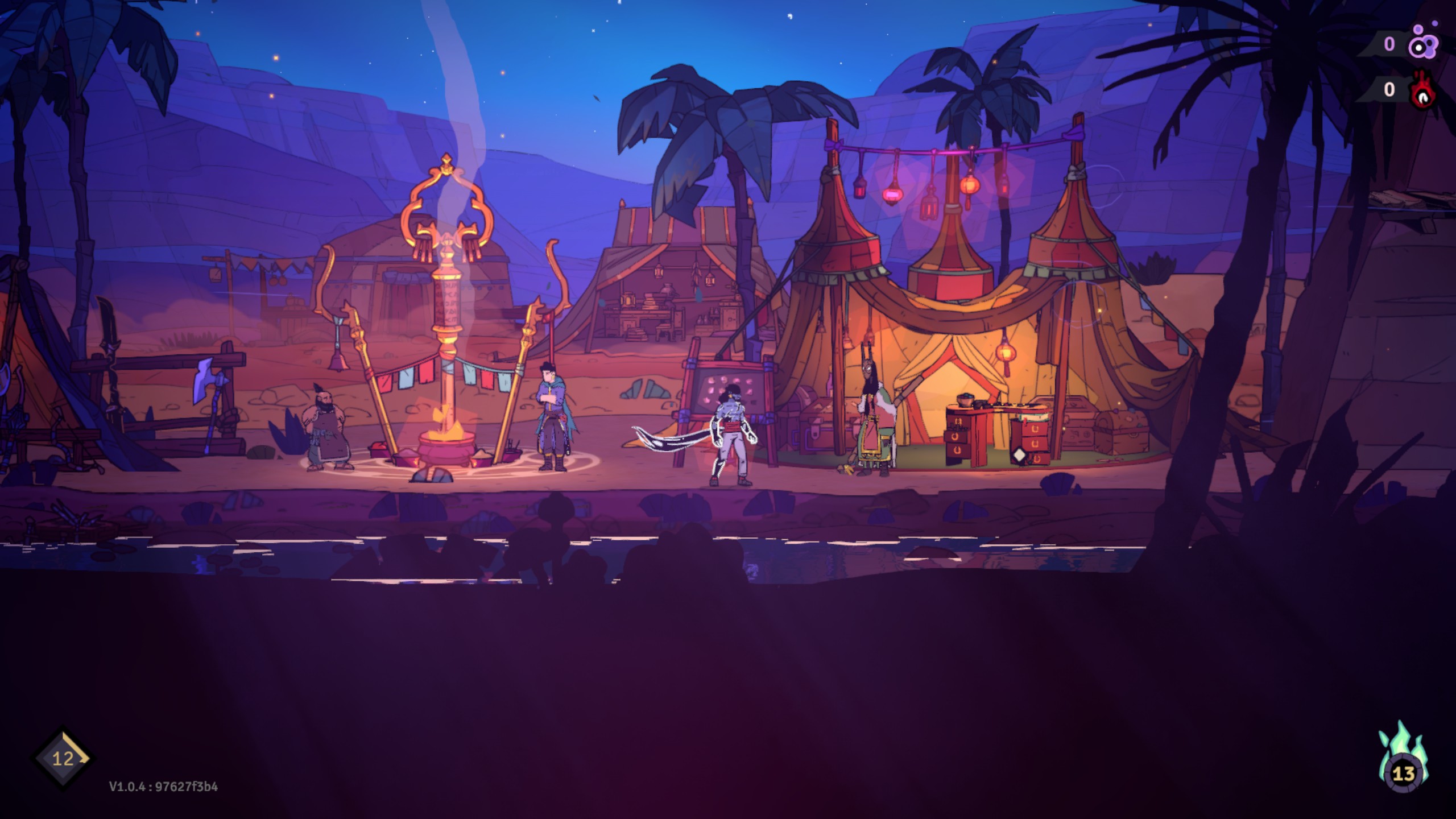
After each death or victory, the magic bola brings you back to the oasis, a hub of NPCs and altars through which you customise your experience. The Weaver offers access to dozens of skins, which, although purely cosmetic fun, contain homages to previous iterations of the Prince (1989, 2008, Two Thrones or Warrior Within), other franchises from the Ubi catalogue (such as Assassin’s Creed, Splinter Cell or Rayman) and even other indie titles (Darkest Dungeon, Slay the Spire or Blasphemous).
If aesthetics don't interest you, you'll probably spend your Soul Cinders on new weapons and medallions, and the recipes for these are usually hidden behind platforming labyrinths behind red doors.
The colour coding works like this: doors with a blue aura unlock segments of narrative progression, golden ones hide medallions, and red ones, as I said, hide a treasure containing a weapon and its recipe.
At the start of each run, you automatically receive one main and one secondary weapon from your unlocked arsenal, and each equipment category allows you to lock undesirable items. You have a limited number of medallion slots, and these also vary in quality. If you can start in only one biome at first, once you've progressed far enough in the story, your options multiply, and it will take dozens of runs through all possible combinations to see the true ending of the story.
Jump’n’wallrun
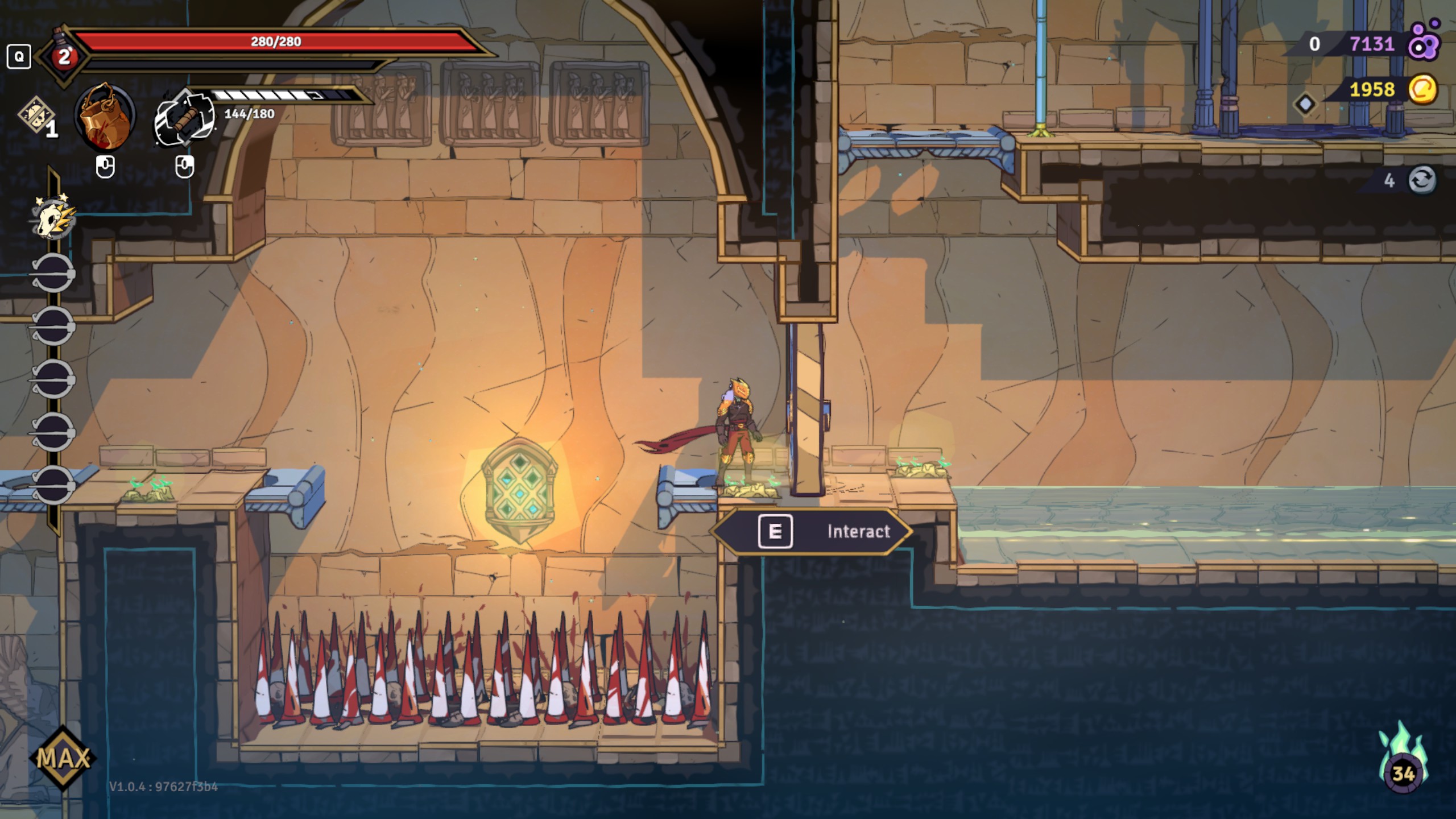
What differentiates The Rogue Prince of Persia from the ocean of roguelikes that seem to have appeared in recent years is its strong emphasis on platforming, for which it provides you with an extensive kit that makes traversal through even the most dangerous routes a breeze.
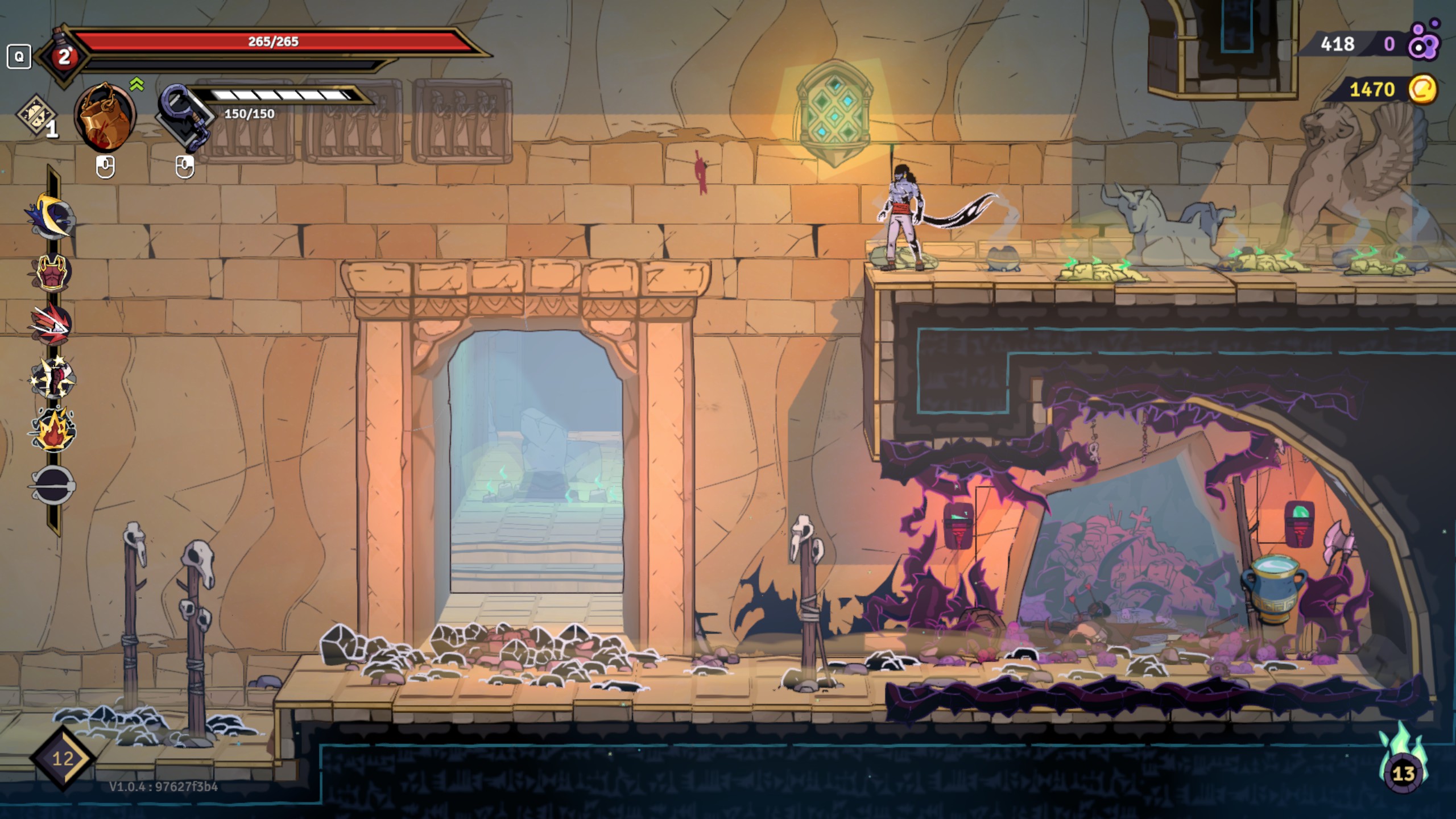
In addition to a dash (which situationally functions as a dodge if you encounter an enemy), you have the classic wallrun at your disposal, an extraordinarily useful move that puts the 0.5 in 2.5D. You can, of course, cling to ledges, and the Prince is so agile that he can climb two or three steps even on vertical surfaces, from which you can jump further to the next wall. The harmonious combination of all these abilities is practically the game's final puzzle, and traps, pitfalls, and enemies become just a minor inconvenience in the rush for the next door.
The controls work perfectly, and if there's one thing I would have wished for, it would have been a bit more difficult content, because you reach a point where none of the traps or structures you encounter pose any danger in the predictable and heavily telegraphed positions you whiz past from dash to wallrun.
At the end of each run you survive, you unlock stones that increase the difficulty (and reward) of future runs. Anything from more champions (mini-bosses with auras or equipped with shields) to the possibility of losing medallions when hit, these difficulty modifiers add an extra challenge when the design of a vanilla run becomes trivial.
Discodarabana
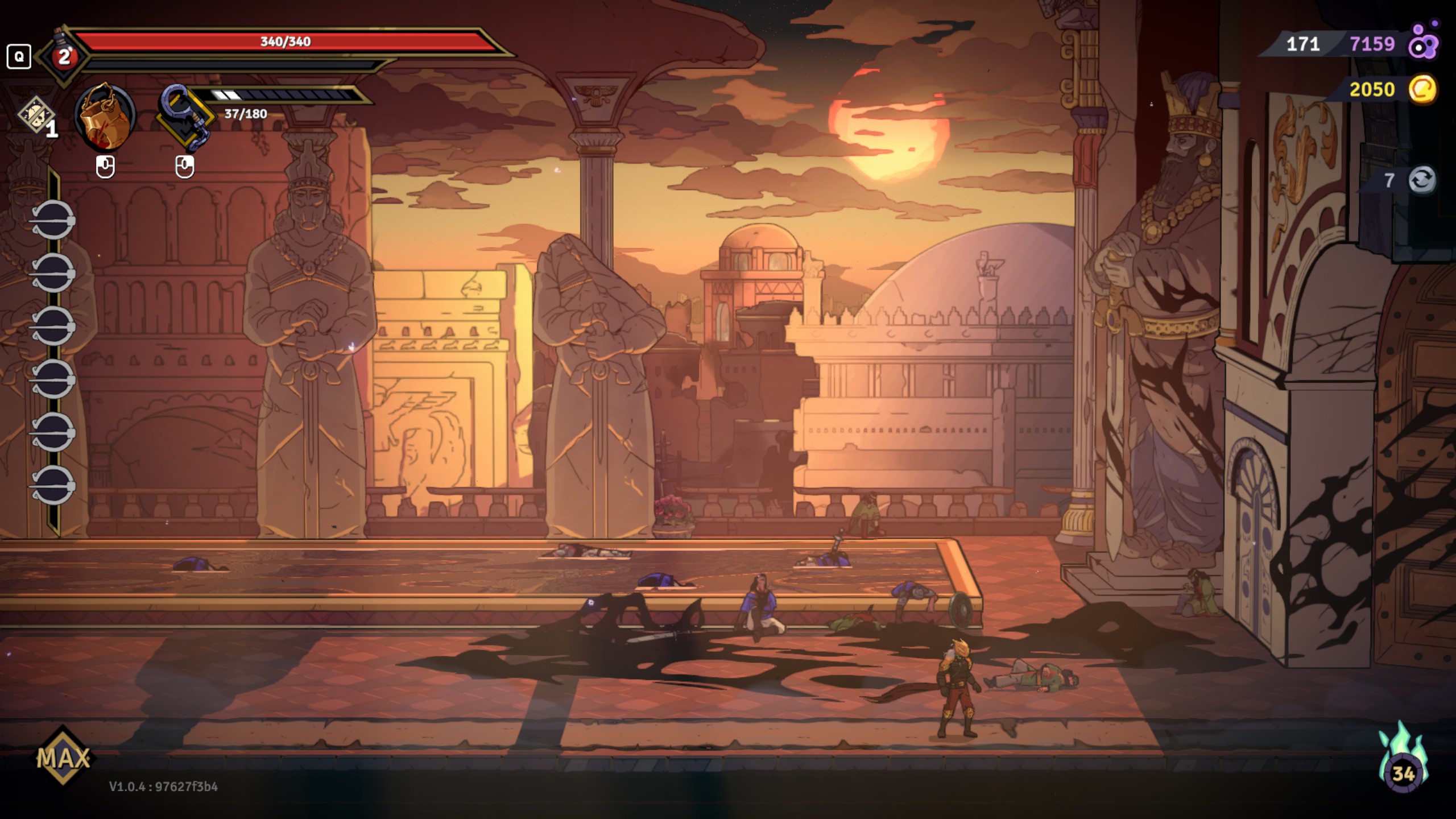
The soundtrack is largely instrumental (with the exception of two tracks) and combines sound design with modern percussion, synths, and EDM elements over traditional Persian melodic lines. The main theme, one of the two works with a vocal line (XYE), appears at several key moments in the story and it's almost impossible not to find a few ideas to resonate with on the soundtrack. Almost two hours of tracks (available here) that you'll become familiar with in their corresponding levels provide an engaging tempo in a game that pushes you to always be on the move.
There's enough depth to get lost in the permutations offered for about 15 hours, but before you launch into the time spiral at the end of which you'll save the kingdom, you need to be aware of a few things.
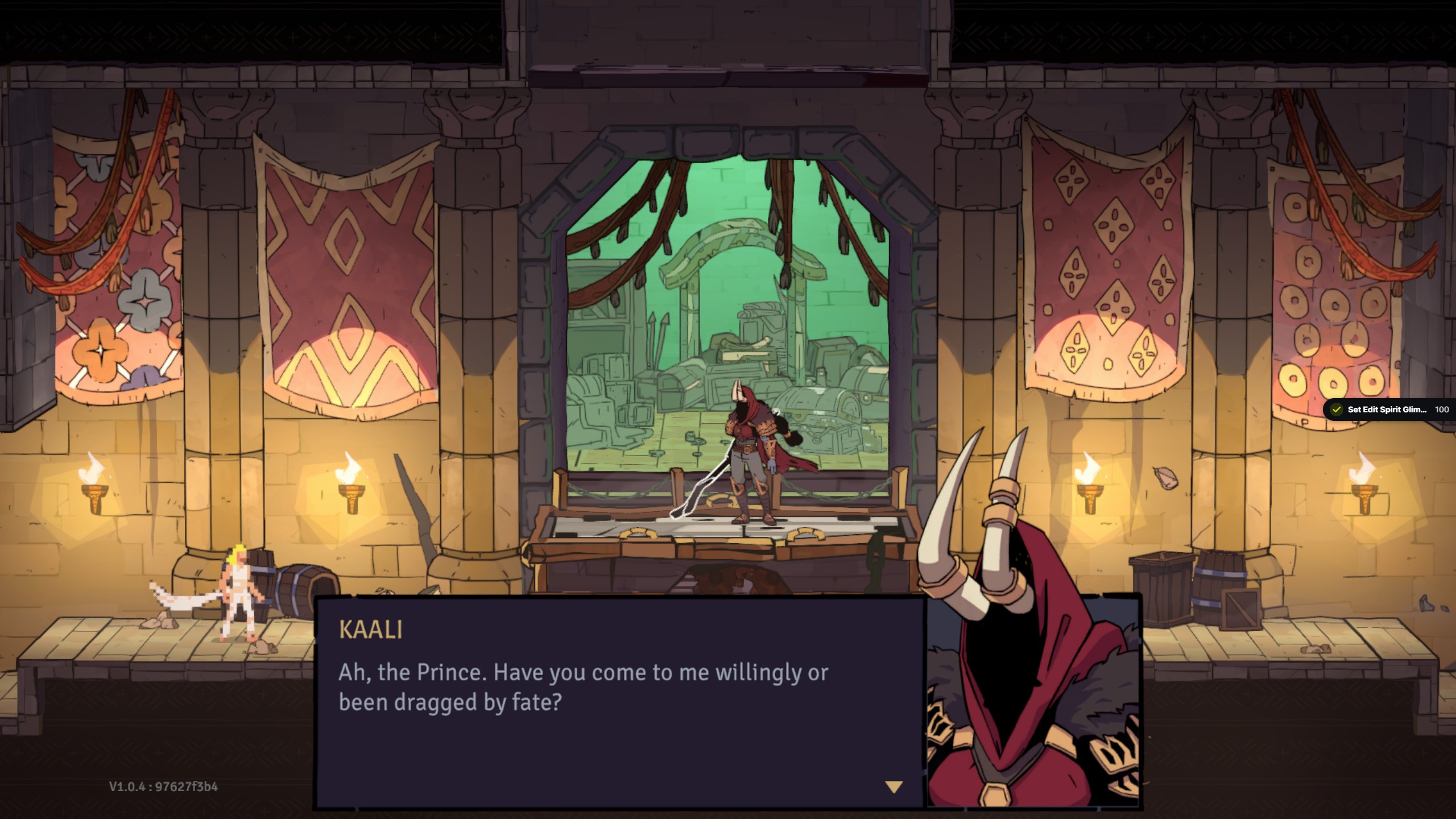
The Rogue Prince of Persia is not a mainline PoP game. This means that the budget, production value, and content maintain the scale of titles like Dead Cells or Curse of the Dead Gods. It's by no means ugly, quite the opposite: a few glances at the screenshots will be enough to appreciate the superb colour palette, the carefully drawn layers that fade into perspective, or the hundreds of details that shape the palace.
At the same time, the presentation is minimalist, with dialogue delivered only through text, very little information about the world, and a genre-typical structure: half-hour chunks with minor variations that rely on how much you enjoy the gameplay loop to keep you arrested in the same content.
For me, it tickled a need for softcore platforming, a niche that few titles still fill and which makes me miss Rayman. The Rogue Prince of Persia is neither the most difficult nor the deepest roguelike, but the combination of traversal abilities, crunchy controls, and vibrant colours kept me engaged enough to finish unlocking the Mind Map.
However, the fact that I spent quite a few hours in the game made me feel the need for more difficult levels or challenges that hit their difficulty plateau after only a few runs. There's not much precision platforming, reaction times are generous at the start and remain so long after you've understood how to traverse any trap setup, and the only thing that can still give you trouble are the enemies, who (I can't believe I'm about to write this) are a bit too varied for the two-button combat system (plus attack flourishes). At first, one or two damage rotations are enough to kill a simple enemy, but I encountered champions at Awakening (Difficulty Level) 30+ who, in the absence of a healthy damage build, took me thirty seconds longer just because of their absurd health pool, without being any more dangerous than their counterparts who faint after two slaps.
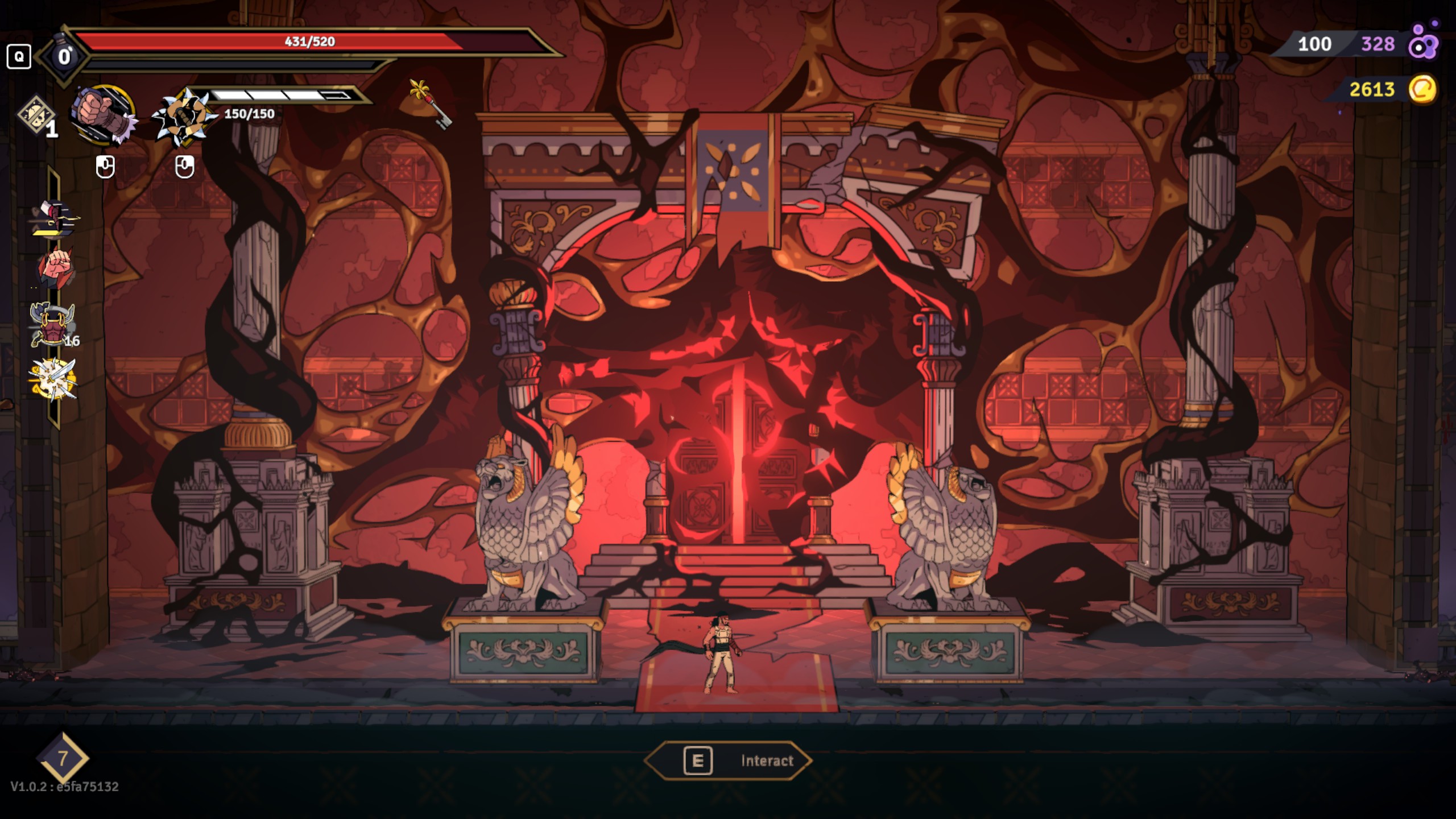
Fortunately, the game is as modular as can be: some of the current features didn't exist in Early Access, and Evil Empire has shown that it can deliver new layers over the existing architecture. It's entirely possible that we'll see more difficult content updates later on. In its current state, the game is a more than decent roguelike where you do some fighting, but mostly run.

Played on: PC
Release date: 20 August 2025
Developer: Evil Empire
Publisher: Ubisoft
Genre: Roguelike
Plus
- Vibrant colour palettes and a world rich in hand-drawn details
- Fun platforming, unique in how it uses the Prince's agility to traverse the environment
- Metroidvania elements combine narrative progression with unlocking new areas organically
Minus
- Relatively low skill ceiling
- The spice and randomness specific to roguelikes aren't very present here
0 votes
Scroll down here and stay on the page for at least 30 seconds to vote.
Pick a score from 0 to 10 (halves are allowed).