
Prince of Persia: The Lost Crown – Review
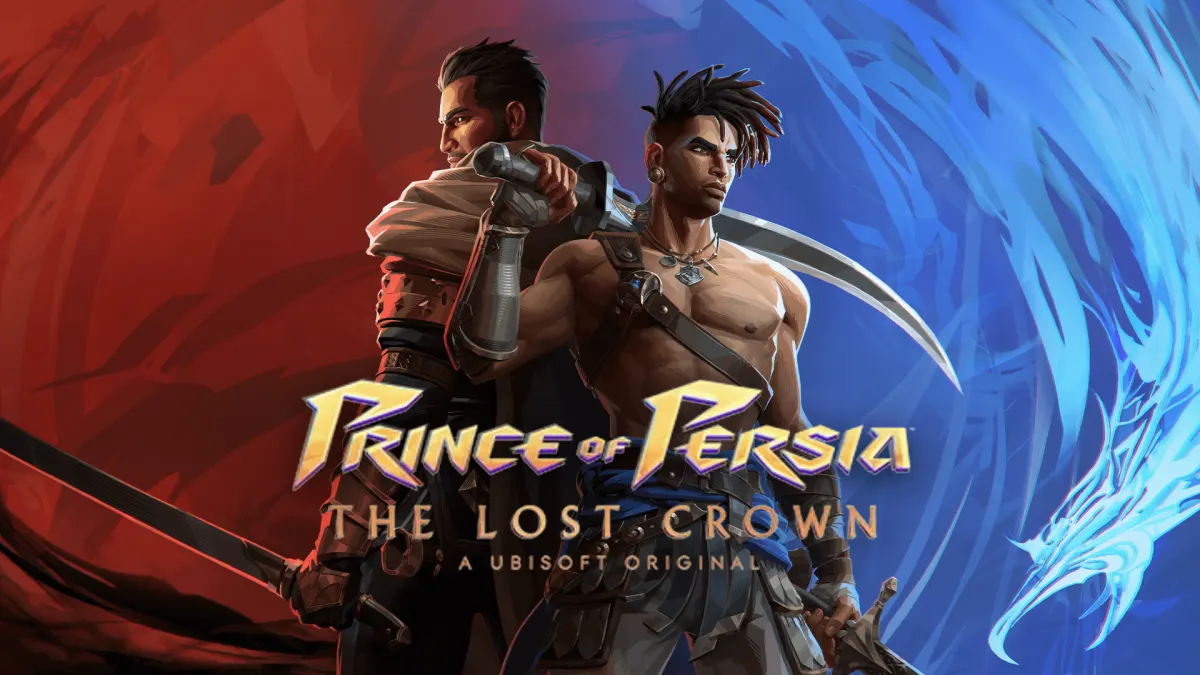
A good metroidvania, easy to learn and quite complex and difficult to master, offering the perfect challenge for both newcomers and experienced players.
Summer Game Fest 2023 was an event where Ubisoft took a major risk: opening the exhibition with the announcement of a game from a much-loved series that hadn't had a sequel since 2010. The series in question is Prince of Persia, and the trailer that debuted the current industry's biggest video game event was for a spin-off titled Prince of Persia: The Lost Crown. The game's trailer looked promising; the new interpretation of the intellectual property seemed fresh and full of colour, action, and environmental puzzles. However, all these elements didn't resonate with fans of the series, and the trailer received a negative reception from them and the general public. Yet, for those who had the chance to try the demo shown to the press at various events so far, or the demo released to the public on 12 January 2024, the impression they left with was a good one.

Since I was little, I've been a fan of the Prince of Persia series. I enjoyed the 2D games, and although I wanted to play Sands of Time when it was released, I didn't get direct contact with Ubisoft's interpretation until the second game in the original trilogy, Warrior Within. I liked that game so much that I did everything I could to play the first one as quickly as possible, followed by The Two Thrones when it was released.
Prince of Persia is a game series that redefined the industry and the platformer genre. The first iteration of the series was in 2D and came out in 1989 for the Apple II, but the game started as a concept in 1985, immediately after its creator, Jordan Mechner, graduated from Yale University. The first iteration of the game was also brought to other platforms in a new and improved format, and in 2001 the intellectual property was bought by Ubisoft. The company reinterpreted Mechner's creation, and in 2003 they released Sands of Time, a 3D game that won numerous awards and distinctions.

What defined the first 2D game was the way the environment was traversed, which in itself was a puzzle. In the case of the 2003 game (Sands of Time), it was defined by its time manipulation powers. In both titles, the main character is the unnamed Prince of Persia. If in the first iteration we enjoyed the Prince only visually, in Ubisoft's interpretation we were delighted by how the character was brought to life by the voices of various well-known video game industry actors, such as Yuri Lowenthal (whom we currently know for his role as Peter Parker in the Marvel's Spider-Man series, but who played the Prince in Sands of Time, The Two Thrones and The Forgotten Sands), Robin Atkin Downes (who was the voice of the Prince in Warrior Within and is the voice of Travis Touchdown from the No More Heroes series) and Nolan North (Nathan Drake from the Uncharted series, Desmond Miles in the Assassin's Creed series and the voice of the Prince in Prince of Persia 2008).
Ubisoft's series took a break from 2010 until 2020, when the studio announced at Ubisoft Forward that they would release a remake of the first game, built from scratch for modern consoles. Since the announcement, we haven't heard anything about the game, but at Summer Game Fest 2023, The Lost Crown was the game that opened Geoff Keighley's event and caught everyone's eye.
On the surface, the game is a 2.5D metroidvania, with a varied palette of vibrant colours, lightning-fast combat, and complex environmental puzzles that require both meticulous planning and increased dexterity. From the initial presentation, the game doesn't seem to have any connection to the Prince of Persia universe, beyond a few time manipulation powers and the complex platforming elements that define the series. However, if we look beyond the presentation, we will discover a new interpretation of the IP that aims to modernise the series and bring it back into the public eye. As we've accustomed you, we'll start with an analysis of the story.
In Prince of Persia: The Lost Crown, the main character is Sargon, one of Persia's legendary Immortals, who will face the dangers of Mount Qaf to rescue the kidnapped Prince Ghassan. Once they arrive at Mount Qaf (a mythical location in Persian mythology), they discover the former city-fortress of King Darius, which has been cursed and frozen in time. Throughout a story seemingly plucked from classic anime, Sargon will grow stronger and unravel the mysteries of Mount Qaf, along with the mystery of Prince Ghassan's abduction.


The story, although new to the Prince of Persia universe, has moments when it fails to convey its intended message or surprise. This is due to its heavy inspiration from clichés and common themes in anime, as well as the game genre Ubisoft opted for. The metroidvania genre allows the player to progress through the story in a different order than the developers intended. As a result, I often found myself in situations where, during a discussion with an auxiliary character, they mentioned an event I hadn't experienced or a character I hadn't met. Although the idea of the location is that time is both frozen and in chaos (due to the past, present, and different possibilities of the future existing simultaneously and overlapping on Mount Qaf), this literary device creates more confusion and fails to keep the player engaged and invested in the story. To give an example: a character who is not an Immortal sets off with the group in search of the kidnapped prince,
The aspect of the story that caught my attention and made me appreciate it is that the game's main theme is the old theme of the original game, which was supposed to be a Prince of Persia spin-off. Few remember that Ubisoft's main series, Assassin's Creed, started as a Prince of Persia spin-off set in the past, where the player played an assassin whose mission was to save the young prince of the main series, who had been kidnapped. Of course, Assassin's Creed evolved from this small project, but I am pleased that I saw how the original idea was revisited and brought to life in 2024.
I also appreciate the effort put in by Ubisoft Montpellier regarding the mythological and cultural aspects of the game. They succeeded in bringing to life the mythological elements and creatures of the Middle East, such as the famous Mount Qaf (the homeland of the jinn) or the Simurgh (a benevolent female bird with a dog or human head, a symbol of fertility that helps humanity and has witnessed the destruction of the world three times and its creation four times, nesting beyond Mount Qaf) or even the famous Wak-Wak tree (a tree with healing powers). As the Simurgh has witnessed the destruction of the world three times and now assists in its creation, the Prince of Persia series is now going through its fourth iteration.
If the story has certain weak elements that drag the game down, the gameplay is as good as it gets. The game responds to every command very quickly, combat is aesthetically and mechanically pleasing, and the puzzles, which start at an easy level, become increasingly complex and require meticulous planning.

Sargon has almost everything he needs for battle from the start. He is powerful from the get-go, and the way he moves on the battlefield brings to mind a deadly gymnastics routine or a Danse macabre. Sargon has immediate access to his two swords and also acquires a bow and a chakram early in the game. The limited weapon arsenal is supplemented by Athra powers, a manifestation of the individual's spiritual potential, which can launch a large projectile to damage enemies, create a healing zone, or boost attributes for a short period. Sargon's combat abilities can be customised with talismans found on Mount Qaf, which offer support powers such as: igniting arrows to burn enemies, extending combos with an extra hit, or creating a bubble where time is slowed for enemies when the main character successfully parries an attack.
Sargon doesn't have the ability to block attacks, but he can parry them. In the case of a normal parry, we'll see a blue visual effect on the screen, a metallic sound, and the controller will vibrate slightly. All these elements make the action palpable and create a risk-reward mechanism in combat, as an aggressive and reactive fighting style is rewarded with a sense of accomplishment and invincibility. When enemies prepare a special attack that can be parried, they will have a yellow glow. If this special attack is parried, Sargon will initiate an acrobatic execution straight out of anime for normal enemies, and for bosses, he will perform a special attack that will deal significant damage.
Speaking of bosses, the fights with them are memorable. The team in Montpellier drew inspiration from both soulslike games and famous Japanese shonen IPs. The first fight with the antagonist reminded me of the first fight with Sephiroth in Final Fantasy 7, and the battle with a powerful enemy in the second half of the game activated my patience and discipline from soulslike games. This second fight reminded me of the battles fought in Dark Souls 3 and Sekiro: Shadows Die Twice with the Dancer of the Boreal Valley and the Guardian Ape. These memorable enemies are not only human characters but also mythological creatures from various Middle Eastern cultures, such as the manticore (a creature with a human head, lion's body, eagle's wings, and scorpion's tail) Jahandar, Erlik (who in Turkish mythology is the god of death and the underworld, often depicted with horns) the forest boar, or even the dreaded Azhdaha (a cyclopean snake or dragon).


As I mentioned, the puzzles in the game require meticulous planning after a certain point, along with lightning reflexes and high dexterity. If we were to reduce them to their simplest form, almost all can be described as "get from point A to point B without touching the traps." However, the execution is worthy of both the Prince of Persia series and metroidvania games. Sargon must jump, use the acceleration power and the replacement power in ingenious ways and with a short reaction time to cope with the puzzles he must overcome throughout the main story. The secondary puzzles, which offer the most powerful talismans or items that can be used to upgrade equipment (swords, bow, quiver, or talismans) are much more complex than the main ones. An example I can give is in the library section of the city-state where the game takes place, where after activating a main mechanism, Sargon must hold two or three levers to open the path to a treasure. After activating the mechanism, a countdown begins, and when it ends, the main character is sent back in time where he will restart the process, but where previous actions are mimicked by a Sargon from a parallel time. Thus, in the first attempt, I held a lever to activate a platform to access the treasure, or I moved a wall to reach another lever. However, the actions are fully mimicked, including the use of powers, such as acceleration or replacement.
The new element the game brings to the metroidvania genre is a system for photographing your current location. If you encounter a puzzle you can't solve, you can take a picture using this system, and it will appear on the map every time you open it. This simplifies the work of players who prefer to complete the game 100%, as it will save them hours of searching for puzzles they skipped because they didn't have the necessary powers to solve them. I believe and hope that this simple and elegant system will become an industry and genre standard from this point forward, as it helps us keep track of unconquered challenges.
Although the combat and puzzles are complex, this shouldn't scare players who don't have the dexterity I described in previous paragraphs. The studio paid attention to accessibility options and offers choices for beginners, people who lack the necessary dexterity, people with fine motor skill difficulties, people with children, or people with busy schedules. Accessibility options range from the simplest (subtitle options) to the most complex (colourblind mode) and options that affect gameplay (automatic unfreezing of the main character, the option to open a portal to skip complicated platforming sections in the main story, etc.). The game can be changed and customised in many ways to create a unique experience for each player.
The environment is one of the most varied I've seen in a metroidvania. We have approximately 14 different types, from a library to a hidden port, from an alien forest to a temple full of traps. Each is different and has its own defining style, colours, and music. The only environment that "repeats" is the main city, which is divided into a perpetual day zone and a perpetual night zone. Although architecturally similar, the enemies and traps found in the two zones are completely different.

On the music front, the legendary Gareth Coker (Ori metroidvania series, Immortals Fenyx Rising, and Halo Infinite) collaborated with Mentrix to bring Mount Qaf to life and create moments of suspense during battles. The music has strong oriental influences, and each area has its own defining songs and sounds.
In conclusion, Prince of Persia: The Lost Crown is a solid metroidvania, easy to learn and quite complex and difficult to master, offering the perfect challenge for both newcomers and experienced players. The title brings a new element to the genre, which I hope will become an industry standard, and the aesthetics, system, and combat are the game's strong points. The story and its belonging to the Prince of Persia series are the elements that work against the game, as the Prince of Persia series comes with certain expectations from fans – the biggest being the presence of the prince from the original trilogy – and the story fails to be coherent due to the metroidvania nature of the game, which allows us to see the story in a different order than the developers intended.

Played on: PS5
Release date: 18 January 2023
Developer: Ubisoft Montpellier
Publisher: Ubisoft

0 votes
Scroll down here and stay on the page for at least 30 seconds to vote.
Pick a score from 0 to 10 (halves are allowed).