
Wuchang: Fallen Feathers – Review

A soulslike with deep Asian DNA, anchored in a unique Chinese mythological and historical setting

Wuchang: Fallen Feathers establishes itself from the very first minutes as a soulslike with deep Asian DNA, anchored in a unique Chinese mythological and historical setting. The action takes place during the Ming Dynasty, a turbulent period marked by political chaos and mysticism, and the game strongly leverages this atmosphere through elaborate temples, mist-shrouded mountain landscapes, and creatures inspired by the archaeological relics of Sanxingdui. Everything revolves around the Feathering Disease, a mysterious affliction that transforms people into avian beings, a concept that combines local symbolism with the classic horror of the genre.
First impressions leave a strong mark: exploration is rewarding, the visual style is spectacular, and the combat system, though not without frustrations related to stunlock and lack of stagger, comes with interesting ideas such as Skyborn Might, special abilities, and a versatile skill tree. Although the story can seem cryptic and sometimes incoherent, the game world manages to compensate through atmosphere and identity. Wuchang not only embraces the soulslike style, it personalises it with an aesthetic and mythology that could only come from China.
Story, amnesia, feathers and semi-understood mysteries
Like any self-respecting soulslike, Wuchang: Fallen Feathers throws you straight into chaos, with an amnesiac protagonist, a mysterious disease that transforms people into monstrous birds, and a narrative thread that prefers to float among cryptic dialogues and item descriptions, rather than clearly telling you what's going on.
The action takes place in China at the end of the Ming Dynasty, a historical backdrop heavily affected by famine, rebellions, and superstitions, over which Leenzee has placed the mythology of the "Feathering Disease", a plague that gradually dehumanises its victims. The idea is excellent on paper, partially inspired by the Sanxingdui archaeological artefacts, but the execution falters: the effects of the disease on the main character seem more cosmetic, NPCs react with bizarre nonchalance to your mutations, and the story's progression often remains fragmented, scattered among rare cutscenes and enigmatic lines.
Nevertheless, the mystery has its charm. Even if the script doesn't fully explore its ideas about corruption, loss of humanity, and pandemic paranoia, the Chinese cultural setting and gloomy atmosphere save the experience. The story isn't the main reason to stay in Wuchang, but it provides enough texture to make you feel like you're exploring a local legend twisted into a dark fantasy nightmare.

Gameplay and soulslike tradition with fresh touches
Wuchang: Fallen Feathers respects the canons of classic soulslikes, but introduces some of its own mechanics that, when they work, bring a breath of fresh air to a genre suffocated by imitators. The combat system is essentially slow, precise and punitive, exactly what you'd expect, but it becomes more interesting through the way it combines special abilities, magic and a concept called Skyborn Might. Everything is centred on rhythm, observation and exploiting small windows of vulnerability. When the mechanics align, you feel like a lethal dancer in an aesthetic ritual of blood and steel.
No shield, just reflexes and discipline
Wuchang doesn't offer classic shield defence (with the exception of the axe, which has a limited parry), forcing the player to rely exclusively on precise dodges and aggressive counterattacks. The Skyborn Might system adds an interesting dose of risk-reward: if you time a dodge well or unleash effective combos, you gain energy for special abilities, spells and discipline attacks. These are executed immediately and can change the dynamic of a fight in an instant.
Attacks are divided into light and heavy, and animations vary depending on the five weapon types (longsword, spear, axe, dual blades, one-handed blade), each with a distinct rhythm and reach. Sometimes the combat feel is closer to the first Dark Souls, slow but methodical, while in other instances some enemies and bosses seem more adjusted to the fast pace of Sekiro or Bloodborne, sometimes creating a tempo imbalance.

Skill Tree instead of stat points, more agency, more chaos
A welcome customisation element is the replacement of the classic levelling system with a massive skill tree, similar in structure to Path of Exile. At each level, the player receives a point that can be invested in a node: from passive HP or damage boosts, to offensive spells, ability modifiers, or even new discipline attacks. The system offers immense flexibility, and respeccing is possible at any time, encouraging experimentation and adaptation to certain enemies or bosses.
However, there's a downside: the menus are clunky, the terminology (Skyborn Might, Benedictions, Temperance, Discipline Attacks) can be confusing, and the tutorials are insufficient. I had to look for explanations in the "Help" menu or outside the game to understand how spell slots work or how to effectively use Skyborn energy.
Offensive Magic That Actually Matters
Magic in Wuchang isn't just a gimmick or a complement to a melee build; it's a standalone pillar of the gameplay. Spells, once charged with Skyborn Might, can be cast almost instantly and can deal significant damage or useful debuffs. The system allows four spells to be equipped simultaneously, and switching between them is quick, via an intuitive radial menu.

Customisable Builds, But Loot Doesn't Keep Up
Beyond the skill tree and magic, the equipment system is vast: weapons can be tempered with elemental effects, receive bonuses from Benedictions, and armour sets offer set effect bonuses if completed. However, the loot itself is quite unbalanced. Many found weapons are inferior to the starter, and some spells seem redundant in the context of Skyborn Might's efficiency. Aside from important drops (flask upgrades, unique weapons), the reward for exploration is poor or irrelevant (generic consumables).
The gameplay in Wuchang: Fallen Feathers manages to step out of FromSoftware's shadow thanks to original ideas like Skyborn Might, organically integrated special abilities, and a skill tree that truly offers impactful choices. Although it suffers from visual feedback, mechanical clarity, and balance between playstyles, at its core, the combat system offers moments of tension and triumph comparable to those in top-tier titles of the genre.
Difficulty and Progression
The difficulty in Wuchang: Fallen Feathers is a double-edged sword. On one hand, the game successfully conveys that classic soulslike tension, that precarious balance between mastering the combat system and the hero's constant fragility. On the other hand, major problems arise concerning the progression curve and the consistency of challenges, leading to an experience that is sometimes frustrating, sometimes surprisingly friendly.

A Promising Start… For Some
Wuchang is, paradoxically, one of the most accessible soulslikes for less experienced players. The slower attack rhythm, wider dodge windows, and absence of a complex stamina system offer a welcome breathing space. It's commendable that the game doesn't punish you so harshly for small mistakes and that you don't have the constant feeling that every misstep is fatal.
The Skyborn Might system, which rewards correct execution of dodges or combos by automatically activating spells and special abilities, is another element that contributes to smoother progression. You learn, you're rewarded, and you become more efficient in combat, feeling real progress.
But Then Comes the Wall
However, progression isn't constant. The game suffers from sudden difficulty spikes, moments where the pace abruptly becomes chaotic, and bosses impose a drastic learning curve without warning. Commanders like Honglan can become showstoppers, and some bosses seem designed for a specific build, forcing you to respec frequently.
This lack of balance affects you if you try a less conventional playstyle. Although the skill tree system offers a wide variety of approaches, not all are equally viable against more aggressive bosses, which can lead to the impression that progression is artificially slowed down.

The Madness System and Controlled Risk
An interesting aspect of progression is related to the Madness system, which accumulates over time and offers both damage bonuses and major risks. If you die with Madness close to the limit, you'll have to face a demonic version of yourself to recover resources. This mechanic adds an extra layer of tension and introduces a real tactical choice: do you want to become stronger now, knowing you risk a tough fight later?
Strengths and Stumbles
Overall, Wuchang manages to build a difficult but not necessarily unfair experience, provided you have patience and are willing to learn its not-always-clear systems. Tutorials are rare and sometimes poorly translated, which leads to a steeper learning curve than it should, and some mechanics (such as Feathering) are never fully explained or exploited.
Boss Fights
The boss fights in Wuchang: Fallen Feathers are, evidently, the centre of gravity of the experience. They follow the soulslike tradition through brutal duels, often choreographed around extremely narrow windows for attacks and careful resource management. However, the game is far from uniform in its approach to these fights.

Variety and Design
The bosses impress with their visual design and the atmosphere of their arenas. From fast and unpredictable human warriors to grotesquely “avianised” monsters or colossal creatures, each encounter has a distinct identity. Some fights are reminiscent of Sekiro, with sword duels where rhythm and dodges make the difference, while others are closer to the Bloodborne style, with large monsters, sweeping movements, and an emphasis on constant offense.
A notable example is Commander Honglan, the first fight that serves as an authentic skill check. She’s fast, has long combos, and demands almost perfect timing, which led to a bit of my own frustration but also maximum satisfaction the moment I succeeded after many attempts.

Difficulty and Inconsistency
I want to highlight the inconsistency of the difficulty level. The game alternates between relatively accessible boss fights and difficulty walls that demand hours of attempts. Some bosses lack clear attack patterns, changing their movements in a way that gives the impression of randomness, which sometimes makes victories more a result of luck than of learning the mechanics.
Another frequent problem is stagger. Although Wuchang has a system of spectacular combos, bosses rarely stagger or offer long windows for counterattacks, interrupting the fluidity of combat. Instead, their attacks can stun-lock you, which reduces the feeling of balance.

Innovative Elements
On the positive side, Wuchang introduces the Madness mechanic, which makes some fights even more tense. If you die with a full Madness bar, you have to confront a demonised version of your own protagonist to recover your resources. This adds an interesting psychological layer and can be used strategically, as Madness also increases your attack power.
There's also Swift Draw, which allows instant weapon switching to link spectacular and devastating combos, making fights dynamic, especially if you experiment with different weapon sets and skills.
World Design: Between Interconnected World and Visual Chaos
Wuchang: Fallen Feathers strives to create a dense, mysterious and coherent world, deeply inspired by the architecture and Chinese mythology of the Ming Dynasty. In good moments, it manages to convey that classic "aha!" feeling of a discovered shortcut or a forgotten altar in the shadow of a crack in the walls. In bad moments, however, the maps turn into a confusing labyrinth, with visually repetitive areas and almost non-existent direction.

When it feels like Dark Souls 1… almost
I noticed that the world design in Wuchang is a clear attempt to pay homage to the FromSoftware style, especially the interconnected structure of Dark Souls 1. Areas like Avian Marsh can be praised for their verticality, for the ingenious way corridors overlap and lead you back to the starting point, in a kind of feng shui of level design. A shortcut accidentally discovered after an hour of exploration becomes a small personal victory. It's clear that Leenzee has people on the team who understand how the exploration–discovery–reward loop works.
…but sometimes it just looks like a poorly lit corridor
Unfortunately, this level of refinement isn't constant. Areas like Shu Sanctum could be harshly criticised for their lack of landmarks, reuse of textures, and almost non-existent direction. I must mention that on several occasions I got lost not because the level was complex, but because everything looked the same. This breaks the rhythm and leads to frustration, especially when the path to a boss is a long and boring run, sometimes interspersed with slow lifts or illogical visual traps.

A beautiful, but monotonous world
Aesthetically, Wuchang alternates between impressive landscapes and sombre areas. The mountain landscapes and traditional temples successfully convey the mystical atmosphere of an alternative mythological China, but the colours are often monotonous, and assets are excessively reused. The artistic design partially compensates for the lack of clear diversity; the décors inspired by Sanxingdui and the semi-zoomorphic relics create a unique and specific aura, but they are rarely exploited in the gameplay itself.
Interconnection vs. confusion
So, Wuchang is a classic case of great potential, unevenly executed. When the level design works, the game evokes the best moments of the genre: the feeling of discovery, the wonder at coherent architecture, the sensation of being a small explorer in a living world. But when it doesn't work, it becomes a sepia-toned mess of generic corridors, where orientation is a harder fight than any boss.

Graphics and Art Direction: Period Elegance and Visceral Grotesque
Wuchang: Fallen Feathers doesn't impress with cutting-edge technology, but it still manages to create a coherent and atmospheric visual identity. It's a game that prefers artistic style over strict realism, and this gamble pays off, especially in the construction of its environments and creatures. However, quality inconsistencies, excessive asset reuse, and poor technical performance often compromise its visual potential.

A Dark, Mythological, Yet Recognisable China
One of the game's most distinct visual assets is its aesthetic stylisation inspired by Chinese culture and mythology. Wuchang borrows visuals from the late Ming Dynasty period, complemented by archaeological influences from the Sanxingdui site, a real place famous for its bizarre artefacts, such as statues with elongated faces and ritual masks. This historical vein is transformed into a unique fantasy atmosphere, with decaying temples, fog-shrouded villages, swampy forests, and caves seemingly painted with blood.
Each area brings a recognisable aesthetic variation. Avian Marsh is a vertical tangle of bridges and roots, with greenish, damp tones; Shu Sanctum, on the other hand, is flat, repetitive, and lacks memorable visual landmarks. Thus, there's a clear fluctuation between inspired sequences and others clearly lacking refinement or execution time.
Character and Creature Design: The Beautiful and the Grotesque
The main character model, Bai Wuchang, is well-made, with detailed armour and a gradual bodily transformation that reflects the progression of the Feathering disease. The transmog system and the way equipment alters appearance contribute to a pleasing fashion souls-like aesthetic, especially in combination with the particle effects of certain spells and weapons.
The creatures, on the other hand, are a combination of Bloodborne inspiration and grotesque Asian art: contorted bodies, stacked limbs, bone carapaces and bleeding tissues. However, their diversity is limited, and many enemies repeat obsessively, with minor variations in colour or armour. Unfortunately, the lack of a more varied bestiary affects long-term immersion.

Technical versus artistic, a constant battle
On the technical side, Wuchang suffers. Low-res textures, recycled assets, and static lighting betray its AA budget. Nevertheless, the game knows how to choose its angles, some panoramas are truly spectacular, especially in the final segments, where temples bathed in red light, bamboo forests consumed by corruption, and lunar landscapes create an aesthetic tension rarely seen in non-FromSoftware soulslikes.
Wuchang is not a graphical gem from a technical standpoint, but it compensates with a coherent and culturally inspired artistic direction, especially regarding the setting and theme. Its world feels alive and laden with symbolism, even if it's often betrayed by visual recycling, lack of optimisation, and an uneven presentation. It's the kind of game that, while not impressing you with pixel fidelity, sticks in your memory through the power of its aesthetic.
Whispered echoes from a world in agony
In a soulslike, sound design is an invisible weapon. It often makes the difference between a truly immersive atmosphere and a cardboard one. In the case of Wuchang: Fallen Feathers, the audio component is a mix of atmospheric successes and technical shortcomings, which together create an uneven but functional sound experience.
Atmosphere that gets under your skin
The most praised aspect of the sound design is the ambience. Wuchang doesn't overdo the music, preferring to build a soundscape immersed in heavy breathing, wind sneaking through ruins, and muffled roars that seem to come from underground. Each area has its own sound; in the swamps you hear insect flickers and ethereal whispers, in abandoned temples, echoes of old bells or wood creaking under the weight of time. It's a tenebrous but not ostentatious atmosphere, contributing to the sense of isolation and melancholy endemic to the soulslike genre.

Music: discreet, but not memorable
The musical score itself is very subtle, almost invisible outside of boss fights. In places, this choice works: the tense silence amplifies the state of alertness. But at other times, the lack of music becomes a felt absence. Unlike Elden Ring or Bloodborne, where a score discreetly accompanies you and creates a certain mood even outside of combat, Wuchang sometimes seems too quiet, too lacking in melodic-sonic identity.
During boss fights, the music intensifies, but without reaching the iconic level of the genre. The orchestral themes are correct, sometimes tense, but lacking clear leitmotifs or memorable sound design that would define a character, a moment, a tragedy.
Voice acting and localisation: a sore point
Here I have the most criticisms. Although Wuchang is deeply rooted in Chinese culture and mythology, the English voice acting is often flat, uneven, and artificial. NPCs speak with strange intonations, lines are often clumsy or poorly translated, and the voice delivery seems, at best, generic.
Localisation issues also affect the clarity of the narrative message; sometimes the texts in the menu or item descriptions are ambiguous or poorly formulated, leading to confusion about lore or mechanics. It's a shame, considering the game relies heavily on world-building and the indirect transmission of information through atmosphere and cryptic dialogues.
The sound in Wuchang contributes decisively to the oppressive and mysterious atmosphere, but only on an ambient level. The music is subtle but unimpressive, and the voice acting leaves a lot to be desired in the English version. A bolder, more experimental sound design, more integrated into the game's DNA, could have transformed a merely correct soundscape into a truly memorable one.

Endgame: Unfinished Metamorphosis
Wuchang: Fallen Feathers is the kind of game that makes you ask a very simple question: “What exactly do I want from a soulslike?” If the answer is “to feel like I’m in Dark Souls, but in a different setting”, you might leave satisfied. If, however, you’re looking for refinement, originality, and thematic cohesion down to the last aesthetic screw, Wuchang might lose you between two sanctuaries and a cryptic menu.
On paper, it’s all there: a grim world inspired by late Ming Dynasty China, an amnesiac protagonist with a cursed peacock arm, enigmatic-psychopathic NPCs, a combat system with dodges, spells, and Skyborn Might, plus several tens of hours of beating monsters with impossible names and abstract-grotesque forms. In practice, things creak in places: animations are rigid, the AI is sometimes on leave, and the story slips through your fingers worse than Red Mercury when you die from too much madness.
And yet, Wuchang manages not to be forgettable. The boss fights (many of them) are tense and memorable, some settings manage to break the rhythm and steal an internal “wow” from you, and the game’s ability to offer flexible builds and moments of tactical satisfaction keeps you hooked more than you’d think. Especially if you’re the type of player who sees every soulslike as a ritualistic journey, not just a difficulty curve.
In short, it’s neither Black Myth: Wukong, nor a top-tier Chinese souls game, but it’s a promising starting point for Leenzee. A game that clearly wants to say something, even if it sometimes mumbles. A soulslike that seems drawn with Chinese paint on a Japanese template, but which, despite its derivativeness, has its heart in the right place. Does it need a lot more work before it can fly free? Absolutely. But, for now, even fledglings throw themselves from the nest before learning to fly. Wuchang just jumped.
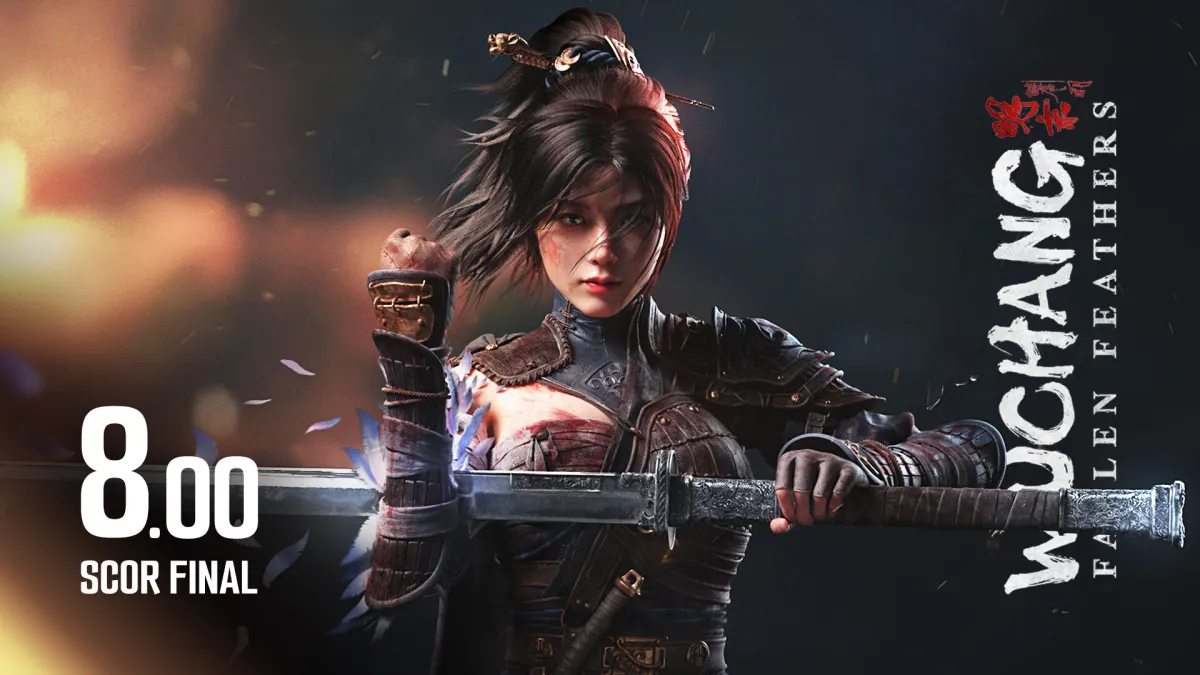
I chose to give it a score of 8 because, despite issues with narrative pacing, uneven difficulty, and a few technical rough edges, Wuchang: Fallen Feathers delivers a solid soulslike, with a visually superb Chinese world, memorable boss fights, and a flexible combat system that rewards player creativity. Even if it doesn't revolutionise the genre, it manages to offer a satisfying and distinct experience through its oriental dark fantasy atmosphere.
Thanks to JocuriNoi.ro for the review key!
For collectors and fans of physical editions, you can find Wuchang: Fallen Feathers here or try it via PC Game Pass and Game Pass Ultimate subscriptions.


Played on: PC
Release date: 24 July 2025
Developer: Leenzee
Publisher: 505 Games
0 votes
Scroll down here and stay on the page for at least 30 seconds to vote.
Pick a score from 0 to 10 (halves are allowed).