
10 games that kept me busy during the pandemic
First published in GRIND III, pages 172–178.
L.A. NOIRE
It has a special significance in my life, and I associate it with two landmark moments: firstly, it made studying for my baccalaureate exam more bearable in May-June 2011 (and probably knocked a point or two off my grade). Secondly, it's the game I played all the way through during the two weeks I spent glued to my bed in October 2021.
In short, LA Noire is the game I associate with my school-leaving exam and my immunity test.
The first time I asked myself, “why am I bothering with all this, why don't I just go to England and become a lorry driver?”, and the first time I could eat raw garlic and pickles without wrinkling my nose, about 10 years apart.
Among Us. Is there anyone who didn't play Among Us during the pandemic? At its peak in 2020, the game was so popular that companies organised “team building” sessions to motivate their employees stuck at home to get to know each other better and forget for good the difference between free time and office hours.
Kids doing school from home jumped into intense “mafia” sessions while pretending they had understood quadratic equations. And grandparents who couldn't see their loved ones used their tablets to prove that the art of deception isn't just for those in government. The success of little Among Us is down both
What I can say about LA Noire, though, is that it has stayed just as disappointing. In the first few hours it makes such a good impression that you think it will change your life, then it gradually betrays your expectations until you can't wait for it to end. Exactly like your first love at school or university.
I enjoyed doing detective work alongside protagonist Cole Phelps and being with him through every promotion and demotion in the ranks of the Los Angeles police. I absolutely loved the 1940s aesthetic and its references to true classics of the film noir genre. I even appreciated the architecture of the buildings, which manages to reproduce landmark areas of post-war LA.
However, I hated the scenes where I had to drive or shoot to the moment it was released and to its accessible rules: the members of a space crew have to repair various malfunctions on the ship and identify the impostors who kill and sabotage. Depending on luck, each player gets one of the two roles. And regardless of facts or intentions, at the end of every round everyone votes to eject a crew member. Sometimes the decisions are inspired; at other times real acts of betrayal are committed that ruin friendships and irreversibly erode trust between family members.
When GRIND's first issue launched in 2021, I played Among Us with Mihnea and Mihai (the other co-founders)
a gun. The game itself has a ton of good ideas and intentions: the facial animations during interrogation sessions are excellent and impressive even today, searching for clues at the crime scene is often fascinating, and the moments when you combine clues to draw conclusions about suspects always give a satisfaction that's hard to put into words.
LA Noire is structured in chapters that mark protagonist Cole Phelps' transfer from one department to another. The peak comes in the first two hours and continues with his move to the Vice squad in the second half of the game. What lies in the middle gives the impression of laying the groundwork for grand revelations that will shake the foundations of justice in Los Angeles. In the end, though, the writers reached for one of the clichés of the film noir genre to expose a cowardly, crooked, mollycoddled protagonist: he abandoned his comrades in the Second World War, was promoted in the police unjustly and, as a result, ends up being replaced by a certain Jack Kelso in the final act.
The twist sounds interesting on paper, but the execution is horrible. LA Noire was a solid 8 when it came out in 2011, and the passage of time hasn't helped it age gracefully at all.
It's good enough to get a mention in GRIND, but not relevant enough to deserve its own article. Even if my taste buds had been working during that pandemic playthrough, I'd still have found it bland.
to get to know each other better. And if their contributions to the project are fewer today, that might be down to the way I assassinated them in my role as saboteur. Just kidding (or at least I hope so)!
A SHORT HIKE It's a coming-of-age journey that anyone can complete in under 2 hours, sprinkled with a soundtrack that adapts progressively, adding and removing instruments depending on the player's actions.
A Short Hike is special thanks to its atmosphere and the positive, encouraging message it carries. It lets you explore a world wrapped in innocence and good intentions, where violence has no place. And, as far as I'm concerned, it's the perfect game for a Sunday afternoon.
Technically, there's nothing special about it. But the combination of music and dialogue will fill your heart with joy. It's odd how John Romero, co-author of violent, bloodthirsty games, has fun with innocent, relaxing indies like this. In the summer of 2020, while I was still taking part in the NEXT LEVEL podcast, I had the honour and the luck of persuading John Romero to do an hour-long interview. And when I asked him what his favourite games were, one of the titles he listed was A Short Hike: a minimalist RPG that tells the story of an anthropomorphic bird called Claire. I understand why A Short Hike is excellent, but I struggle to process why the malevolent entity behind the Icon of Sin (the final boss of DOOM 2) would recommend something like it.
GRIS is an adventure that's hard to describe or classify: the main character gains new powers along the way, and the story is told in an artistic, visual manner. At the same time, the game itself is linear and has no secrets to encourage you to replay it.
The female protagonist is going through an existential phase, doubts her own strength and needs a challenge that will let her find herself again. At first the game is presented only in black and white. Along the way, as the protagonist gains confidence by solving puzzles and climbing structures that blend classical architecture and avant-gardism, the other colours that form part of the aesthetic are added: first red, then green, blue and yellow. As the colour palette grows richer, the landscapes start to grow in complexity too.
I finished GRIS somewhere between Final Fantasy VII and IX. It was a real pleasure to deal with a short game that tells its story in a way that allows for a multitude of interpretations and challenges you to find solutions to small puzzles built into the surroundings. I recommend it to anyone who wants 2-3 relaxing yet memorable hours on a Sunday afternoon.
BATMAN
When we talk about Telltale Games, there are plenty of criticisms to make. The studio that brought Sam & Max back to life, hit its peak with The Walking Dead series, released remarkable original titles such as The Wolf Among Us and somehow ended up going bankrupt precisely through a lack of originality also produced two games with and about Batman.
And yes, Batman: The Telltale Series introduces exactly the same gameplay mechanics you can spot in any other title in the studio's portfolio. You make decisions based largely on lines of dialogue, and then you get a few action sequences where you have to press the right button to carry out the scripted move (quick time events). The story, however, manages to stand out thanks to some relatively fresh elements: the characters get a less expected twist that sets them apart from the “canon” established by Christopher
THE TeLLTALE SERIES Nolan's films and the animated series of the early 1990s.
So I found a Harvey Dent completely different from what I'd expected, and met another Oswald Cobblepot who wasn't raised by penguins as in Tim Burton's film.
Thanks to a few wise decisions, I even ended up in Selina Kyle's bed and enjoyed a moral ambiguity that suits a playboy like Bruce Wayne.
The game also has a sequel that improves on every aspect of the original and adds a hefty dose of originality.
Titled “The Enemy Within”, this extra chapter challenges you to befriend a certain John Doe at a critical moment. Most of the interactions are carried out through Bruce Wayne, and the decisions you make end up determining whether the young man turns into a violent Joker or a delinquent timid one. Unlike the first game, the choices here land much harder and set off more dramatic twists and turns. Play your cards well enough and you can even rid Gotham City of the villain The Joker for good – cutting down the time you spend in the Batman suit.
Nintendo's FITNESS GAMES, finding themselves stuck indoors too. In February 2020, I weighed somewhere between 78 and 80 kilograms.
Two years later, I'd jumped to 95 and, for the first time, found myself having to put in the effort to lose weight.
Now, I don't want to over-praise Nintendo Switch fitness games: push-ups, squats and pull-ups done at home help far more towards a complete workout. But if I hadn't had Fitness Boxing 2, Jump Rope Challenge and Ring Fit Adventure between 2020 and 2022, I'd definitely have ended up weighing more than 100 kg.
Of all three, I felt most drawn to Fitness Boxing 2. It's the game that gave me the greatest satisfaction, because it helped me learn a few boxing fundamentals and pushed my limits when it came to stringing manoeuvres together. Without realising it, I ended up combining uppercuts, straights and hooks in ways that would have impressed even Leonard Doroftei. I even played dress-up with my trainer, buying her the shortest little skirts and bustiers that embellish every single pixel.
Ring Fit Adventure shouldn't be overlooked either, though: an RPG that ties your progress to physical exercise. Once a little monster blocks your path, you have to perform certain exercises before you can push on with the story. Picture a random encounter from Final Fantasy, only the attacks are launched by flexing and stretching the plastic ring included in the game box. The trick is that you train without thinking about the fact that you're training. The objective on screen occupies your mind enough that you stop noticing you're sweating through every pore and sailed past the point where you'd have given up and gone for a shower long ago.
The recipe works, but my biggest problem is consistency: I did 5-6 workouts in Ring Fit Adventure, after which I completely forgot about it. There are better RPGs out there, and more efficient ways to train.
Jump Rope Challenge is the only free game on this list. The programmers at home, created a small bit of software that uses the gyroscope in the Switch Joy-Cons to measure movement. So every time you do a full rotation of the wrists, Jump Rope Challenge assumes you've skipped the rope once. The daily target is 100 skips, but you can go as far as your calves and ankles will allow. The advantage is that you can't trip over the rope.
The disadvantage is that you can cheat by just rotating your wrists without actually jumping. And if you live in a block of flats with neighbours underneath, you'd do well to put a thick rug under your feet and take every jump off your tiptoes.
SONIC
Sonic Mania marks a storming comeback for the iconic blue hedgehog. After years of failed attempts to bring the fastest of the spiky lot back to life, SEGA finally found a programmer capable of producing a worthy sequel to Sonic 3. In fact, you're advised to forget Sonic 4 ever existed and imagine that Mania is the true successor to the Sega MegaDrive/Genesis trilogy.
In many ways, Sonic Mania looks like it could have come out two decades earlier. The gameplay
MANIA
is the same, the principle of working your way through the levels is identical, and the likeable hedgehog's abilities and weaknesses are carbon copies too. The strong point, though, is the level design, the new enemies and the gameplay mechanics that freshen up a recipe as old as Sega and the earth.
Unlike his rival Mario, Sonic didn't get as smooth a transition into the third dimension. From Sonic Adventure on the Dreamcast through to Sonic Frontiers on PS5, Xbox Series and Switch, the moments when the hedgehog truly shone and delivered something spectacular and memorable can be counted on the fingers of one hand. The quality of 3D games with Sonic as the lead tends to gravitate somewhere between scores of 7 and 8.
But when he's limited to just two dimensions, Sonic is at his best. And Sonic Mania stubbornly combines the classic, established elements with the lessons offered by two extra decades of ingenuity in level design. It's everything a 1990s kid who fell in love with speed and found a new noble cause in rescuing the animals held captive by Dr. Robotnik could wish for.
THE SYBERIA TRILOGY
I think I first played Syberia around 2003: I'd managed to get my hands on a CD with the full game from the Italian PC Games, and I was itching to get into the world of the stately mammoths, just as they were printed on the cardboard sleeve. I got stuck fairly early on, though, before I ever managed to leave the village of Valadilène.
So for the next 18 years I abandoned the idea of helping Kate Walker uncover the secrets of the Voralberg family. But at the start of 2021 I decided the time had come to pick the adventure back up. Armed with a better grasp of English and of the tricks of point & click adventures, I plunged into the world Benoit Sokal created to take in its beauties and tease out its mysteries.
The first Syberia game made me fall in love with Kate Walker. The American lawyer finds herself caught between two worlds: the first is mysterious but honest, loaded with nostalgia and regret, yet sprinkled with the aesthetic of a faded glory time has forgotten; the second is superficial, dishonest, and described to us through the phone calls Kate receives. It's a conflict of East and West, with materialism and spirituality constantly set against each other. The fact that the American lawyer chooses to take an initiatory road into the unknown is exactly the narrative hook that got me repairing spaceships and mixing cocktails for octogenarian opera singers without so much as turning my nose up.
And if the first Syberia is a proper masterpiece, the sequel manages to take the action and the story up a level. What I liked most was the balance between civilisation and wilderness – you start the game in the heart of a little village, and along the way you draw closer to the land of the mammoths. There are a few noticeable graphical improvements, too, plus an attempt to vary the landscapes and the puzzle types. What I didn't like was that the game introduced antagonists sitting somewhere at the intersection of Team Rocket from Pokémon and the contestants from Wacky Races… and the two brothers disappear in the final act anyway.
But Syberia 2 earns its keep by presenting the spectacular little village of the Youkol civilisation and revealing the true purpose
DOOM 1,
DOOM is the perfect game for moments of rage, when you want to feel all-powerful while offloading your negative energy onto pixelated demons. Thousands of FPS games have come out between 1993 and today, but precious few have managed to deliver the same satisfaction for the act of butchering everything in your path.
So I accompanied DOOM Guy on all his exotic adventures. Applying the principle of “as in heaven, so on Earth”, I went from the Martian-born hell of the original game to the terrestrial carnage of the second. And with the BFG 9000 and a stack of rockets, I felled demonic lords, gargantuan minotaur-like chieftains with robotic arms, and Pantagruelian brains propelled along on mechanical spider limbs.
What's more, I even saw a few community-made mods through to the end.
for which the charming automaton Oscar was created. The twists will give you chills and set you thinking, especially if you've spent a good few hours with the characters and managed to build up a small dose of emotional attachment to them. I agree that the open ending isn't ideal, but I reckon the series ended the moment Kate Walker led Hans Voralberg to the land of the mammoths.
I stand by the previous claim because I don't think Syberia 3 should ever have existed. Kate Walker, once a leading light for the whole notion of feminine intuition, chooses to guide an oppressed Youkoli tribe through a periodic migration ritual. Along the way she ends up facing off against a private detective who wants to
2, 64 About two of them (Syringe and Sigil) I also wrote in the GRIND magazines, as an excuse to send John Romero a copy.
But the one that impressed me most was DOOM 64, a game time forgot precisely because of the limited distribution it got at launch. What began as a simple port for the Nintendo console turned into the bridge to DOOM 3: a harder game that leans into survival horror and, for the first time, offers levels that change as you progress.
What's more, the DOOM 64 soundtrack swaps the heavy metal frenzy – recorded on synthesisers and played back through Creative Sound Blaster chips – for ambient music that owes more to the atmosphere of horror films. The gameplay mechanics are similar, but the music changes the pace, and now and then it adds to the scares during a confrontation.
forcibly return her to America, with an army of xenophobic locals who insist on putting an end to the nomadic habit of transhumance. The most ridiculous element is that a tribe guided by tradition, following a ritual thousands of years old, needs a New York lawyer to see the journey through. Kate Walker's role in the whole story isn't just forced, it's pushed by quasi-political motivations: now that the series' protagonist has settled her scores with the Voralberg family, she tries to show off her virtue as a Western woman by protecting the rights of some indigenous people oppressed by the modern locals. Personal impressions aside, Syberia 3 suffers from optimisation problems that were never solved (the console ports still freeze frequently, and the PC version stutters even on latest-generation systems), its puzzles are far less inspired than in the first two games, and the story does nothing to help Kate Walker's development as a character.
The only reason I gritted my teeth and sat through all of its action was, rather, my respect for Benoit Sokal: by coincidence, the creator of the series died the very next day after I started Syberia 3.
Fortunately, DOOM 64 has been released on every modern platform and is now available to those who don't get much pleasure out of blowing the dust out of a Nintendo floppy disc. And since it's the favourite game of id Software's Hugo Martin, some of this title's signature elements (such as the demonic Unmaker weapon) turn up in DOOM Eternal too.
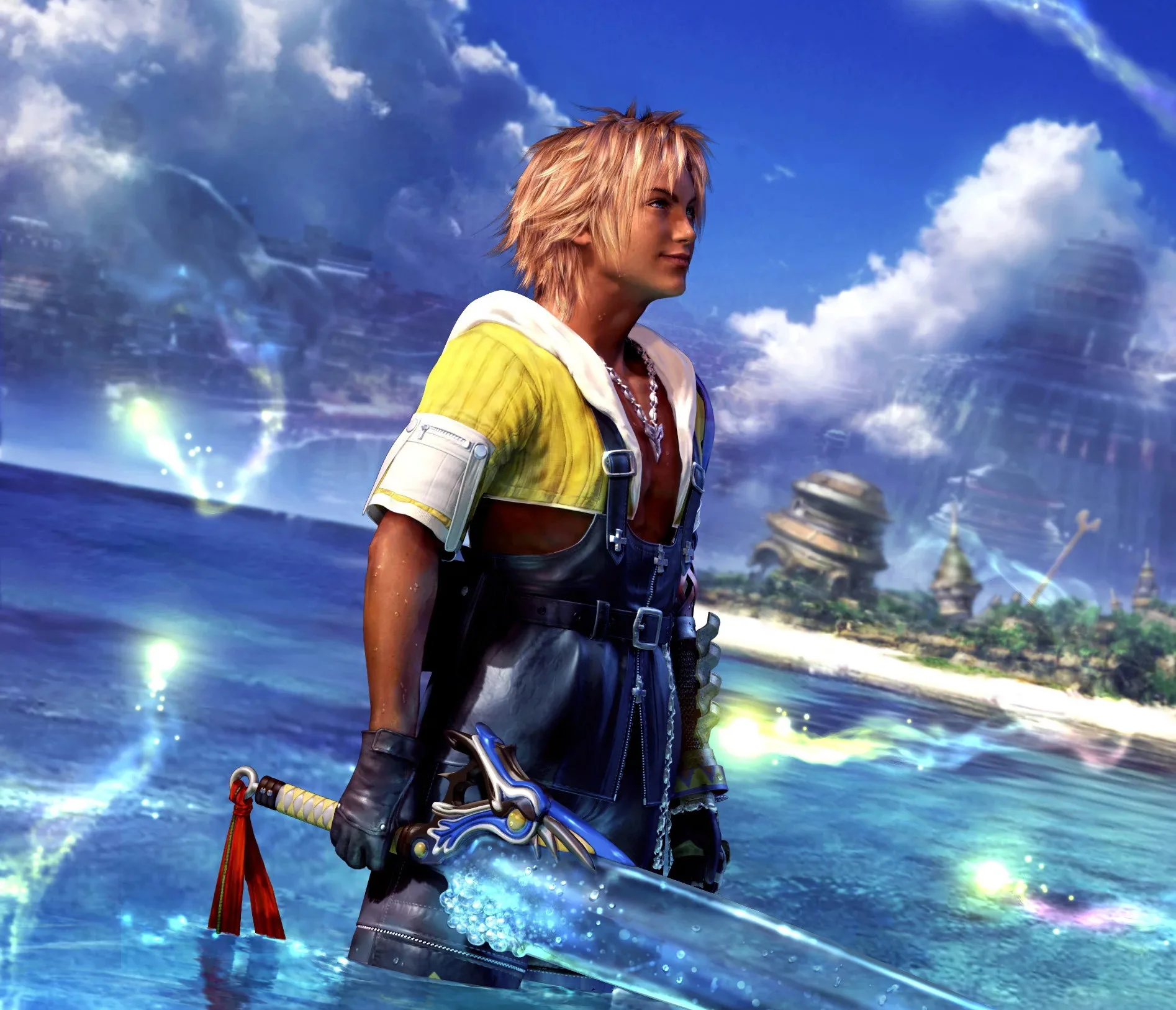
FINAL FANTASY X the main story in 50 hours, as well as for P To write these lines, I played the track “To Zanarkand” from the Final Fantasy X soundtrack for the thousandth time. To better understand why I value this title so much, I recommend you give it a listen too.
When I bought Final Fantasy X from Altex, I had seemingly lost my passion for games, and the motivation to write about them, for good.
I had just left the NEXT LEVEL podcast and had no intention of going back, or of trying to make another magazine. But Square Soft's title (the last in the main single-player series before the studio merged with its rivals at Enix) has the special merit of reminding me why I love video games, and why they're an elevated art form.
Over the course of the pilgrimage I made alongside Tidus, Yuna and the other guardians, I can say I became a better person. I ran into situations that successfully manipulated my emotions, I grew attached to certain characters, and I savoured every twist.
At the end of 60 hours, once I'd seen how the story turns out, I cried like a child and felt purified by a sense of incomplete satisfaction. Sometimes you save the world, but that doesn't mean you get the happy ending you were hoping for.
Final Fantasy X marks the series' move to PlayStation 2 and makes the most of the new-generation console's potential. More than 20 years on, the game still looks impressively good and still carries the same emotions. The story is far vaster than in earlier titles in the series, too, and dares to include things like gradually learning a foreign language in order to understand the dialogue between certain NPCs, specialising in an underwater sport built on stats and mathematical calculations, exploring territories left unmarked on the map, and collecting mega Pokémon (aeons) that help you in battle.
If you've read this far, I recommend you switch tracks and play “Besaid Island” from the game's soundtrack.
Final Fantasy X is clearly a game from another era: a time when programmers competed to pack in extra unlockable features and tried to justify the game's high price with challenges that could keep you busy for months.
Finished the main story? There's a whole multitude of missions and obstacles that demand a better understanding of the game's mechanics and a heap of… grind. Final Fantasy X offers rewards both for those who play through the sto- ry, and for those willing to set aside more than 100 [hours] to slay every beast and uncover every tiny detail adjacent to the narrative. What's more, the entire content is on the disc and works flawlessly without any updates. Scandalous, I know!
Since I wrote the article in the first GRIND magazine about Final Fantasy X, I've played through the game once more and watched several YouTube videos picking apart every tiny detail. What I can tell you is that, more than two decades after X's release, there are still new discoveries to be made – whether it's elements in the backgrounds, the meaning of a particular conversation between characters, or the secrets of the RNG that hands out rare items.
Another thing I love about Final Fantasy X is the grandeur of the presentation: everything, from boss battles to cinematic sequences, leaves you with the impression that the characters' decisions play out on a universal, cosmic scale. At every moment the camera picks the most spectacular angles to give it all a cinematic atmosphere. And the fights in the last part of the game (Yunalesca, Seymour Omnis, Sin, Yu Yevon) will have you hunting through the dictionary for adjectives grander and vaster than “epic”. You genuinely feel like you're taking on the primordial forces of the universe and walking out victorious.
It's perfectly fine to disagree with me and decide that Final Fantasy X is a Japanese oddity with a sick obsession for the bottoms of its female characters. You're free to call my taste into question, and to think Western RPGs do it better. But if Final Fantasy X hadn't existed, and if I hadn't been overwhelmed by the sentimental depth of Japanese art, the magazine project you're reading right now would never have seen the light of day.
The first GRIND came out precisely because Final Fantasy X made me want to write again. And two magazines later, I still can't stop talking about this game… for the simple reason that my fascination hasn't run out. To get you into the same mood as me, I invite you to think over this article while listening to “Suteki Da Ne” from the Final Fantasy X soundtrack.
Long pandemic, short life.