
40 Years of Famicom
First published in GRIND III, pages 146–150.
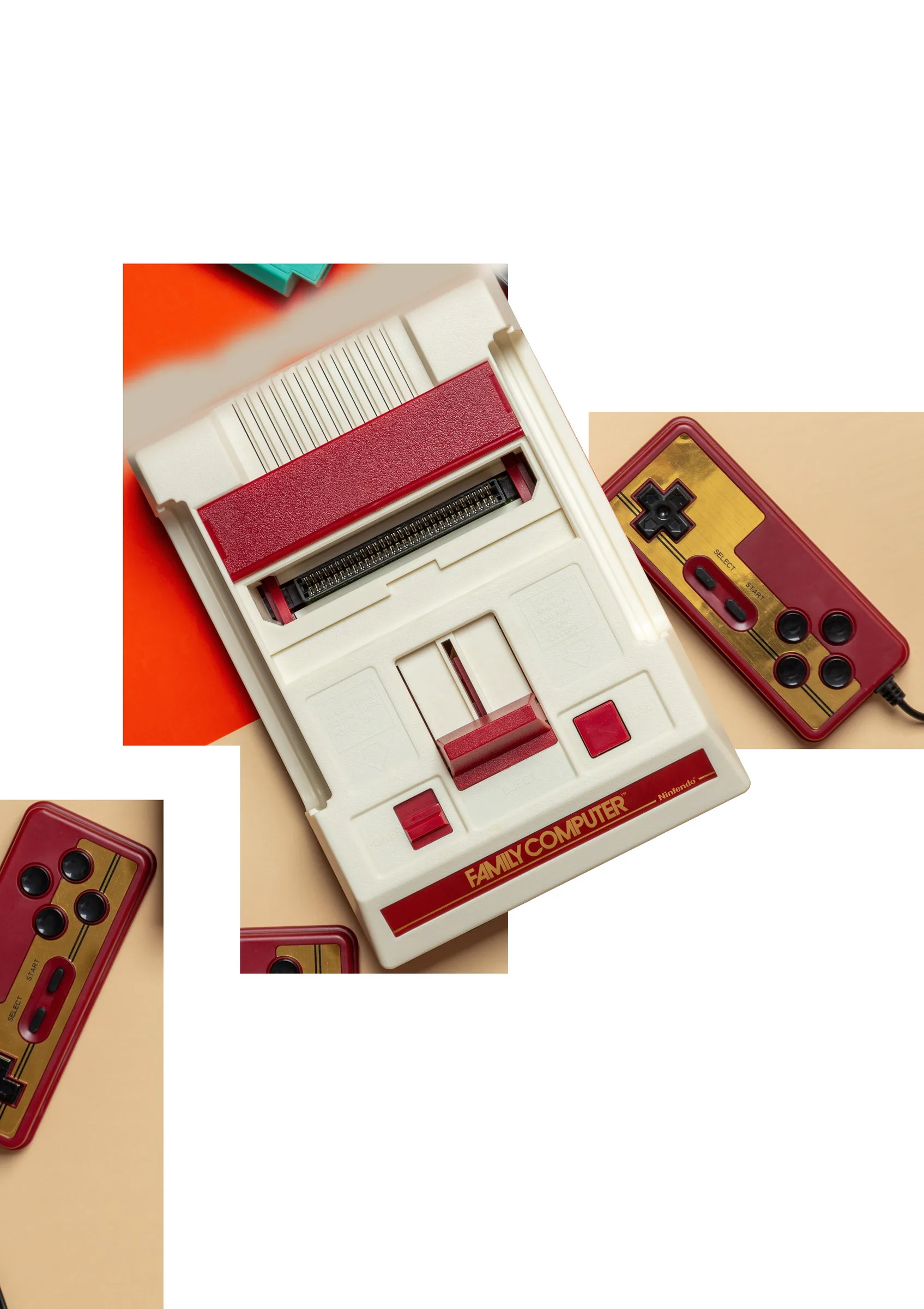
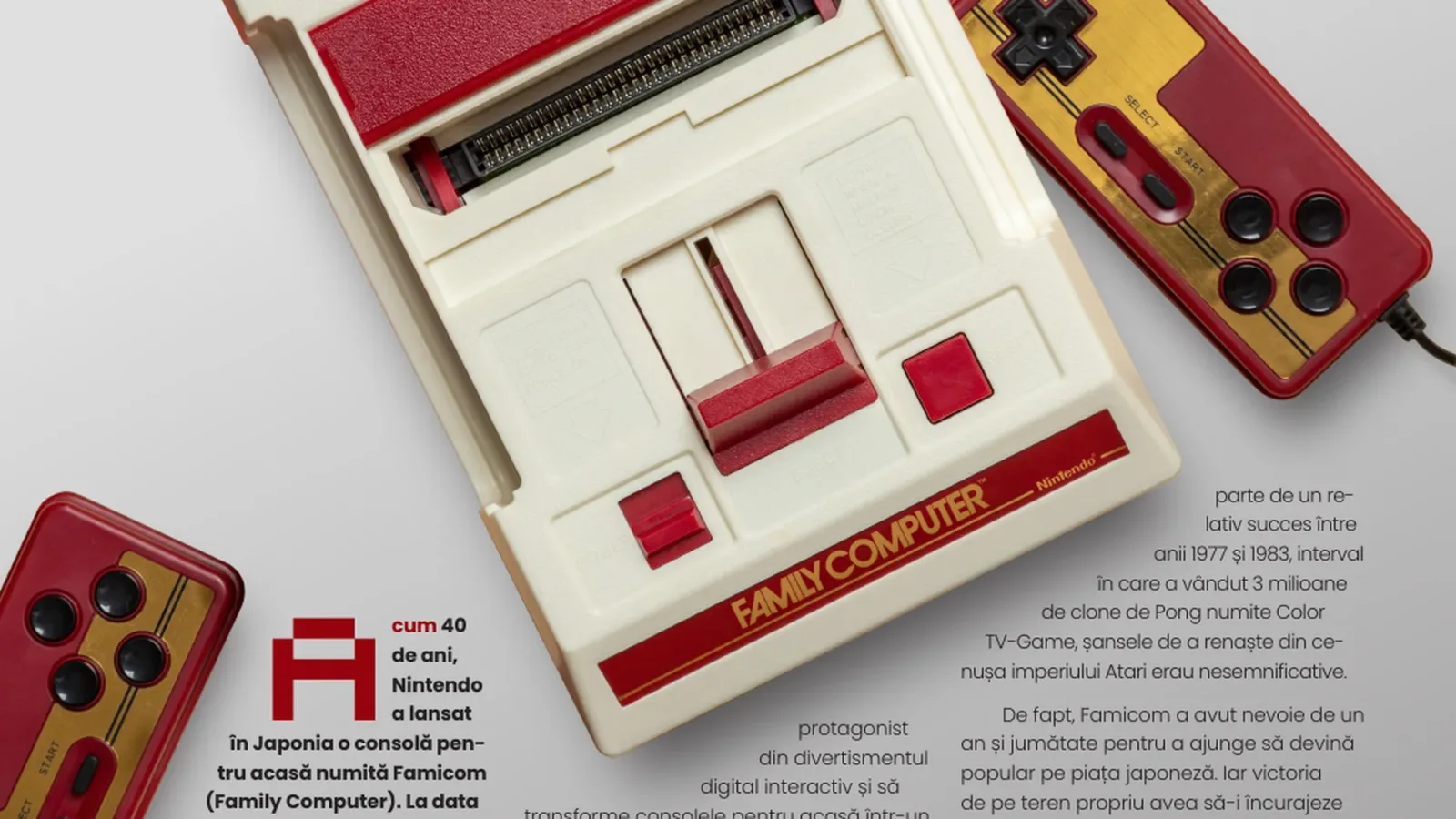
40 years ago, Nintendo launched a home console in Japan called Famicom (Family Computer). On 15 July 1983, Japanese children could enjoy the experience offered by three games already established in the arcades from the comfort of their own homes: Donkey Kong, Donkey Kong Jr and Popeye.
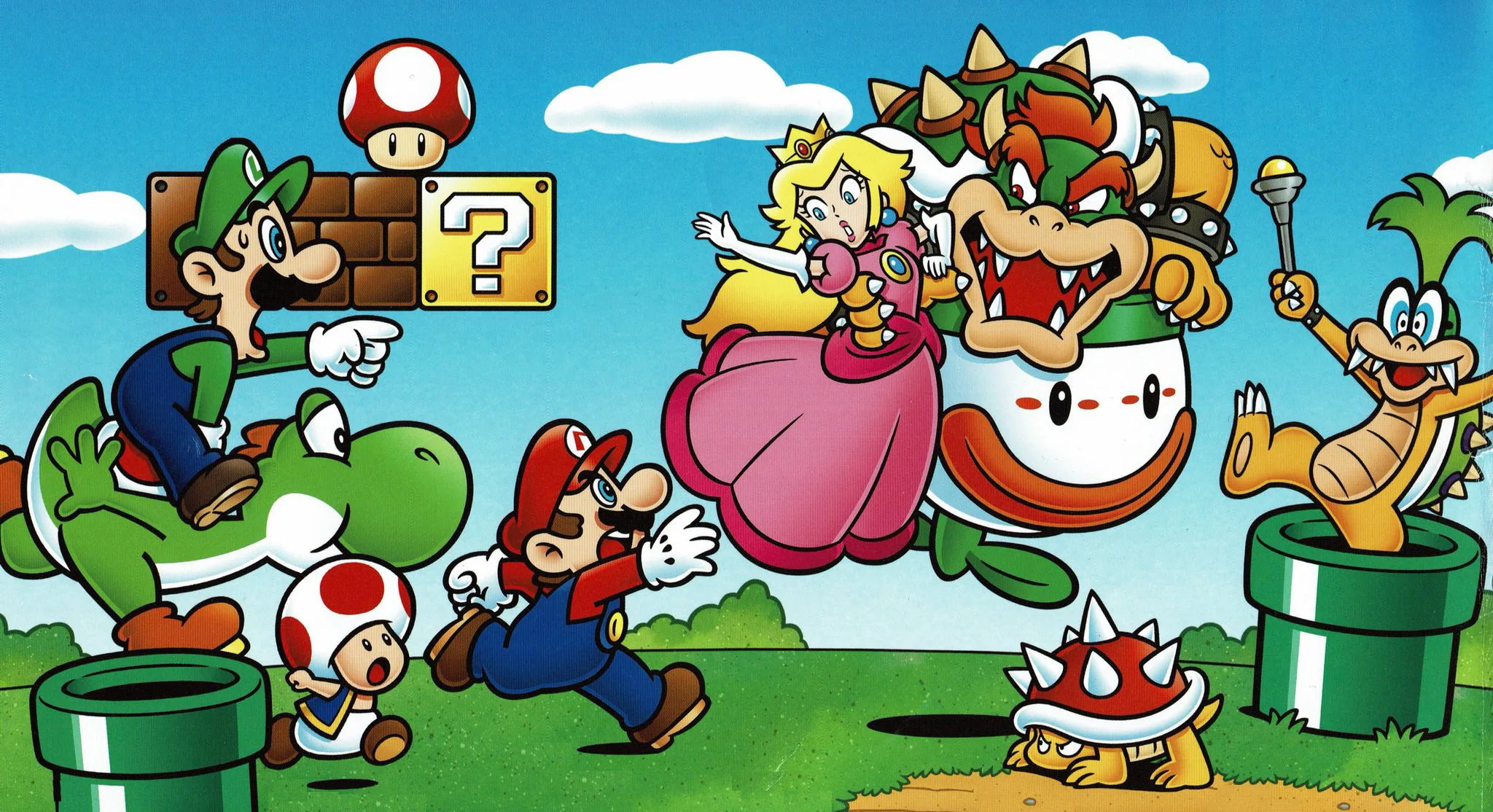
At the time, nobody would have expected a company best known for playing cards and pocket systems such as Game & Watch to save the entire video game industry, hand the world the most iconic protagonist in interactive digital entertainment and turn the home console into an essential item for every television-owning household. Nor would any Nintendo employee have dreamed that the device launched in 1983 would be cloned and sold in tens of millions of units even in countries with no official distribution: Dendy in the Soviet Union, Pegasus in Poland, EndingMan/Terminator 2 in Romania and Bulgaria, Samurai in India, Genicom in Brazil, Subor in China and Polystation in plenty of other sovereign territories. Nintendo had already enjoyed a measure of success between 1977 and 1983, selling 3 million Pong clones under the Color TV-Game name, but the odds of rising from the ashes of the Atari empire were negligible.
In fact, Famicom needed a year and a half before it caught on in the Japanese market. And that victory on home turf would encourage the lads at Nintendo to launch their product in the US too, under the name Nintendo Entertainment System. The same Mărie in a different hat – one shaped like a VCR, far more familiar to Western audiences – and it would become a genuine sensation in the country that exports McDonald’s and democracy.
Today, the average lifespan of a games console is 7–10 years. That’s the window in which the manufacturer keeps putting out new releases and supporting whatever problems crop up along the way.
Famicom, though, stayed in official production until 2003, and Nintendo offered repairs until 2007. And that’s before we even mention the clones still being churned out in China and Taiwan to this day, feeding the nostalgia of kids who grew up with Terminator or giving less well-off families the chance to play and learn to program on a system with a keyboard and a modified version of BASIC. Super Mario Bros is the undisputed parent of the platformer, and nobody can ever ask it for the results of a paternity test. Duck Hunt, Clay Shooting and Hogan’s Alley are the grandparents of the first-person shooter, with the caveat that “light gun shooter” is a genre in its own right, given its reliance on peripherals and its limited mobility.
40 years on, Famicom is still alive. And the mysterious hold it has over children the world over isn’t down to low production costs and market accessibility alone. There are mini-computers, smartphones and second-hand laptops with faster processors, bigger memory and far more modern graphical interfaces. But Famicom has an impressive software library, and with it the chance to play some of the best games in history. Wikipedia lists 1063 titles released officially on Famicom between 1983 and 1994. That figure doesn’t account for the homebrew productions made by enthusiasts, the pirate-modified clones or the games Nintendo refused to license on quality grounds. What’s more, plenty of genres popular today can trace their origins to a Famicom release: The Legend of Zelda and Metroid innovated and popularised the idea of an open world you can explore non-linearly, as you please. Both spawned sub-genres in their own right, with thousands of imitations and just as many attempts to improve the formula. Contra, Blaster Master and Battletoads redefined the action game, with varied levels that switch perspective and push players to tackle challenges in a different way. Dragon Warrior (known as Dragon Quest outside Japan) and Final Fantasy practically invented the JRPG, borrowing from Dungeons & Dragons-style games to tell stories about saving the world at the end of adventures of cosmic proportions. Platoon, Maniac Mansion, Goonies II, Deja Vu and Dr. Chaos are point & click adventures adapted for a two-button controller and a D-pad. Rockman (known as Mega Man outside Japan) introduced the ability to choose the order in which you take on the six end-of-level bosses, widening your tactical options according to the abilities you pick up along the way and each enemy’s weaknesses. Excitebike, Lode Runner and Battle City shipped level editors that let players build their own adventures and challenges. It sounds banal today, but at the end of the 1980s the idea of becoming a level designer without any programming knowledge was genuinely something special. Barcode World, a Sunsoft title from 1992, popularised scanning barcodes for assorted advantages or to unlock features across different games. Via an accessory called the Barcode Battler II, players could scan a series of playing cards or even run ordinary product barcodes through it to see what happened. The idea never really caught on in Europe or the United States, but it was a runaway success in Japan. Famicom Wars and Fire Emblem: Shadow Dragon & the Blade of Light laid the foundations of the tactical RPG. Godzilla 2: War of the Monsters, Napoleon Senki and Conflict are the grandfathers of real-time strategy (RTS). Tetris, Dr. Mario, Adventures of Lolo, Puyo Puyo and Bubble Bobble pushed the puzzle game so far that the recipe hasn’t changed to this day – only the graphics have improved and, in places, new multiplayer features have appeared (as in Tetris 99). Sweet Home, an RPG Capcom released in 1989, packed in quick-time events, decisions that kill off certain characters permanently and irreversibly, and multiple endings… into a package you could comfortably call survival horror. It was also the main inspiration for Resident Evil, released seven years later on PlayStation. Soccer, Tennis, Tecmo Super Bowl, Ice Hockey, Double Dribble and Golf became the foundation for every sports game that followed. Analyse any of them and you’ll see that the presentation, the mechanics and the controls are near-identical in contemporary releases. Track & Field, Dance Aerobics and World Class Track Meet (known as Stadium Events in the West) experimented, via an accessory called the Power Pad, with turning real-life movement into in-game actions. Many years later, the Nintendo Wii and Dance Dance Revolution would pick the idea up again and popularise it. Highway Star (known as Rad Racer outside Japan) and JJ: Tobidase Daisakusen Part II (The 3D Battles of WorldRunner) experimented with a stereoscopic 3D effect, letting players don a pair of glasses to unlock a far more immersive display mode. The technology was tried again with the Virtual Boy and a few GameCube accessories, but it finally found success in a rather more mature implementation on the Nintendo 3DS. Top Gun, Flight of the Intruder and Ultimate Air Combat are fully fledged flight simulators, serving up intense aerial combat despite the technical limitations. Urban Champion, Kung Fu, Karateka and Punch-Out!! laid the groundwork for games like Mortal Kombat, Street Fighter II and Virtua Fighter. 1942, Galaga and Gradius are some of the best shoot ’em ups ever released on a home console. Sure, the arcade versions are more spectacular and the 16-bit ports look better. But the genre’s potential had already been mined on Famicom/NES. Double Dragon, River City Ransom and Mighty Final Fight are perfect illustrations of what a beat ’em up can be: RPG elements, combo strings and tactics built around a two-dimensional plane where you can move both vertically and horizontally.
Famicom was a profitable system, selling 61 million units in its original form alone – Dendy and Pegasus, the popular clones in Russia and Poland, are estimated to have sold 7 million systems between them. That doesn’t count the “mioritic” Terminators and the dozens of Polystation variants. But factor in peripherals and add-ons such as the Famicom Disk System and we can add another 4.5 million devices to the tally.
Then again, hardware without software is nothing more than a slightly better-sculpted brick — and one that holds up worse in the rain. According to official figures from Nintendo, the Famicom (and the NES in Europe and the US) sold 500 million cartridges between them. Which means that, on average, every owner of an original console bought eight games. That 1:8 ratio wasn't matched again until after the GameCube generation, when software became more accessible to the masses and gaming grew exponentially to take in a more diverse audience.
But it also means the Famicom's commercial success kept Nintendo afloat for almost two decades. After the NES/Famicom, hardware sales went into decline: the SNES reached “only” 49 million buyers, the N64 cut that to 32 million, and the GameCube marked the low point with 21 million. Competition from SEGA, Sony and Microsoft managed to segment the market and, in the end, to dethrone the giant from Kyoto. Until the miracle that was the Nintendo Wii, the Famicom was the most successful home console in the company's portfolio.
It should be said, though, that Nintendo sells hardware differently from its rivals. To this day, the company behind the Famicom phenomenon sells consoles at a price that turns a profit on the hardware itself — while Sony and Microsoft lose money by selling PlayStation and Xbox below production cost, hoping to claw it back on games, services and accessories.
“Nintendo makes money on every front and can afford to stay inside its own bubble of ignorance, producing new experiences without paying any attention to the wider trends in the industry.”
And that is more than a good thing for the evolution of games as an art form. Even though the guys at Nintendo have been through some fairly long spells in third place, they still set the standards and redefined entire genres with exclusives for their own platforms. The Kyoto company's presence on the market is a huge benefit, stopping the giants at Sony and Microsoft from oligopolising the business and turning the whole industry into something soulless and less fun. If Sony focuses on spectacle and cinematic presentation, Nintendo invents new ways of interacting with the game world and introduces new kinds of experience. While Microsoft makes a substantial effort to grow demand for its own cloud storage service, pushing the industry towards an always-online world paid for by subscription, Nintendo still sells a good chunk of its catalogue in physical form and shows no sign of wanting to change tack.
All of these trends started 40 years ago with the Famicom and will continue for as long as the Nintendo spirit stays alive — the spirit of a company that made toys for nearly 100 years before it entered the console market. And if you have a Twin Famicom or an EndingMan/Terminator 2 for sale, contact me — writing these lines, I've realised what I want to add to my collection, and I want it as soon as possible!