
CONTROL Resonant – Xbox Series X Review

Manalan Mailla
Hold on, what's going on here? Am I seeing double? Has a patterning A.W.E. jumped out of the game and onto the pages of GRIND magazine? No, dear reader, this is a separate opinion on CONTROL Resonant. Usually the editorial team agrees on the score, and when several of us have the same game in progress, we publish a main review, written by one of us, to which we add the technical observations as notes or additions from the others, as we did with Cronos: The New Dawn and Hell Is Us. There are also situations in which we publish separate reviews, if the experience of playing differs enough from one platform to another. That is more or less the case with CONTROL Resonant, the newest title from Remedy Entertainment.
Now that I've cleared that up, I want to confess that I am a huge fan of Remedy's games. The universe created by the renowned Finns has a particular charm, and from the first Alan Wake onwards, I have played their releases religiously. "But wait, Tudor, you said you were a huge fan, and you're starting with Alan Wake?" I'm not going to get into the Max Payne debate, because that franchise is a separate beast, one that deserves to be discussed at length. No, I'll confine myself to that part of the Remedyverse in which the Federal Bureau of Control (the "F.B.C.") has sunk its claws. The celebrated bureau was introduced to us in 2019, with the first game. I found this government structure fascinating, and the way it worked was so similar to the institutions back home, with procedures on top of procedures, on top of procedures, and an awful lot of paperwork. But the utterly sterile way in which the F.B.C. officials approached the paranatural, no matter how strange or meaningless it was, I found incredible. The world was complex, and the building was plastered with reports, objects with paranatural properties, and a few entities that defied Euclidean logic.
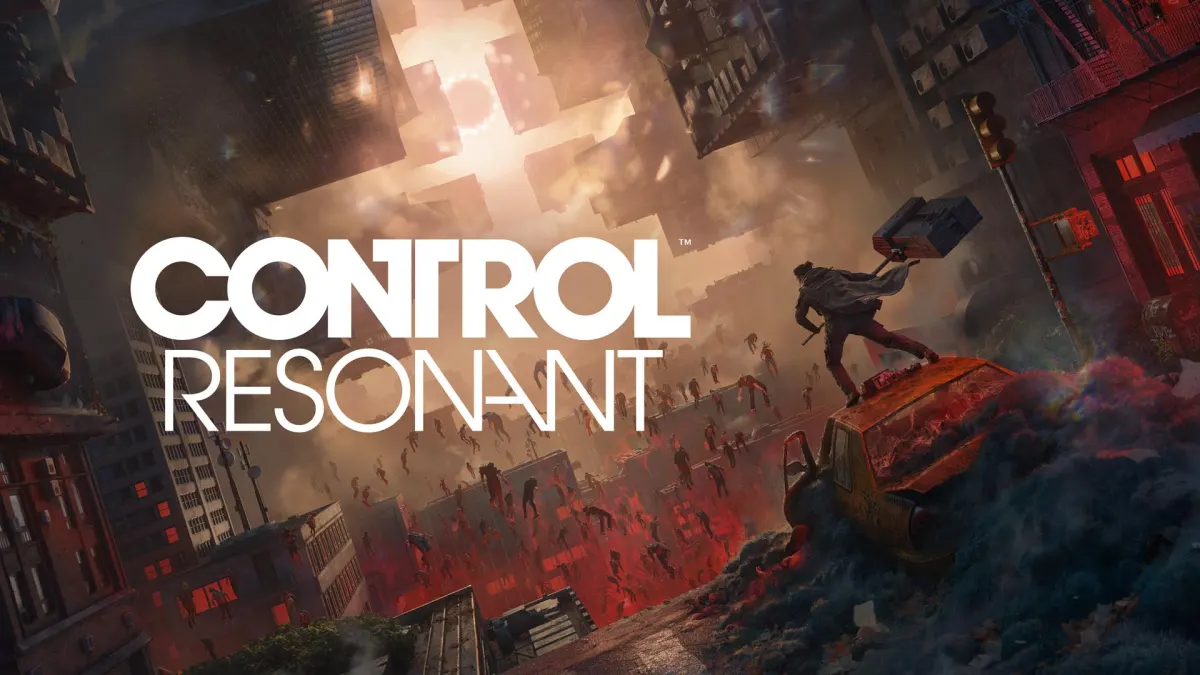
It's clear I fell in love with the first CONTROL, which is why I was very happy to see CONTROL Resonant announced at The Game Awards 2025. Resonant is one of the most anticipated games on my list for 2026. To my great disappointment, however, Dylan's adventures do not rise to the same level as Jesse's. The unwritten rule of sequels is that they should be better than the original, because they give developers the chance to put their initial vision into practice, without the limitations imposed by the previous title. I'm not sure Remedy has managed to do that, because, in certain respects, Resonant is a step backwards. As you've come to expect from me by now, we start with the story.
The past won’t stay in the past!
Although the premise seems relatively simple, experience has taught us that the plot is never what it appears to be in a Remedy game. Seven years after the quarantine was established in the first game, meant to keep the Hiss plague in check, Dylan Faden, the younger brother of the F.B.C. director, is violently woken from his coma, with a stab straight through the heart, as if he were a strigoi (a Romanian undead). The "ritual" binds him to an object with paranatural powers, called the Aberrant, which contains the Board from the Service Weapon and can change its shape according to the protagonist's combat needs. After this horrible Monday-morning awakening, Dylan discovers that the Oldest House has been abandoned, and the Hiss plague seems to have taken the officials' place. Shortly after exploring the building's non-Euclidean corridors, Dylan makes a shocking discovery: the Hiss army has managed to break the quarantine and has taken to the streets of Manhattan.
In his attempt to stop the paranatural force that destroyed hundreds of lives in the first CONTROL, the protagonist allies himself with the institution that locked him up and discovers an Altered World Event ("A.W.E.") that has isolated the famous neighbourhood from the rest of New York. Together with Agent Zoe de Vera, the deputy co-directors Emily Pope and Simon Arish, and his sister, Jesse Faden, Dylan will try to stop the Hiss plague and the A.W.E.
Seems simple, doesn't it? We go in, we beat up a few non-Euclidean horrors, and that's the game done? Not quite, because everything I've written above is only the premise. The story has three distinct narrative threads, which remain separate for a large part of the game:
- Stopping the A.W.E.;
- Destroying the Hiss forces;
- Locating Director Faden.
Once we're past the introduction, the player is given absolute freedom in fulfilling the three objectives. Want to look for Dylan's sister? Go ahead! No idea how to stop the Altered World Event? Well then, let's go hunt some Resonants! This freedom seems to be a result of the genre chosen for the game, because what we have here is a hack-and-slash in a sort of open world. I say "sort of" because the correct term would be open-zone, Resonant being divided into a few larger locations, which can be explored.
Unfortunately, with the opening up of the world, Resonant has lost some of the charm of the first game. The story does not rise to the same level of quality as the one in the previous title, and that is precisely because of the freedom the game offers the player. CONTROL told an incredible story, and every objective you completed showed you the path to the next one, or at least gave you a clue about which section of the Oldest House you ought to explore. Here we get nothing of the kind. Most of the missions are fine from a narrative point of view, but they don't cohere into a unified whole. Only at the end of the game do we find out why we had to hunt the Resonants, where Jesse is, and why she has gone AWOL.

Don't get me wrong. From a story point of view, the game is fine, but that's the problem. IT'S ONLY FINE! The world-building is phenomenal, but the story doesn't have the same impact as the one in the previous game. The side missions, on the other hand, are entertaining and succeed in showing us how strange and fascinating the Remedy universe is. Whether we're helping a woman find her twin sister in a neighbourhood infested with paranatural mould, or helping FRA go from the status of a detained paranatural entity to that of director of the F.B.C., every side mission is memorable.
What really impressed me at a narrative level was the way Dylan's story is presented. His past is mysterious and was not fully explained in the first game. All we know about the Faden siblings' childhood is that they discovered an "Object of Power" ("O.o.P.") which allowed them to step into other realities and come into contact with Polaris. Now, for the first time in the CONTROL universe, we have the chance to see with our own eyes what happened, instead of relying only on the accounts in an F.B.C. report, largely redacted and anonymised. What's more, the developers have taken this opportunity to show us something truly unusual: what Hiss possession looks like from the perspective of someone who has lost control of their own body. To be honest, it doesn't look too good, because the experience seems very similar to locked-in syndrome.
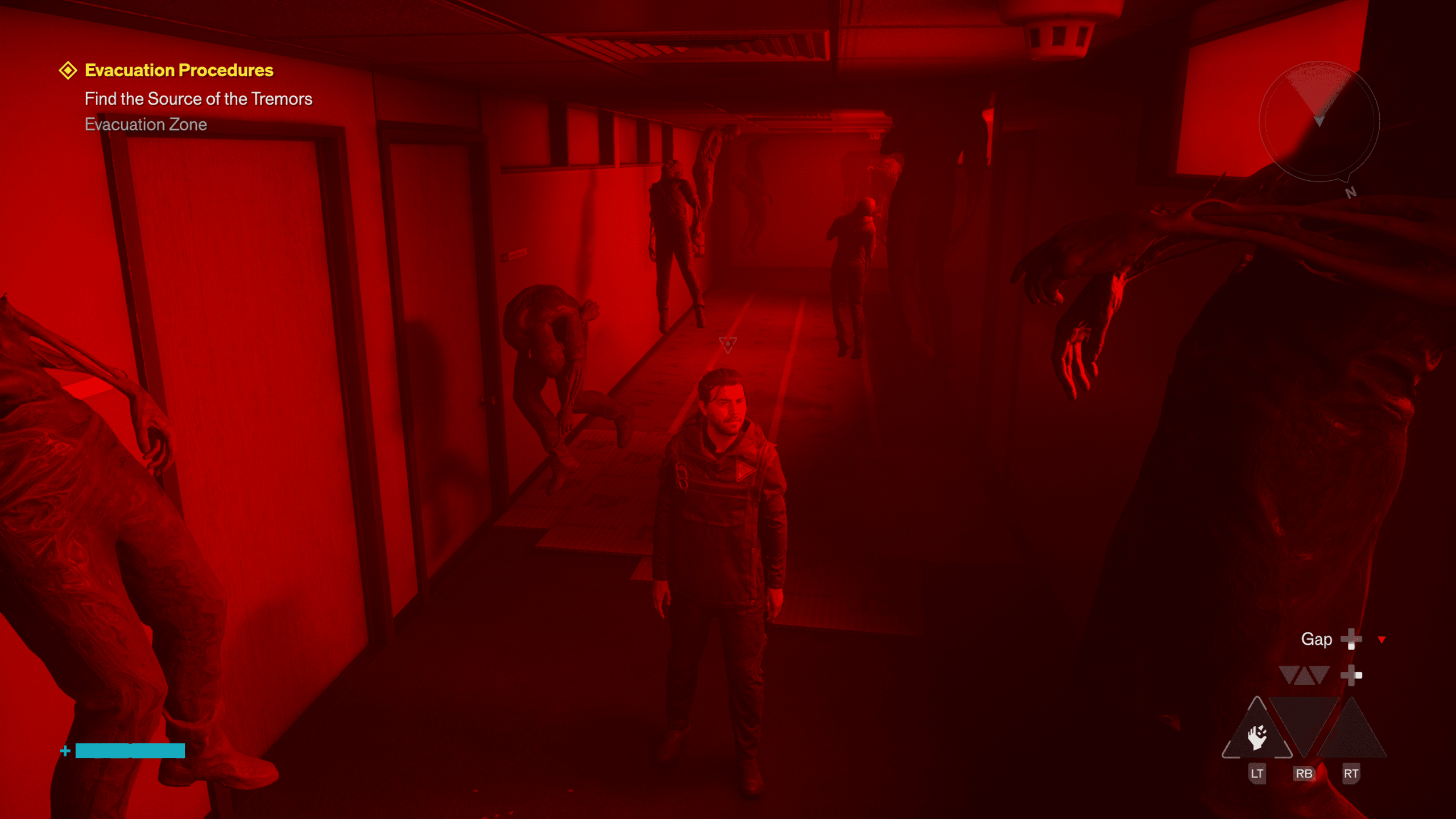
Unlike the Dylan of the previous game, who seemed to have gone off his rocker, the one we meet now is a shy person, with a poor education, who gave in to a moment of frustration and allowed the calamity to enter the Oldest House. He quickly realised the mistake he had made and tried with all his might to warn the F.B.C. employees to run. Unfortunately, all he managed to get out were Hiss incantations.
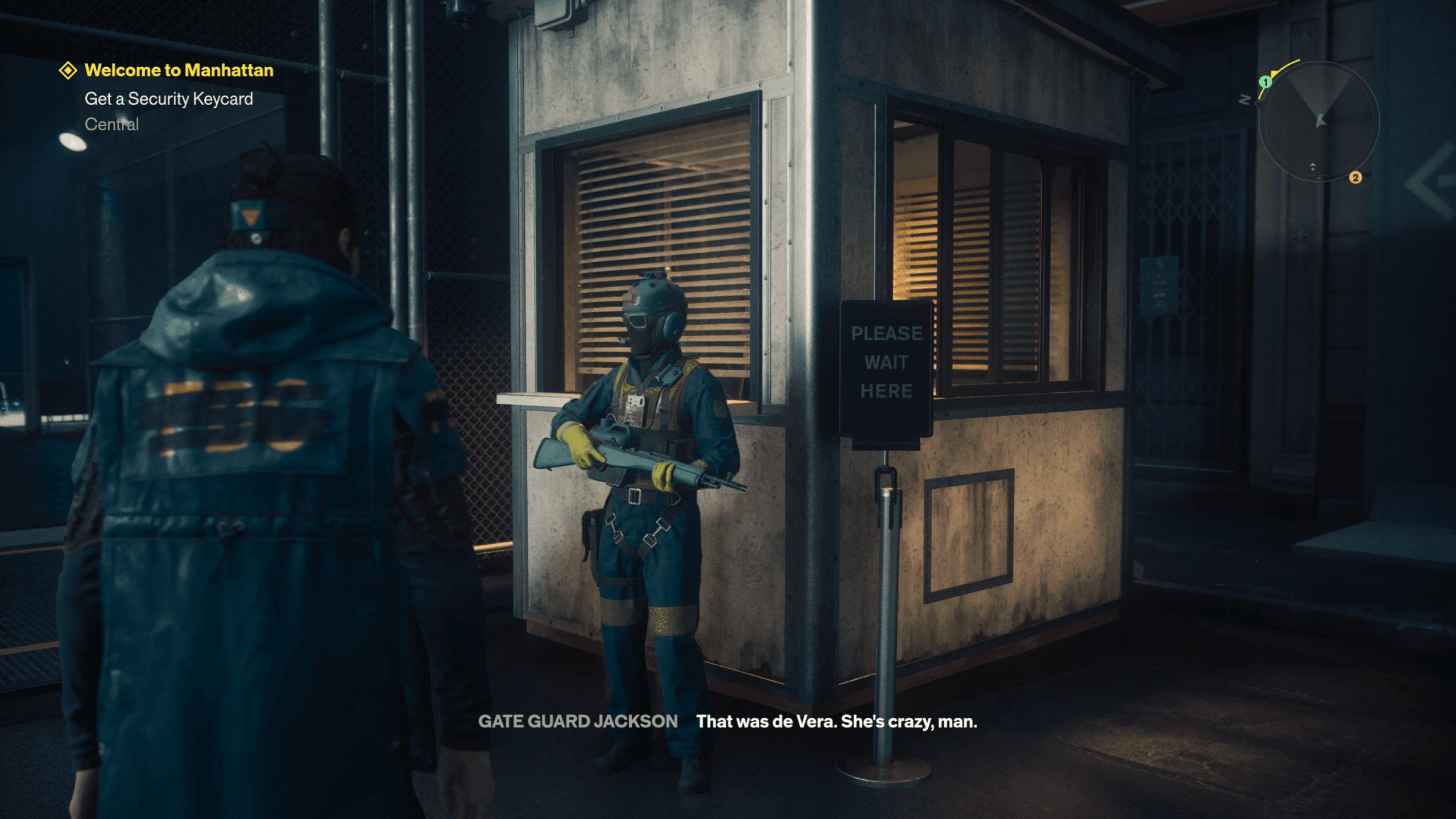
The past doesn't stay in the past, because Dylan has to confront both the horrors in Manhattan and the repercussions of his own actions from the first game. The protagonist is not looked on kindly by his colleagues, and with good reason. He was the entry point of the Hiss plague into the Oldest House, and the officials constantly remind him that hundreds of employees died because of his actions. Their attitude changes gradually over the course of the game, but the initial aversion is easy to understand. In one memorable episode, Dylan's supervisor, Agent Zoe de Vera, threatens an F.B.C. employee that if he doesn't let Dylan into a building, she'll put him on fridge duty. That's a reference to a side mission from the first game, in which Director Faden "exorcised" a refrigerator that had to be watched constantly, just like SCP-173.
Fight For Control
Resonant was presented as an action game, and Remedy emphasised the fact that it is not a soulslike. I can confirm that it really isn't, but it can't be placed strictly in the category of action games either, because its structure is based on mechanics specific to the metroidvania genre. Unlocking new abilities opens new paths of exploration and lets you reach areas of the map you couldn't access before. This structure isn't limited to exploration abilities, because some areas also require certain offensive abilities in order to be accessed, such as the one for setting things on fire.
As I mentioned above, the developers chose to change the genre for this sequel, which is why we no longer have access to the Service Weapon that accompanied Jesse in the first game. In its place, Dylan will butcher both the Hiss forces and other paranatural monstrosities with the help of the Aberrant, a possessed piece of steel that can change its shape according to the player's "needs."
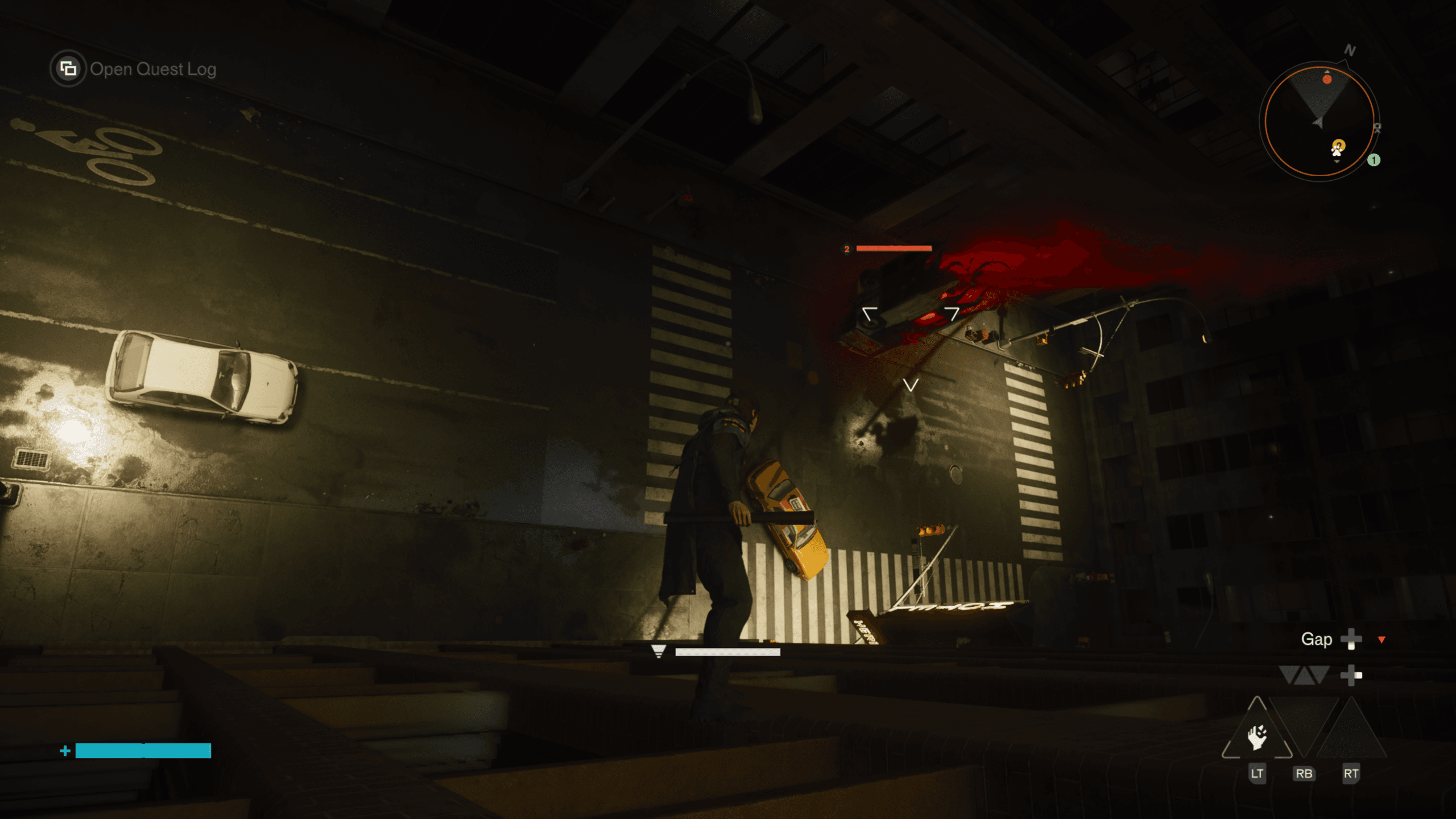
The protagonist can choose between three basic forms of the weapon: a hatchet, two spearheads, and a scythe that would make the relatives back in the countryside beam. These are used exclusively for light attacks, while heavy attacks rely on three other forms of the weapon: a sledgehammer that would make even Doomguy blush, a metal whip, and a drill. The combat itself is a simple hack-and-slash, in which you slam to the ground beasts and concepts the human mind cannot grasp, but which can be represented in 4D. Although it is complex and allows you to customise your fighting style, the combat system doesn't have the same level of refinement as the one in the first CONTROL.
In theory, the combat system is well thought out and allows both for customising your play style and for adapting to various situations. Weapons such as the scythe are ideal for wiping out groups of enemies, while the spearheads are perfect for eviscerating bosses. The problem, however, lies in the repetitiveness of the fights. Right from the start of the game they become exhausting, because we use the same tired combos against enemies who have a little too much health. And so, in the first hours of Resonant, the player will try to prioritise the special enemies and the large ones, in order to finish the battles as quickly as possible. You may be wondering why. Because the small enemies appear continuously, in waves, summoned by the large ones.
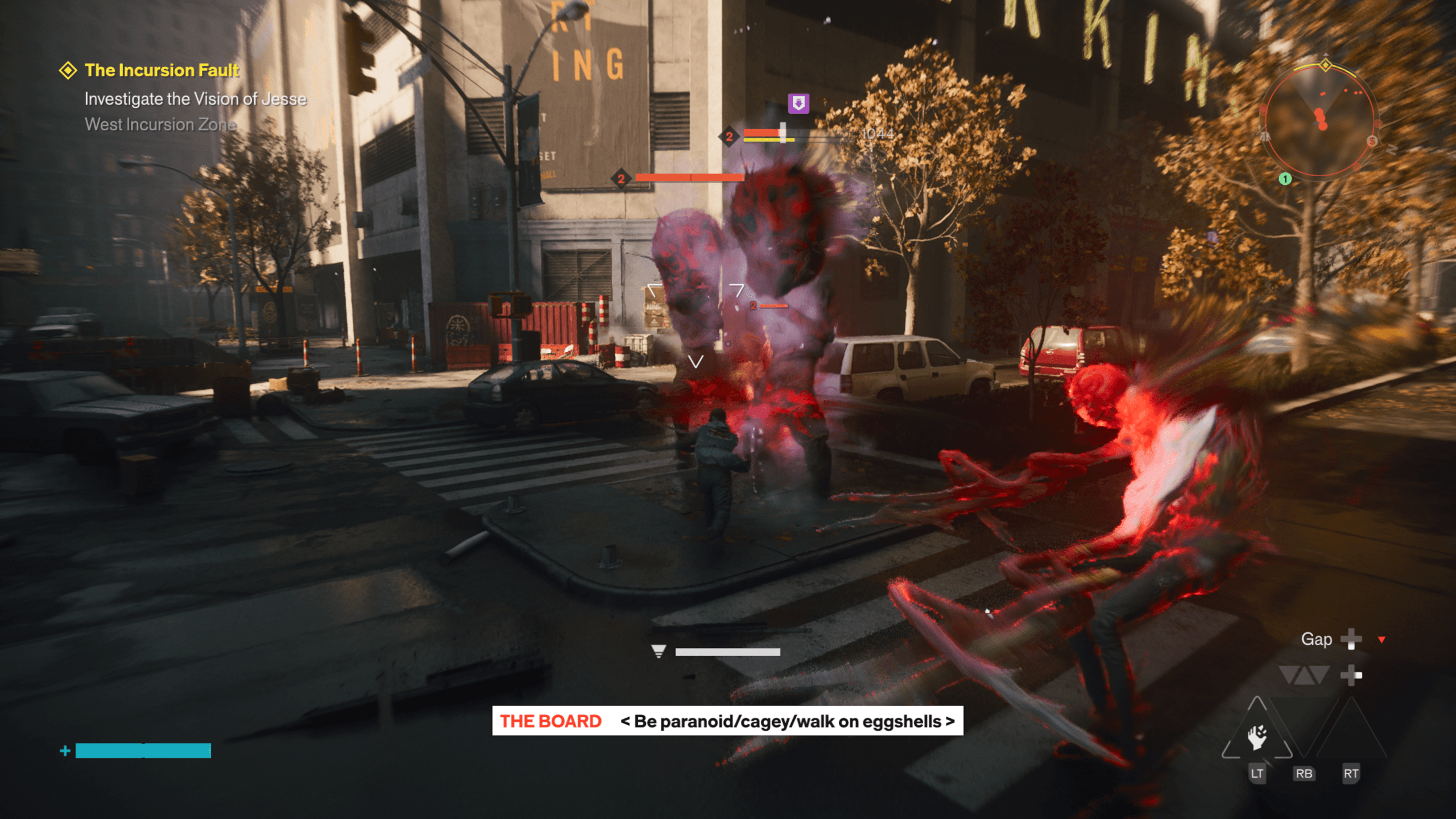
This exhausting dance repeats without pause until the end of the game. And the developers didn't think to introduce a pathfinding system, or to indicate in any way how we might make the work easier. Right at the beginning, every player will set themselves the main objective of becoming more powerful. That is precisely why absolute freedom was not the best choice for Resonant. There is an efficient order in which you can approach the objectives in order to grow stronger naturally and make the fights more enjoyable, but the developers mention this nowhere. And for those who don't want to repeat my mistake, or Zuluf's: THE FIRST THING YOU NEED TO DO AFTER YOU FINISH THE INTRO IS GO STRAIGHT TO THE FACTORY AND TAKE DOWN THE RESONANT THERE!
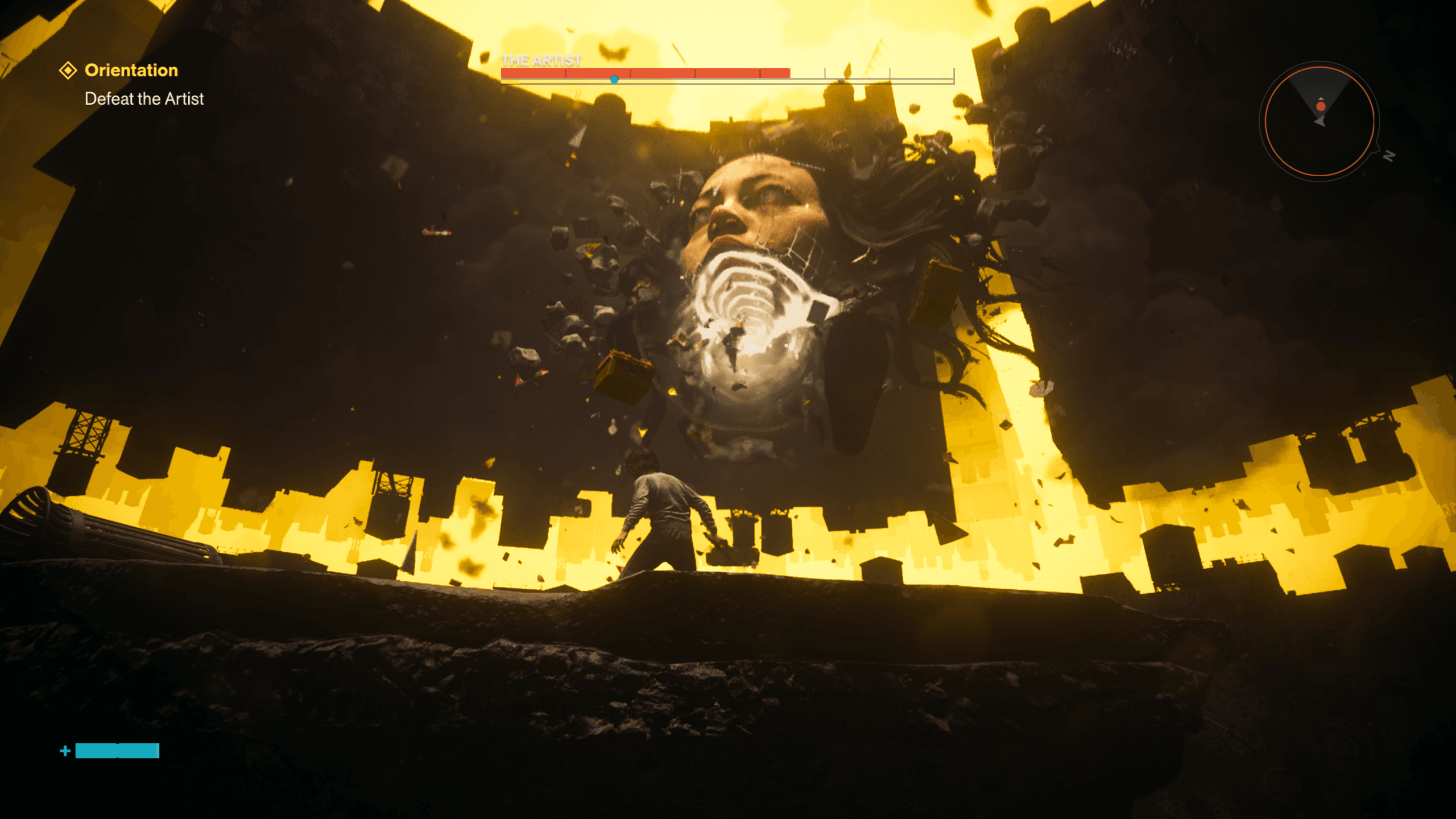
Since I've mentioned a Resonant, let's talk a little about what they actually are. These creatures are former humans, with a sensitivity to the paranatural, who have been seized by "something." This unknown element differs from one person to another and can range from the patterning we saw in the trailers to ****************. All right, settle down! I'm not giving you spoilers, so stop censoring the review. The idea is that these fights are conceived as the climax of each area, and their introductions recall the battles with certain bosses in Elden Ring or Devil May Cry. Unfortunately, that's more or less where the resemblance ends. Unlike the fights in the titles mentioned above, the ones in Resonant are genuine endurance tests. They are not inspired in the slightest, and often they amount to filling the falter bar, the equivalent of a posture bar. Filling it allows us to land a coup de grâce, which offers a significant bonus to the damage dealt with the Aberrant.
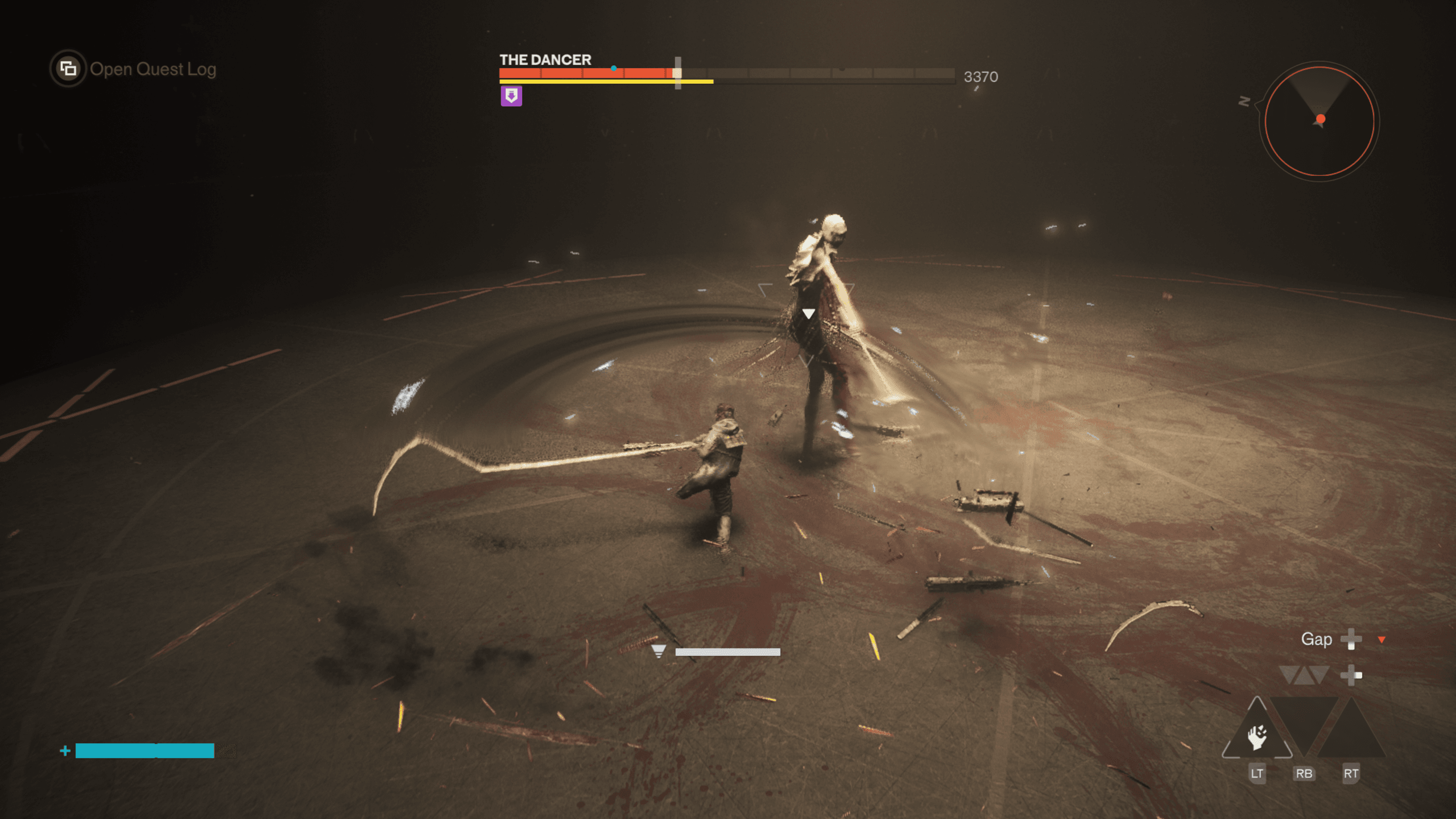
An example of an uninspired fight is the very one in the factory. And, before I get censored again by the F.B.C.'s Board of Directors, I should mention that this fight appears in the trailers! Dylan has to confront a creature made of lava and avoid certain portions of the arena in which the boss splatters molten rock. You'd think it would be easy to stay out of the way, but when the Resonant starts spitting lava like an angry volcano, it ends up covering about 85% of the arena. At that point, the only option is to use the ability that lets you float in the air for a few seconds, so you can reposition and attack. After you take down a Resonant, the protagonist has the chance to steal an ability from it. With each ability obtained this way, the fights become easier, and the first one I recommend is the one for setting things on fire. Trust me, it will make your life simpler.
All right, so they clearly didn't think the fights through all that well, but they surely did a good job with the exploration, right? Yes. Here I can confirm that they did an excellent job, because the exploration never gets boring. Dylan quickly obtains the ability to float in the air and a dash, and besides these, he can also walk on walls, shifting his centre of gravity, and pull himself towards certain anchor points. Once you have access to all the exploration abilities, the game becomes fantastic, because you move rather like Spider-Man. The last two abilities, in particular, have allowed the developers to give their imagination free rein and create incredible areas, both aesthetically and mechanically. Some of them will genuinely blow you away.
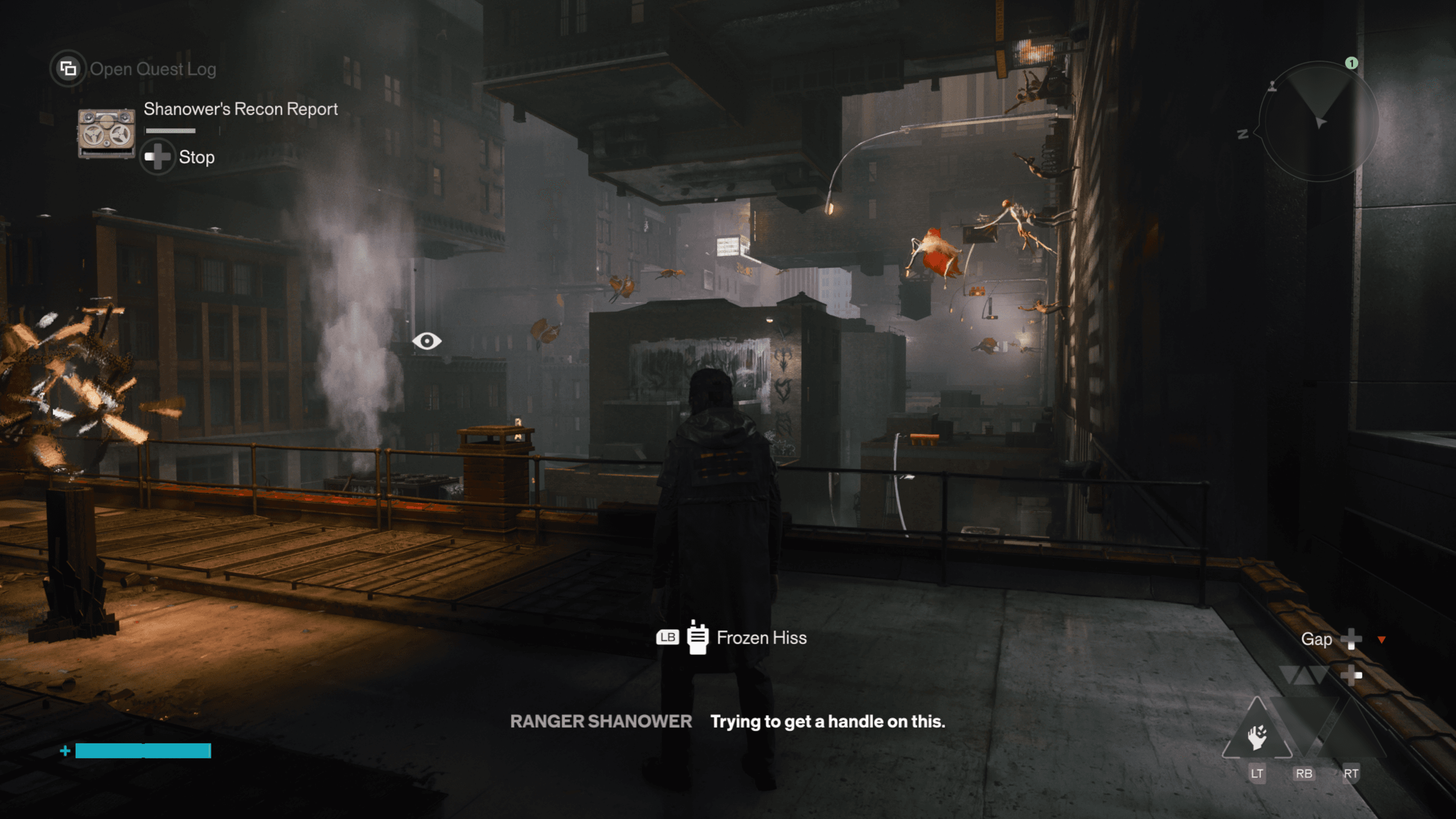
Of course, the areas wouldn't mean much if we didn't also have some interesting activities to do. Unfortunately, apart from the side missions and a few collectibles, there isn't a great deal to keep you glued to the screen. The areas also have secondary objectives, but these feel more like the ones in a Ubisoft game and quickly become a to-do list you tick off without blinking. Completing objectives and eliminating enemies doesn't give Dylan XP; it gives it to the area he's in. Raising an area's level unlocks more objectives on the map, after a reset. Yes, you read that correctly, there is a reset system in the game. It doesn't trigger every time we "rest," as in a soulslike, but whenever we take down a Resonant.
**************
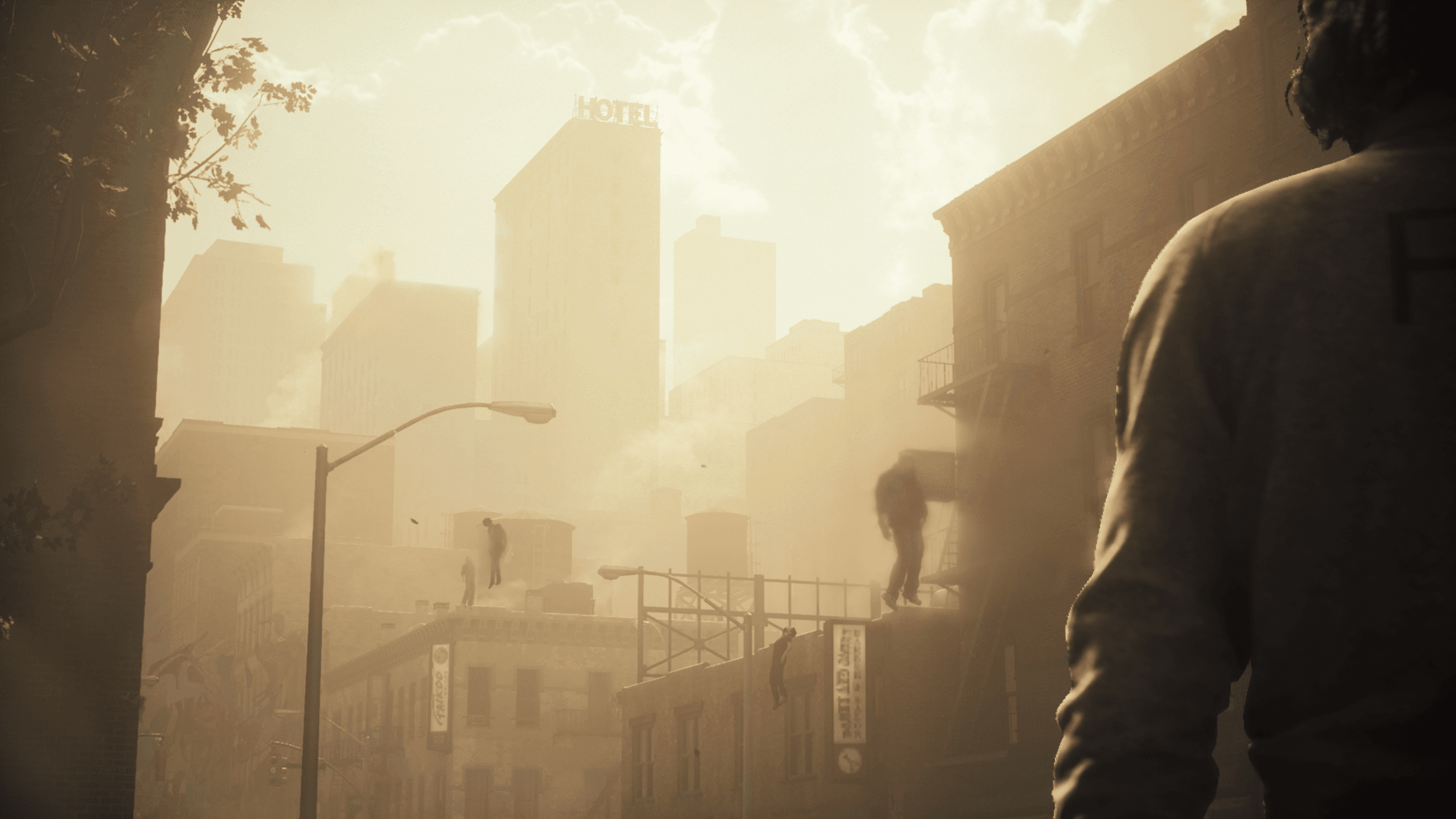
To be honest, I don't have much to say about the graphics, because Resonant looks impeccable. The areas are great, and when you also have some ray tracing turned on, the game looks almost real. Well, as real as a Manhattan under siege by paranatural forces can look. Still, with the move to an open world, Resonant has lost some of the non-Euclidean charm of the Oldest House. The open spaces, the tall apartment blocks and the abundant light drive away the unease that defined the corridors of F.B.C. headquarters. For that reason, you don't have much cause to be frightened of a flayed bat, a flying scrotum or a walking sponge when you can see them from a kilometre away.
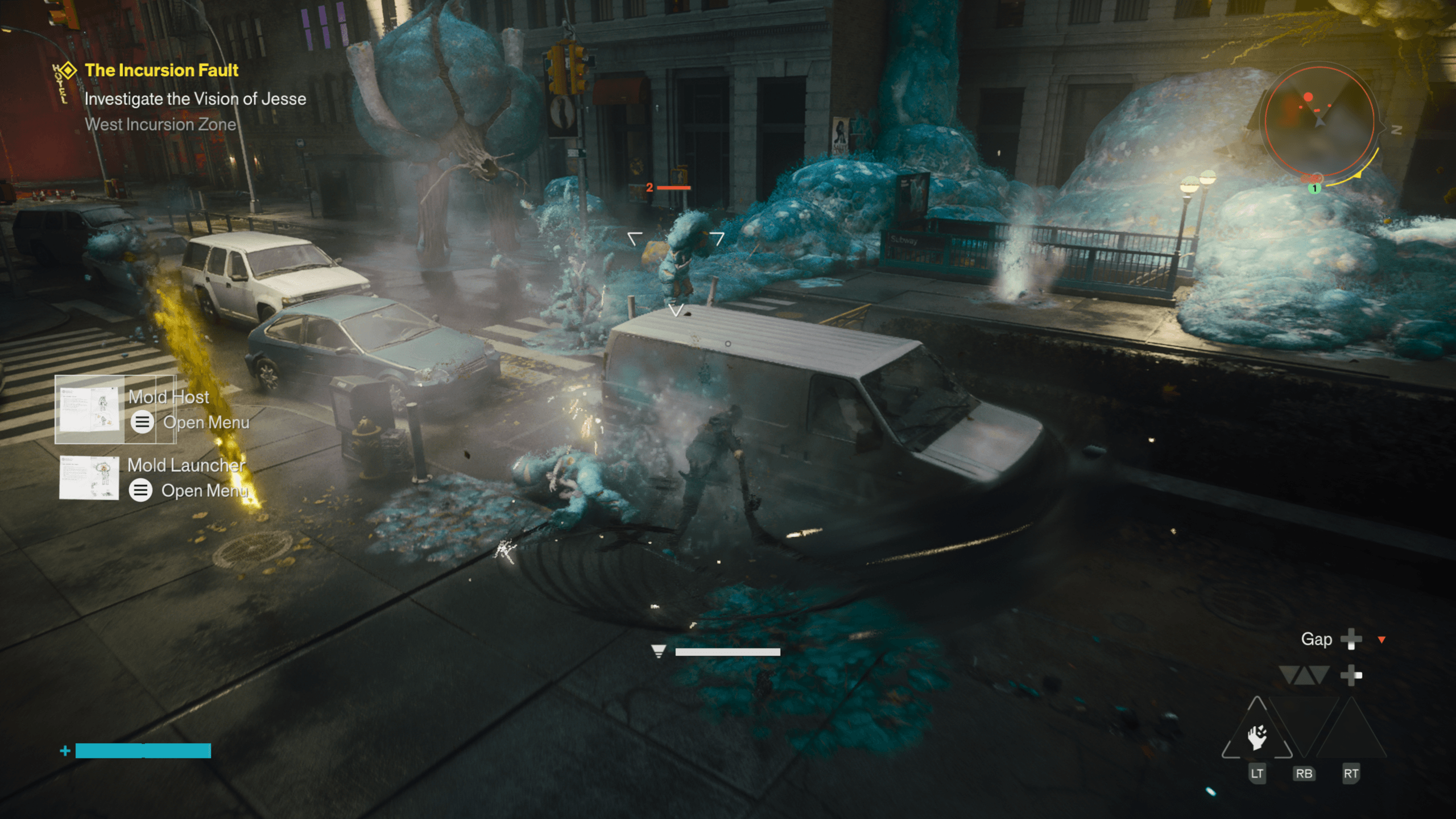
One thing that bothered me was the enemy design. Unlike the first CONTROL, the enemies in Resonant are genuine monsters. In the previous game, they could be mistaken for ordinary employees of the institution, but here the design seems straight out of H. P. Lovecraft's wettest dreams. As such, that ***************** effect from the previous title is no longer to be found here. Besides their design, I also have to confess that the variety of enemies isn't all that great either, which saddens me, given what fine enemies we had in Alan Wake 2.
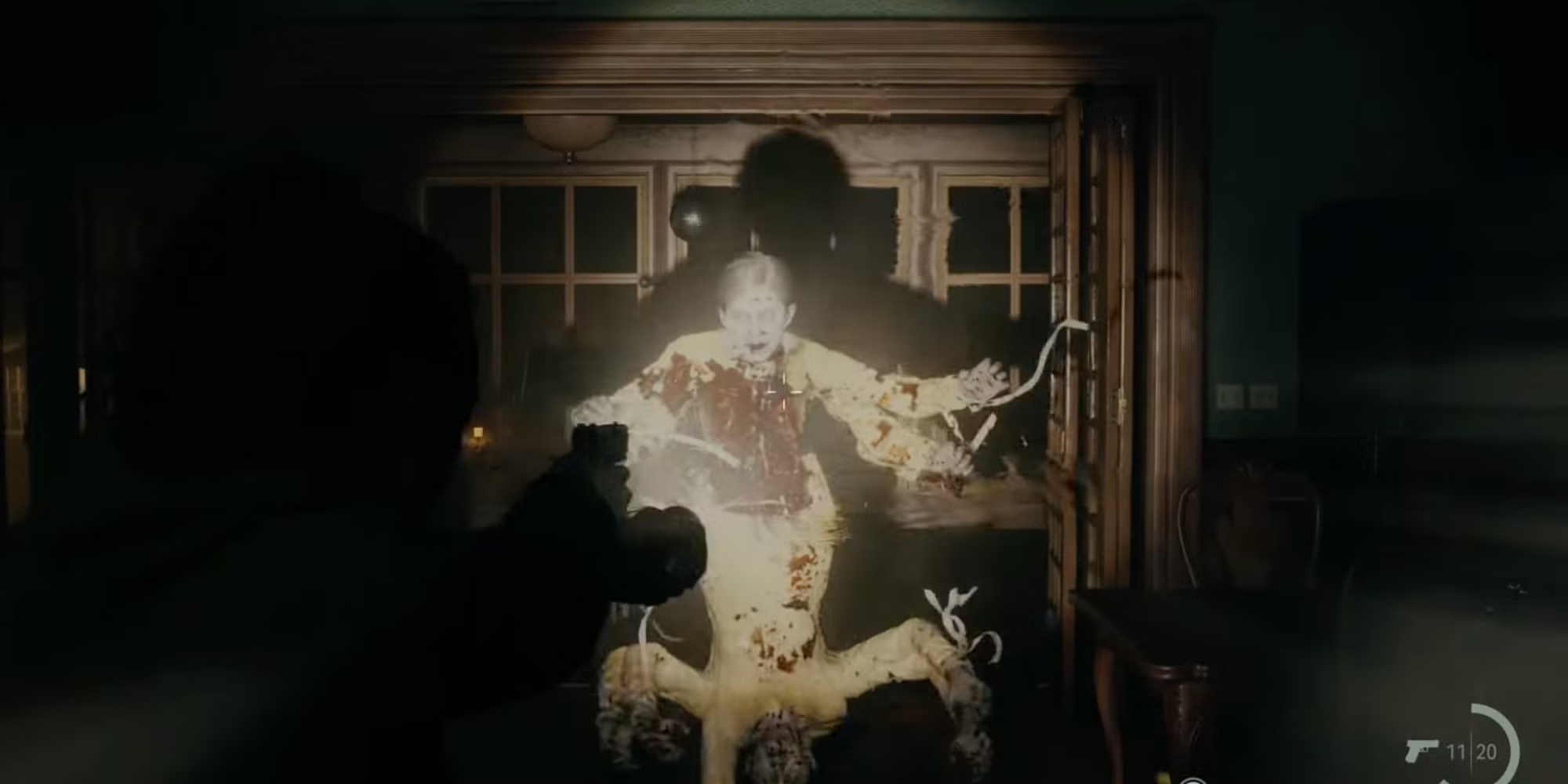
Photograph from Alan Wake 2, taken from Game Rant.
Since I've brought it up, yes, the enemy above was an obscure reference to the future of the Remedyverse, which nobody understood at the time. Don't worry, because if you explore everything, you will certainly come across a reference to Alan Wake 3. How much it will impress you, I don't know.
As for the voice acting, again, I have nothing to criticise, because Remedy does an excellent job. I do, however, have a few things to say about the soundtrack. Ever since the first Alan Wake, the games in this universe have had musical moments that made the player feel invincible. Whether we're talking about the Ashtray Maze, Herald of Darkness, or the Old Gods of Asgard concert, Remedy has always known how to blend music and story, offering incredible soundtracks for its games.
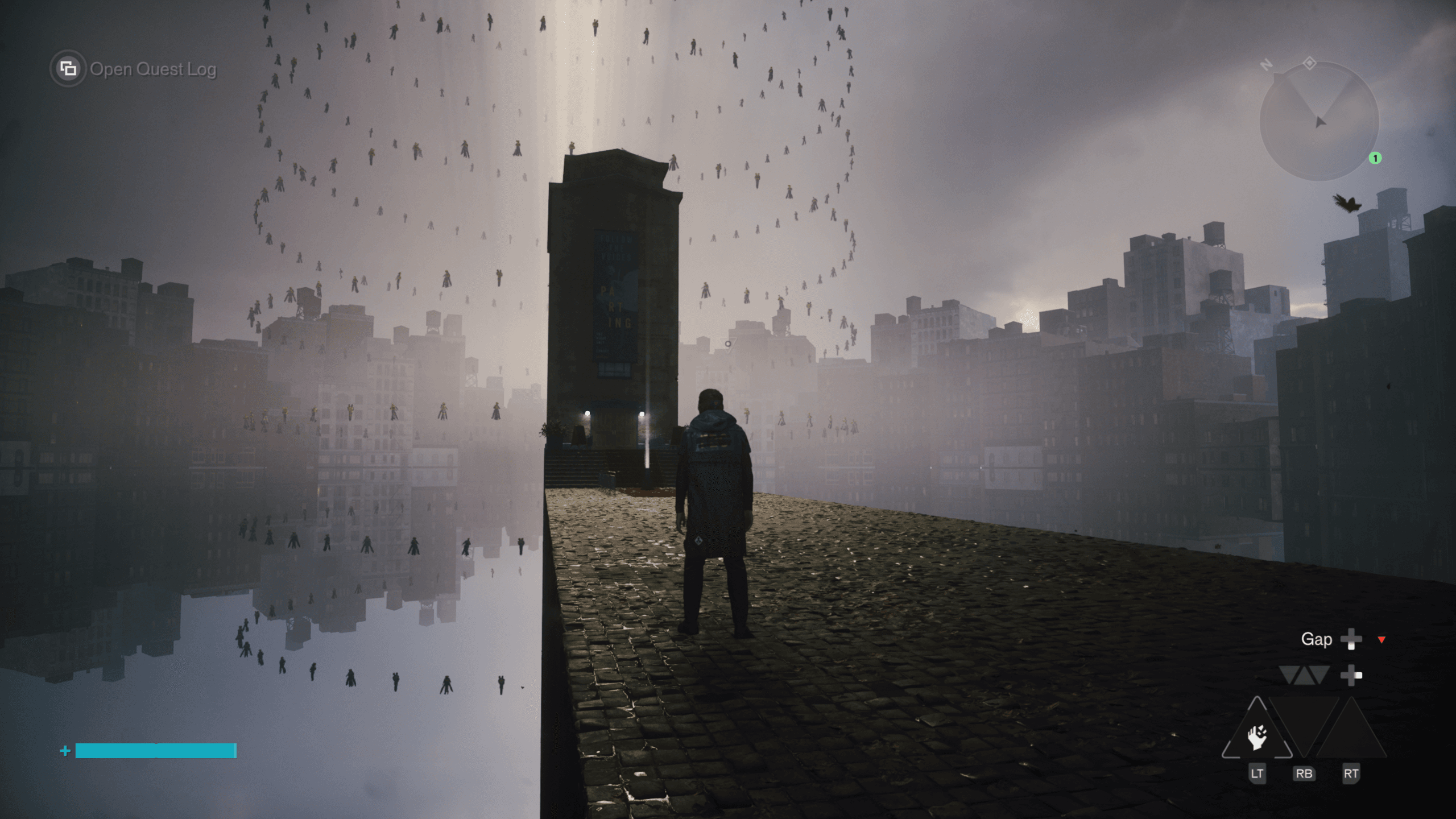
Unfortunately, the established formula seems to have been forgotten, because the soundtrack in Resonant does not rise to the level of those in the previous titles. There is a moment similar to the "Ashtray Maze," but it doesn't have the same impact, and the absence of enemies makes it feel downright sterile. What's more, towards the end of the game there is a second attempt to recreate such a moment. Unfortunately, the fact that it takes place in an open area, and not in a location built around a directed event (a scripted event), robs it of some of its charm.
If you taste the color red, please report to the nearest F.B.C. checkpoint
You know very well that I rarely mention optimisation problems, but this time I have something to say, because the game stuttered in places on Xbox Series X. The frame-rate drops weren't hideous, but they were noticeable. The Quick Resume system on Xbox also doesn't seem to have been optimised for CONTROL Resonant, because the first two or three minutes after I returned to the game were marked by massive stuttering, or even by the screen freezing.
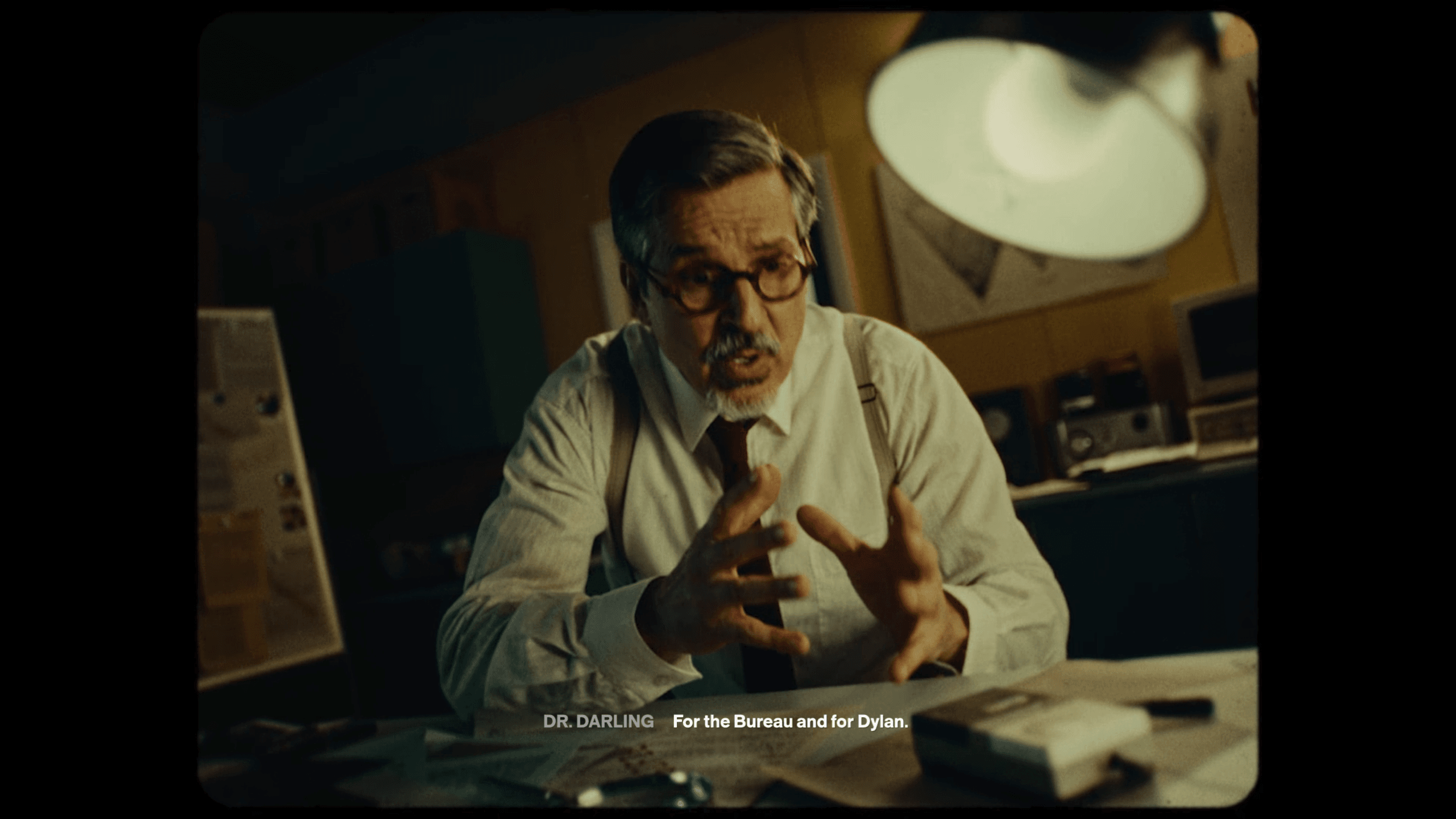

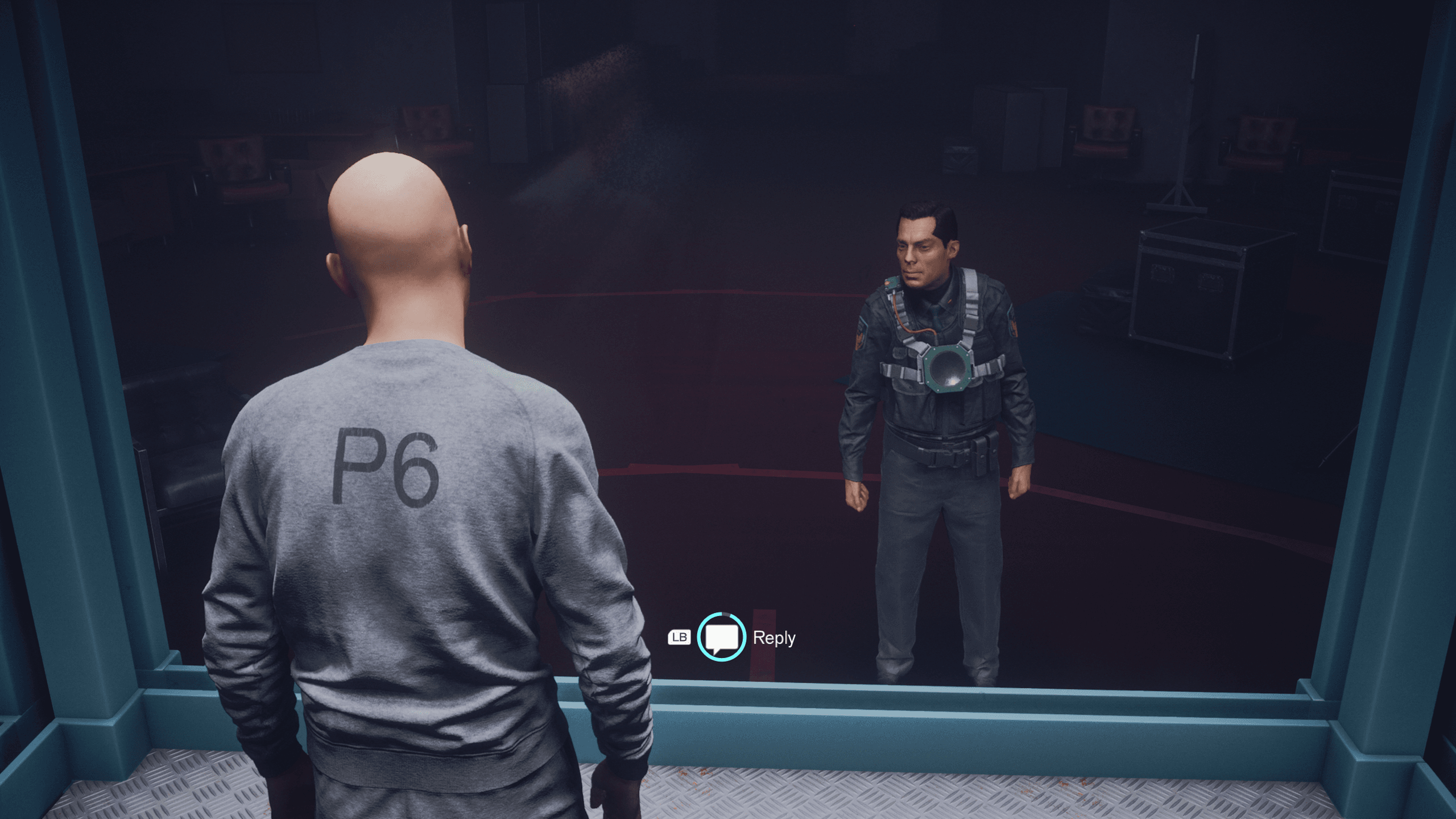
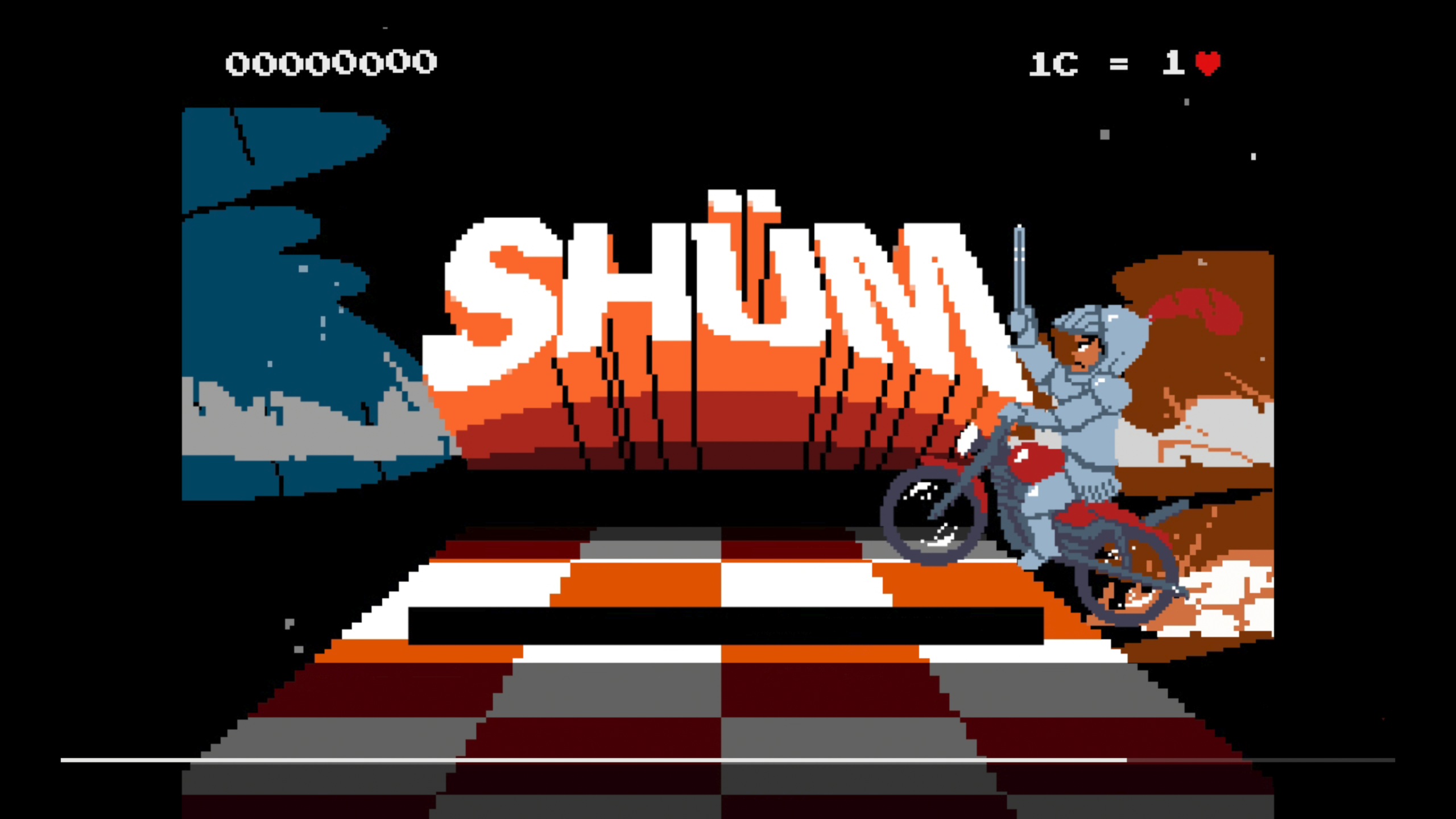
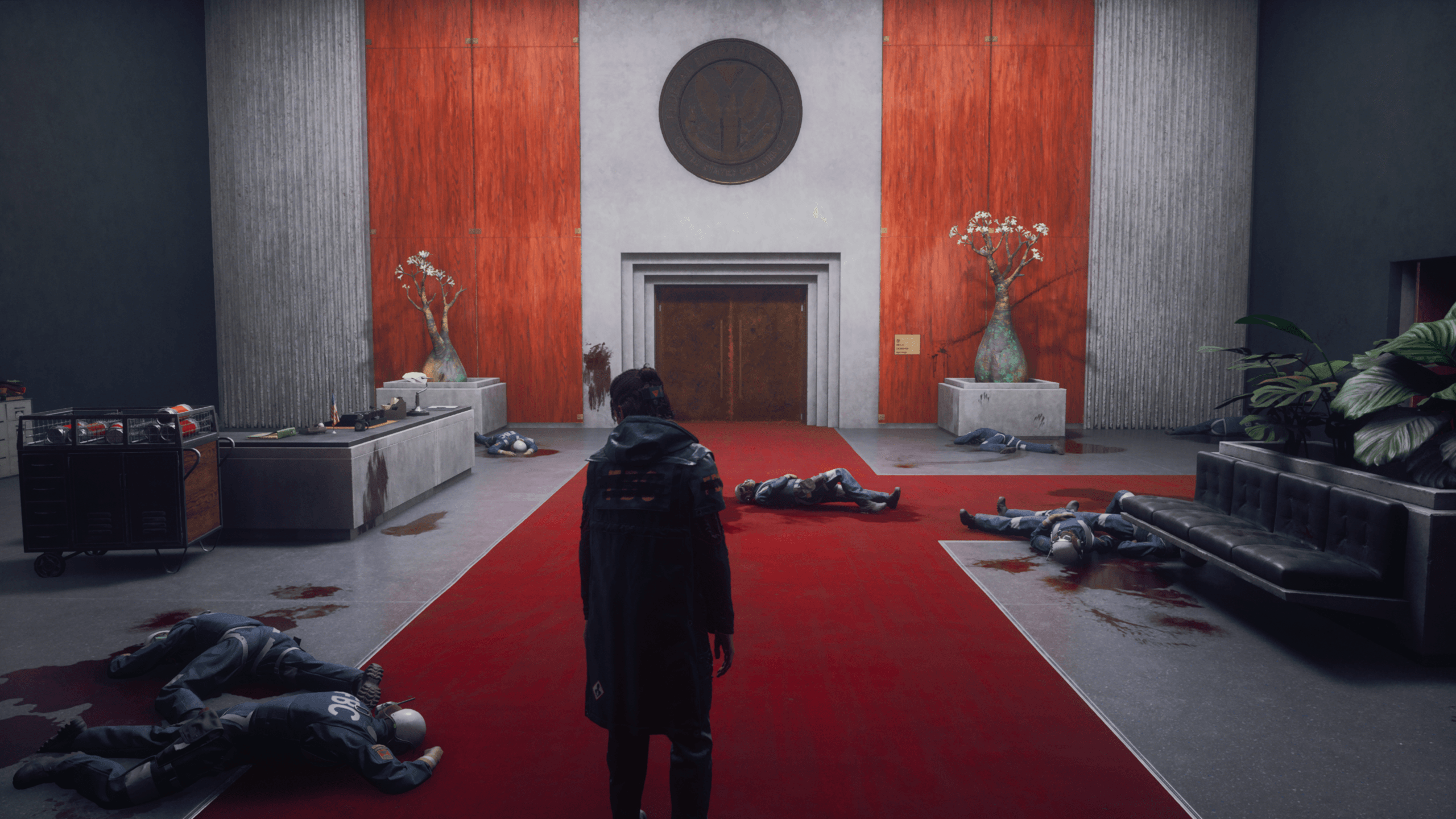
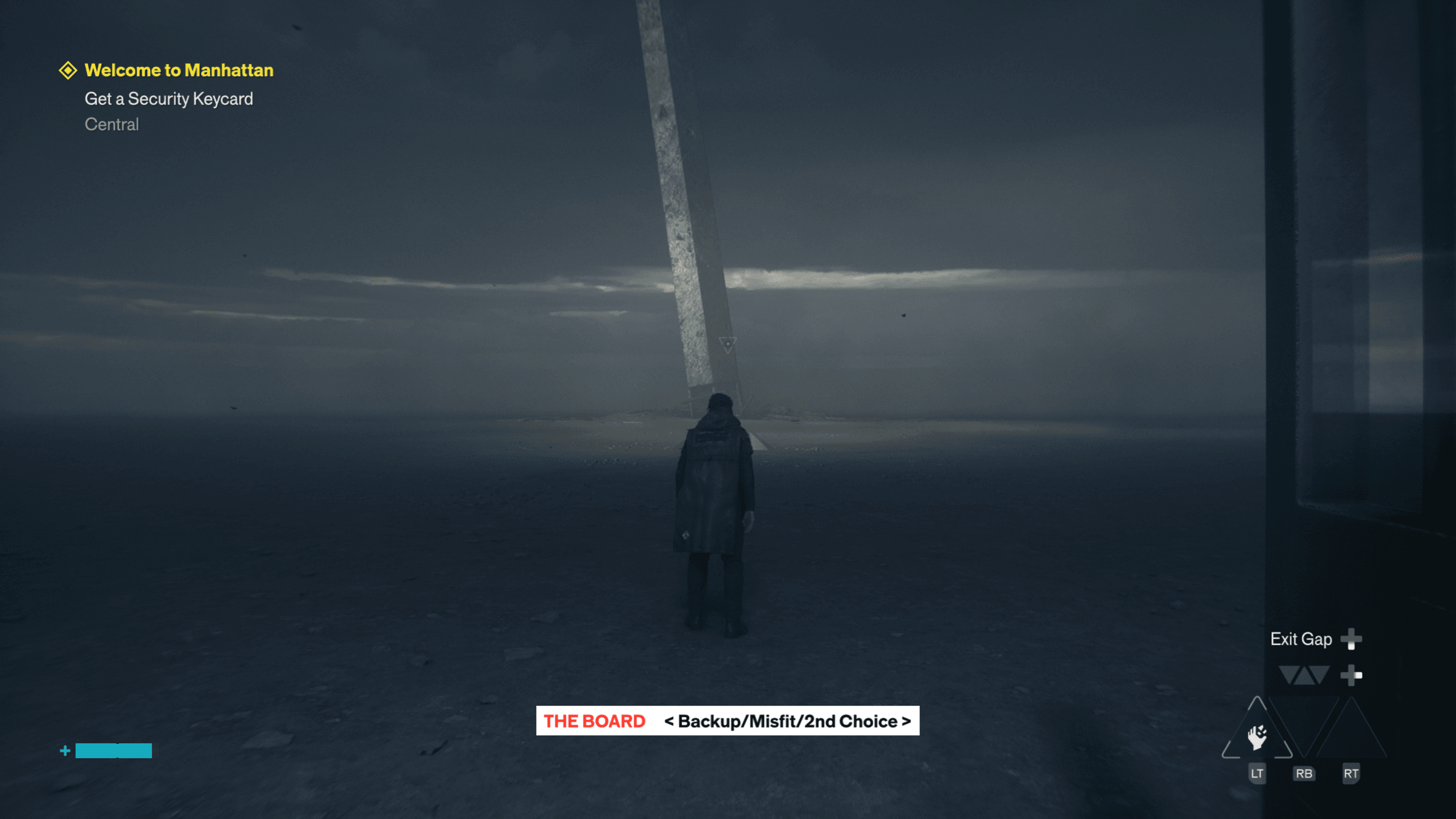
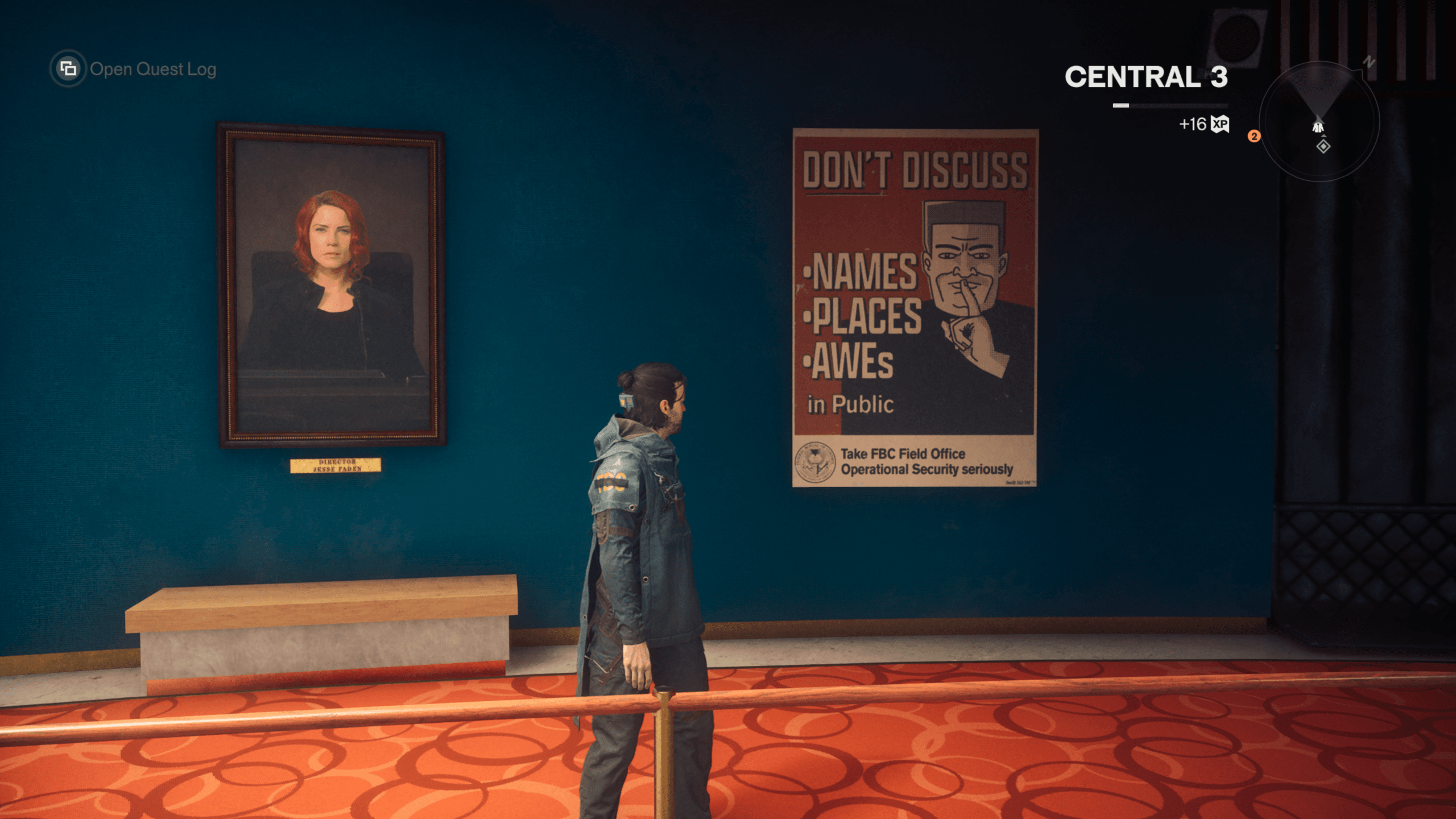
I would like to close the chapter on optimisation on a positive note, but I can't, because the A.I. of the F.B.C. agents does not always behave consistently. Sometimes they behave like super-soldiers and wipe absolutely everything off the face of the earth, and other times they seem to want, quite deliberately, to get themselves killed and make your life harder.
< The Crisis/Purge is over >
Despite everything written above, I don't want you to think that Resonant is a bad game, because it isn't. It's a pretty good game, and it belongs to the category I call "solid 7s," which I recommend with pleasure. Still, for fans of the Remedyverse, Resonant doesn't manage to rise to the level of expectations. I hope a future CONTROL 3 will correct the mistakes of this title.
*Thank you to Remedy Entertainment for the opportunity to play CONTROL Resonant.*

CONTROL Resonant is a good game, with excellent exploration, a fascinating world and moments worth living, but the repetitive fights, the uninspired bosses and the optimisation problems keep it from reaching the potential of the Remedy universe. If you are fans of the studio, it is worth giving it a chance, but don't expect it to repeat the magic of the first CONTROL.
Plus
- Dylan's past
- The exploration
Minus
- The filler side activities
- The soundtrack
0 votes
Scroll down here and stay on the page for at least 30 seconds to vote.
Pick a score from 0 to 10 (halves are allowed).