
Demeo x Dungeons & Dragons: Battlemarked – Review

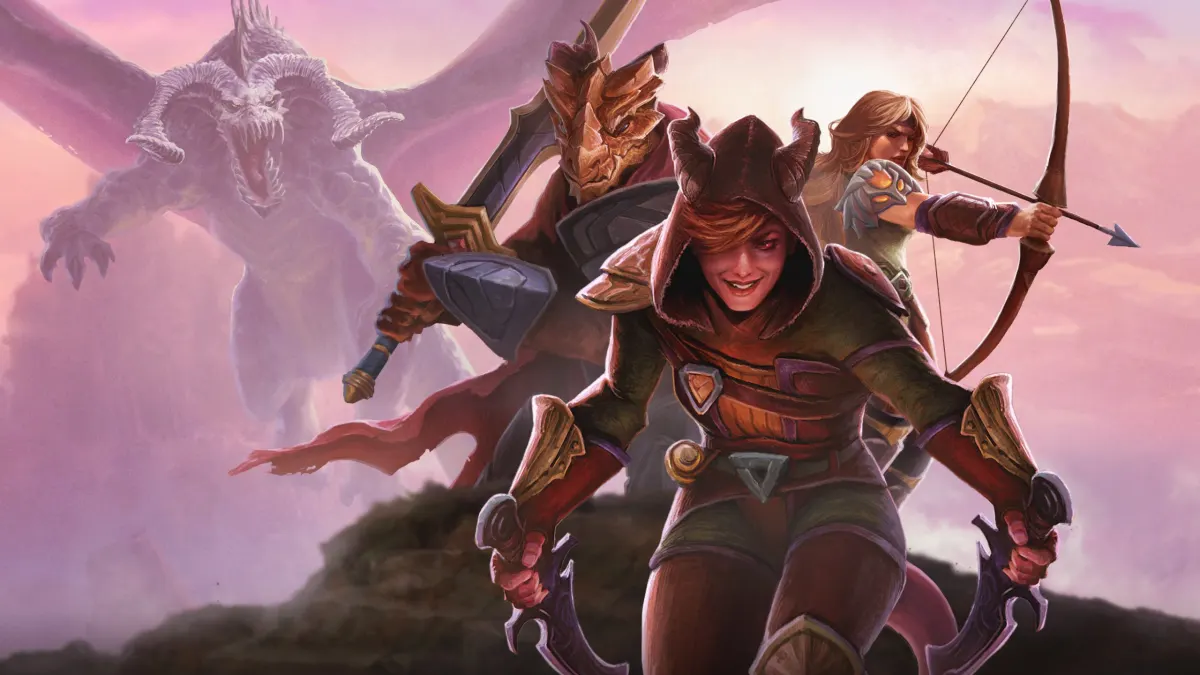
Dice, cards and minifigs on the tabletop
If you've ever ventured into a pen & paper session with your mates, you'll know it involves a mountain of prep. Once you've found a table that's big enough and clear enough, you spread a map across it to describe the play space. On each side, a member of the gang pores over their character sheet while pulling every figurine you'll need out of its little bag. When you finally get everything in place, the microwave beeps and the smell of popcorn floods your nostrils, announcing that the story is ready to begin.
Digital tabletops spare you the setup and jump straight into the tactical, cooperative heart of a DnD session. Battlemarked marries the card game from Demeo with the look and lore of Dungeons & Dragons in an accessible, welcoming formula. By definition, it's the kind of game that's far more fun in multiplayer, with collective decisions and plans that struggle to survive the whims of chance and the dice.
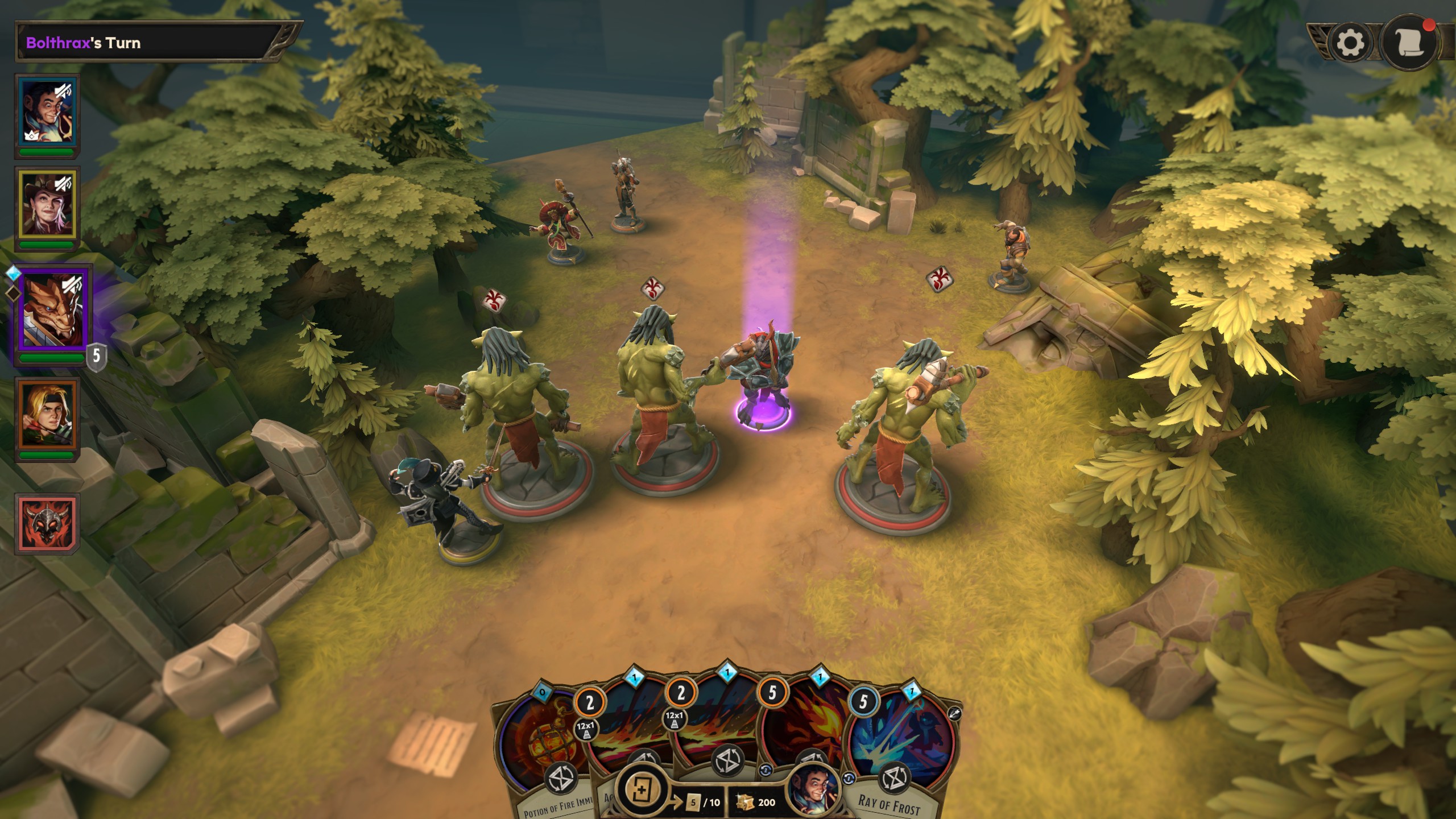
The maps themselves look like the miniature models you might see in hobby shops, and if you glance past the edge of the table, you'll spot the furniture and decor of a typical living room. Demeo's animations make way for a tabletop visual convention, complete with that moment of suspense just before you see which of the last die's twenty faces will decide the final turn of an epic dungeon crawl.
DnD lite?
Let's be clear: Battlemarked isn't DnD. It's a tactical tabletop game in which actions are cards, and the rules are simplified into a package that's easier to learn than, say, 5th Edition. For the most part, you're focused on card cycling, positioning, synergies and tactics, but with simple, direct decisions. The atmosphere, universe and story are lifted straight from the Forgotten Realms, with enough fanservice to make names and places recognisable, and a familiar, if rather summery, narrative structure.
For me, the beating heart of Dungeons & Dragons has always been the dice. Beyond the story and the imagery (which here are fixed and prescribed, in the absence of a DM), every action and plan is dictated by the chaotic outcome of an icosahedron bouncing across the table until it finally settles on an irreversible result.
And on that front, the transplant has taken. Here too, you'll roll the dice for every action, with all the emotions that come with each permutation. The story's skill checks combine the heroes' attributes with dice results for all sorts of little detours or shortcuts through the main narrative, and the suspense of waiting for the die to stop spinning is a shot of adrenaline in itself.
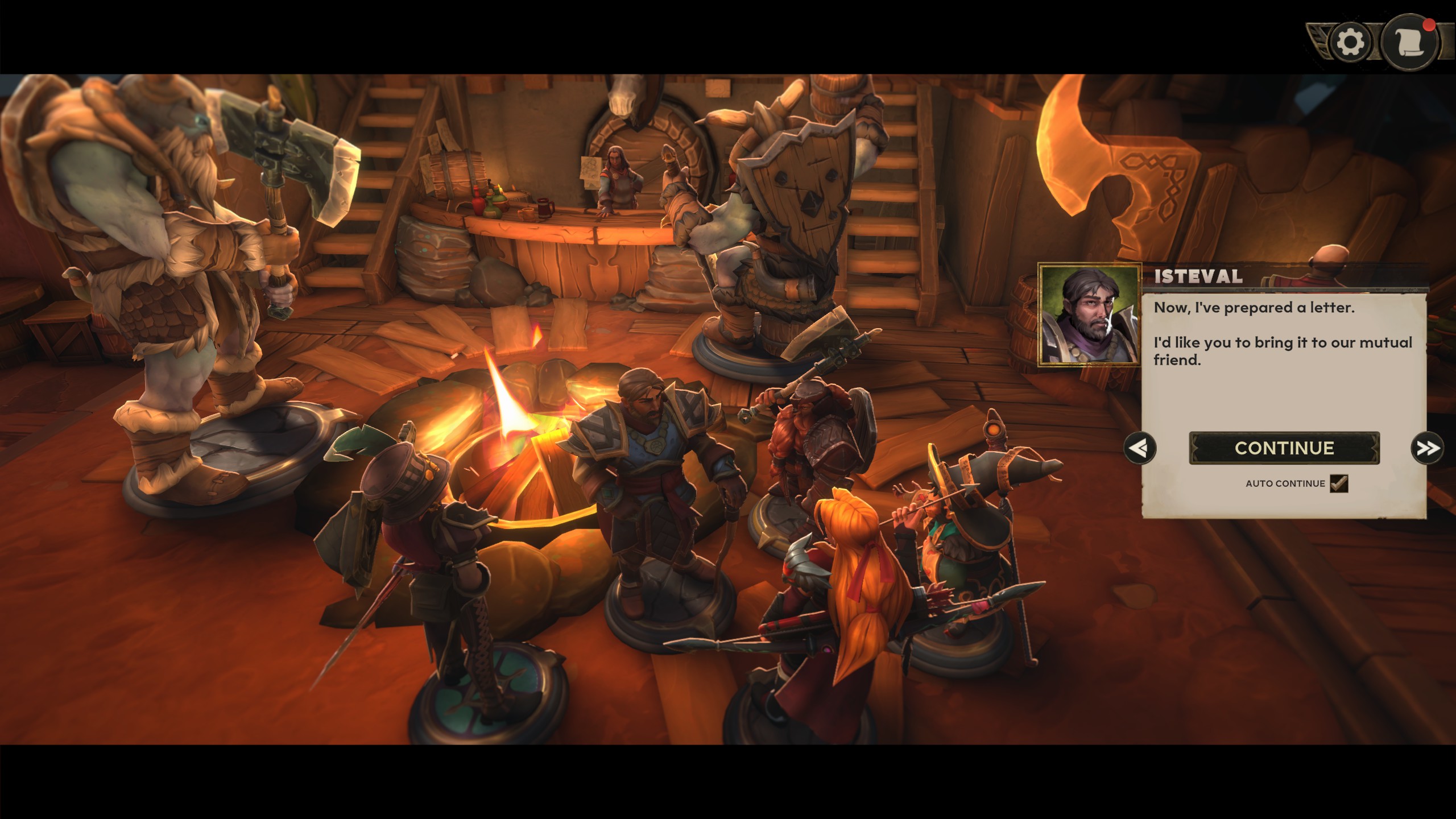
The rest of the decisions you make are minimal. Every side quest comes practically packaged in its own instance, a small self-contained diorama in which the quest begins and is resolved, after scenes with minifigs that aren't very complex in animation terms, but benefit from all the drama and personality of convincing voice acting.
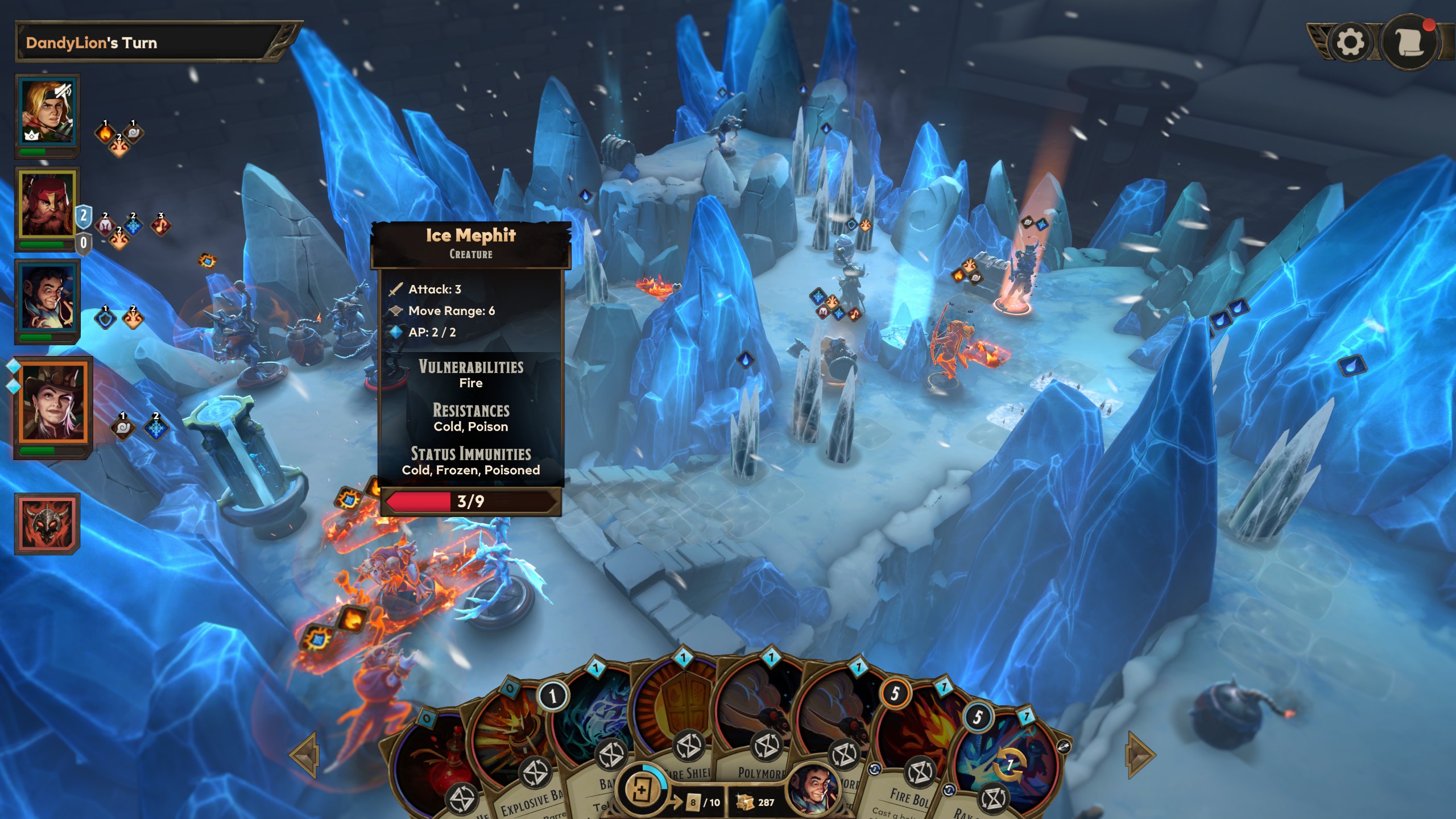
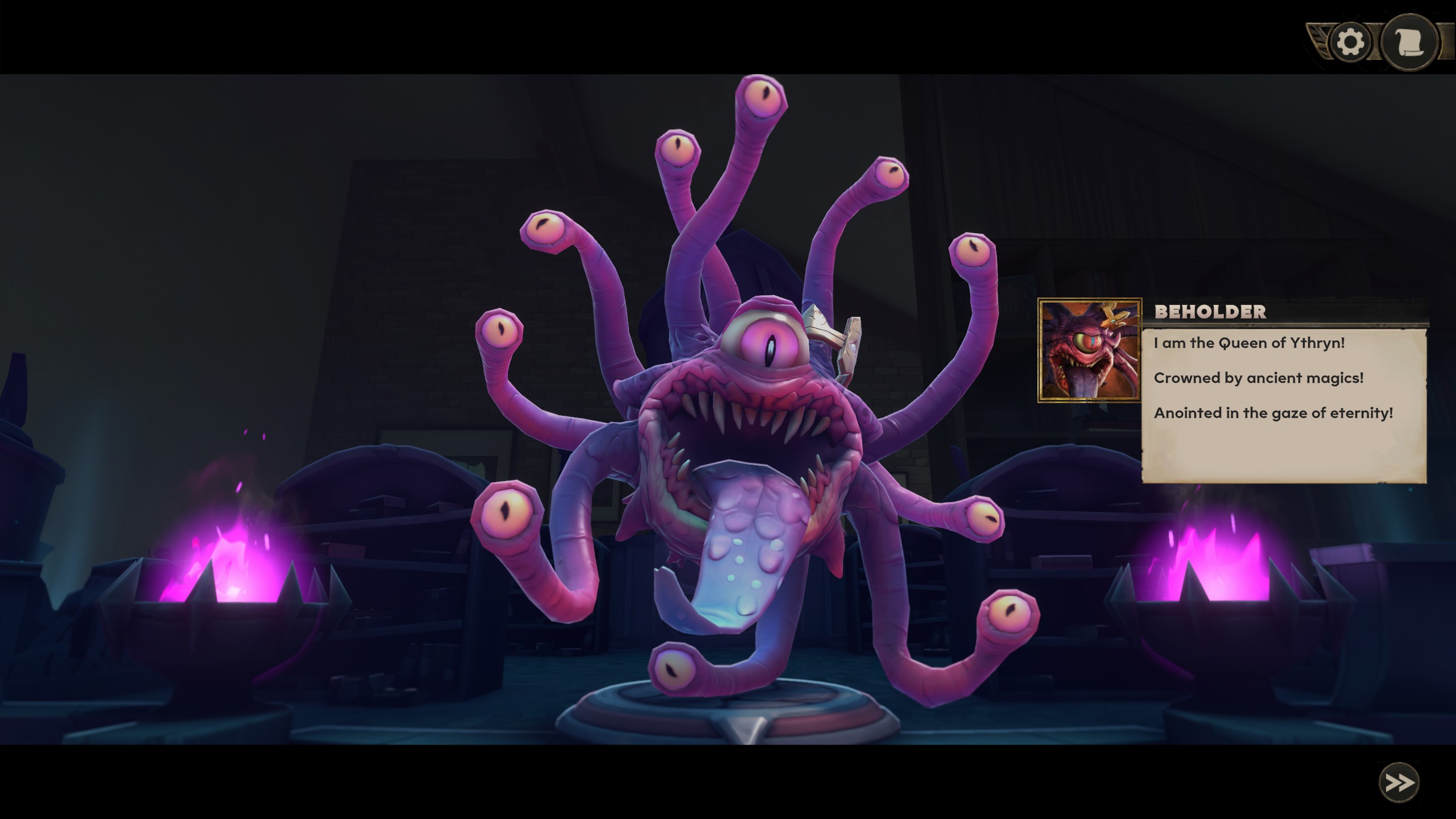
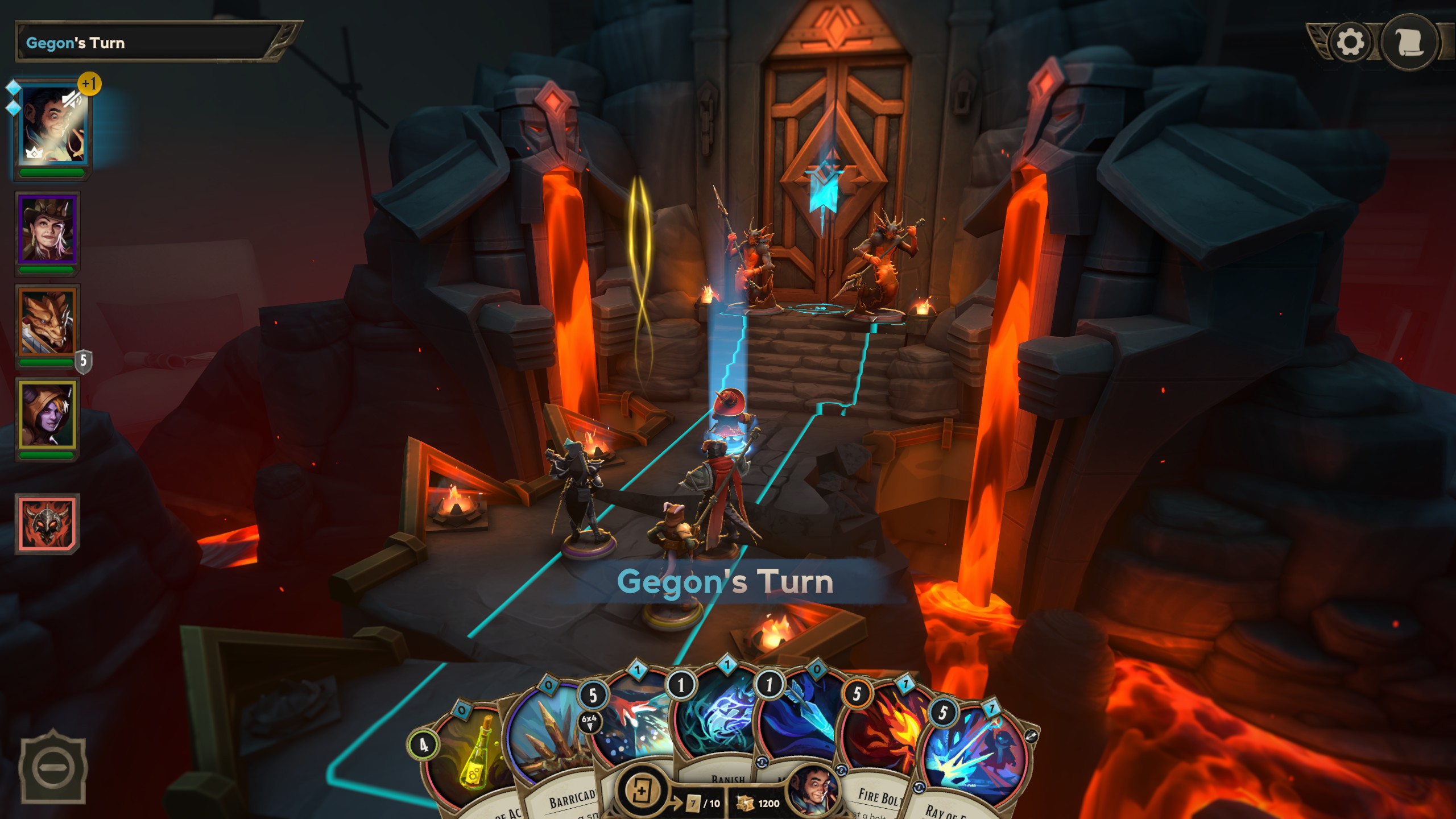
The production value, incidentally, made me forget how simple the staging is. The art direction is semi-realistic, playful but painstaking, and I often caught myself rotating the camera and studying the models the way you'd admire a real minifig, turning it over in your hands and marvelling at the little details that slipped past your first glance.
The card art, the scenery, the enemy models and the hero portraits all sit in the same register, on that fine line between having an identity of its own and showing reverence for the source material. Tying it all together like a ribbon, the soundtrack, an hour and a half of acoustic and orchestral pieces (which you can hear here), captures all the magic and grandeur of a fantasy epic with a fairly small number of instruments.
Straight outta Neverwinter
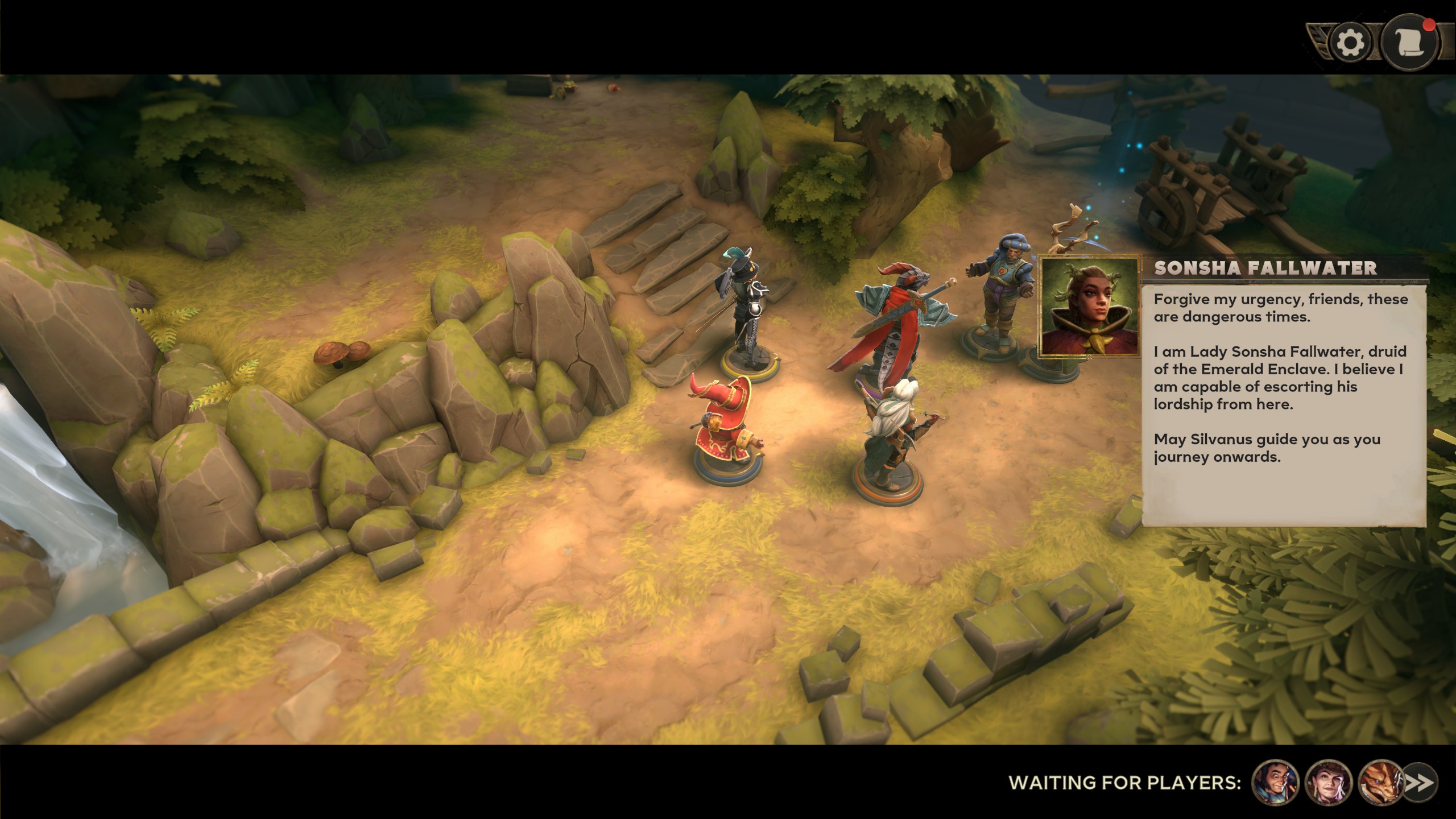
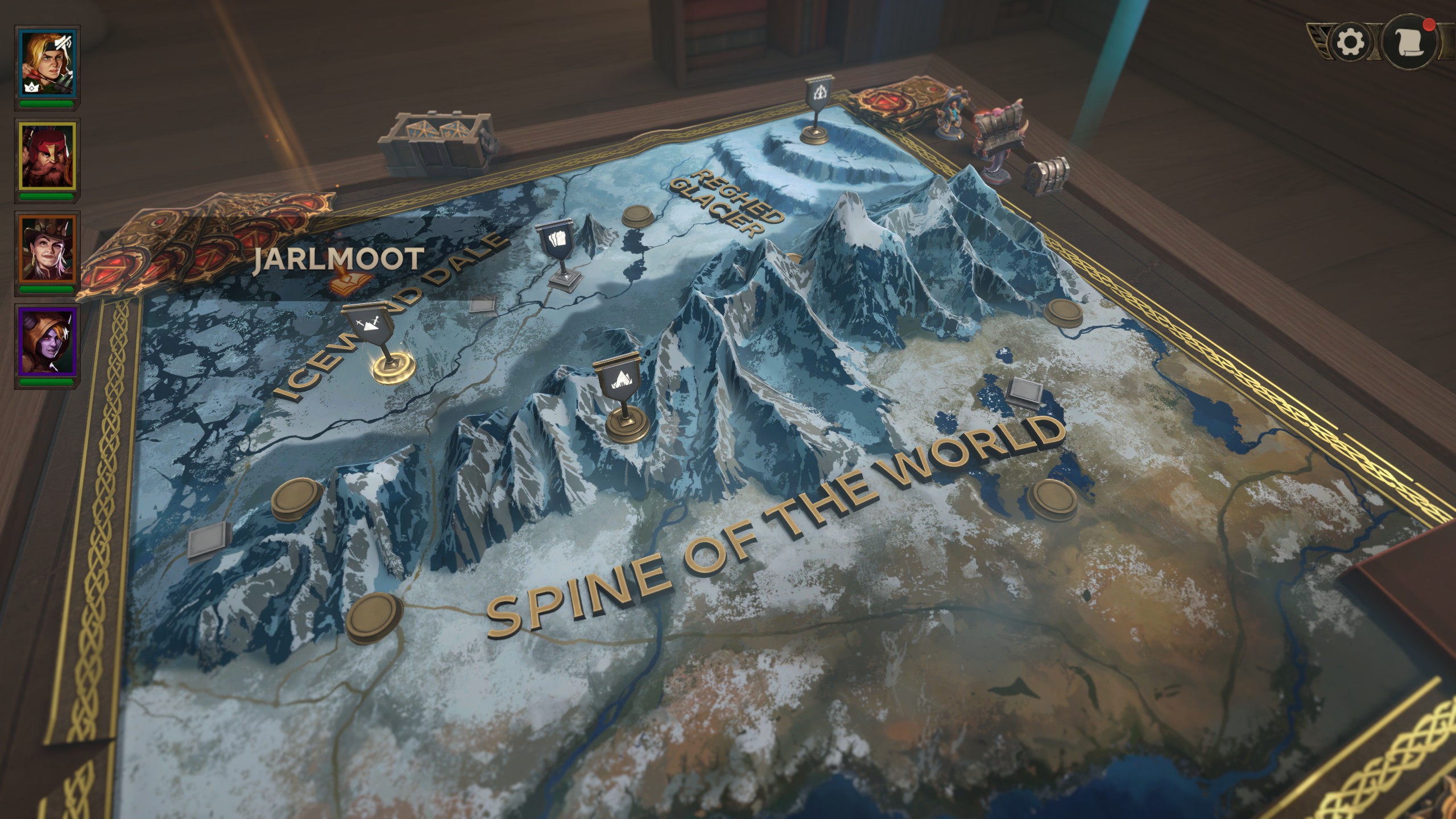
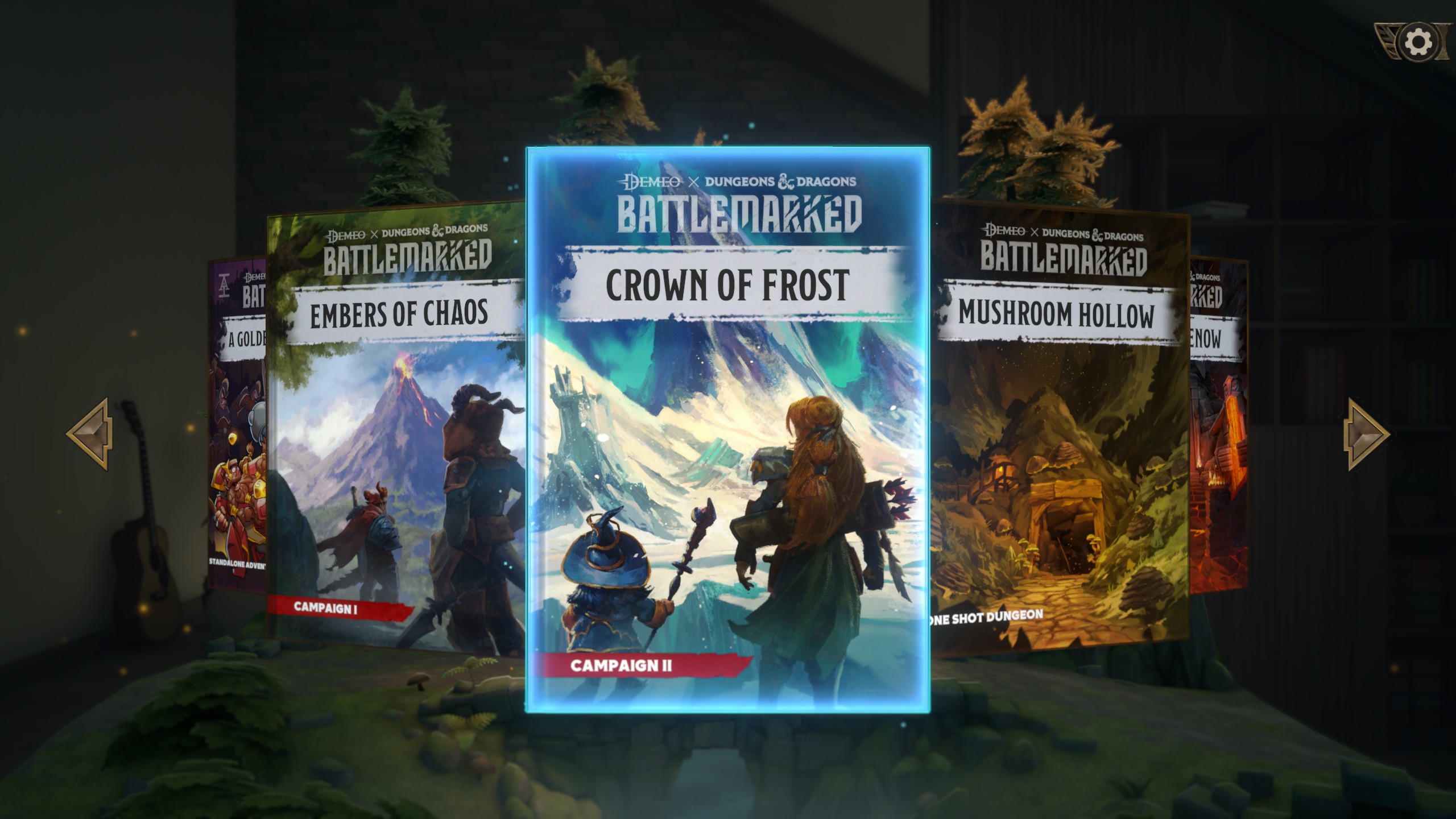
Let's spare a thought for the Forgotten Realms of old, through which we've wandered in the likes of Baldur's Gate, Icewind Dale and Neverwinter Nights. The two campaigns in Battlemarked take us across the north of Faerûn. The first (Embers of Chaos) explores a conspiracy against elves and humans. The second (Crown of Frost) is a trek to Icewind Dale in the far north-west, to head off an invasion and solve the mystery behind it.
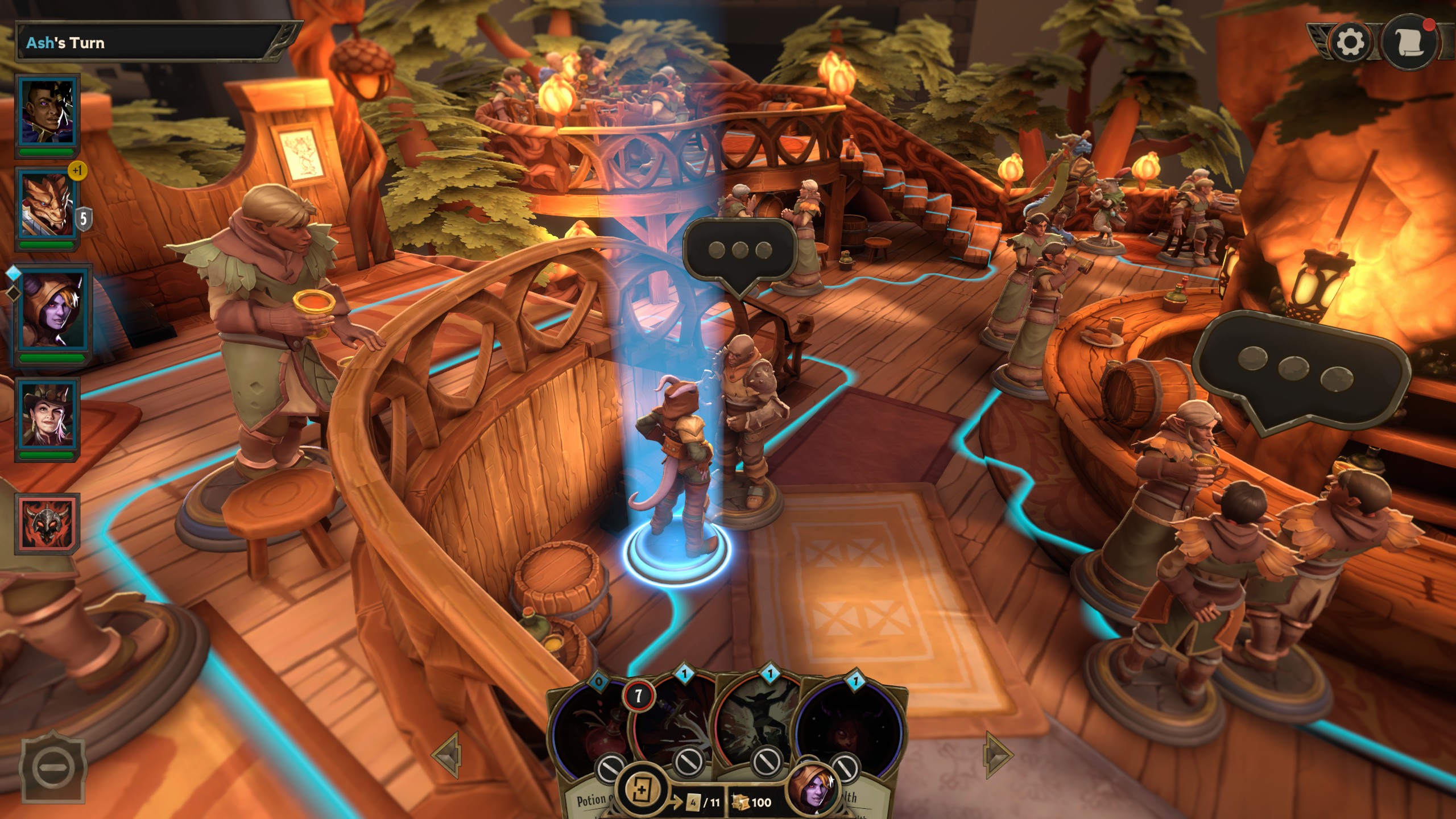
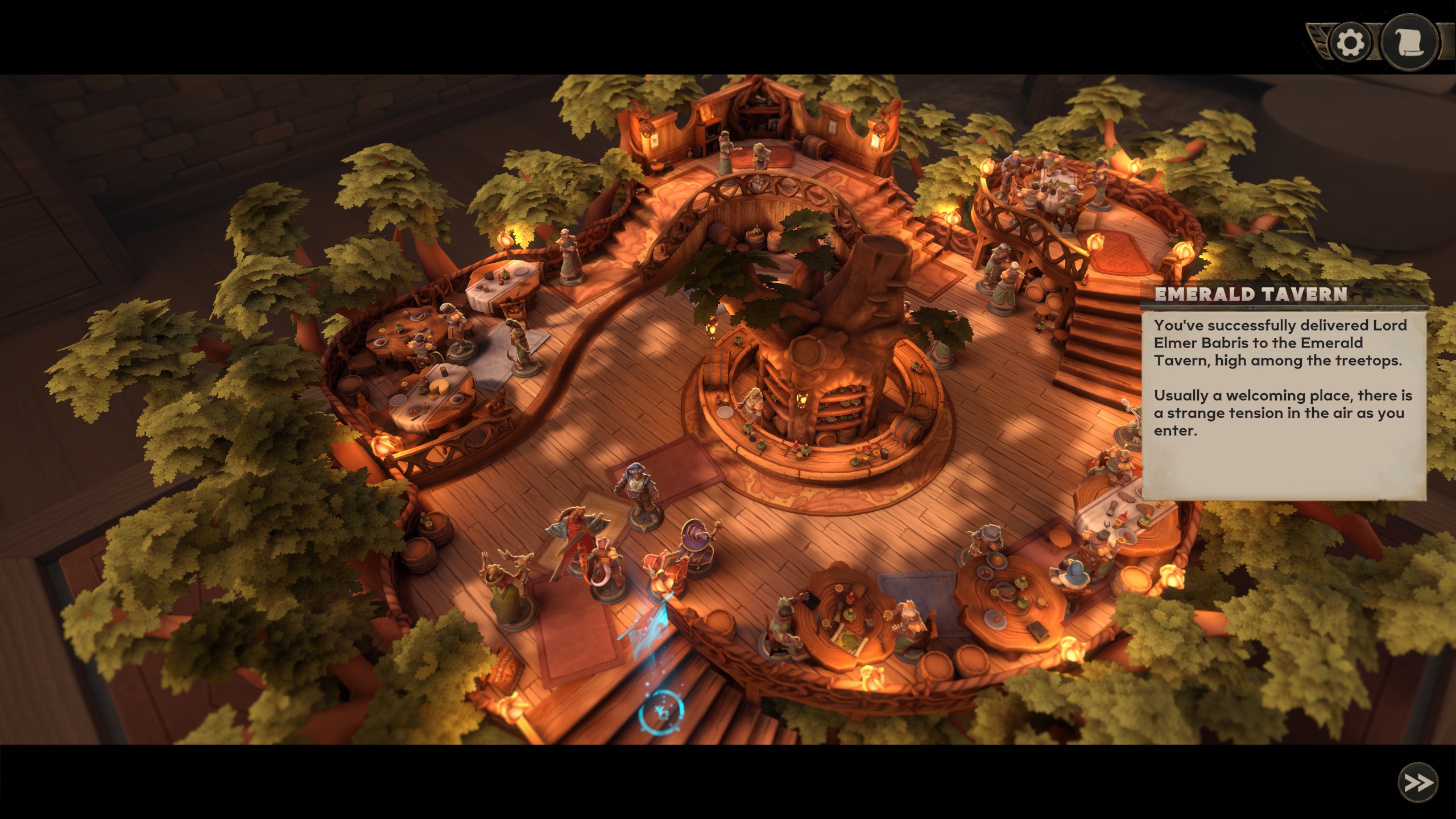
The tavern serves as a central hub where you pick up the latest rumours, hear out the locals' grievances and collect a cluster of side quests. Acoustic guitar chords and flute melodies set exactly the backdrop you need before things heat up, and the combination of music, subtle but dense sound design and voice acting contributes massively to Battlemarked's level of polish.
And the party? The party is a group of up to four members, who can be Fighter, Paladin, Sorcerer, Bard, Rogue or Ranger, or the classes added in more recent updates, namely Warlock and Druid. Their portraits (and races) are fixed, but the figurines can be recoloured and you can customise your build by picking a secondary attribute (and, implicitly, your development path after levelling up). Don't expect anything too complex, as the talent trees are ultimately just lines on a character sheet, but some of the perks you can pick up this way are absolutely devastating in the right context. From passive bonuses to new spells or a higher hand limit, the way you spend your talent points is what customises your kit, and experience levels persist between campaigns.
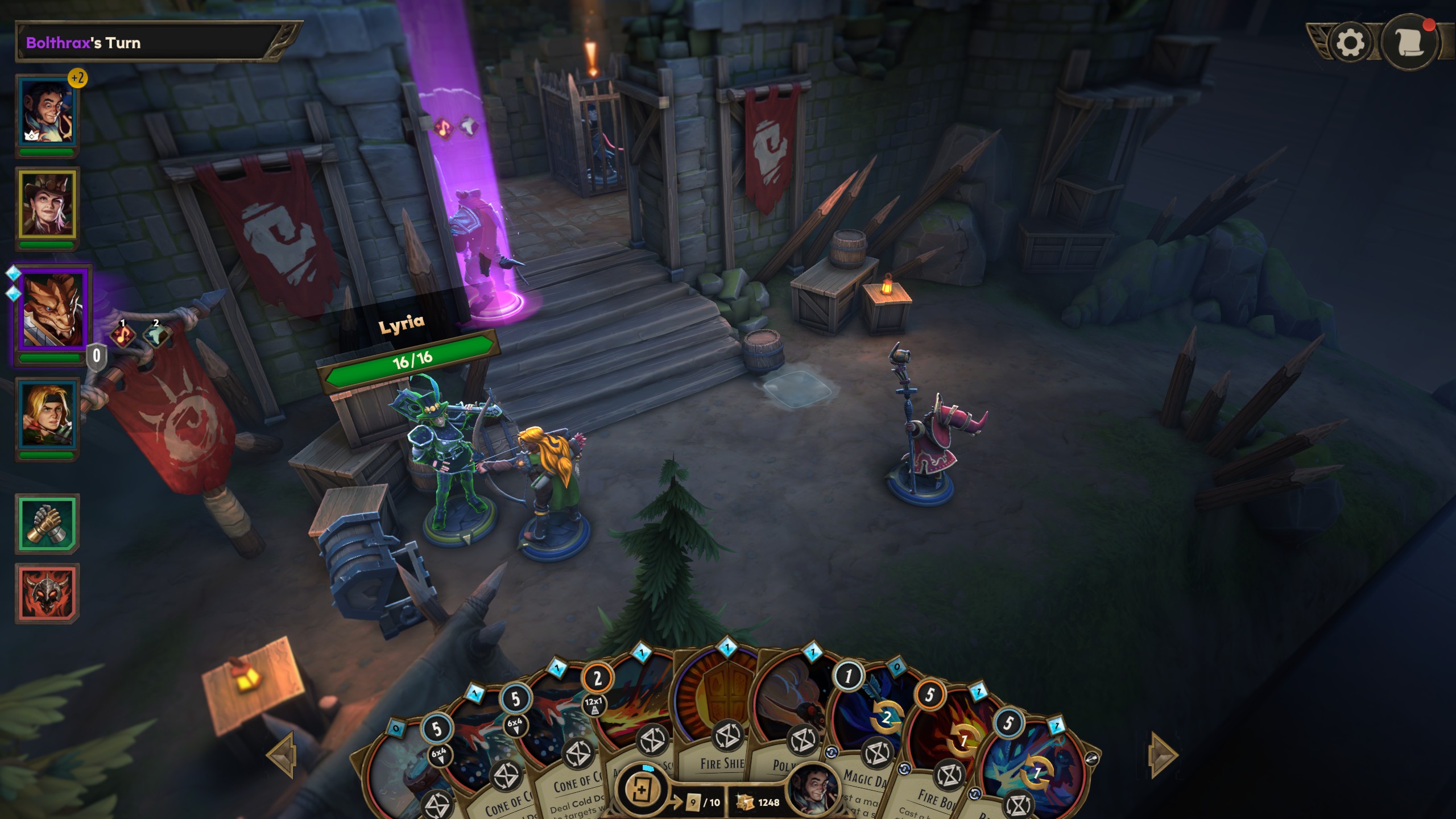
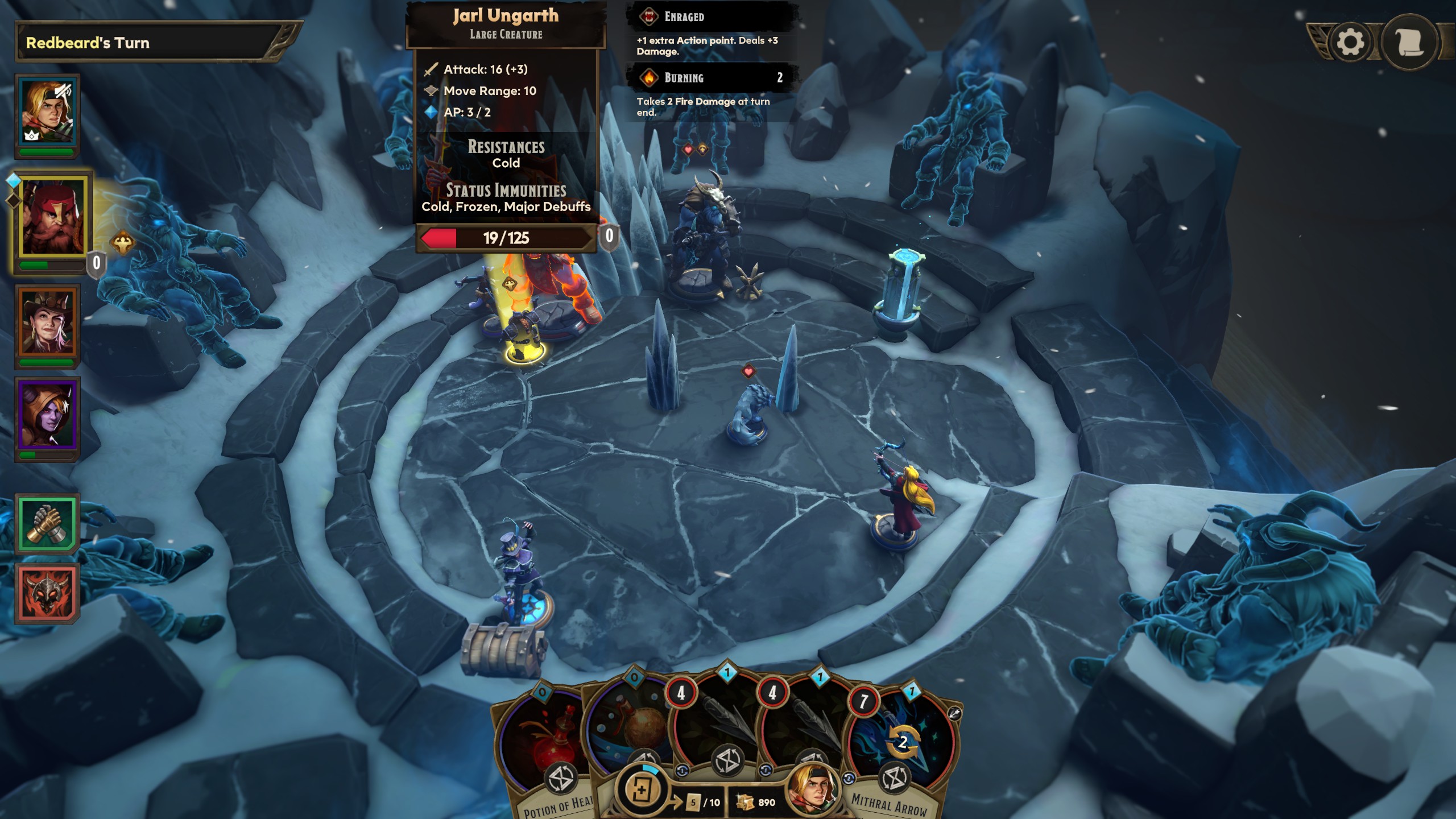
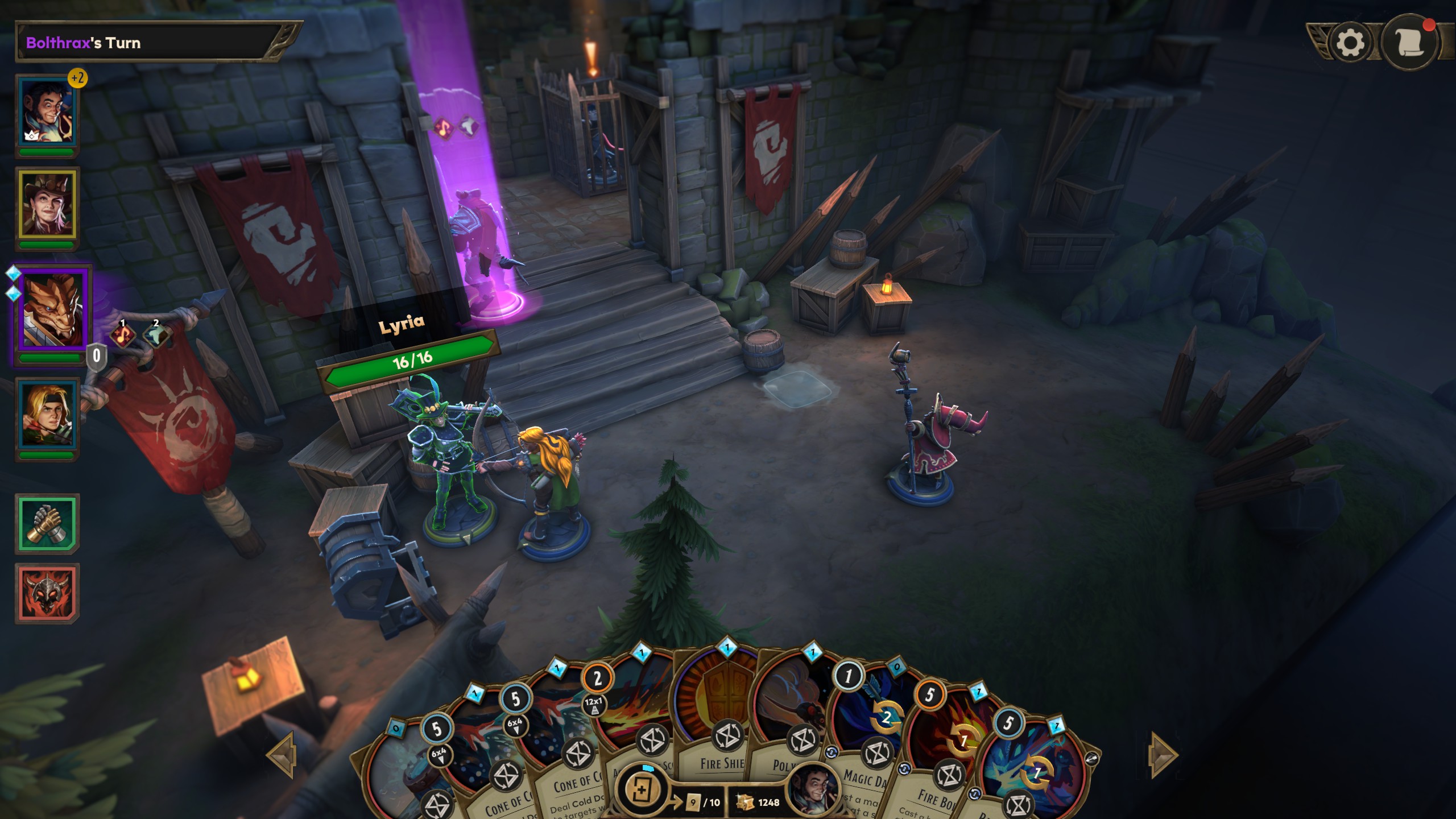
Each class comes with its own deck of cards representing the abilities you can use on your turn, just like in Demeo. You get two actions per turn, in tiny arenas and dungeons of three or four floors that now and then show a surprising level of tactical depth. Chokepoints, killzones and space control emerge organically as your whole team works in unison against a more numerous enemy, fumbling through the fog of war in search of the exit and trying to keep some semblance of tactical sense while being forced to give up its most powerful cards to put off disaster.
The world map, the flavour text and even the tone of the descriptions often reach the standard set by the best CRPGs, with easter eggs and references scattered through the quests and achievement names. It's all on the scale and level of detail you'd expect from a digital board game, of course, but pointed and well measured enough that you greet each nod with a mix of recognition and nostalgia.
The bosses have DnD-style ability rotations and vulnerabilities, but they struck me as slightly undertuned at launch. Fortunately, an update has since arrived that lets you pick tougher difficulty levels if the base game feels too easy. If you choose to play with friends, that leniency is welcome, since it means moments of total chaos or critical fails don't end your session prematurely.
Reviving a downed character costs a single action point, which means you can take far more risks than if death were permanent. Chain reactions, explosive barrels in the scenery and area spells turn almost every encounter into an emotional rollercoaster in which you still have a chance, provided enough factors are working in your favour and at least one hero is left standing.
Each class's kit (or deck of cards) has fairly simple, clear synergies, broadly in tune with the traditional roles you need in an RPG. The Fighter and Paladin have classic tanking abilities, with taunts, armour and defensive skills. The Bard is all about utility, the Sorcerer is a glass cannon, and the Rogue and Ranger dominate the battlefield through mobility and subterfuge, and ranged attacks, respectively. And if the base roster isn't enough for you, two more classes have arrived since launch: the Warlock and the Druid. The former has curses in their arsenal, adding a much-needed layer of buffing and debuffing to fights. The Druid, naturally, is a hybrid class with an arsenal of spells and crowd control that complements the ability to turn into a giant bear.
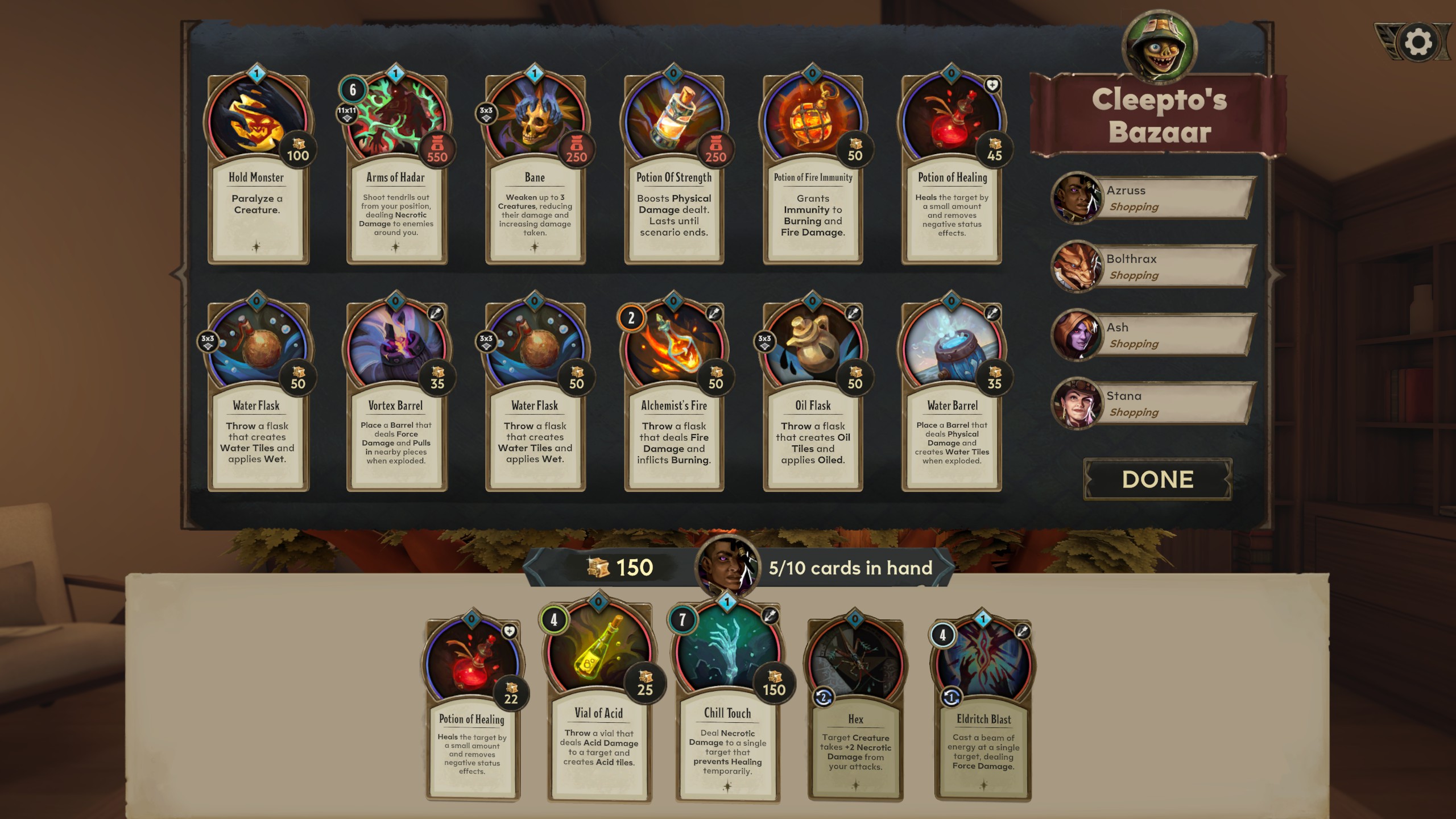
You can spend your gold at a bazaar that turns up occasionally between adventures, where you can buy equipment, potions and neutral spells. You're encouraged to do so as often as possible, because it's the only way to use up your resources. The gear consists of ballistas, healing potions and all sorts of obstacles, traps and modifiers that you can use in tandem with your abilities to set off spectacular chain reactions.
A friend in need is a friend indeed, but a friend who rolls natty 20s is better.
I've had the chance to put a few dozen hours into Battlemarked with friends, and about a dozen on my own. As expected, the fun factor is exponentially higher in co-op, but campaigns run much longer, because the length of each turn depends on every player's plans and preparation.
It's good to see how plug-and-play everything is: you can swap party members in the middle of a campaign if you need to. Even if, say, none of your friends are interested in Battlemarked, the public lobbies are full of people who are also looking for a less lonely experience. If you prefer playing in VR, that's part of the crossplay too.
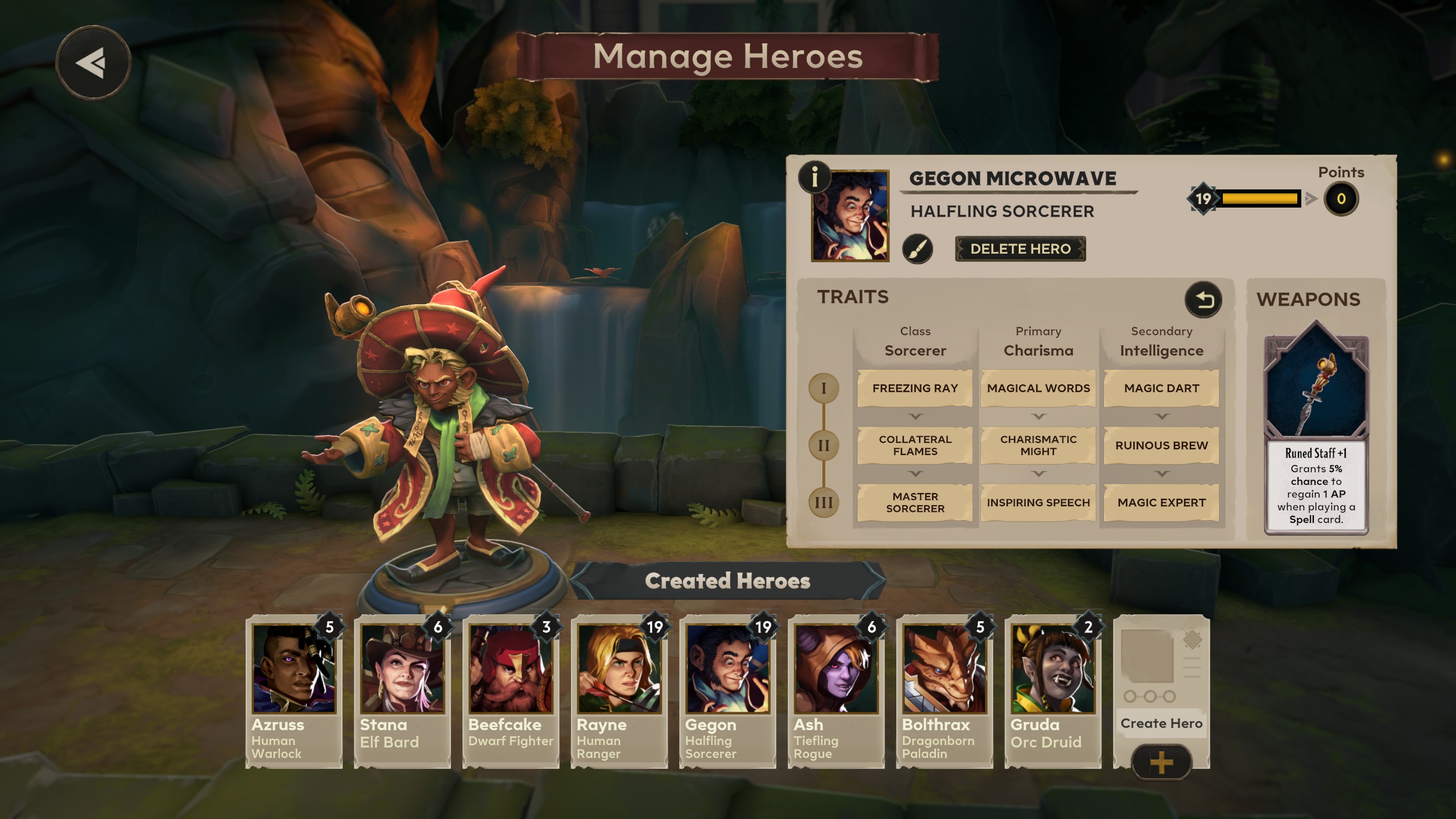
Beyond all that, though, what kept me coming back was the steady stream of updates since launch. Two classes (and the new quests needed to unlock them), a mini-campaign in collaboration with Jerry Holkins of Penny Arcade, and numerous upgrades that tackled my initial gripes (a more complex skill tree, henchmen who level up, and a richer bazaar). All of this at a shelf price of 30 euros is the sign of a product that values its userbase and, on a personal level, has made Battlemarked a recurring experience in which I've had more fun, and more often, than in any other tabletop game in the last two years.
The game is an excellent entry point into the Dungeons & Dragons universe. I'm convinced it won't satisfy everyone, and there's room for improvement in the synergies and the variety of combos. At the same time, its evolution since launch has addressed the criticisms levelled at it initially, one by one, and the replayability, together with the new content, promises a few dozen more hours of chaos and fun.

Played on: PC (Steam)
Release date: 20 November 2025
Developer: Resolution Games
Publisher: Resolution Games
Plus
- High production values across the board
- Steady, consistent post-launch updates
- Crossplay and VR, satisfying co-op
Minus
- A touch simplistic for the most hardcore of the player base
- Limited customisation, very little roleplaying
0 votes
Scroll down here and stay on the page for at least 30 seconds to vote.
Pick a score from 0 to 10 (halves are allowed).