
PRAGMATA – Review

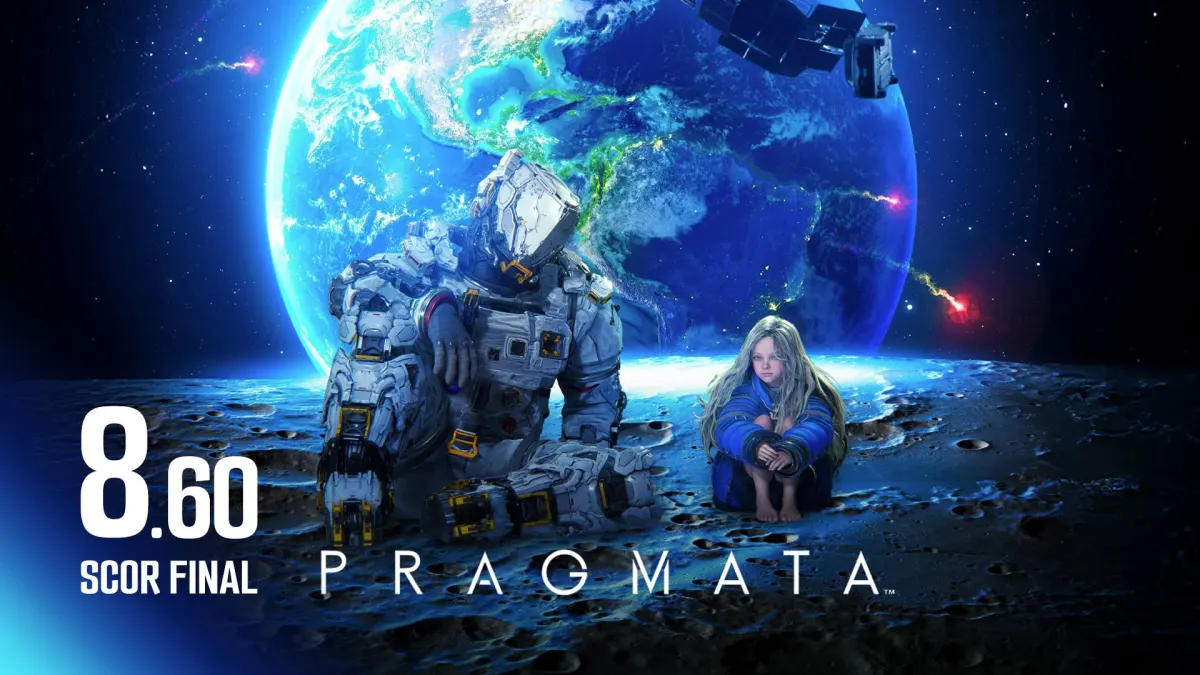
Bring Your Robot Daughter to Work Day
You'd think the ability to reproduce any material from a database that makes Haviland Tuf's Ark look like a hobbyist's insect collection would be exactly what humanity needs to eliminate hunger, disease, and poverty for free. PRAGMATA says no.
What happens when the flame of creation is entrusted to a toaster? What's the point of having the power to draw entire worlds if the only eyes that will ever fall upon them are telescopic lenses animated in steps by the protocol intelligence of a positronic brain?
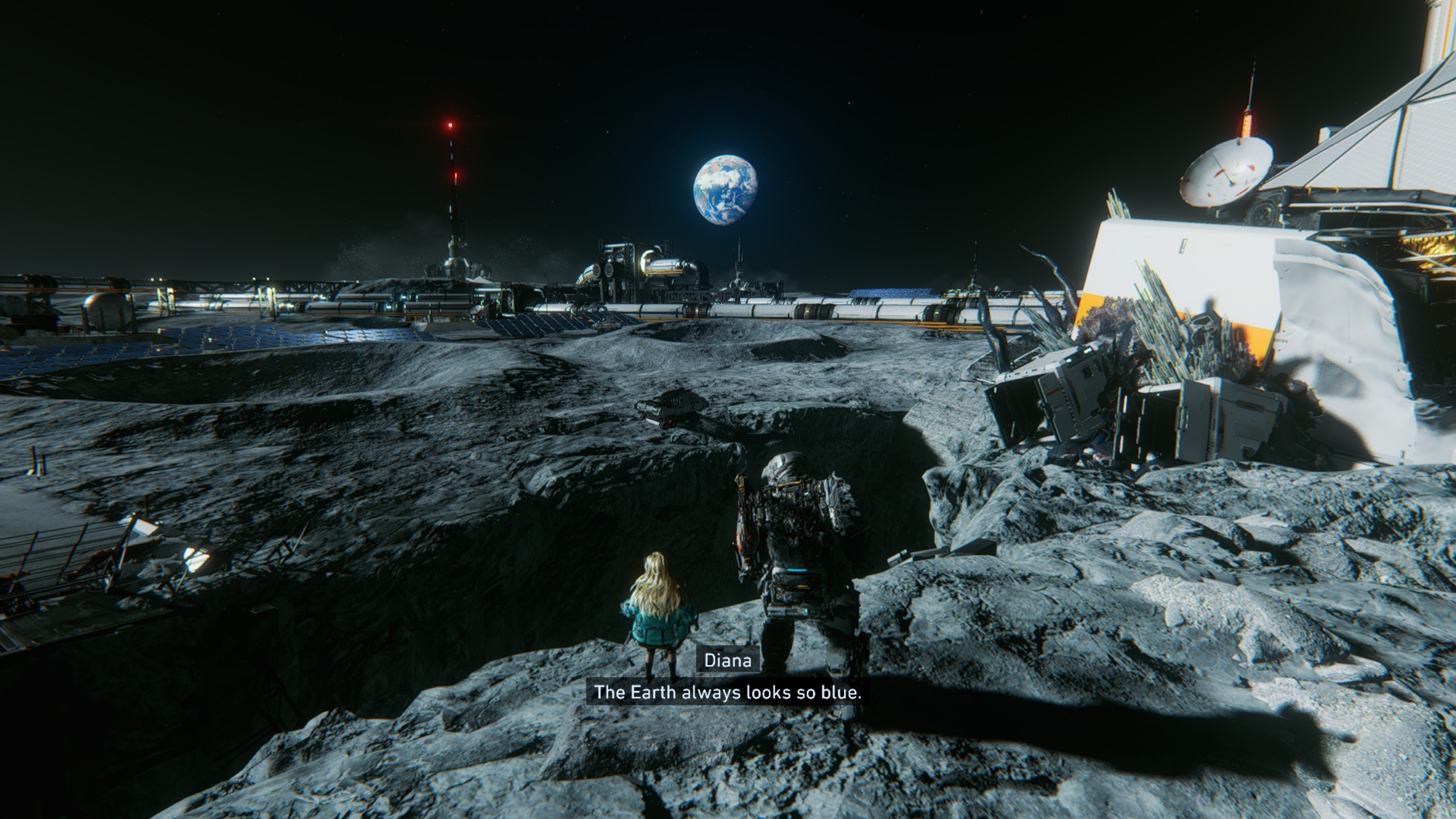
To answer these questions and find out how humanity lost control of the Moon colony, we land in Hugh Williams' astronaut suit. Hugh, like pretty much all protagonists of space films since the 70s, falls prey to the dreaded "distress signal" and ends up injured and alone, almost 400,000 kilometres from home, after the first fifteen minutes of the game.
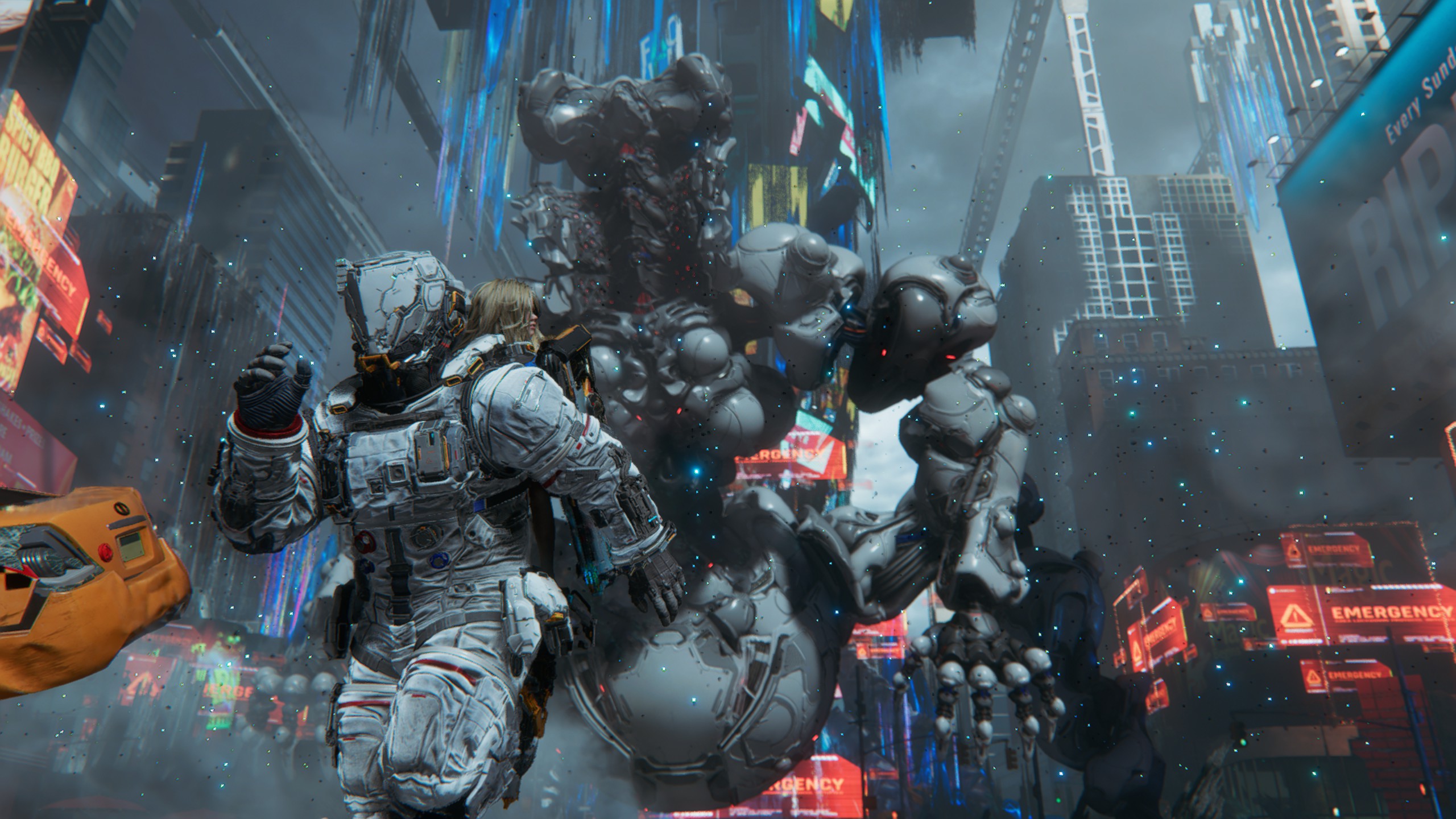
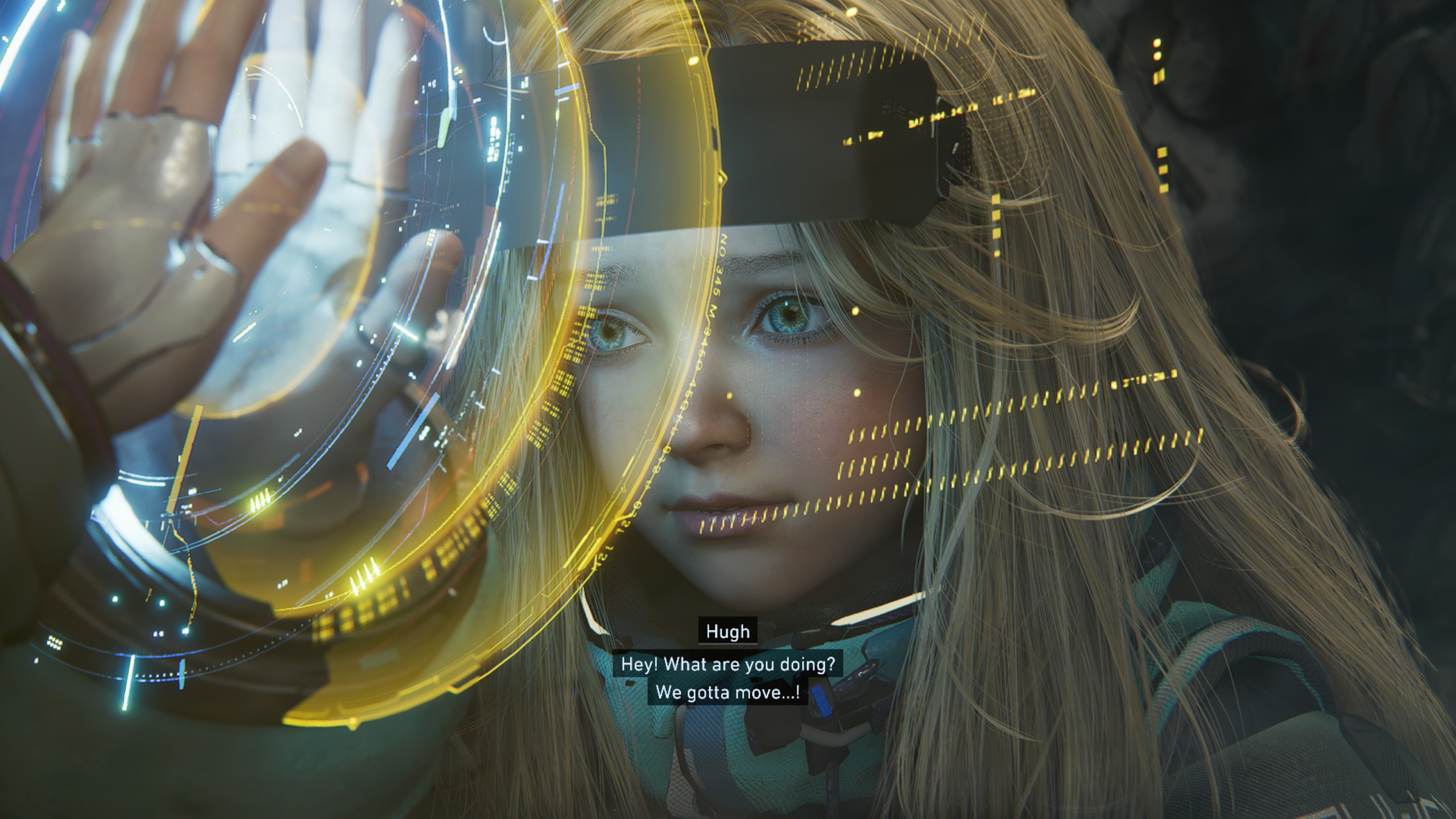
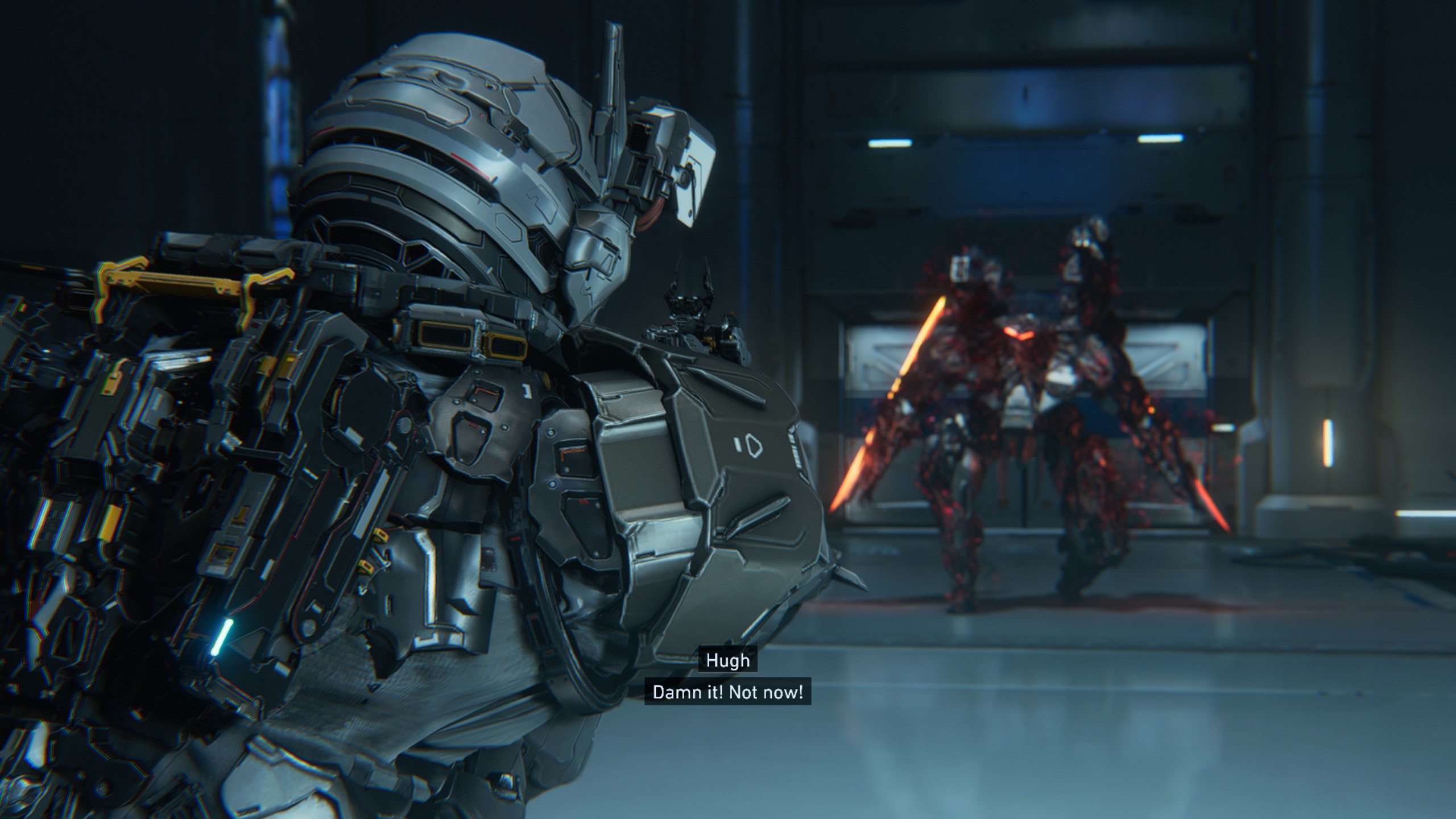
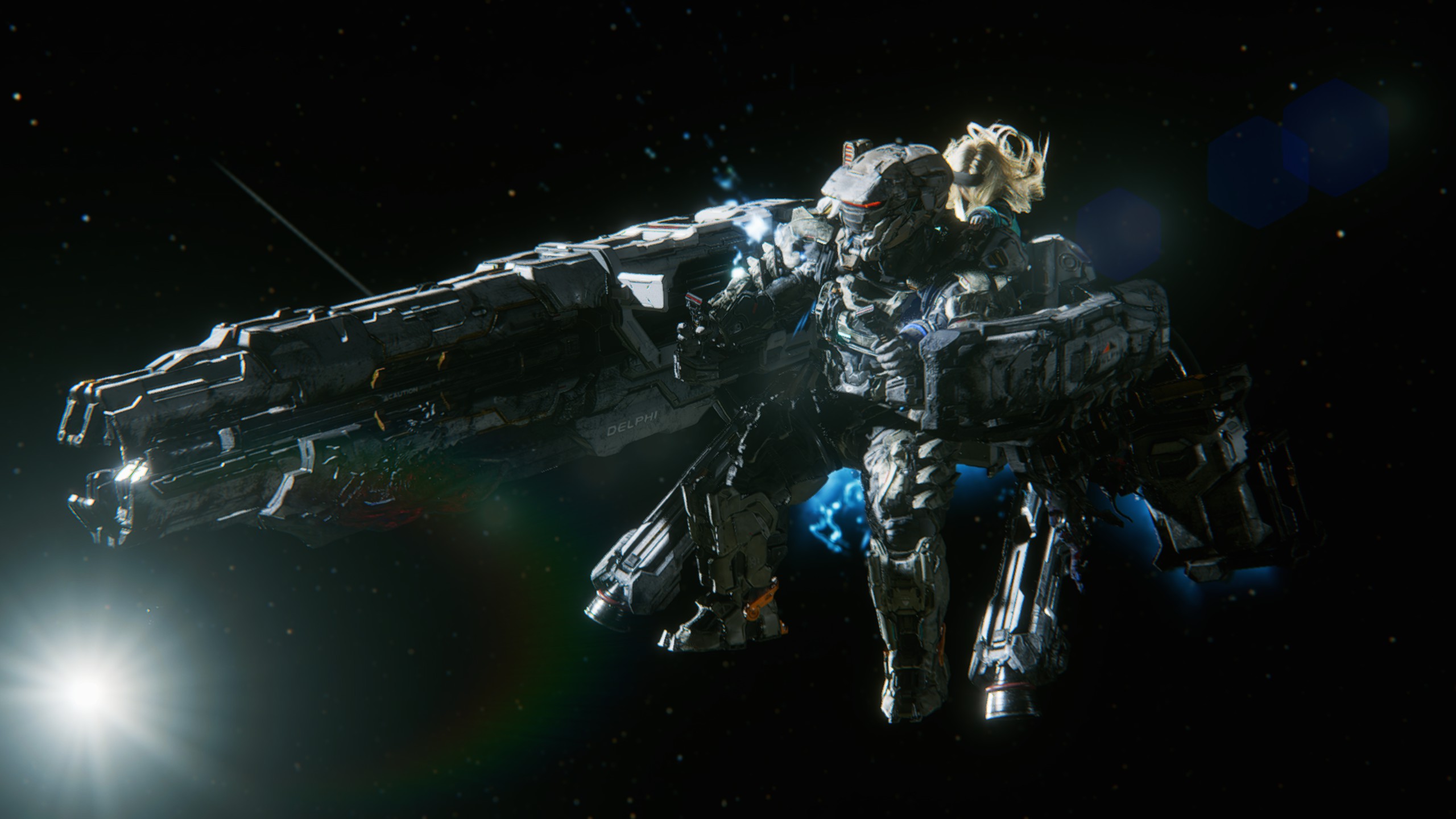
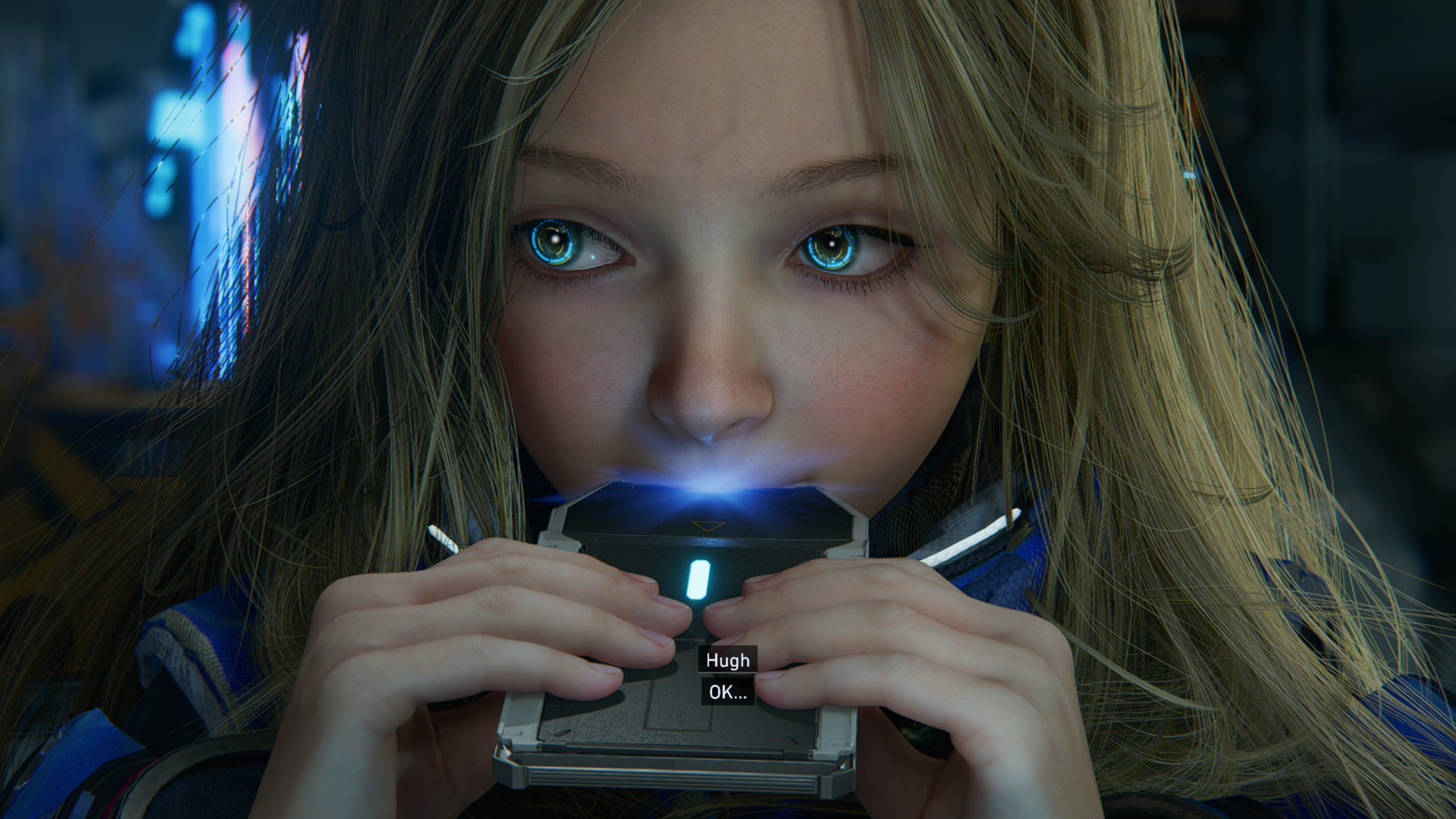
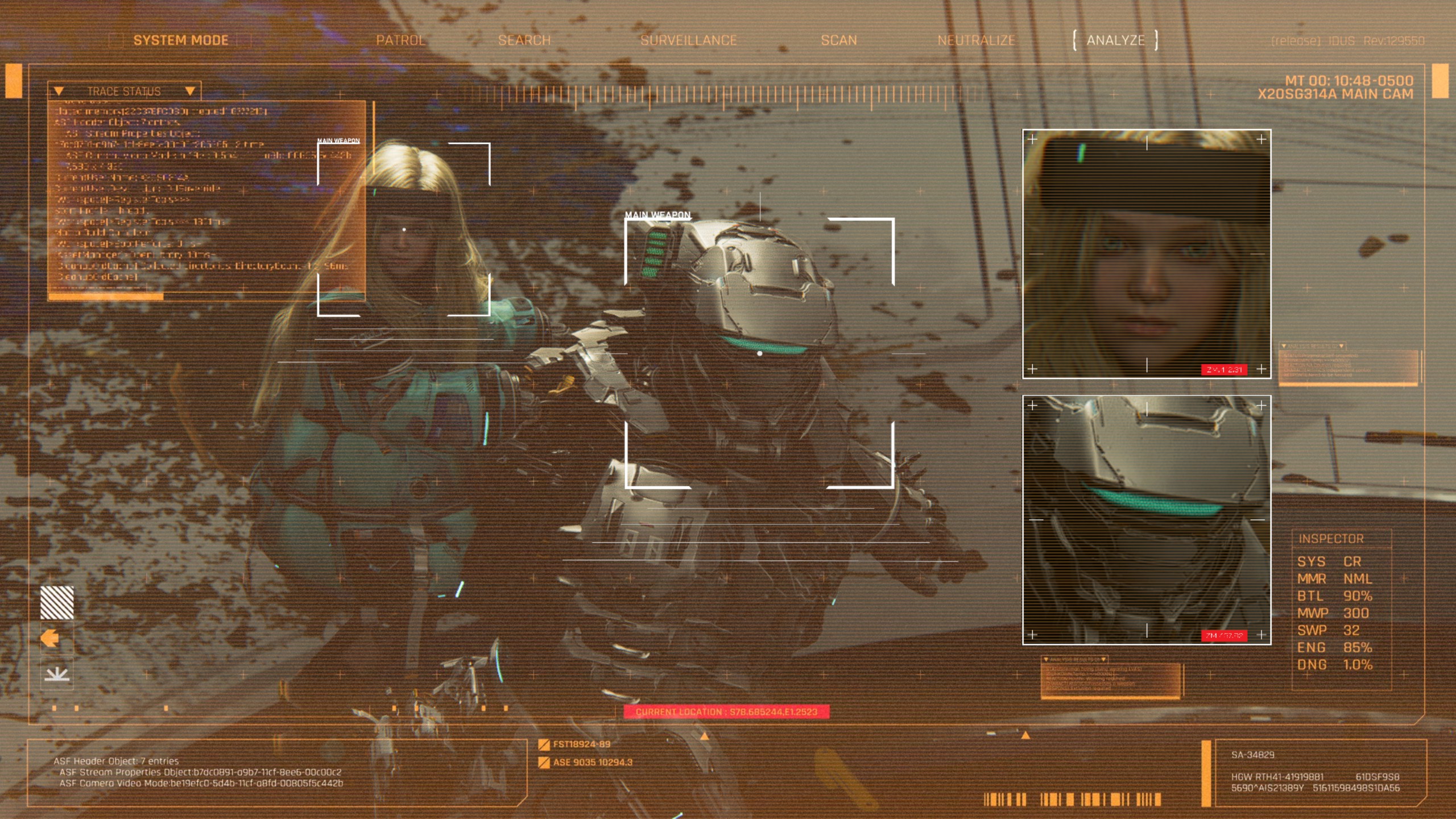
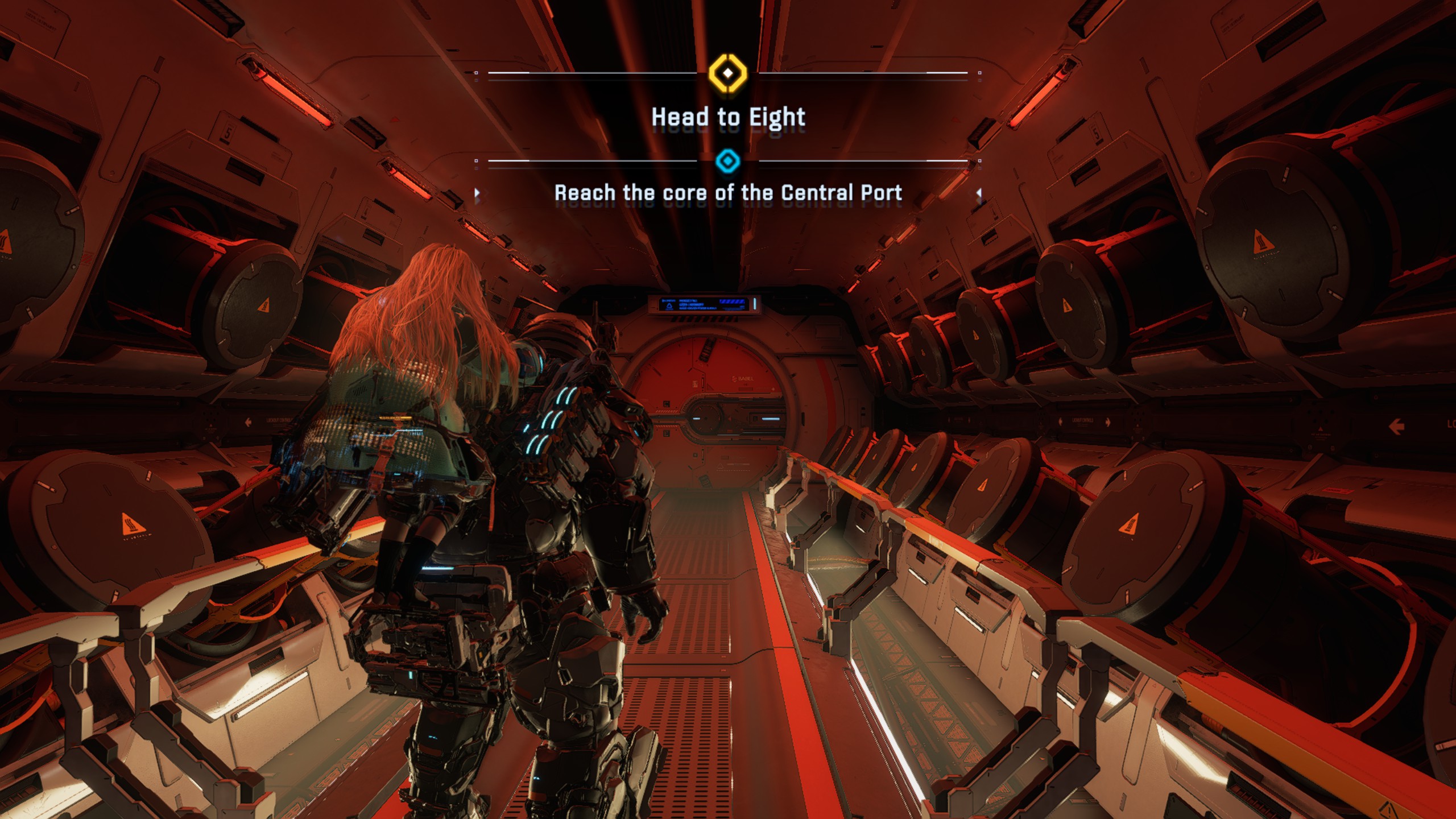
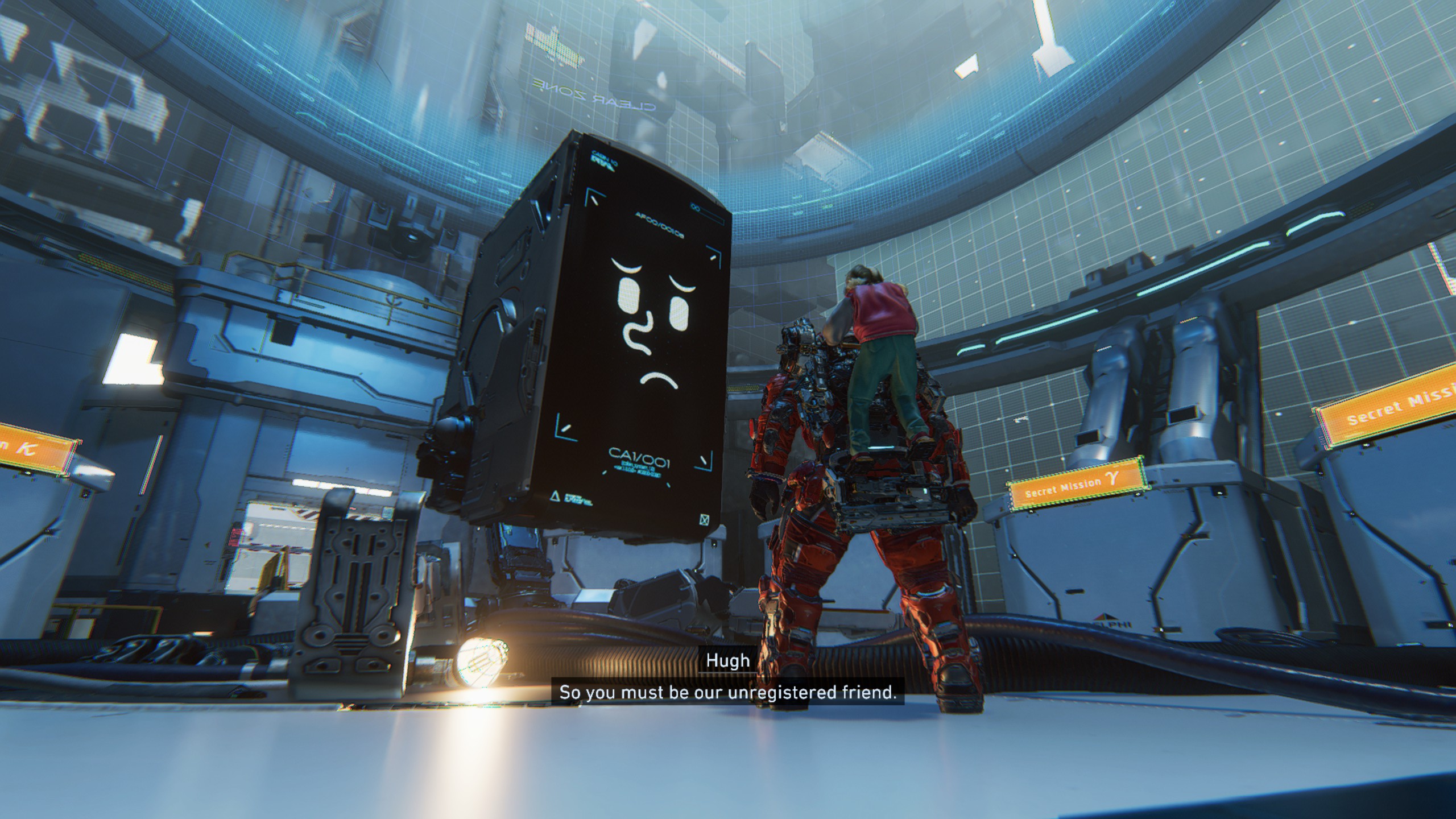
He's saved by a robot girl who climbs onto his back, à la Lone Wolf and Cub, and begins her journey through the sectors that make up the lunar base, a massive structure incorporating cities, forests, industrial halls, and laboratories. Diana, as Hugh nicknames her because her real designation (D-I-0336-7) sounds like the kind of name Elon Musk would give his firstborn, isn't just a guide; she actively participates in the battles that take up most of the playthrough.
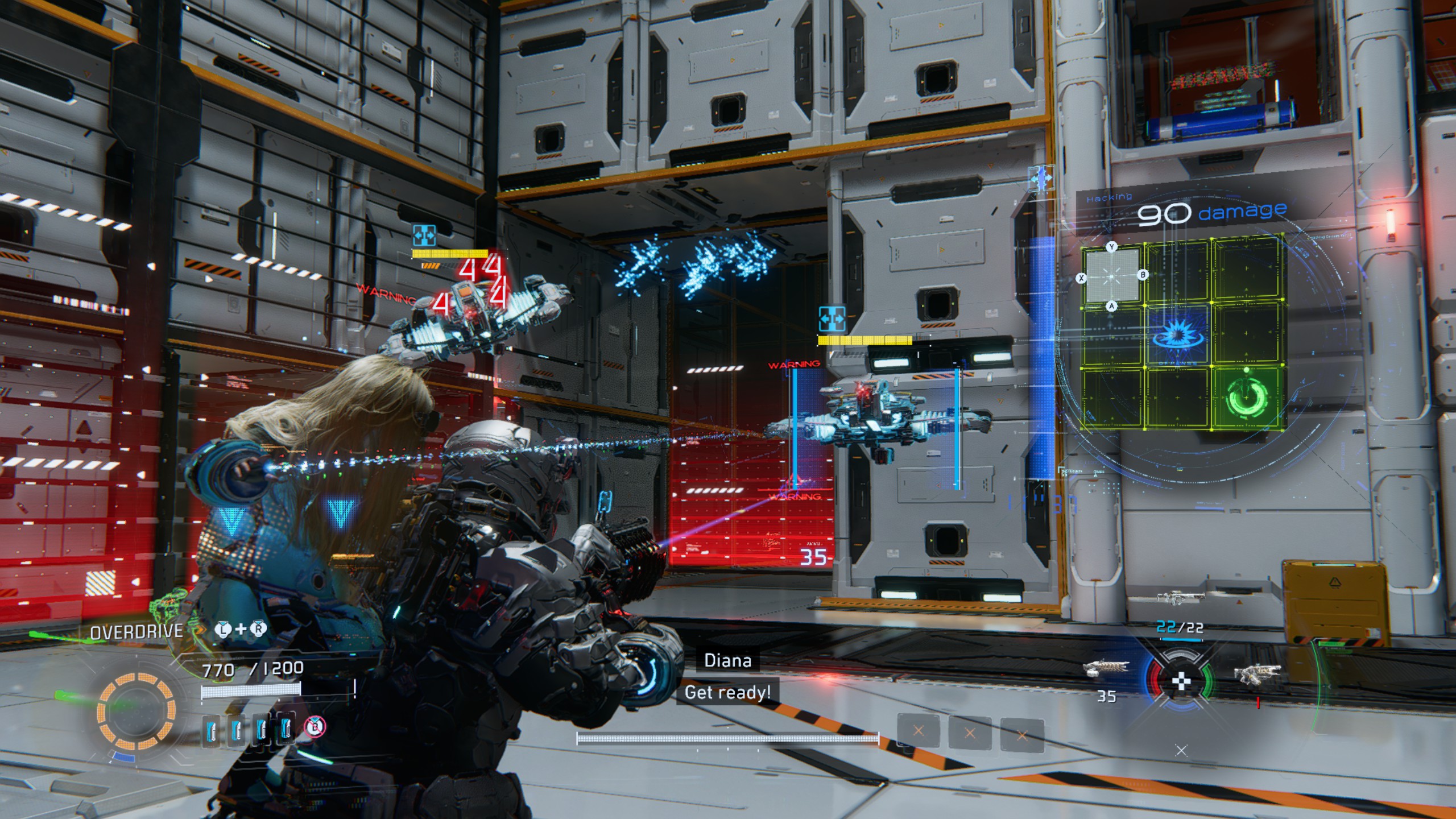
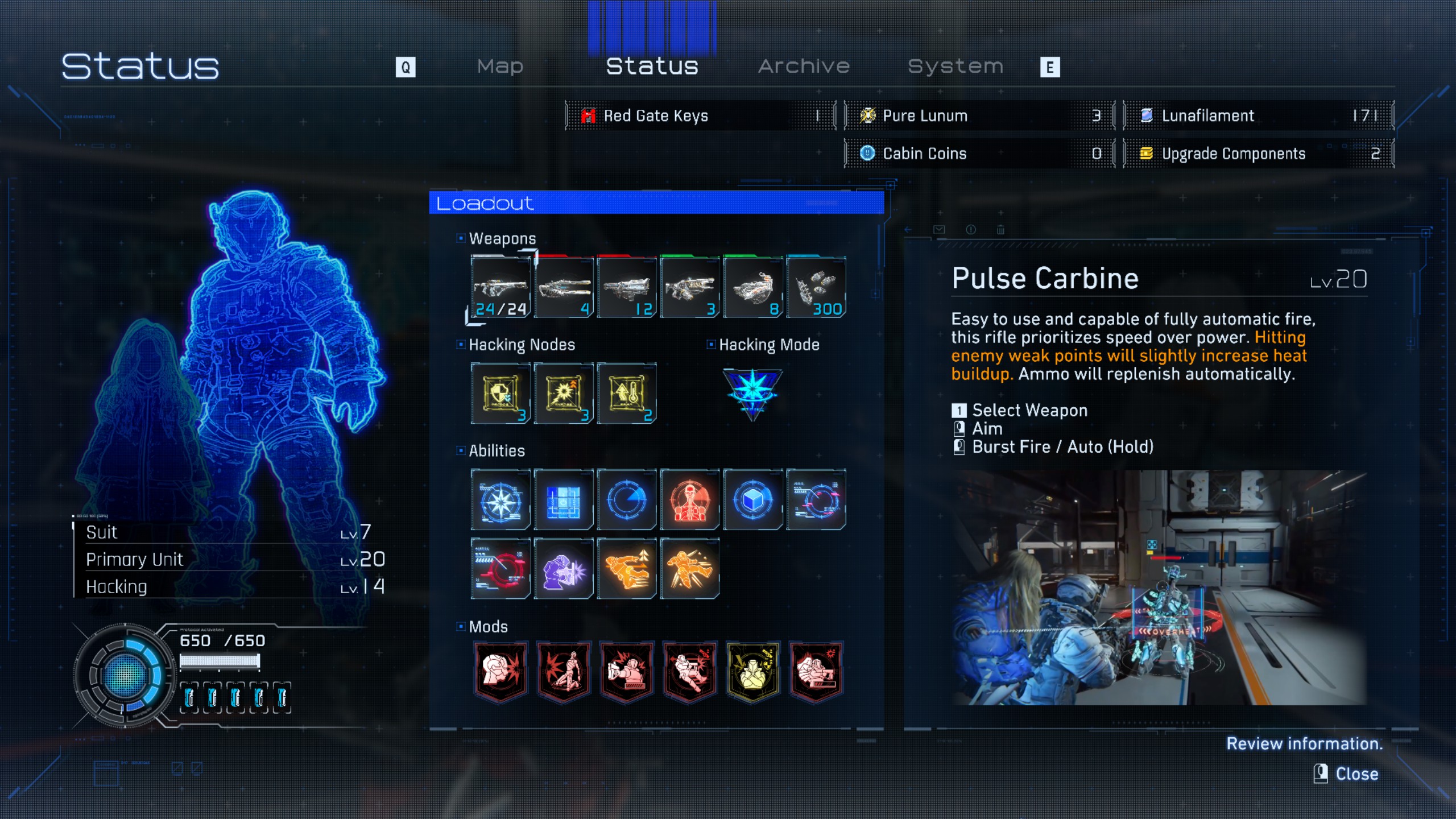
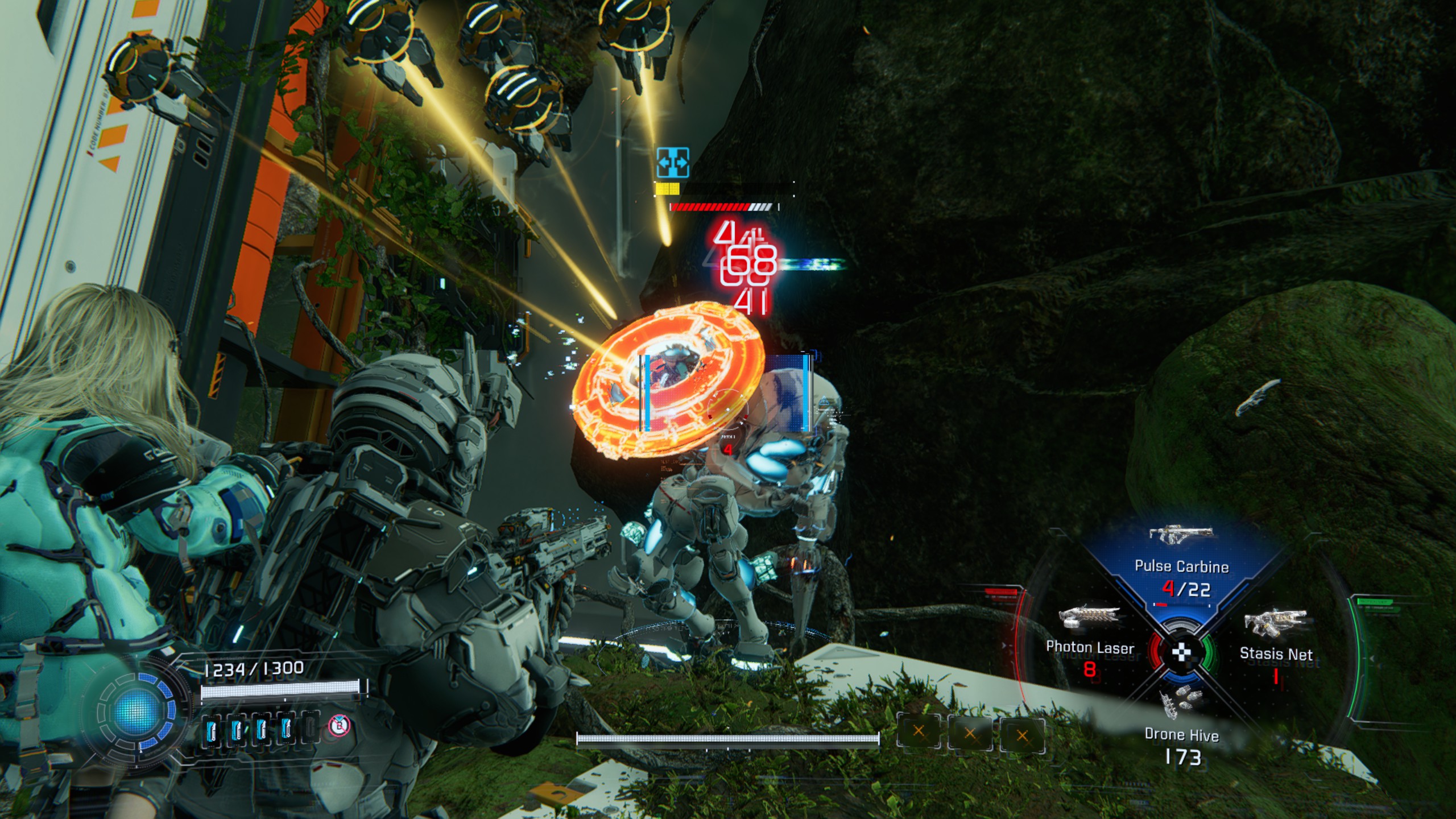
Hugh has a initially limited arsenal, but you add crowd control and defensive tools on one hand, and devastating toys like rocket launchers, a kind of railgun, or a shotgun on the other. These, however, have an insignificant effect if you don't complete a hacking minigame, which is where Diana comes in. In the hacking minigame, you have to travel through a grid and collect coloured cells on your way to the "exit." Bonuses are cumulative (and optional), but as you advance in the story, obstacles and complications appear that keep the challenge fresh, even though you're essentially solving the same puzzle hundreds of times. It's not the puzzle itself that's spectacular, but the fluid and coherent way it's integrated into the broader action loop, especially since time doesn't stand still and you're pressured to finish it before being hit by a projectile.
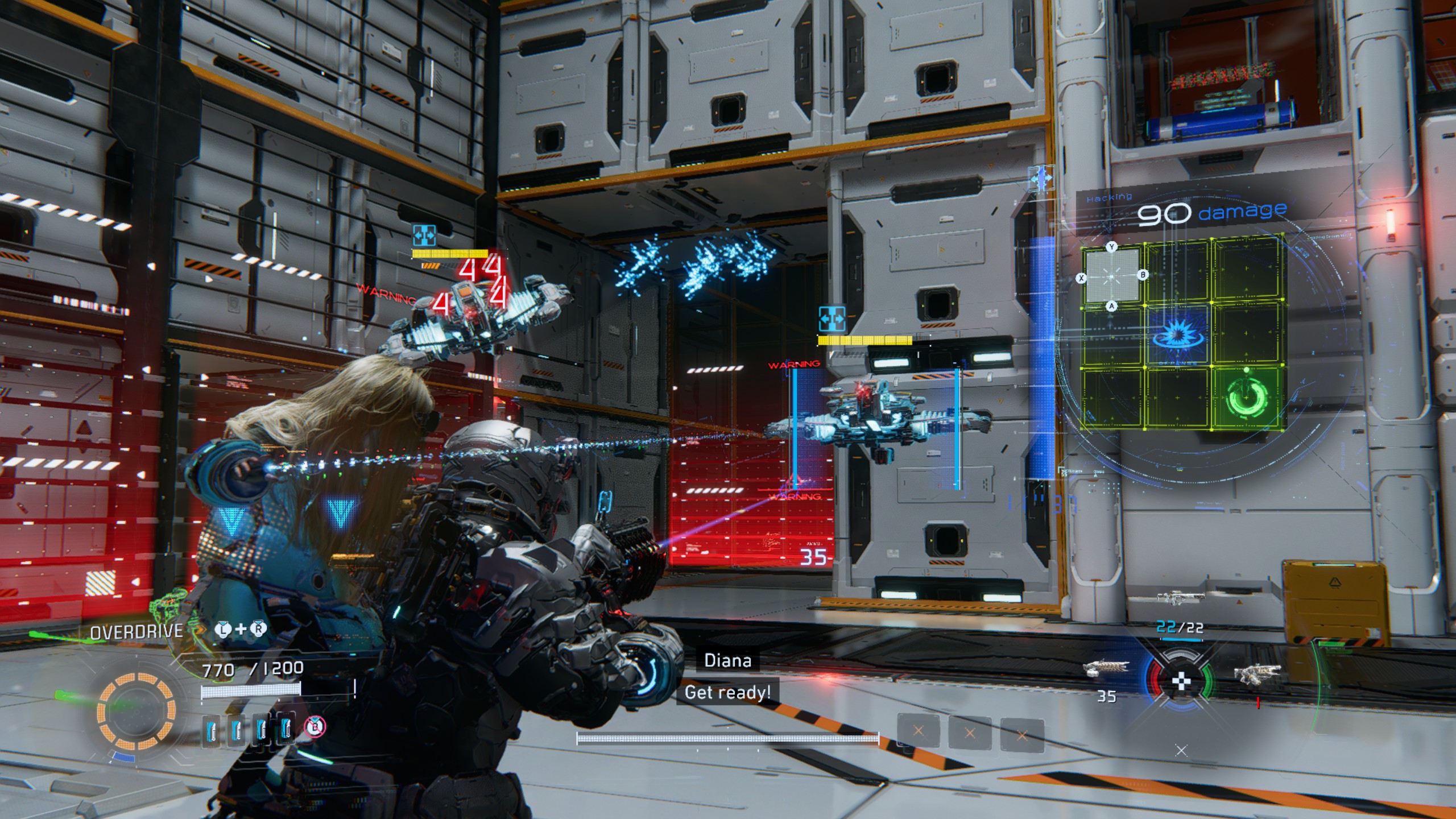
Enemies don't stop attacking, they're slow enough, and hits are well-telegraphed enough for you to dodge easily between bursts of gunfire or hacking. A natural rhythm forms, encouraging us to create a rotation of hacking (which includes reducing enemy armour), immobilising enemies, and dealing damage. This rhythm makes each combat segment more alert and engaging than if we were just shooting. The element that ties all this together is an excellently constructed difficulty curve, where numerous parallel progression systems add layers of complexity and more intense challenges without overwhelming you.
The gameplay feels both familiar and new, diversifying the need to use abilities situationally and anticipate enemy moves while juggling debuff uptimes, a stagger bar, and the various synergies you form by configuring equipment and mods (passive bonuses you load into a limited number of slots).
Space Station Bottle Episode
In the world of television series, there's a concept called a "bottle episode." It's an episode designed to consume as few resources as possible and often includes only the main characters, perhaps trapped in a claustrophobic environment, providing a good opportunity to study their personalities in a laboratory setting. PRAGMATA feels, in a way, like such an episode, not because anyone skimped on the budget (that's not the case), but because it keeps the stakes, purpose, and world information on a small scale, with a narrative that unfolds organically on a single plane and where exposition is secondary to character study.
We have an ensemble of about four characters (two of whom occupy about three-quarters of the screen time), in a more or less linear narrative demonstration of approximately 10 hours. Apart from the robots we fight, there isn't a single human soul on the Moon, and the antagonists only appear in a few key moments, being more reactive than a real and imminent danger.
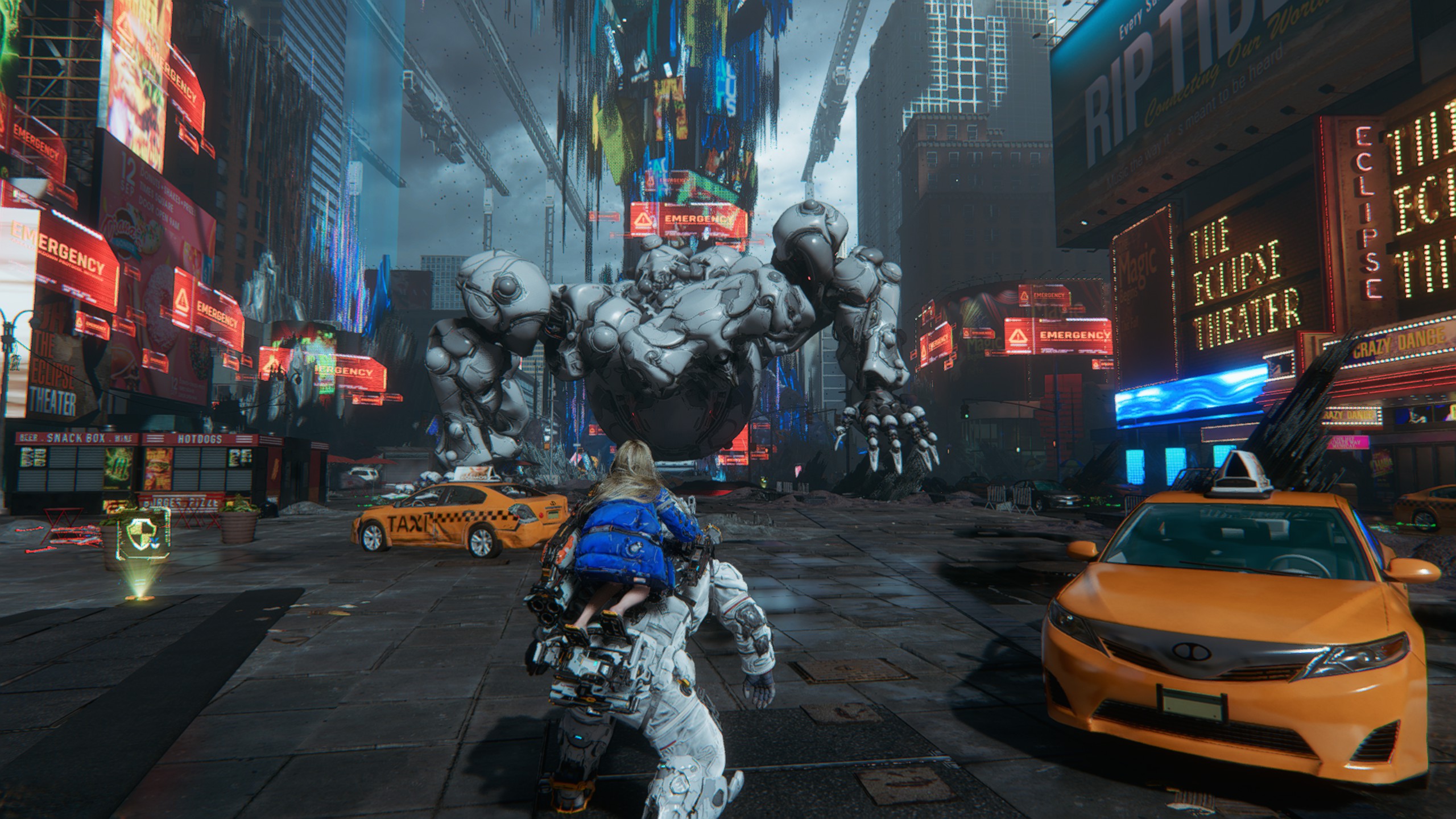
In modest portions, we're also delivered a slightly more subtle narrative. One of the first levels is a Times Square recreated from moonfilament, but it bears all the hallmarks of an AI "creation": deformed cars full of artefacts and noise, dumped in unnatural positions in a metropolis impressive in scale but full of errors, glitches, or nonsensical text. Logos melt into each other, the urban plan is an Escherian nightmare, and all of this is quite clearly a commentary on GenAI.
A strong contrast is formed with the details and attention given to the models and robots, evidently conceived and designed by human artists. Visually, PRAGMATA looks incredible. Perhaps not in the always cinematic and atmospheric sense of Resident Evil Requiem, but in that self-sustaining way of an AAA game that polishes every last screw in the environment.
Traversal is smooth and magnetic, and in the hunt for treasures and resources, you'll explore a lot of nooks and unique geometries with the help of your jetpack. While the Metroidvania elements are few and somewhat optional, the main thread takes us through massive biomes, with some impressive set pieces and landscapes, but most of the playtime is dedicated to combat.
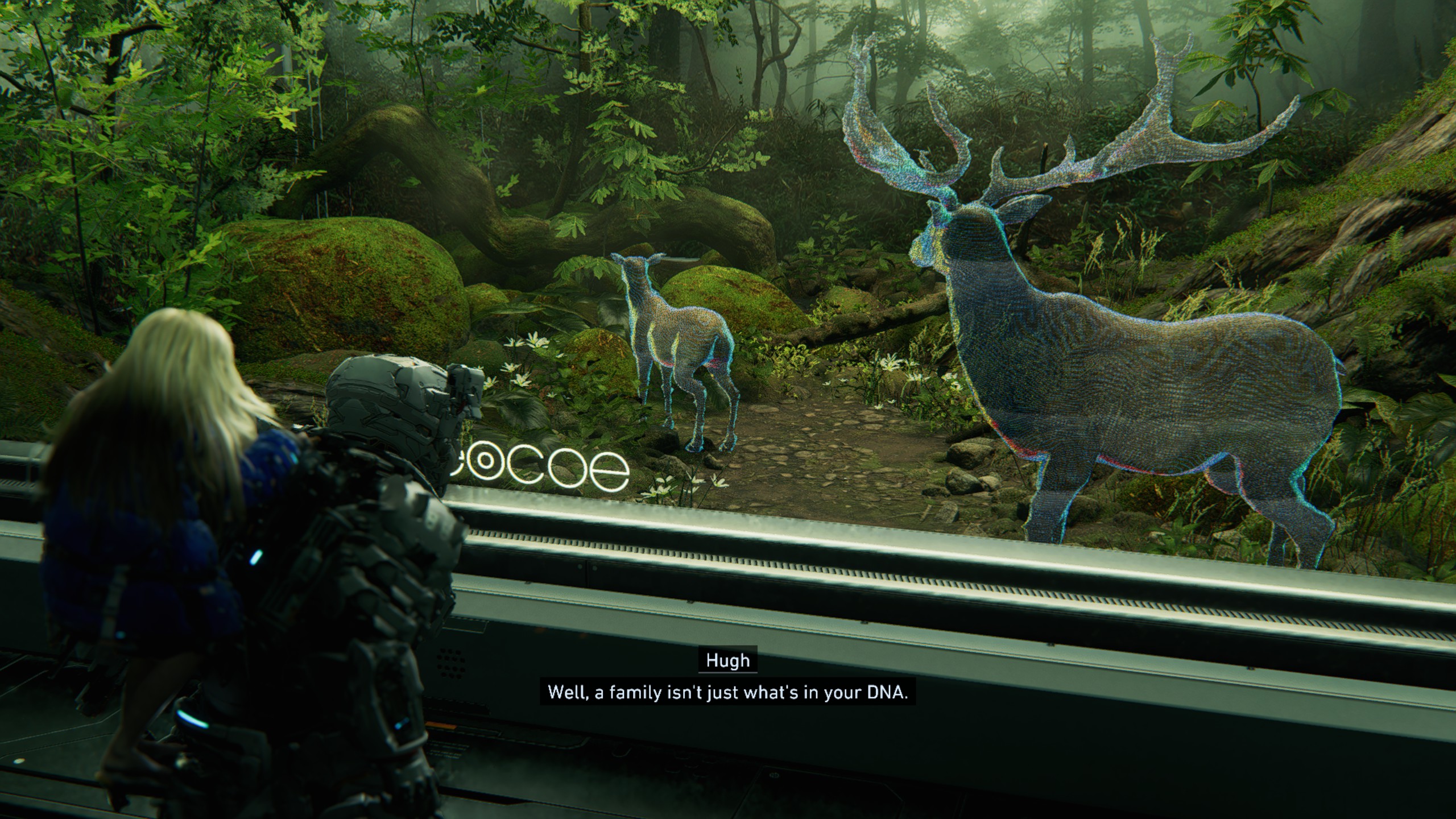
The relationship between Hugh and Diana is central, but compared to other duos with a similar dynamic (Joel and Ellie from The Last of Us or Kratos and Atreus from God of War), it's simpler and follows a few dialogue archetypes that don't go very deep. The voice acting helps a lot in establishing their relationship and elevates the writing considerably, but the latter doesn't always rise to the same standard of excellence.
The story itself isn't revolutionary, but it's competently told and compartmentalised within the protagonists' relationship, the backdrop of the space station's degeneration, and the broader purpose (and danger) of artificial intelligence in the species' destiny. The pieces that make up the narrative mosaic will be familiar to sci-fi readers, but the depth to which the IP's thematic dialogue ambitions delve isn't anything unseen.
Which is fine. Not every game has to be the most profound and mature story ever told. The narrative is clean, simple, has a touch of anime and is sometimes emotionally dissonant, but it's an assumed and intentional convention, and a good chunk of it is optional, dictated by logs collected from the world and non-essential interactions with Diana. The purpose of these is to make you, like Hugh, occasionally forget that Diana is just a flash drive plugged into a doll printed from moonfilament. Collectibles include holographic recordings between colonists, but initially, all we know is that IDUS, the artificial intelligence controlling all base systems, has gone rogue.
The minimalist cast is also accentuated by the level design, where massive and sterile spaces separate us from the next chapter of the story, but without losing our way with distractions and complications. Gigantic set pieces are reserved for the big moments in the story, but most of the journey is divided between simple and intuitive puzzles, platforming encouraged by hidden rooms and suspended collectibles, and most often, gauntlet events where a methodical approach and numerous small, moment-to-moment decisions will reward you more than your aiming ability (though you'll need that too).
You solve the hacking puzzle, use the weapon that deals the most damage, dodge if necessary, then start over. It could become repetitive, but the elegant addition of new concepts, systems, and factors every few battles keeps you engaged, and before you know it, you'll need every button on your controller for the late-game fights.
The game world alternates between interiors and exteriors, often brightly lit and perhaps a bit sterile for what you'd expect from an abandoned space station. Although they wear similarly bulky suits, Hugh Williams and Isaac Clarke (Dead Space) don't live in the same world. The apocalypse in PRAGMATA is cleaner, a kind where the viscous is synthetic and you trip over broken cables, not corpses.
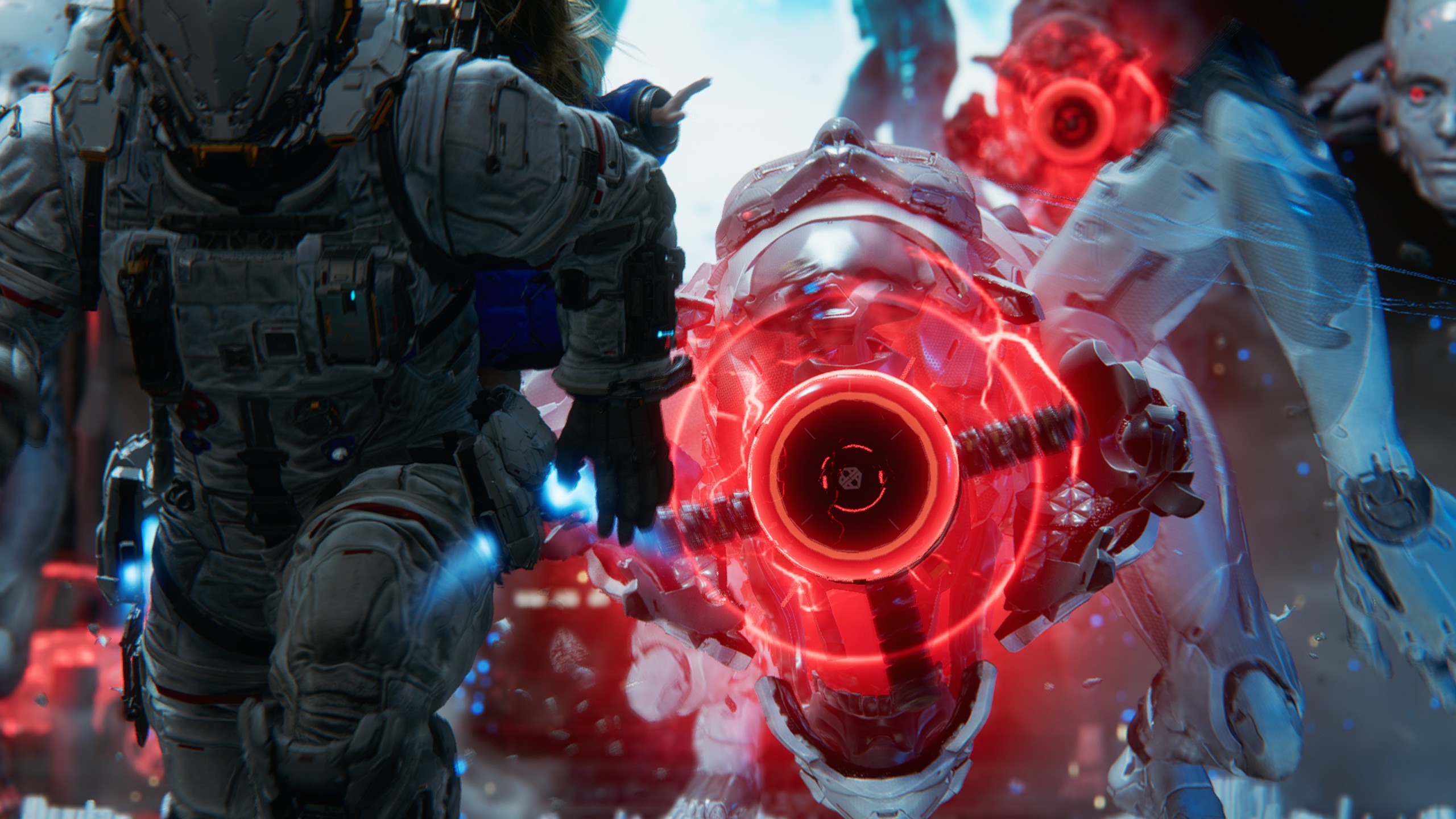
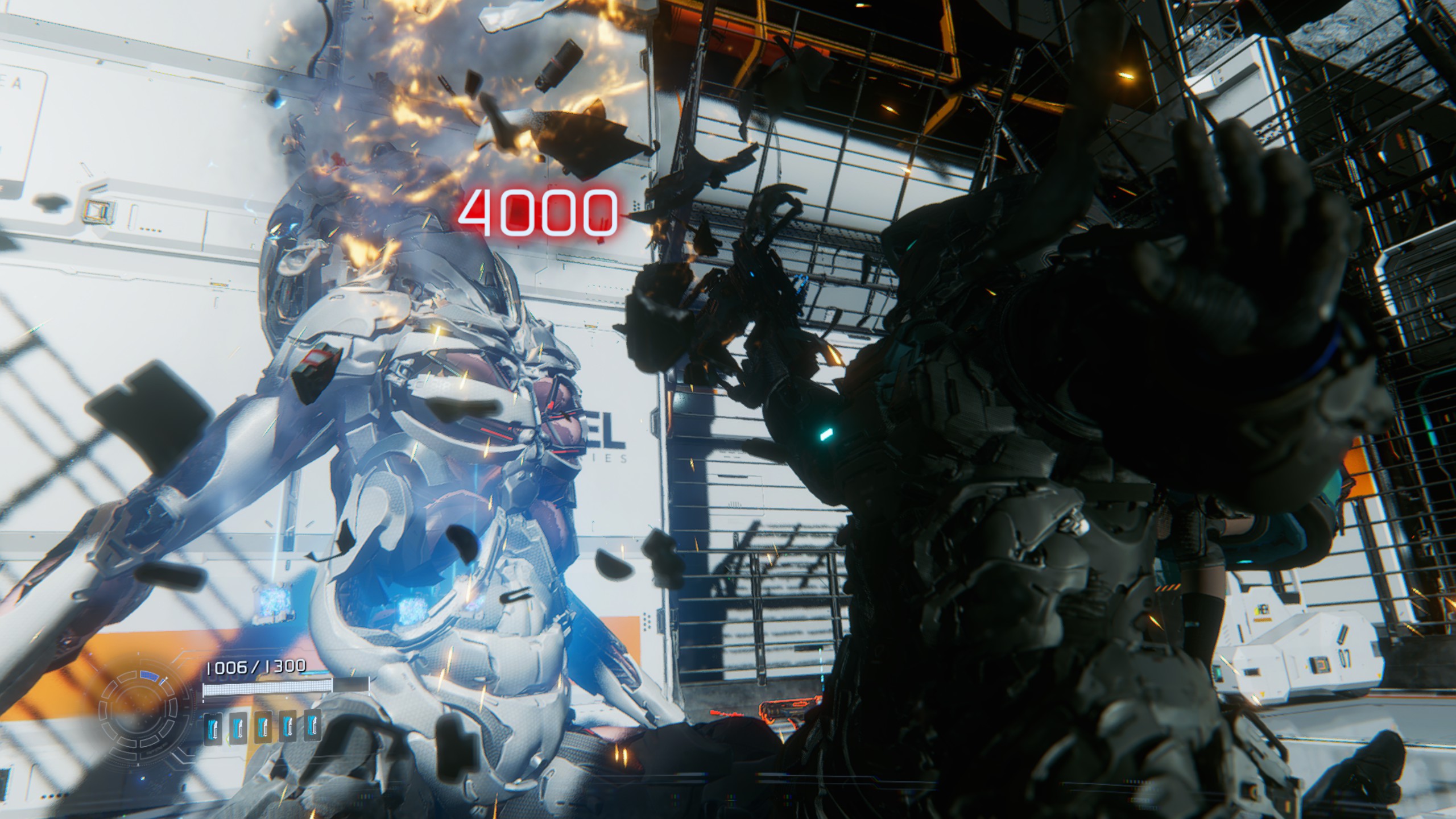
Despite this, the combat is explosive, in its own way. Robots shatter into a thousand pieces, vulnerable points can sometimes lead to effects similar to decapitation, and finishing moves feel and look like the reward they should be for sometimes minutes of sweat and adrenaline.
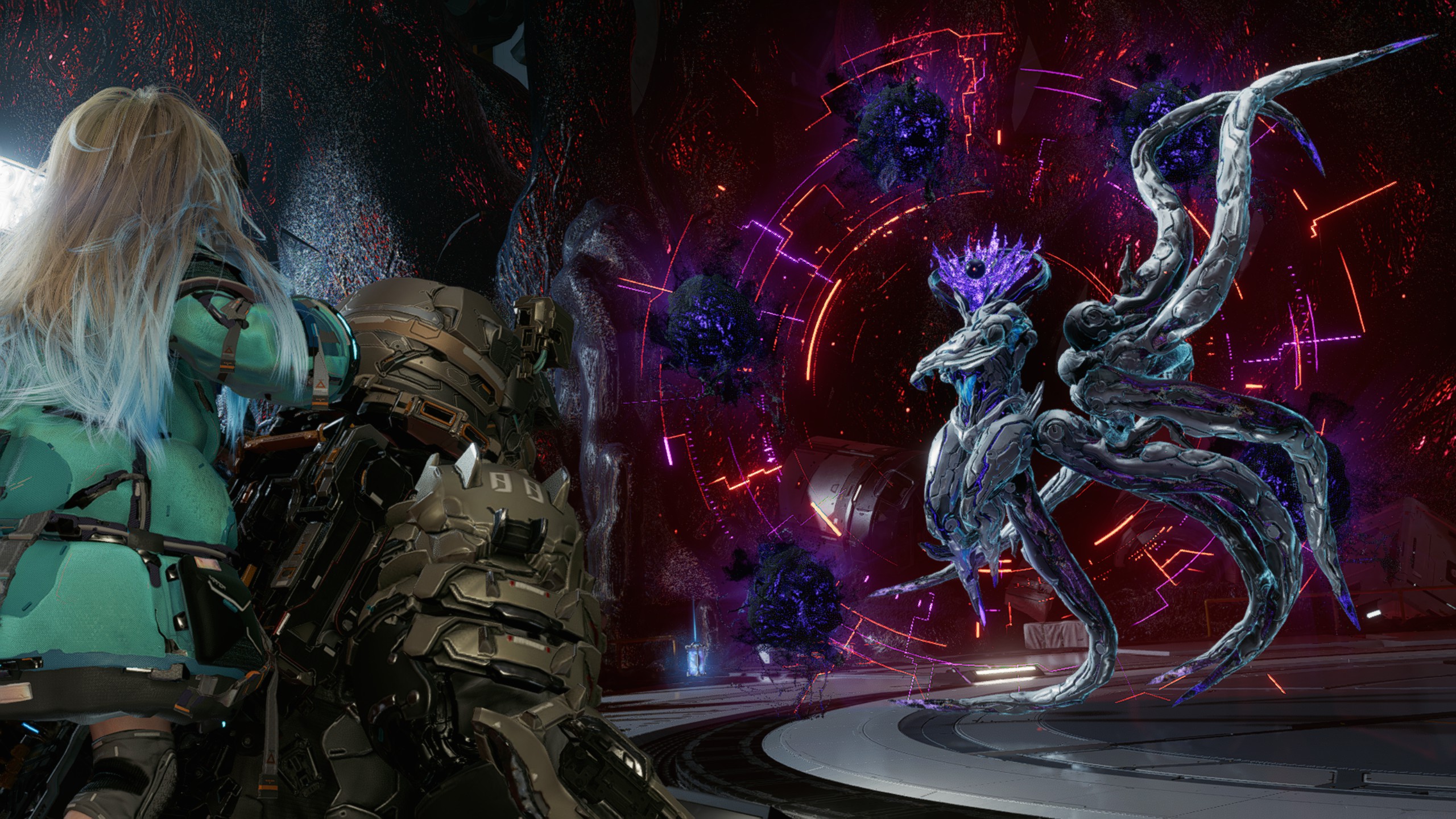
Boss fights are spectacular and last long enough for you to put into practice all the mechanics you've accumulated and improved up to that point in the story. What PRAGMATA lacks in depth, it makes up for with an accelerated and enticing rhythm. More than wanting to unravel the mystery, at some point, I wanted to see what new types of enemies, weapons, and tools would be thrown my way. And I wasn't disappointed.
The standard difficulty level is perhaps a bit too easy if you stop to gather resources and maximise your character's attributes, but the first playthrough serves more as an adaptation to the numerous mechanics. Enemies aren't so much numerous as they are interestingly designed, with vulnerable points and complementary abilities that will force you to play radically differently even with minor permutations in the formula of new waves appearing.
After you finish the game for the first time, you gain access not only to a higher difficulty (Lunatic) but also the obligatory New Game+ and extra content in the form of simulations that will test your skills a bit more intensely than the main mission (Unknown Signal). Thus, the post-game content fully compensates for the reduced runtime.
Indeed, it's a perfect example of a game that doesn't waste your time. I think you'll agree with me that about 10 hours of captivating gameplay, where progression is felt from one hour to the next, is preferable to several dozens of diluted content. Even repetition is used creatively in PRAGMATA: the hacking grid becomes a routine exercise, like changing gears in a car, but as you advance, new factors and considerations are added to how you prioritise solving the minigame over the rest of the events happening on screen.
Minmaxing variety
The rapid pace at which new systems and mechanics are added is also due to the fact that each "checkpoint" in the game brings us back to the home where we can spend resources and unlock abilities. Each expedition resembles a walk in a soulslike, where you have a limited number of healing "potions" and their recovery comes at the cost of a global respawn.
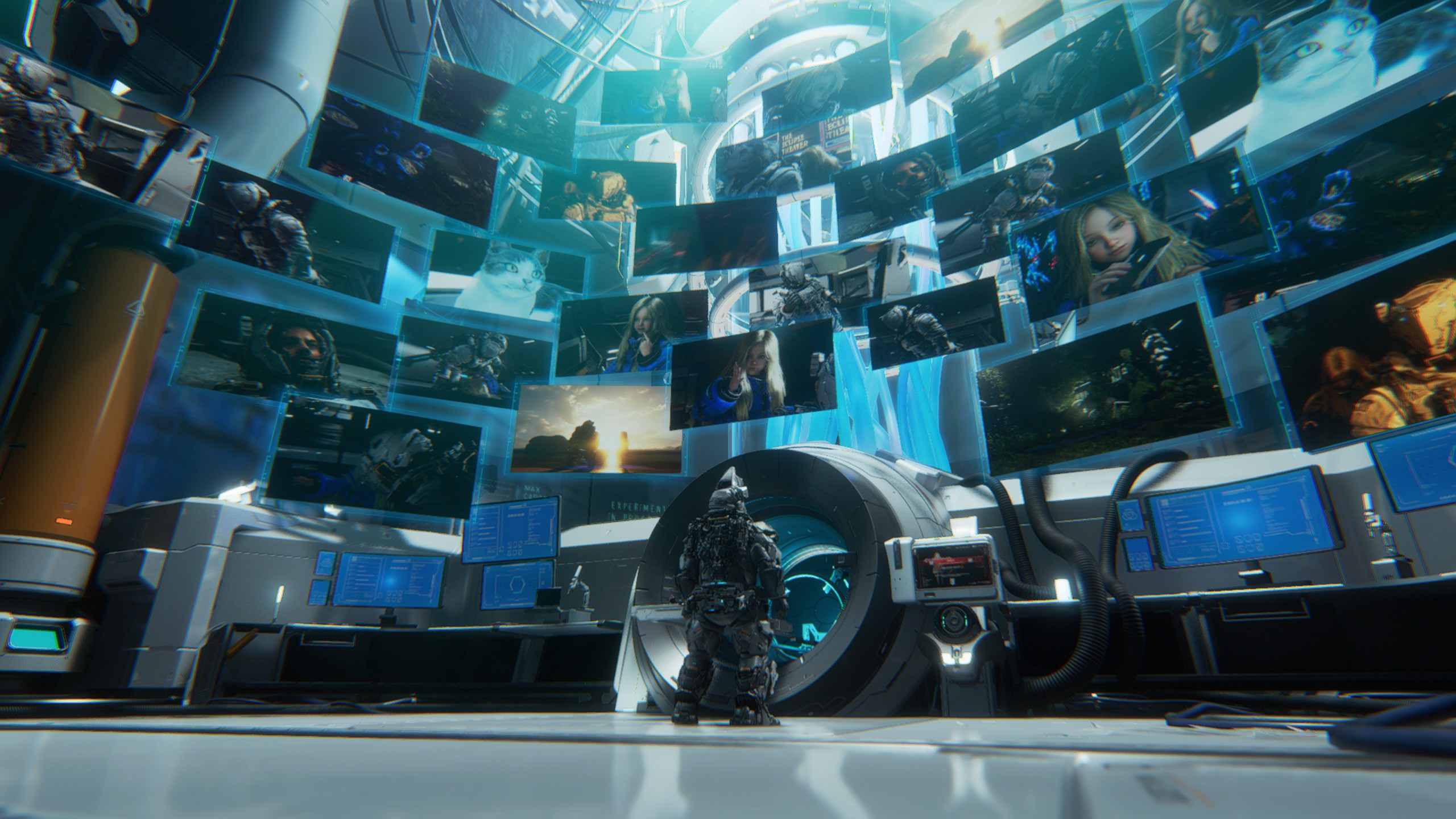
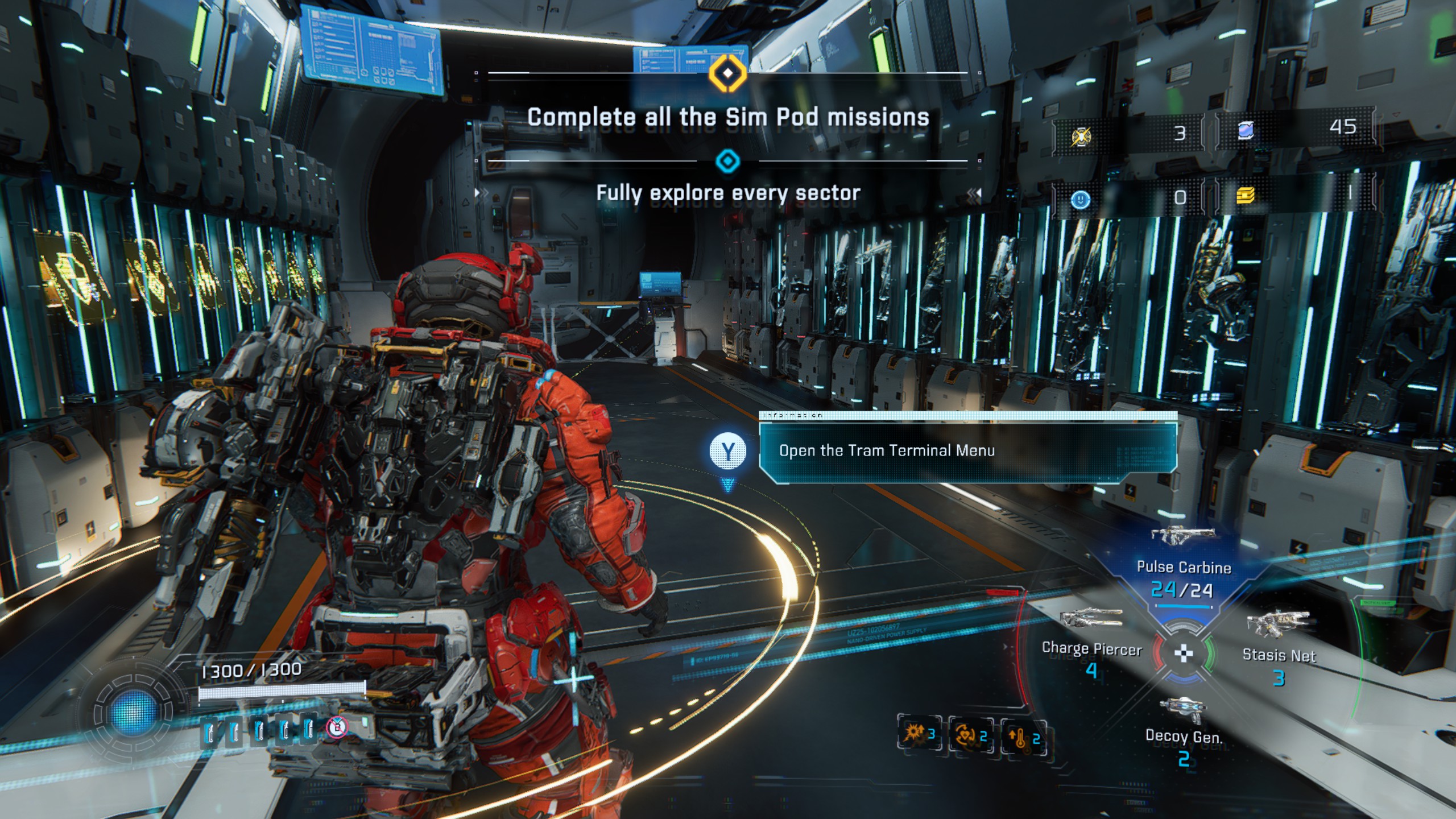
In this Shelter, a central hub that levels up and gains new terminals and wings depending on how much you've advanced in the main narrative, meta-progression is reflected in a visually satisfying way. New weapons appear in compartments that unlock, as do mods, and the REMs you find form a gallery of decorative objects and dialogue lines that Diana can't wait to share with you.
This is perhaps the sweetest side of the character: a naive and empathetic enthusiasm, more robot-child than child-robot.
Progression and item collection visually enrich the base, so by the end of the game, you see your work reflected in every corner of the room, and gameplay options diversify as you unlock all weapons and chips.
From here, we can travel to any previously unlocked checkpoint to collect missed collectibles or gather data packets containing training sessions.
Training sessions are a kind of challenge, with three medals and quite generous prizes, which contribute massively to character development, and which can be accessed through a terminal that becomes available after a few upgrades.
Skins, mods, and all sorts of surprises can also be unlocked via Bingo cards. There's a dedicated terminal for information gathered about each enemy type and the ability to reach any checkpoint with any weapon and ability configuration you deem necessary, making the entire experience of revisiting a certain area accessible and fast, with the percentage of unexplored content clearly marked next to each section.
Babysitting my Roomba
CAPCOM demonstrates that there's always room in the AAA space for a new, well-structured IP with simple and clear ideas, as long as the execution is solid. Impeccably optimised, visually competent, and with a narrative that isn't overly profound but flawlessly delivered, PRAGMATA is an easy-to-recommend action-adventure. It blends many mechanics clearly inspired by classics, in a natural way, where the final product is more than the sum of its parts. It's not as ambitious as it is well-polished, but it's certainly a solid experience worth the entry price and packed with pleasant surprises.
It's minimalist in its cast and maximalist in its progression systems, with dozens of mods and strategic battles where you can test ideas. The soundtrack perfectly complements the world of electrical panels, towers, and laboratories on the moon's surface, becoming intense and engaging during encounters.
I've always appreciated a title that knows when to stop after telling its story, where you don't need the promise of "more" to appreciate what's in front of your eyes. It's like a sci-fi novella, a product aware of the economy of its own tools, which places a higher value on the quality of each moment than on grandeur. A game where the idea of production value is prioritised over the idea of content volume.
More than anything else, PRAGMATA is cohesive, a complex of ideas that infuses the already well-worn recipe of the third-person shooter with new mechanics, drawing you into a ballet of gunfire, dodges, and hacking sessions that tickle your distributed attention in a unique way. It's not perfect, but I'll venture to say it will be one of the best games of the year, and it's only April.
Thanks to CD Media SE for the review code and the opportunity to play PRAGMATA in advance!

Available on: PC, PlayStation 5, Xbox Series X/S, Nintendo Switch 2
Played on: PC (Steam)
Release date: 17 April 2026
Developer: Capcom
Publisher: Capcom, CD Media SE
Approximate playtime: 10–15 hours
Plus
- Unique gameplay loop, alternating gunplay with simple yet engaging puzzles
- Numerous progression systems and unlockable upgrades that exponentially increase your combat efficiency
- Rich post-campaign content, with traversal, combat, and hacking puzzles adding several good hours of challenges
- Rich visual presentation, impeccably optimised
Minus
- The story is competent, but nothing overly profound
- Difficulty: even on the hardest level, it doesn't keep pace with how powerful you become over time
0 votes
Scroll down here and stay on the page for at least 30 seconds to vote.
Pick a score from 0 to 10 (halves are allowed).