
Dreams of Another – Review


What do you do when a dream becomes (a bit too) vivid?
Dreams of Another is an experience that seems taken directly from a fragmented dream, playable and interactive, yet as enigmatic as it is fascinating. From the creators of the PixelJunk games, under the direction of multimedia artist Baiyon, this title attempts to overturn shooter conventions, transforming weapons into tools of creation, and destruction into an act of revelation.
Technically and conceptually, Dreams of Another meanders between the abstract and symbolic worlds, between digital art and human emotion. In this review, I will explore what works, what doesn't, and what experience remains after the screen fades to black.
Inverted purpose, destruction creates
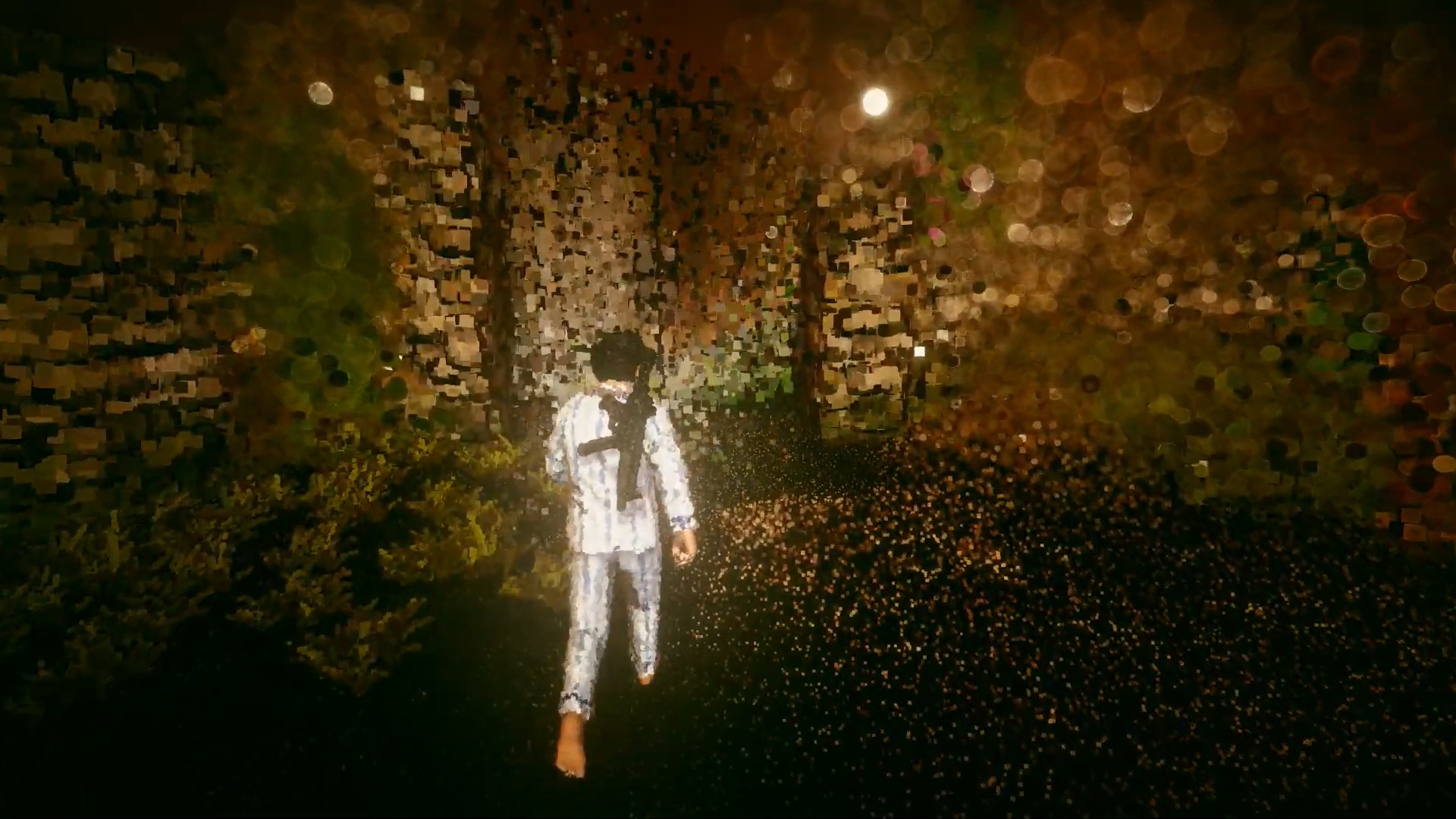
One of the most memorable ideas in Dreams of Another is the radical inversion of its core mechanic. Instead of shooting to destroy, in this game, you build by shooting. Fragmented pieces of the surrounding space, in the form of a crystallised cloud with dispersed particles, become objects, structures, characters, or scenery before your eyes. It's as if you're painting with bullets, through a weapon that recovers chaos and transforms it into form.
This philosophy underpins the game's motto: "No Creation Without Destruction". Destruction is not final, but the stage through which something new can come to life.
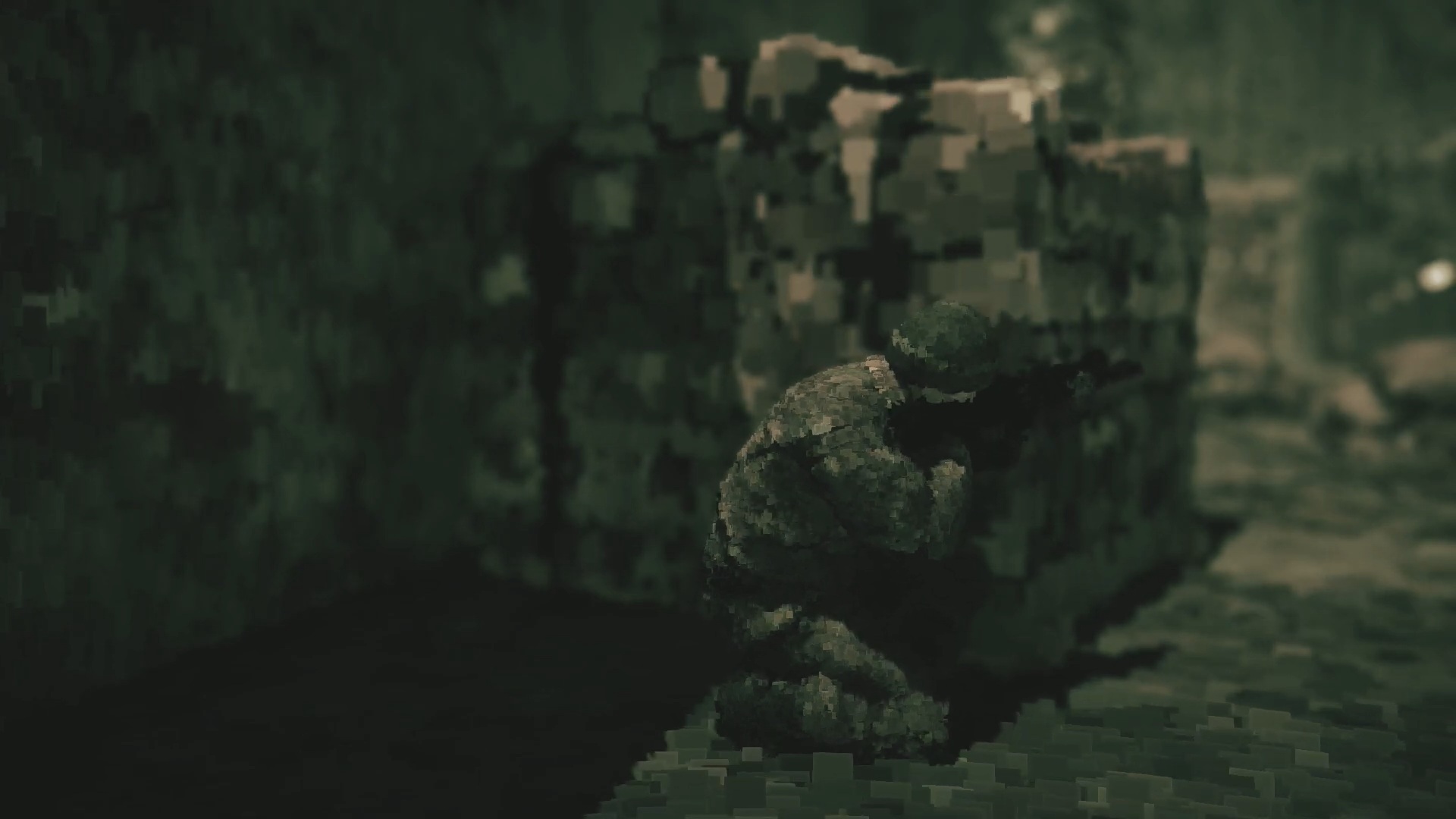
The mechanic works well, but it's not without moments of confusion. On the map, the initial world appears as an abstract mass of particles, and you have to "discover" the correct forms. This perspective brings an element of exploration, but sometimes the transition from abstract to concrete can seem arbitrary or unclear, in the sense that you don't immediately understand why some elements take shape, or what connection they have to the story.
When everything works, it's magic. A wall appears from nowhere, a bench starts to validate your existence, an unnatural character gives you philosophical lines. But when it feels like the game is just "throwing" elements at random, the experience can seem to unravel, just as the game's universe can, at some point, revert to a collection of particles.
Atmosphere, visual style and music give flow to a breathing dream
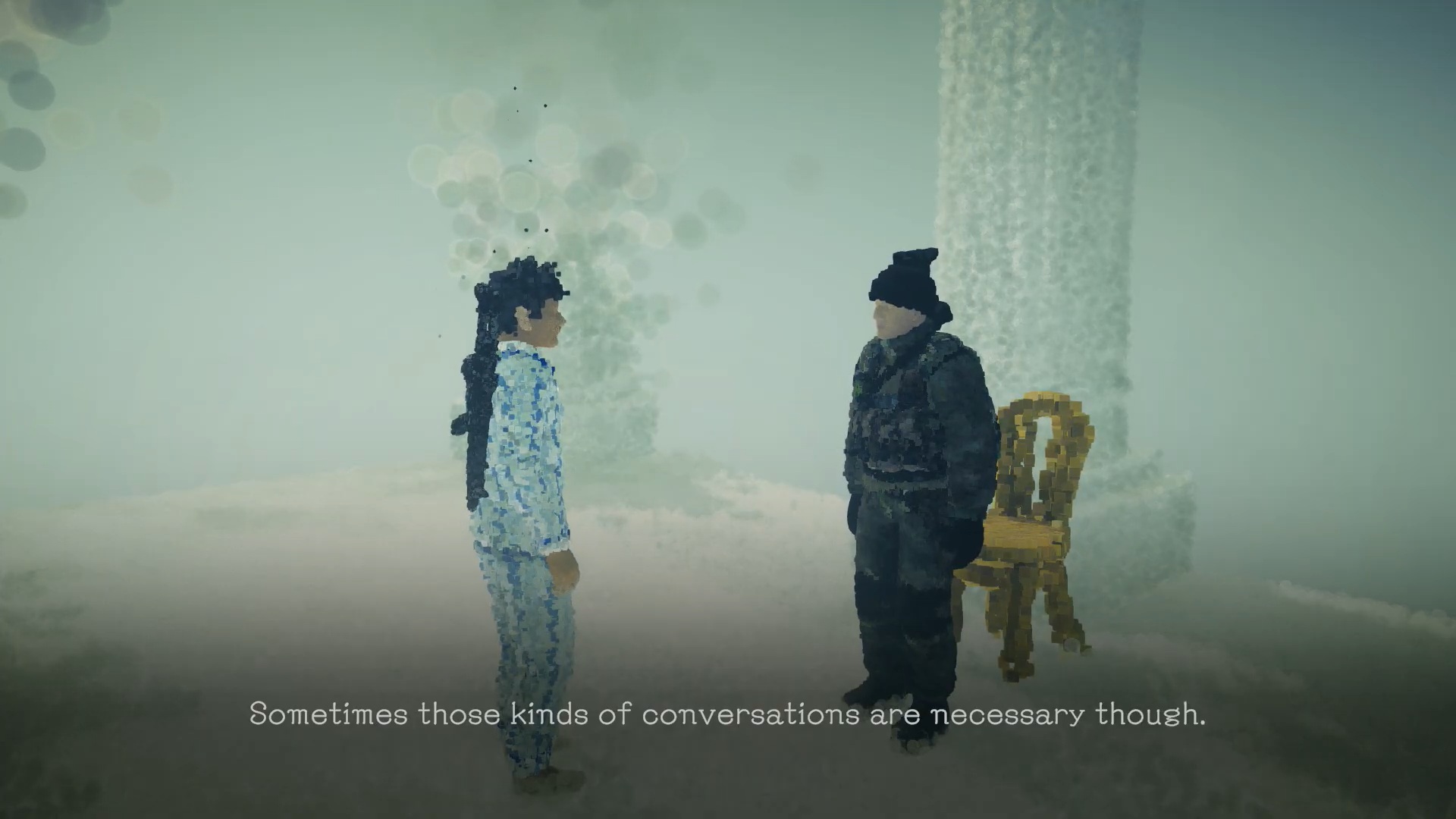
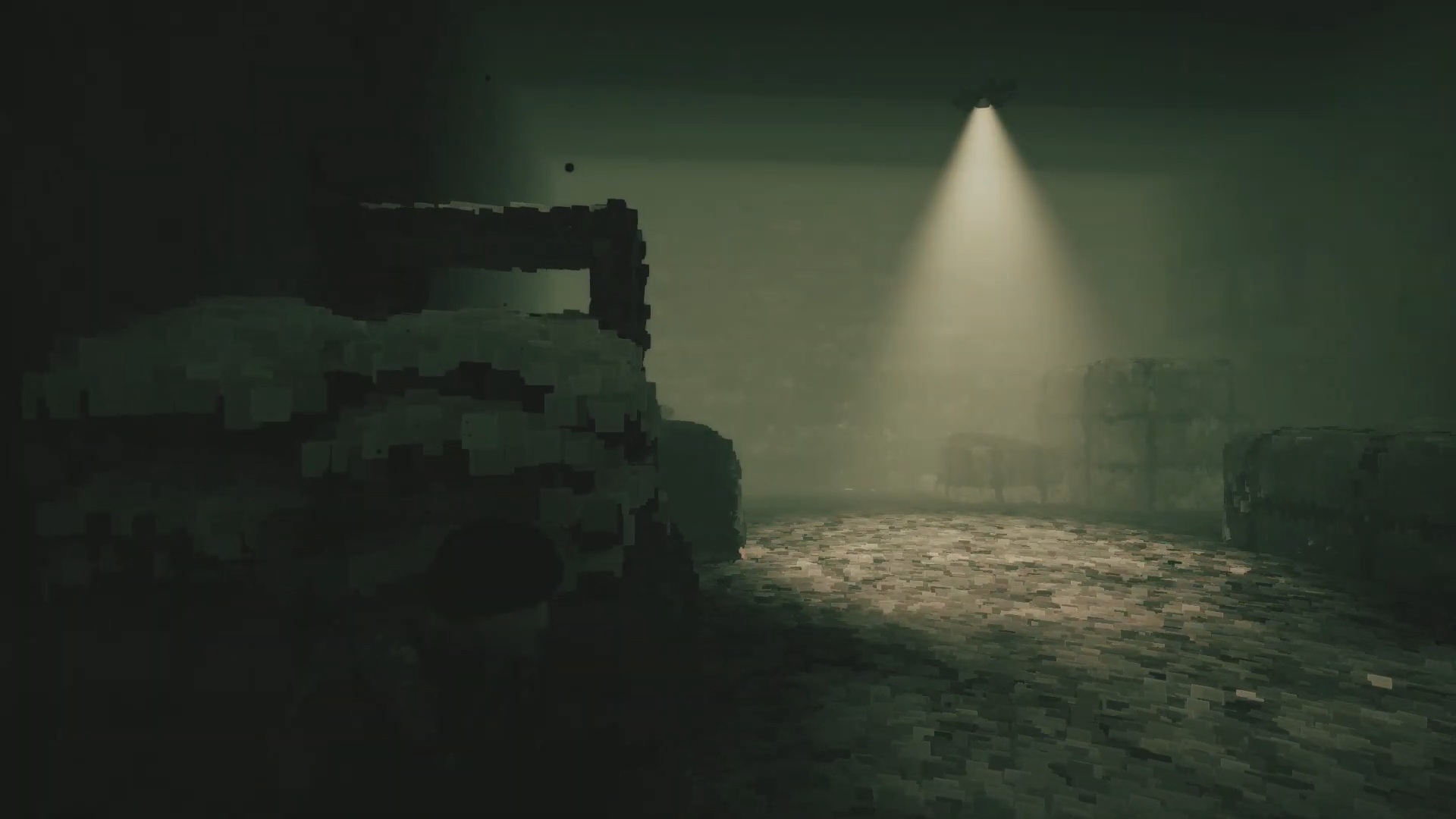
Where Dreams of Another shines are the visuals and the ambience it creates. The game uses point cloud rendering technology. The world appears as a collection of luminous particles that gather into a form before your eyes. It's a risky aesthetic choice, but one that, if you have patience, becomes hypnotic.
In the PS VR2 version, the effect is amplified. The transition between third-person and first-person (in VR) makes the particles seem to pulse around you, outlining and dissolving the world at the same time.
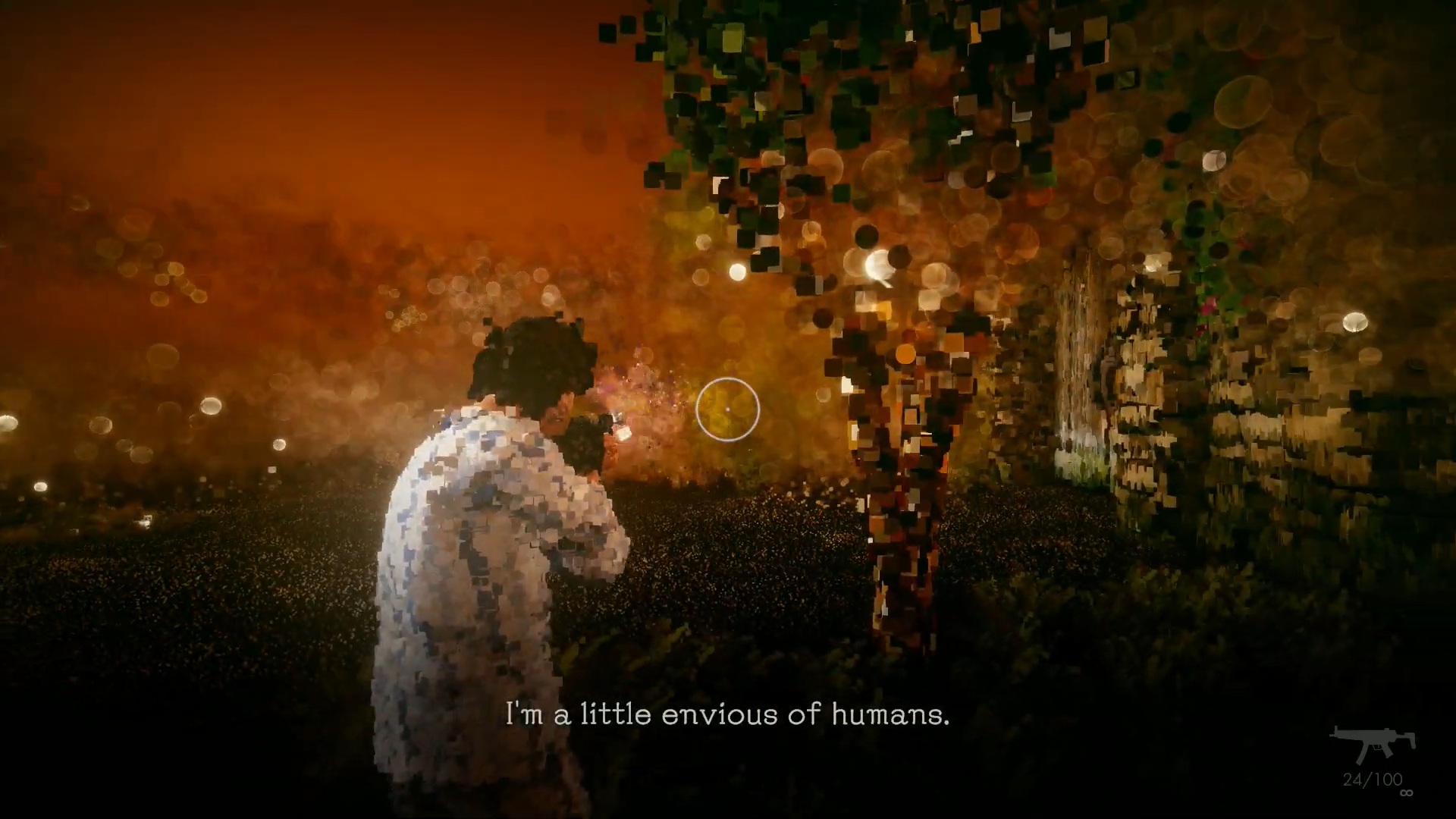
The dialogues are not grandiose. They are short, strange, sometimes contradictory, but that seems to be the exact intention. Doors that talk, objects that express their thoughts, all in a metaphorical tone that stimulates your brain. You don't have to understand everything at first. The game invites you to reflect, interpret, and accept whatever meaning resonates with you.
The music is an integral part of the experience. It's ambient, sometimes minimalist, sometimes overwhelming. According to the official description, the soundtrack is created by the game's director himself.
The story is like a fragmented mirror
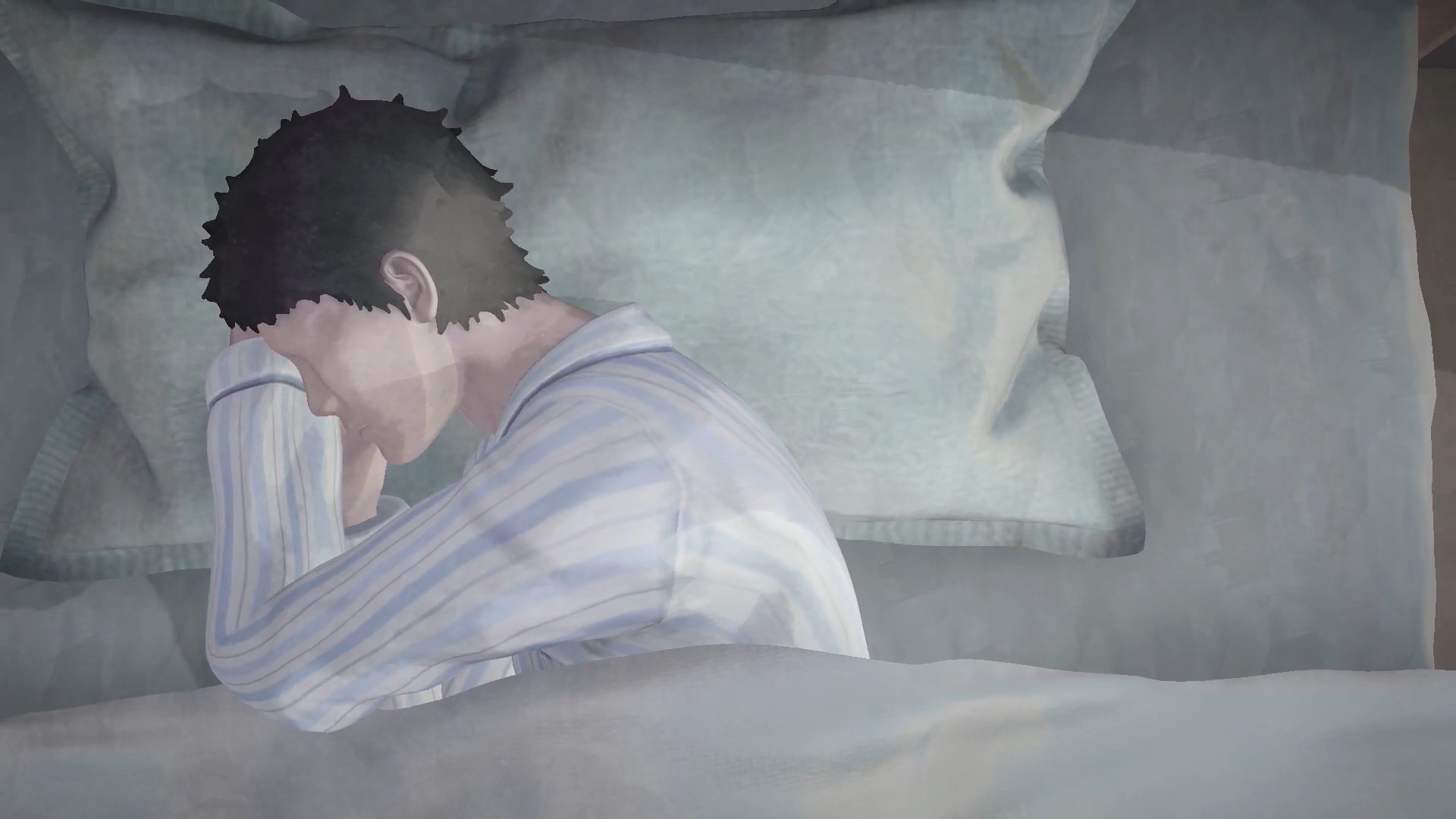
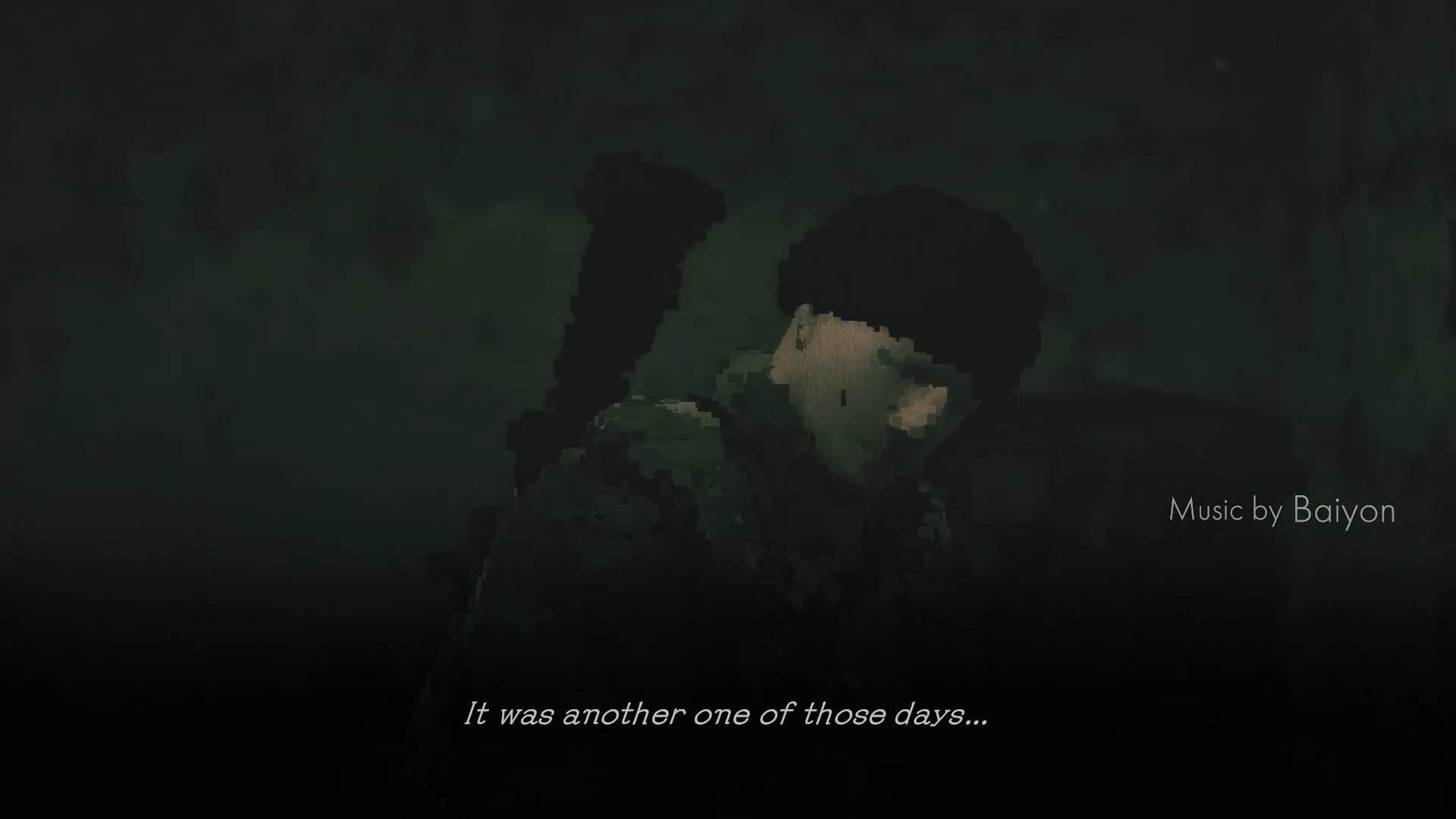
The narrative in Dreams of Another doesn't follow a classic linear thread. It's more of a poetic puzzle. The central characters are The Man in Pajamas and The Wandering Soldier, and the game takes you through dreams, memory fragments, and mental landscapes. The goal isn't necessarily to explain everything, but to feel connections between the fragments.
The atmosphere is more contemplative than dramatic. Don't expect intense battles (in the classic sense), but rather symbolic confrontations, moments of introspection, and, from time to time, a mental machine that throws its forms into the air like particles. Some scenes end abruptly, returning to the main screen or teleporting you to another space, a sign that the game doesn't want to be predictable.
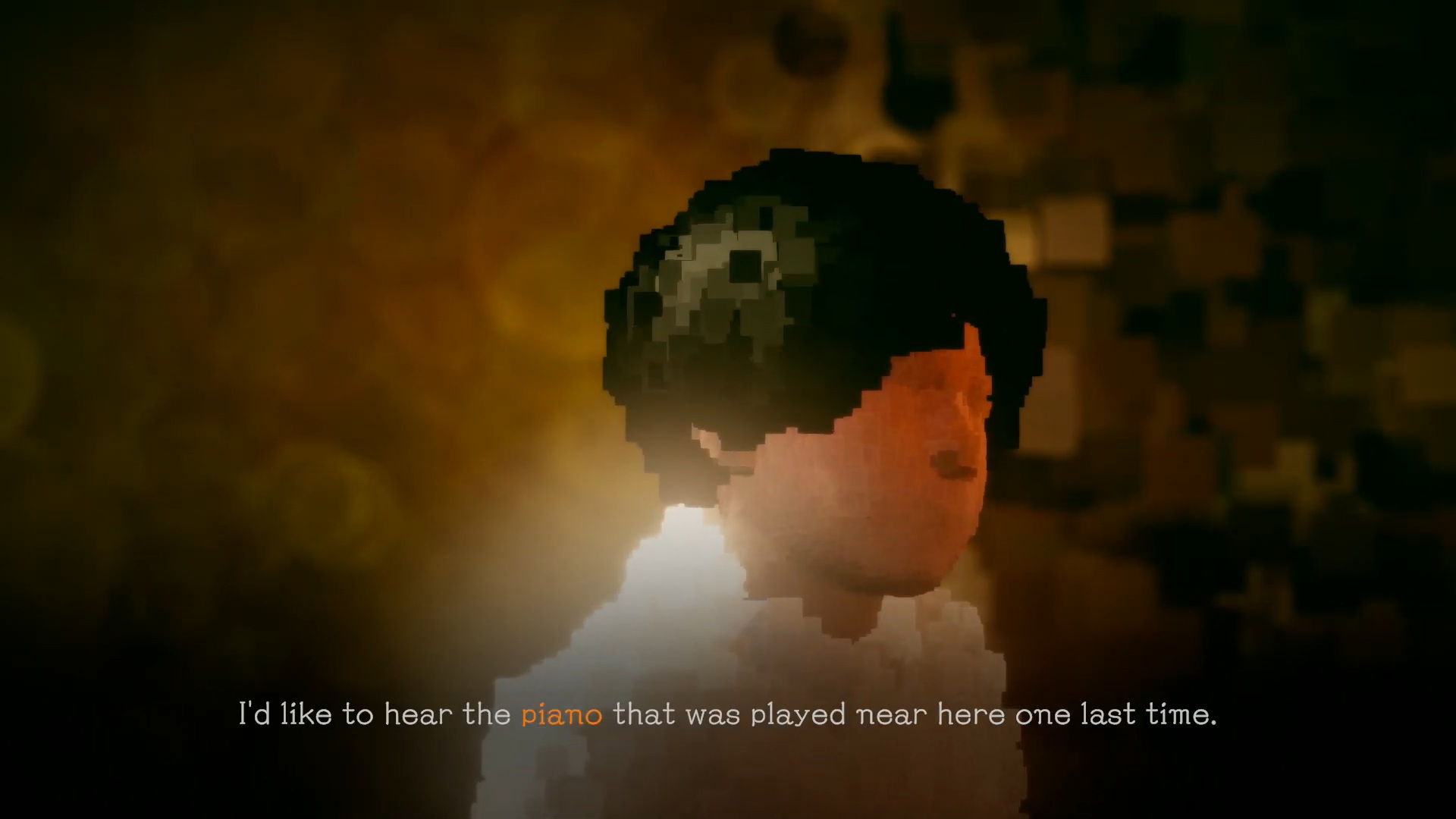
This approach works for those who accept that the narrative can be fragmentary, but for players who want a clear story until the end, moments of frustration can arise: why does an object appear? What's its connection to the character? What's the meaning of this line? And the game doesn't always give you answers.
What remains after you finish the game?
After finishing "Dreams of Another", you're left with a mix of emotions and strange images that linger: the scene with a bench questioning itself, doors that talk to you, a vague soldier, distorted dreams. The game doesn't tell you everything, but it leaves you fragments of thoughts to gather.
It's possible to replay it, looking for other meanings, to watch dialogues you missed, or to experience certain sequences differently. This type of replayability won't be for everyone, but for fans of artistic games, it's fertile ground for reflection.
In terms of impact, Dreams of Another is an example that the indie industry and artistic experiments can still be relevant. It doesn't always have to come with shotguns and explosions, but with intimacy, sensitivity, poetry.
Do we need another conclusion?
Dreams of Another is not a comfortable game. It doesn't give you all the answers, it doesn't hope to keep you in suspense all the time, and it doesn't conform to conventional action gamer expectations. But if you go in with an open mind and are willing to let the game speak to you through symbols and images, you can have a rare, poetic, and memorable experience.
It's a courageous and often inspired project, with moments of pure beauty, but also moments where its ambition becomes a hindrance. The pace, clarity, and repetitiveness might push some to say: "I feel more lost than the dreamer." Nevertheless, for those willing to dream and decipher, Dreams of Another is worth exploring.

Plus
- Hypnotic visuals and immersive ambience
- Unique 'creation through destruction' mechanic
- Thought-provoking, poetic narrative and dialogue
Minus
- Pacing can be slow and repetitive
- Narrative ambiguity may frustrate some players
- Mechanics can feel arbitrary or unclear at times
0 votes
Scroll down here and stay on the page for at least 30 seconds to vote.
Pick a score from 0 to 10 (halves are allowed).