
Rise of the Ronin – Review

“Power corrupts, and absolute power corrupts absolutely.”
Change, patriotism, and the allure of power
I know of only one example of a peaceful revolution: the Velvet Revolution. Change, while natural, is difficult for the average person to accept, let alone for a structure upon which an entire society is based. Large-scale changes happen either very slowly or suddenly and violently. We have so many examples of bloody revolutions that have changed various regimes throughout history. Some of you might still remember what happened in Romania in ’89, when the Communist Party tried to evict the Reformed pastor László Tőkés from his apartment and community due to anti-communist comments he had made during the political show “Panorama”. A relatively small action by one person started a wave of reactions that would turn into a tsunami that engulfed the entire country and ended with the execution of the Ceaușescu couple. We can also look at how the socialist regime was established in Russia in 1917. The historical event, also known as the October Revolution or the Bolshevik Revolution, was practically a coup d'état through which Lenin and the Bolsheviks took power from Kerensky's government. The revolution came against a backdrop of societal frustration with the government's ineffective economic and social measures, combined with the increasingly precarious situation on the front, which forced the leadership to send the capital's garrisons to the front. The explanations I have offered are simplified and quite brief, but the idea remains the same: change will always encounter resistance. Even in situations where it is necessary, it will rarely be welcomed with open arms. The only peaceful example of change I know is the Velvet Revolution that took place in Czechoslovakia, a pacifist revolution through which the Communist Party lost power and, implicitly, the leadership of Czechoslovakia.
Change did not come easily even in more learned lands. Japan has had several periods of major change, which were defined by bloody conflicts. The best-known example is the Sengoku period, which ended with the unification of Japan under a single central governing structure, that of the Shogun. This period has often been represented in various forms, from literature and manga to TV series and plays, and you would be hard-pressed to find someone who hasn't at least heard of Sengoku. Those who have studied history a bit or watched any of the different ways the period has been interpreted will know the story of Oda Nobunaga and how the allure of power changed him. Power corrupts, absolute power corrupts absolutely, and for this reason, we can say that the road to hell is paved with good intentions, as many leaders began their path to tyranny in this way.

An equally interesting period, full of conflict and change that is not often discussed or represented enough, is the Bakumatsu, a period defined by conflict and change, which many consider to be the moment modern Japan was born. This is due to progressive ideas and a government that accepted to develop through Western technology and tactics without compromising the country's traditions and identity. These 16 years that laid the foundation of the Japan we all know today are not often explored, although they have just as many conflicts, political intrigues, assassinations, and betrayals as the 148 years of Sengoku. Despite the large number of important events that took place during this period, Team Ninja, with the help of Sony Interactive Entertainment, managed to create a historical fiction that covers almost all of them and represents the complexity of society during those formative years of the nation. In addition to this, the developers also managed to present us with a captivating story with important lessons about the cycles of violence and the allure of power.
But what exactly is this “small” studio I mentioned earlier, and how did it benefit from Sony's help in publishing its latest title? The studio is a division of Koei Tecmo, founded in 1995 by Tomonobu Itagaki, the producer of renowned games such as Dead or Alive and Ninja Gaiden. The small studio grew over the years, and recently they have managed to work with famous franchises on new projects such as Hyrule Warriors and Marvel Ultimate Alliance 3. The developer's greatest achievement in the last 10 years has been the launch of 3 completely new intellectual properties, these being:
- The Nioh franchise, which brought them their current fame;
- Wo Long: Fallen Dynasty, the title through which they perfected their action-RPG formula set in the chivalric novel of the Three Kingdoms;
- Rise of the Ronin, which is their most recently released title.

I consider the current game to be a historical fiction through which the renowned developer attempted to apply their action-RPG formula to an open-world creation. Although evolution and, implicitly, change are normal, both in life and in the video game industry, they are not always welcome or even easily accepted. I believe the logical step was to apply their formula to an open-world game, but this was sometimes implemented in a flawed manner. As you've come to expect from me, we'll start with the story.
A Cycle of Violence
As I explained earlier, the title is an intense action RPG, set in Japan's Bakumatsu period (1853 – 1869). The period itself is defined by conflict due to the Shogunate's isolationist policy, namely Sakoku (1639-1853), which acted more to the detriment of the country, although it originally aimed to protect Japan's interests and culture. During the Sakoku period, the United States of America and Great Britain were doing everything possible to develop their relations with the Land of the Rising Sun, which was not viewed favourably by a large part of the population in the Far East.

The conflict that defined Bakumatsu was the result of several factors, one of which was the Shogun's inefficient leadership. The uprising of the castes was due to the notion shared by many Japanese that the West and its gifts, namely military technology, naval technology, and medical knowledge, had to be absolutely rejected, and anyone who used them was a traitor to the homeland. This aversion to the West was the result of hundreds of deaths caused by diseases that missionaries from the West brought with them, the main one being cholera. The consequences of the disease on society are still strongly felt in the game, and this makes it relatively easy to understand why the Japanese did not want to open their borders to the white devils.
A part of the nobility capitalised on this popular hatred and gained the support of nationalists under the pretext of defending the country and Japanese values and culture. Thus, they advocated for the rejection of Western modernism and the preservation of ancestral traditions, because the military changes that the West brought with its technology would have also meant major social changes due to the loss of the samurai's significance and importance.
The other part of the nobility believed that it was better for Japan to be prepared for the future, to accept help from the West, but not to be subjugated by it. On the contrary, they believed it was good to learn from Westerners and incorporate what they learned from them. Unfortunately, and as often happens, these two camps clashed and caught the entire society in the middle. One of the victims of this conflict is our character, a survivor of a shogunate military campaign.

The reason why the shogun's army attacked the protagonist's village is not clarified throughout the game, but what is apparent is that the soldiers' actions do not represent the noble values of the samurai, but rather war crimes you would hear about in third-world conflicts. The shogun's forces seem to make no distinction between civilians and soldiers, and anyone who stands in their way is considered a representative of the enemy forces, regardless of the person's age, gender, or health. From the very first minutes of the game, we witness what appears to be a purge, not a “liberation” of a village.
The noble intentions of the soldiers are even more apparent when we see that they are willing to kill children without a care, and the main character is saved at the last moment by a mysterious shinobi who takes them under her wing. The only survivors of the massacre are two orphaned children, a girl and a boy. These are the two characters we can play as and the only characters in the game that we can meticulously customise, from appearance to voice.

The two are raised by the enigmatic shinobi who trains them for years to become the perfect weapon against Japan's current leadership. The village that defined the protagonist's formative years is a place where every villager is prepared to become the perfect saboteur and works with a partner called a “twin”. The character we didn't choose at the beginning of the game becomes our “twin”, and the childhood of the two was not filled with laughter, play, and magic, but with intense training in all fighting styles and with all weapons to prepare them to destroy the shogunate at all costs, both from within and from without.
The protagonist's first mission sends them to board one of the black ships, which were the vessels the Westerners came to Japan on, and to kill the ship's commander, Matthew Perry. Matthew Perry is an important modern historical figure not only because of the actor from the famous TV series Friends but also because of the diplomatic relations that the famous American commander managed to establish with the Land of the Rising Sun. As you probably deduced, the mission does not end successfully, and one of the characters must sacrifice themselves for the other to escape. Once the character who will escape is chosen, they will become the character we play for the rest of the game.

After returning to the village, we witness a symbolic funeral for the lost twin, but the vigil is interrupted by the shogunate forces who have come to destroy the village full of dissidents. Our character manages to face the soldiers this time, but the village is decimated. Having no reason to tie him to the village, the protagonist leaves in search of the “lost” twin, as he does not consider him dead. This is the premise from which we start, but also the central reason for our character's actions.
This quest will take us through the 3 important areas of the period:
- Yokohama;
- Edo (currently Tokyo);
- Kyoto
The right man in the right place
The game's story will take us through these three large locations where we will witness two things: the Bakumatsu uprising and the search for the lost partner. The central character linking the two narrative threads is Sakamoto Ryoma, a ronin of particular importance in the events that took place during those 16 years that changed Japan. Sakamoto-san begins the game as an adorable, charismatic fool with a twinkle in his eye that we often see in young graduates. He believes that the white devil should not be driven out of the Land of the Rising Sun, but that society needs to learn from Westerners to bring the country in line with the rest of the Western world. This perspective denotes Sakamoto-san's openness to modernism, along with the revolver he carries at his hip like a brigand. But Ryoma is not only a fan of Western weapons; he also prefers drinks from the West. This is exemplified in the game by his love for beer, a drink he chooses over traditional sake whenever he has the opportunity.

Historically, Sakamoto-san is one of the central figures of that period. However, unlike how he was represented in historical sources, in the game he is just a man. The first interaction with him is in a cave, where both our character and Ryoma fight some bandits to save a village besieged by them. Being young, Sakamoto allows himself to be led by emotions and desires more than by the reason for which he is known, but throughout the game we see how he grows from a slacker into a true leader, who wants to advance society to create a better world. His desire stems from his love for his country, which he believes must be prepared for any danger from other nations.
Although he begins the game on the side of the revolutionary forces, who wish to expel Westerners from the country, Ryoma does not stand idly by in the face of the atrocities that occur during the conflict. Not infrequently, he switches from one camp to another, from revolutionaries to the shogunate and back, depending on the needs of the common people. Unlike all members of the two camps, Sakamoto-san is the only one who constantly seeks a diplomatic solution to any problem. For him, fighting always seems to be the last resort, unlike his more hot-headed colleagues like Genzui Kusaka or Katsu Kaishu, two central figures of the revolutionary forces.

The game simplifies the events of the period a bit, and the point where the conflict between the two camps began is the death of Yoshida Shoin, an intellectual whose ideas formed the basis of modern Japan. In the context of the game, Sakamoto-San and Genzui were both students of Yoshida, and his death stirred strong emotions in his revolutionary students. Genzui was forced by the others to take over the leadership of the revolutionaries, as he was considered the master's best student. However, the legacy left by the philosopher is quickly distorted and communicated in a way that serves the interests of the revolutionaries, and the values taught to Genzui begin to be corrupted by the influence of power.
The conflict has several causes, and the rather simplistic representation does not explain all the causes of the conflict and the reasons that actually led to the Meiji Restoration. Japan was not a paradise during that period, at least not for the common people. I will not deny that Westerners brought diseases with them, but the greed of some daimyo (feudal lords of Japan) also pushed the people towards the chaos that dominated the period before Bakumatsu. This can be observed through the game's side missions, in which we will interact with common people, from poor farmers to displaced persons and proud townspeople, and each of them will show us the complex realities of the period.
The displaced and the sick detest both the revolutionaries and the shogunate, as both sides have brought them nothing but trouble. Villages “liberated” from enemy control look more like ruins due to the fact that both sides resort to the method of purging to ensure that all enemies are killed. Often this means that every building is set on fire, and every person in the village is considered a potential enemy who must be killed, regardless of age, gender, child, or elder. The few survivors must bow their heads to the “saviours” and “help” their “noble” cause with donations or increased taxes, which causes famine and hatred towards the new “leadership”.
Neither the poor farmers nor the townspeople care who is in power. In the words of one character: “No matter who rules, life goes on.” Thus, the game manages to present a somewhat complete picture of a society caught in conflict, as it presents both the point of view of those at the head of the two main factions and the point of view of the citizens. What becomes apparent throughout the story is that few truly understood the teachings of the executed philosopher, and hatred and thirst for power manage to corrupt even the noblest intentions. Thus, the themes addressed by the game transcend the period in which the action takes place, and the game's message is as valid today as it was 150 years ago.
Us vs. Them
In addition to these two main factions I mentioned earlier, the game has two more: the Westerners and the bandits. The Westerners control few areas, and the bandits are the third largest faction we will encounter in the game. We don't have the option to join these two factions, but we can help some characters from the latter. The main character is literally a mercenary, as they are not tied to any cause in the game. We have the freedom to ally with either of the two main factions, and through side missions, we can indirectly help the other groups in the game.
Although narratively there should be some major repercussions for our choices, this is not true. Only one choice has an impact on the story, but it is not significant. The choice in question appears in the last act of the game where we will be forced to choose a side to fight for, and the consequence will be that the other becomes hostile. However, after a few missions, we have the option to switch again. The game even allows us from the second act to relive certain events to make different choices and see their impact on the world.

From this perspective, the game's story leaves a bit to be desired. Some actions will have greater consequences than this forced “choice”. For example, a series of choices made in both some main missions and some side missions will determine whether certain characters survive or not. Being historical fiction, I didn't expect the game to address any supernatural elements, but I was pleasantly surprised to discover a few missions that mirrored the famous Japanese Kaidan.
Kaidan are horror or mystery stories that had an oral tradition in the Land of the Rising Sun, originating in Japan's Edo period. These have evolved beyond their folklore status into something modern, and throughout the game, we have the opportunity to participate in some of the most well-known. These sections of the game are somewhat similar to certain side missions in Assassin's Creed 3 where Connor investigated some of America's famous strange stories, such as the headless horseman or UFO sightings.

Go Rin no Sho
The story doesn't live up to the expectations I had for a game developed by Team Ninja, and unfortunately, neither do the game's main mechanics. Team Ninja are known for their combat recipe, which has been developed over the 29 years the studio has existed. The recipe started with Ninja Gaiden and was perfected with Wo Long Fallen Dynasty. Rise of the Ronin seems to be a step backward from a combat perspective.
The main mechanic of any combat created by Team Ninja is parrying, and this lacks substance in the current game. If in Nioh we knew for sure that we pressed the block button briefly and performed that essential movement, in Rise of the Ronin it's not quite like that. “Parrying” here is a separate action found on the triangle button. Pressing the button practically causes a mini-attack that makes the main character advance. Because of this, the timing and space needed for a parry are different, because this “attack” must make contact with that of the enemy, and technically that means that the two hitboxes must touch.
A perfect example for explaining this system is the bayonet. This weapon category is composed of various types of firearms with the eponymous blade attached. Parrying attacks has an animation of approximately 3 seconds, of which only one is the time when contact must be made, and it is precisely the second at the end of the animation. But it is not enough to hit that tiny window; we must also be lucky enough for the enemy's blow to make contact with the bayonet. This weapon category parries in a crescent shape and only to the right of our character, from the leg to the waist. If the enemy's attack comes from above and the target is our shoulder, then you have no chance. The good part is that it is not necessary to parry all the blows from an opponent's combo, but only the last blow.

After approximately 15 hours, I managed to somewhat master this obscure system, and after 50 hours of gameplay, I had become a master of the system, but only for katanas and Chinese swords, as the rest of the weapons required perfect coordination with a system based on arcane rules. The combat in Rise of the Ronin is the most accessible of all Team Ninja games. Enemies only have a few attacks and are easy to learn, and in terms of variety, there aren't many. There are many bosses, but besides ninjas, samurai, soldiers who shoot guns or arrows, and giant enemies, there is nothing else.
It's clear that the developers had a favourite weapon, and that is the classic katana. The weapon that has become a symbol of Japan has over 6 different fighting styles, and some are references to their history as developers. Each fighting style has pros and cons, and combat becomes a deadly game of rock, paper, scissors where you have to choose the right style to break opponents' defence. Once an enemy's defence bar is depleted, they are completely open to an execution, which kills most enemies. Bosses require 2 executions if they have more than half health and only 1 when they have less than half health remaining.

Tradition vs. Modernism
The other central mechanism of the game is the relationships we form with the different characters in the game. We can befriend each of the main actors of the Bakumatsu, and depending on the level of friendship, we will benefit from different combat bonuses, such as a higher dexterity level, the ability to sneak better, and so on.
Being an RPG, the game has classic attribute systems and various abilities that can be developed to customise the playstyle. People who want to play a classic samurai with a kanabo or an odachi will invest in abilities based on physical strength, while those who want to play a shinobi will invest in dexterity abilities, which allows them to perform multiple assassinations.
The reason why Rise of the Ronin's combat system doesn't live up to the expectations created by Team Ninja's previous games is because the game is a new genre for them. While all their previous creations were action-RPGs, their latest title is an open-world action-RPG. This “small” difference completely changes the dynamic. The vast world of Japan is composed of 3 regions, as I mentioned earlier in the story section. These three seem to be inspired by Ubisoft's games, as the maps are large and full of activities and collectibles.

Activities are numerous and varied, from the classic “liberations” of villages/temples/camps to specific challenges for horses or the glider created by Iizuka-san. In addition to the activities mentioned earlier, we also have “collectibles”, such as cats or treasures. These activities are not just filler, as each offers rewards that help us advance our relationship with certain characters. Horse riding challenges help you improve your archery or marksmanship skills, and glider challenges help you unravel its mysteries to “fly” more efficiently.
Regarding rewards, I think I have my biggest criticism of this title, because almost every action will give us a reward. Did you assassinate an enemy? Here's a new weapon. Did you finish a mission? Here's a helmet! Did you photograph Mount Fuji? You won a tobacco case! The tobacco case changes your attributes and won't let you smoke because smoking will harm you in real life and the game didn't set out to promote this vice. Because of the abundance of equipment and weapons I received, I felt like Buridan's ass. As a result, I stuck with the semi-decent equipment I put on my character at the beginning of the game and only changed it in rare cases when I received a weapon much better than what I was already using.

Mono no aware
In terms of sound, I have nothing but praise for Team Ninja. Each weapon category has a unique sound, and although that substance is missing from the parry, the sound is perfect. Every hit is clearly audible, and if we were to hear the executions with our eyes closed, we would easily recognise when a decapitation or amputation occurs and when an attack is blocked. Inon Zur was the composer and managed to create the perfect atmosphere by emphasising the relationship between the shakuhachi and the cello. The icing on the cake in this rather large chapter are the actors, who managed to bring historically important characters to life. I recommend playing the game in Japanese, as their interpretation will help you lose yourself in that fascinating period of the country in the Far East. If you would prefer not to hear the voice of Shunsuke Takeuchi, who plays Ryoma Sakamoto, and Chikahiro Kobayashi, whose role I cannot reveal, then you can play through Rise of the Ronin accompanied by Benjamin Lok and Will Ni, who play these characters in English.
Unlike many others, I will not criticise the game's appearance. The developer does not have a reputation built on the aesthetics of their creations, but one based on their combat mechanics. None of Team Ninja's games look excellent; most look as if they belonged to the previous generation rather than the one for which they were released. My opinion is that the graphics engine and the game's appearance meet the expectations a fan of the developer would have. Yes, there is a graphical difference between Wo Long: Fallen Dynasty and Rise of the Ronin, and the latter has a more modern visual aspect than the former, but I do not consider it fair to judge these creations on their aesthetic appearance. Given the genre of the game, I would even recommend not playing it in the console's Fidelity mode but in Performance mode, as every extra frame will be useful to you.
In conclusion, I believe that Rise of the Ronin is a step forward from the developer in adapting the formula for the open-world genre, but two steps back when it comes to their combat recipe. It is not a bad game and does not deserve most of the criticism it has received from many journalists and influencers because it was not judged on the correct criteria. Team Ninja's latest title is an experiment that tries to do too much, but which manages to represent with a certain “artistic” fidelity one of Japan's most interesting periods.
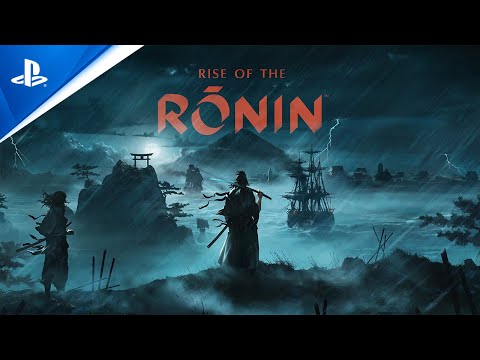
Played on: PlayStation 5
Release date: 22 March 2024
Developer: Team Ninja
Publisher: Sony Interactive Entertainment

0 votes
Scroll down here and stay on the page for at least 30 seconds to vote.
Pick a score from 0 to 10 (halves are allowed).