
Silent Hill f – Review

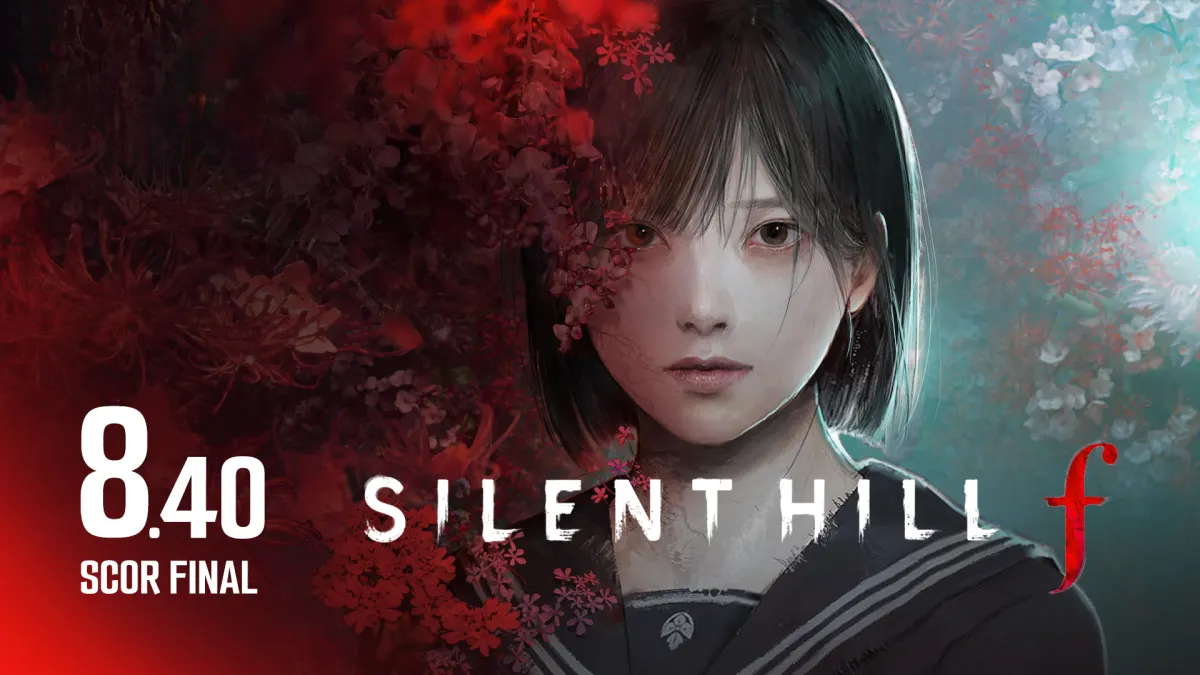
The Fascination of Horror
The choice of Maine as the setting for most Silent Hill games is no accident. Stephen King fans will recognise not only numerous homages and creative decisions clearly inspired by the author's work, but also mannerisms and a general atmosphere that is more than familiar. Over time, the stories and heroes have changed, but the essence has somehow remained the same: a place where reality is lost in the fog and the nightmare begins.
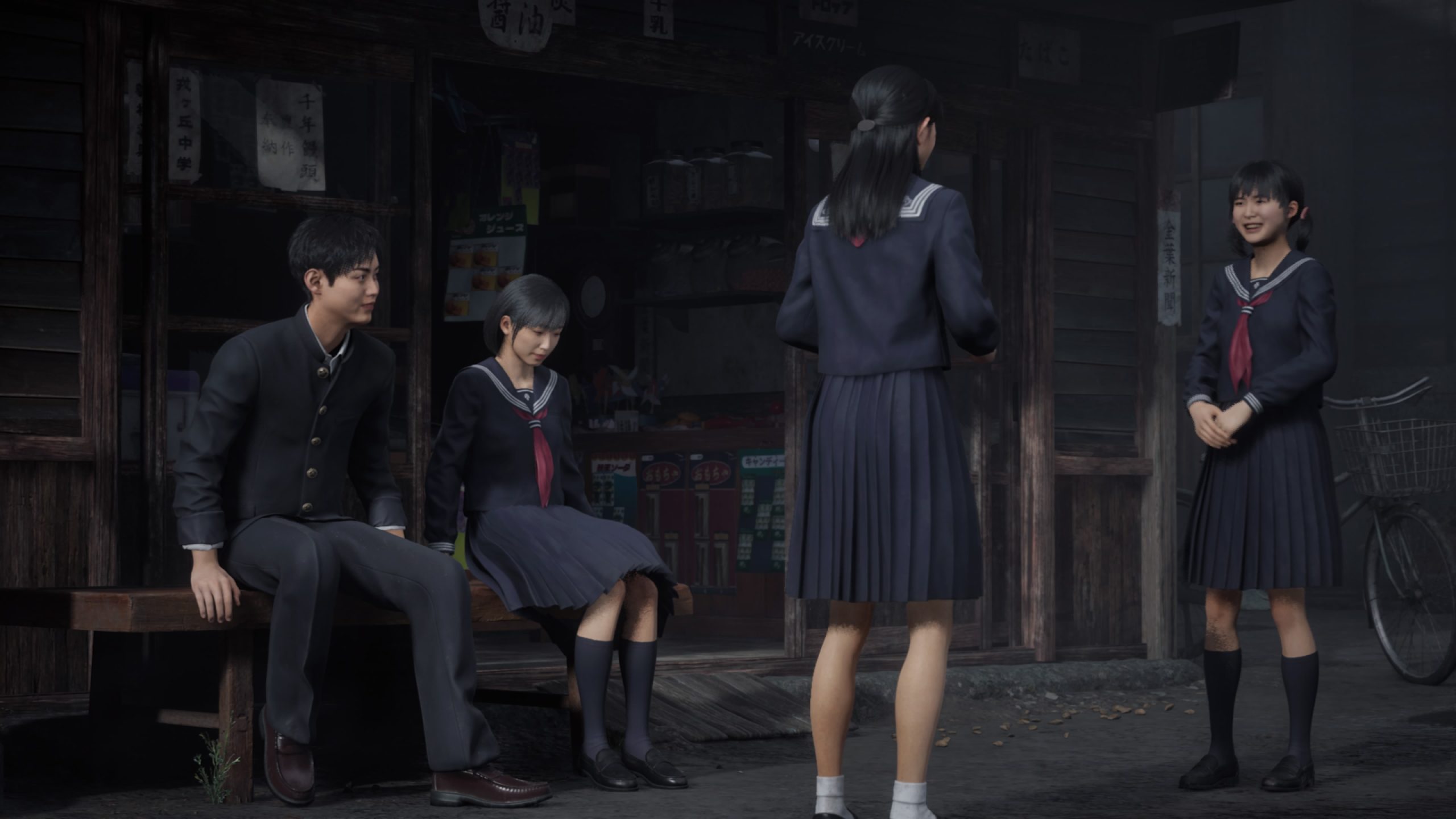
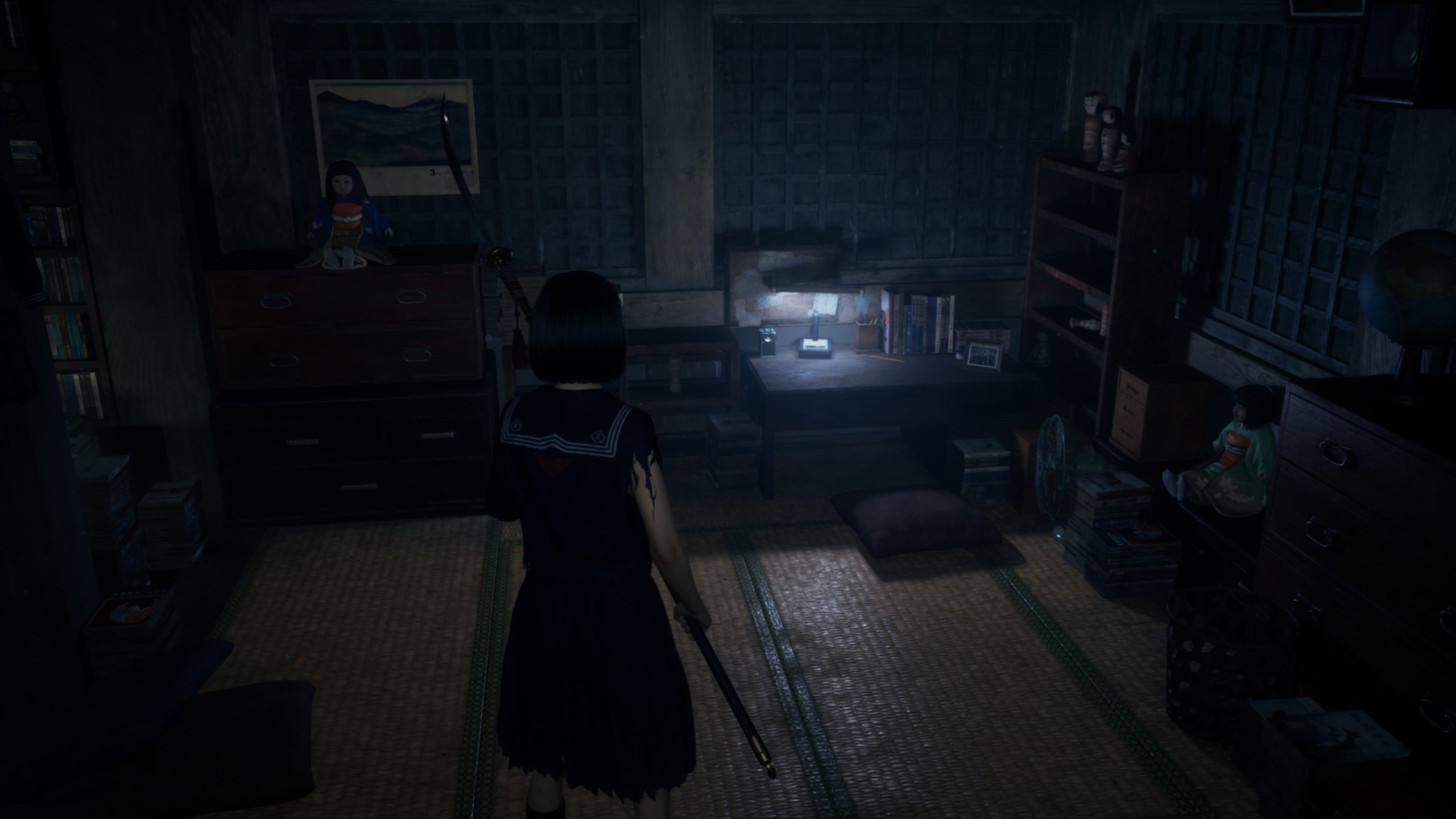
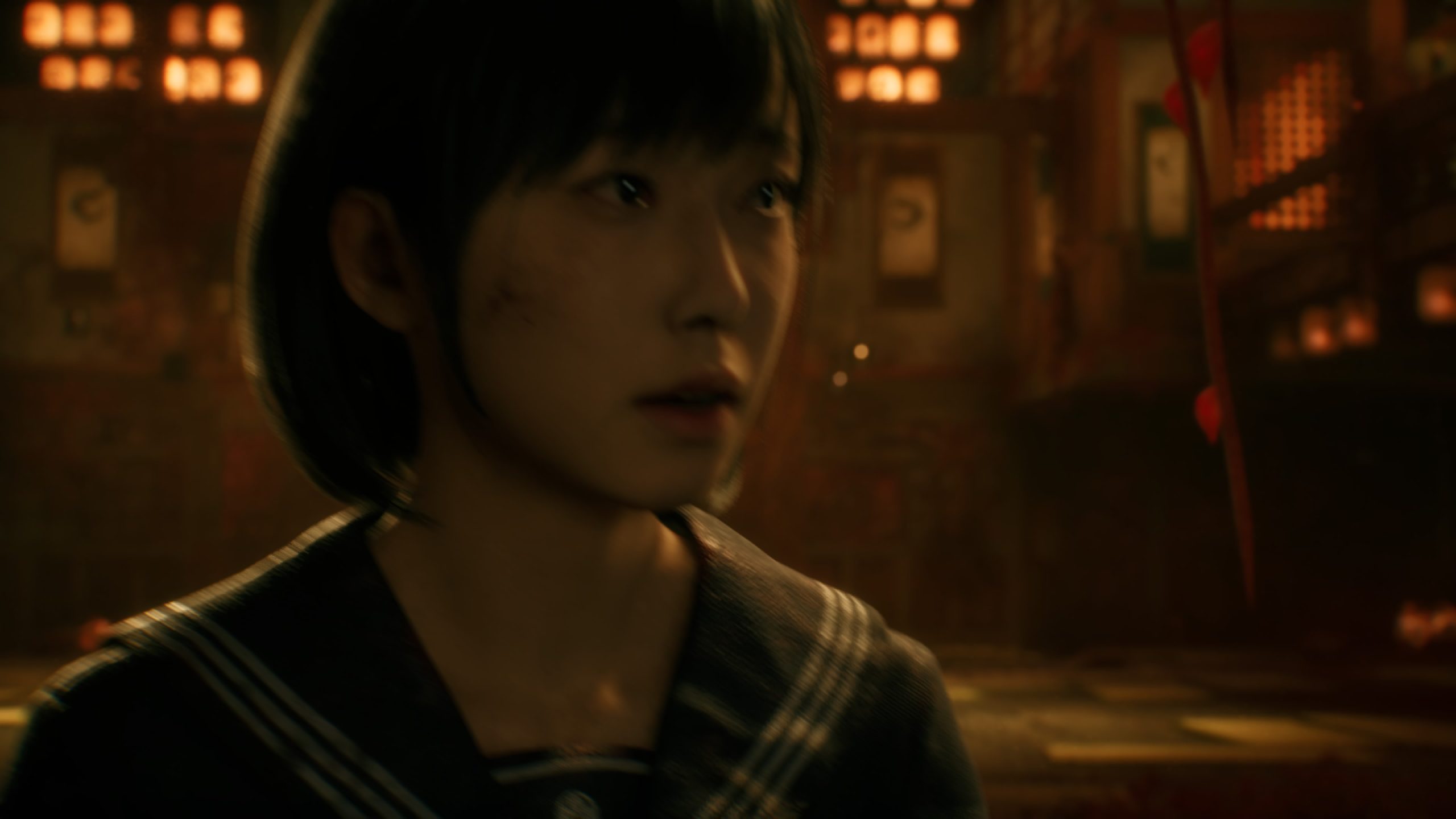
Nor is it accidental that the action in the latest title, Silent Hill f, is set in Ebisugaoka, a fictional town in Japan. The themes I mentioned (horrific manifestations of the pain the protagonists live with) are explored here in the story of Hinako Shimizu, a teenager caught between the expectations and plans of those around her and the need to forge her own path. Her social world, which we get to know in the first hour of the game, consists of an alcoholic father, a passive mother, and her three closest friends: Shu, Rinko, and Sakuko. We are in the 1960s, the so-called Showa era, a context that provides a unique contrast to the problems that haunt our heroine.
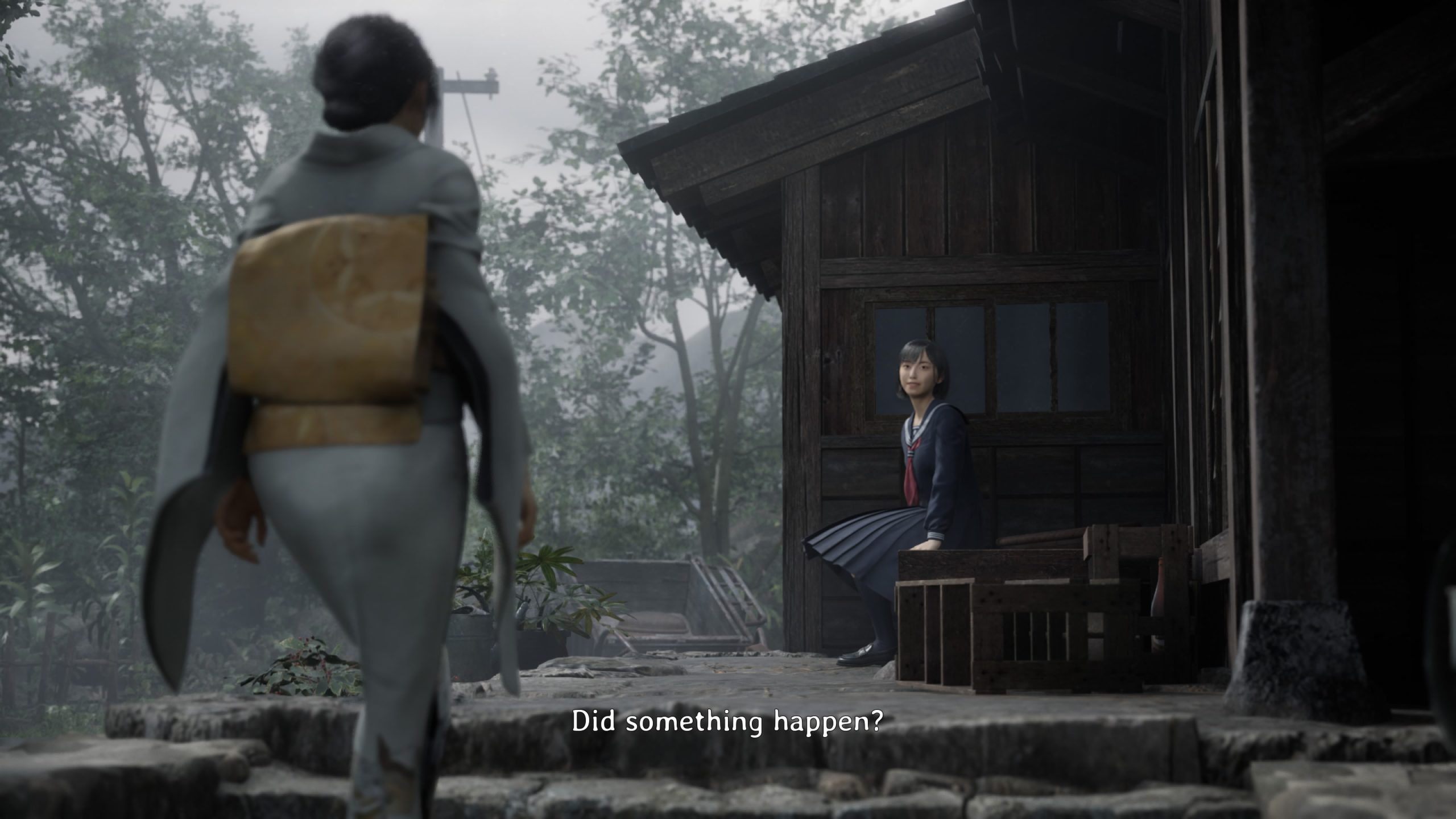
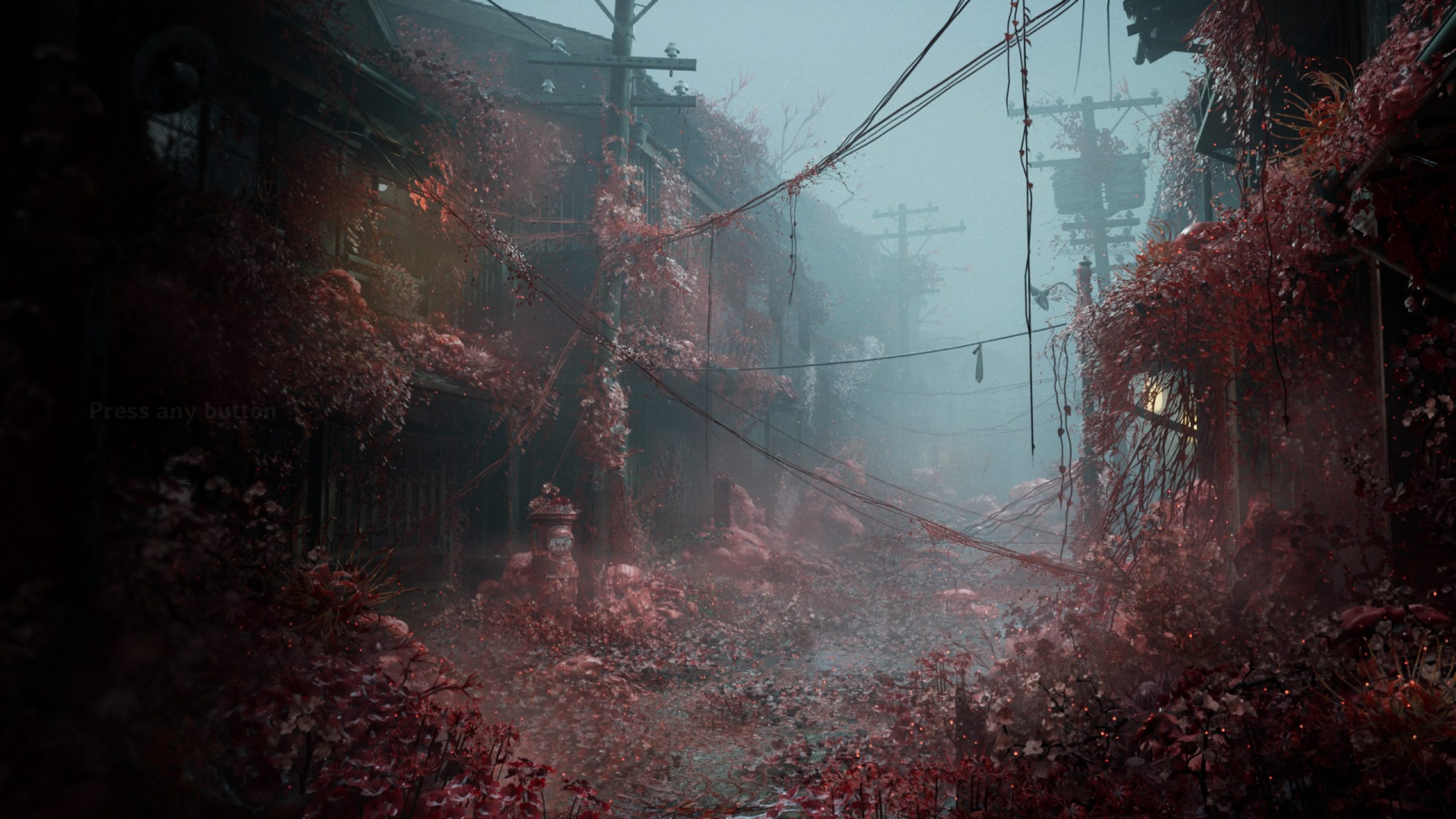
It doesn't take long after Hinako's relationships are established for us to be shown the Evil. A spirit dressed in a shiromuku (a type of wedding kimono) spreads a fog over the town and infects Sakuko with red spider lilies, a necrosis that blooms and sublimely delivers a combination of beauty and grotesqueness that stays with you. The aesthetic is striking, whether we're talking about the intricate architecture and economy of space or the minimalist colour palette and attention to detail of every object you encounter.
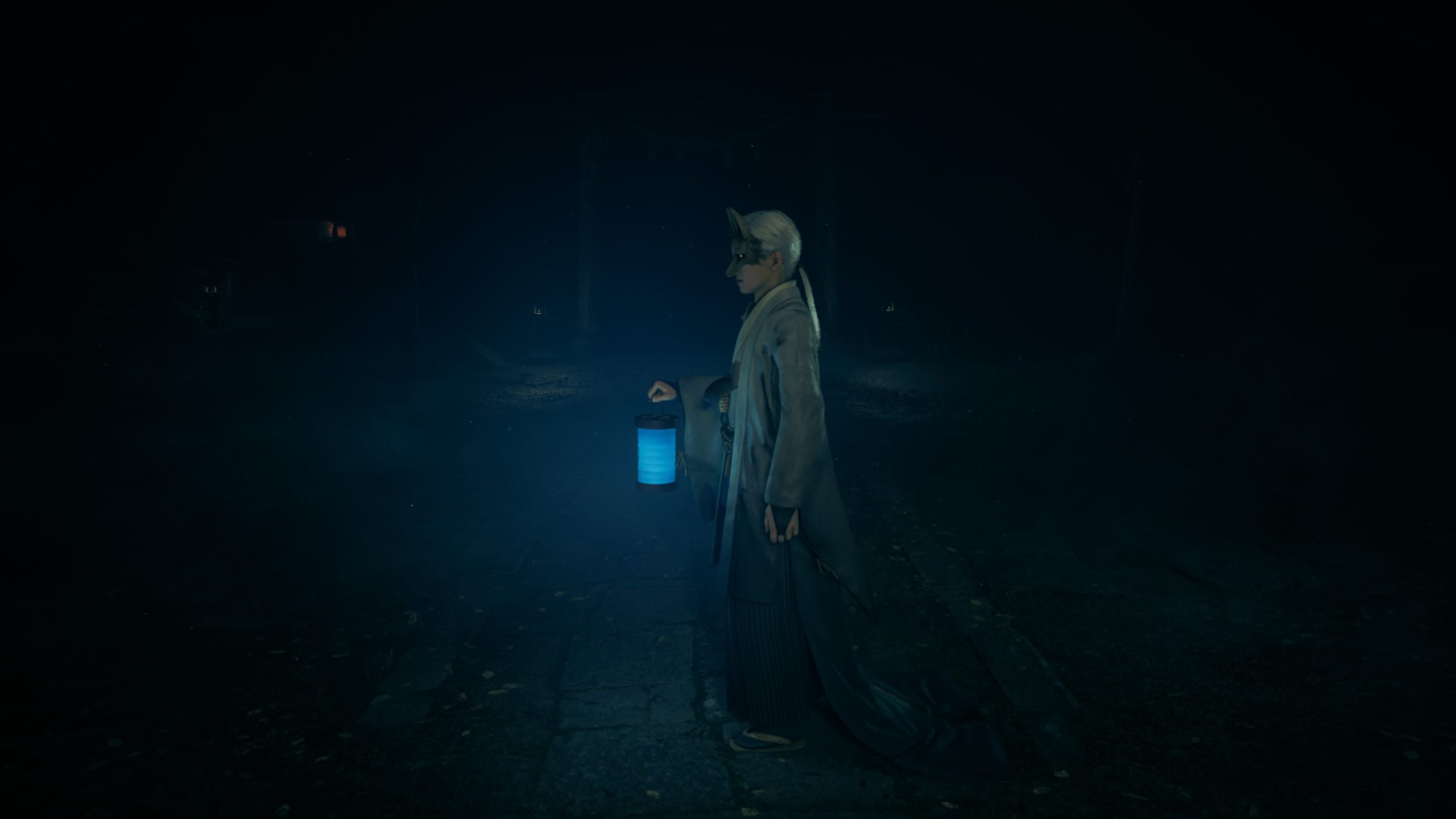
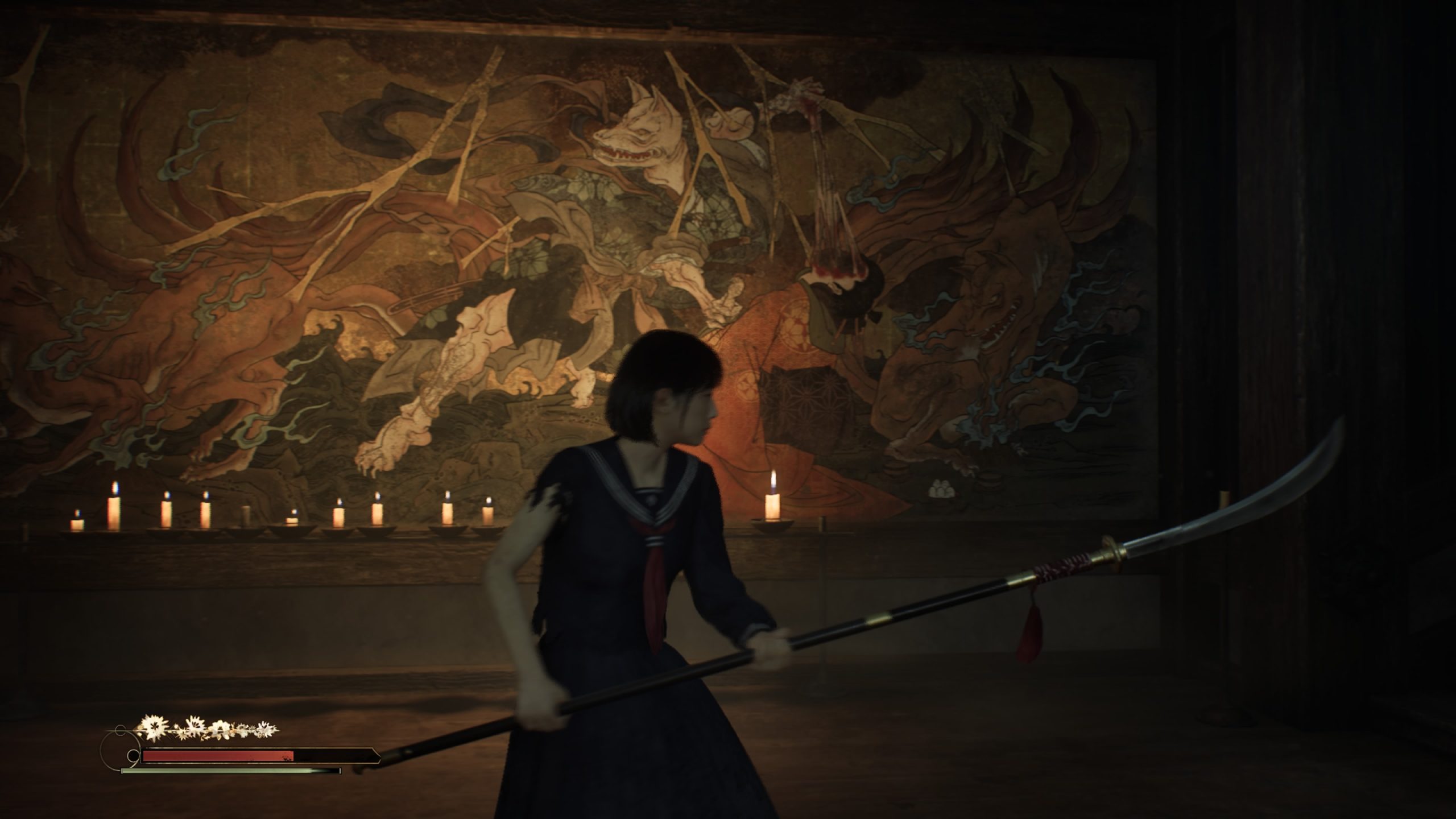
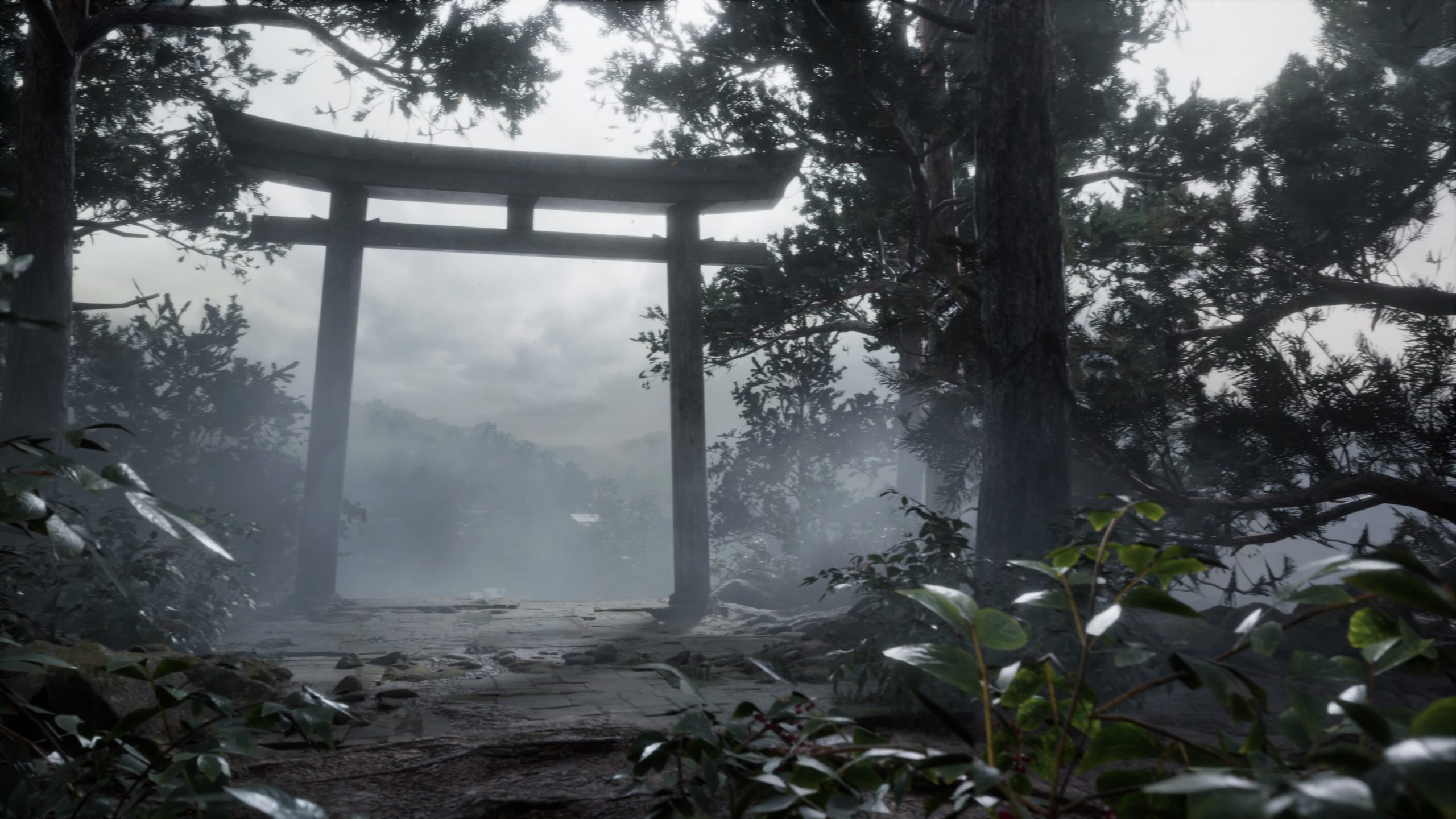
Elements familiar from games from, with, and about the Land of the Rising Sun, such as torii gates or small stone steps flanked by Japanese lamps, are ever-present, and the allegories and magical realism in the fox story reminded me of Kurosawa's first dreams. On a more submerged level of the narrative iceberg, there is an entire mythology integrated into one of the subplots represented by Hinako's struggles. The juxtaposition of fox-god stories and the real conflicts in her life is probably the most interesting relationship in the puzzlebox.
The path is always clear, without resorting to yellow paint or other tricks, narrow enough that you never get lost in the real world. Transitions to the Otherworld (renamed Dark Shrine World here) are recurrent, and the entire game has a very clearly defined structure, alternating, in turn, between linear segments from all imaginable existential planes. And then, for the more Escherian moments in the interiors of certain levels, you have a minimap a hotkey away. A welcome modernisation (unlike the game's insistence on displaying your objective on screen with an almost insulting aggression).
There is a beauty to the straight lines, paths on muddy alleys and among houses that don't lose their charm after many playthroughs, and which I appreciated as much as I appreciated the Japanese fidelity to the Romanian village in Resident Evil Village. Surprisingly for a UE5 title, I encountered no technical issues, and the optimisation is outstanding (joking aside, that fog is still good for saving resources).
The sound design is absolutely incredible: you can almost feel the wood when you step on it, and the minimalist soundscape uses an entire arsenal of instruments, textures, and tones in very precise doses. The syncopated way the wood in the mannequins creaks contributes to the discomfort created by encounters with them, even if they are weak compared to the monsters we will meet later.
The writing here was entrusted to Ryukishi07, whose previous work in Japanese horror shares some of the recurring themes in the series (dysfunctional families or child abuse and their effects on the psyche). This imprint is felt in what the game talks about, in the sense that it focuses on several interconnected narrative planes that are completely different in content from anything I've encountered in the series before. There are some common bridges, don't get me wrong, but the ensemble of characters from previous games and the interconnectivity with the cult's story had formed a canon in my head that I didn't find here, and which is replaced by smaller struggles.
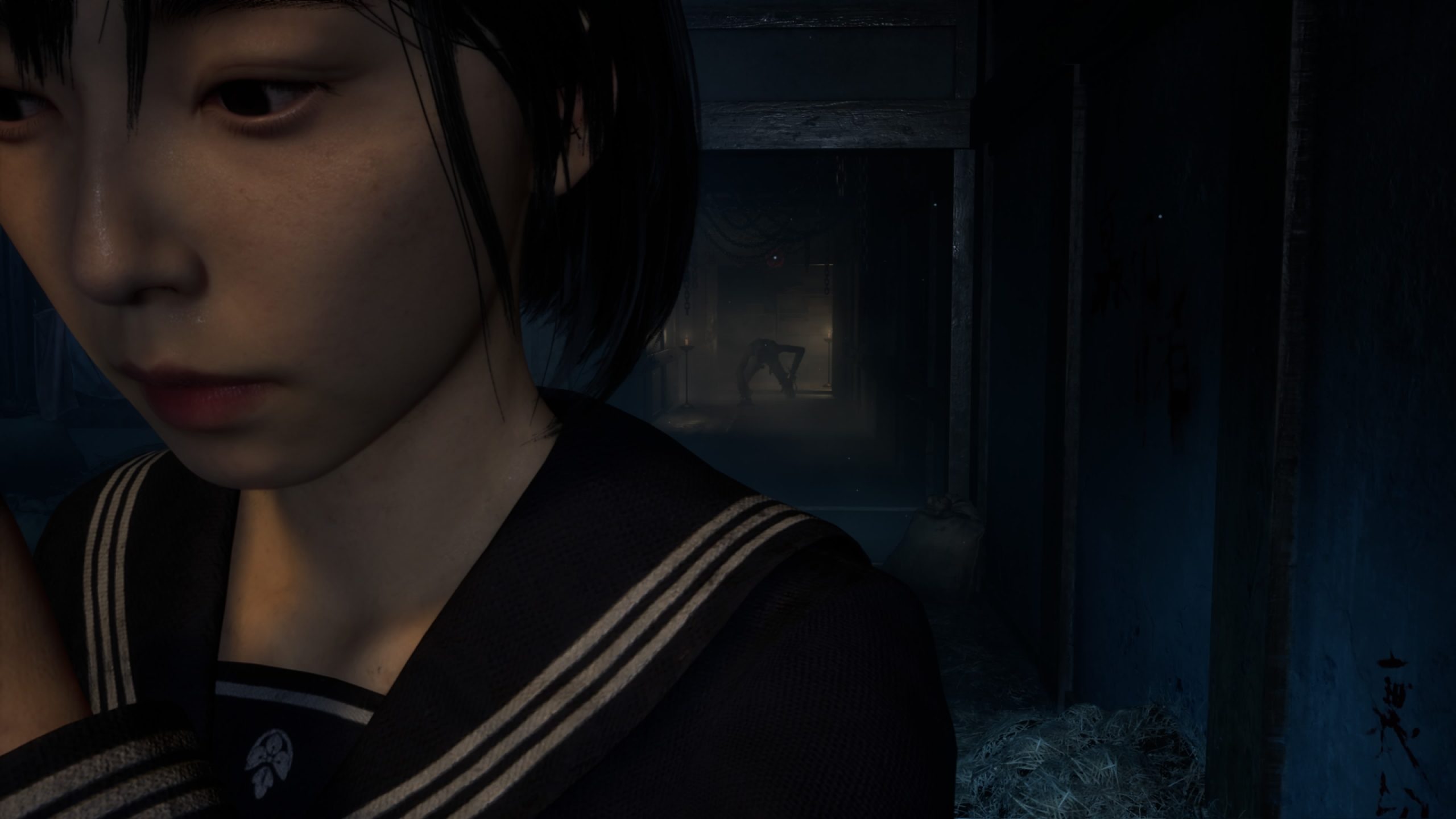
There were interesting episodes, especially in the Otherworld segments, but Hinako's conflicts (a clumsy love triangle and a constant effort to assert her free will without clearly defining who exactly she would want to be if she were mistress of her own destiny) didn't hold my attention as much as I would have expected from a Silent Hill game.
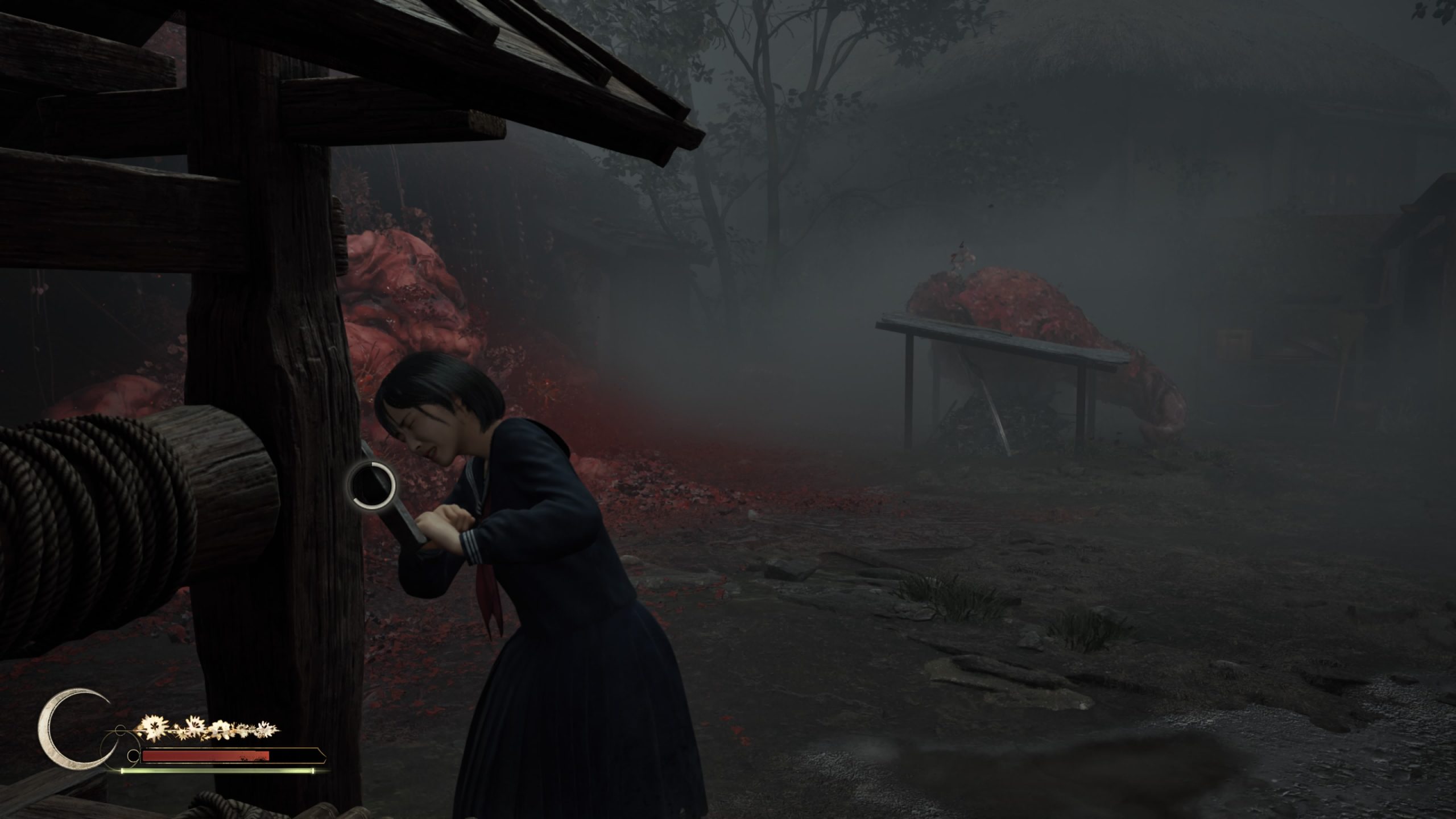
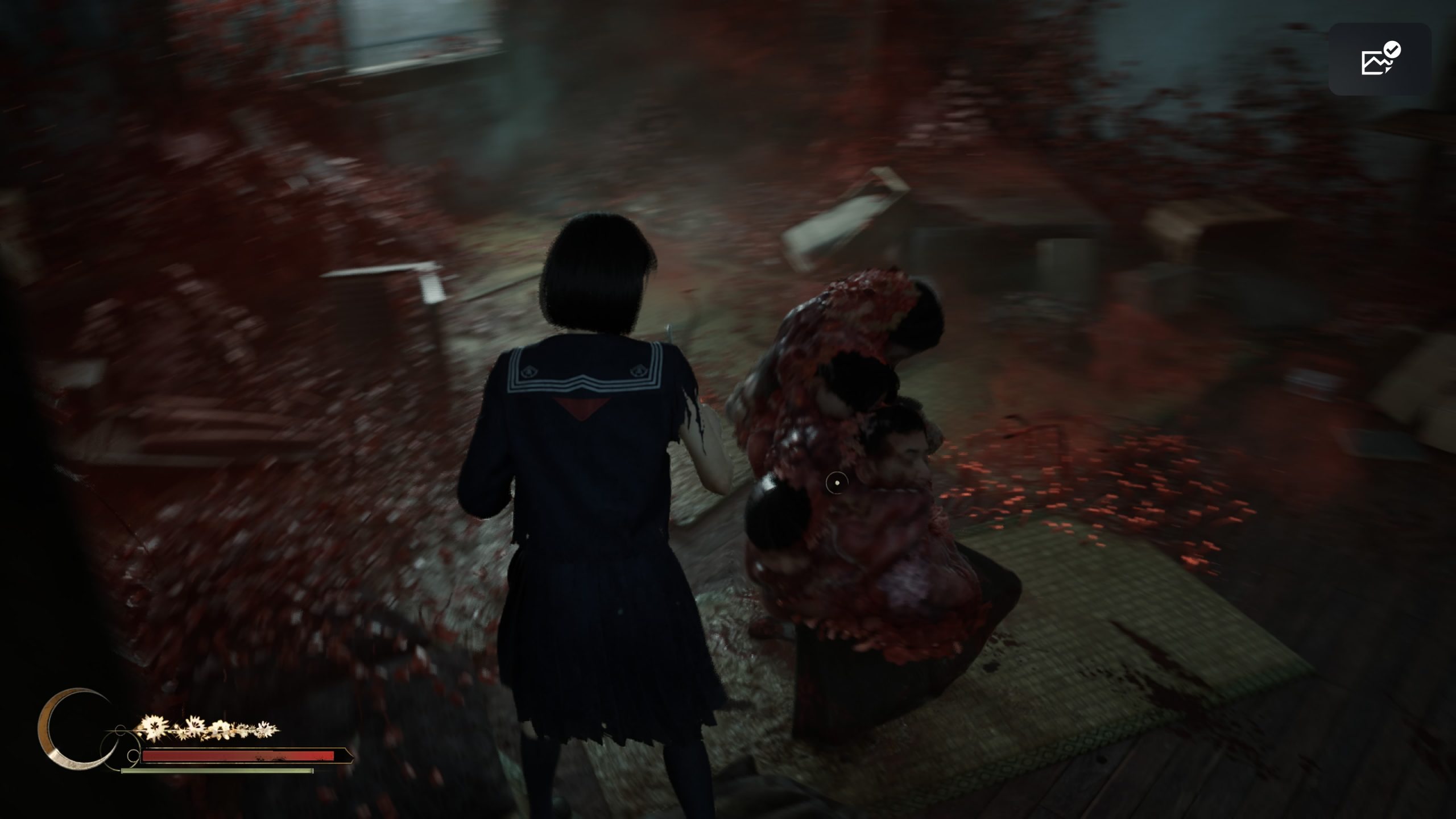
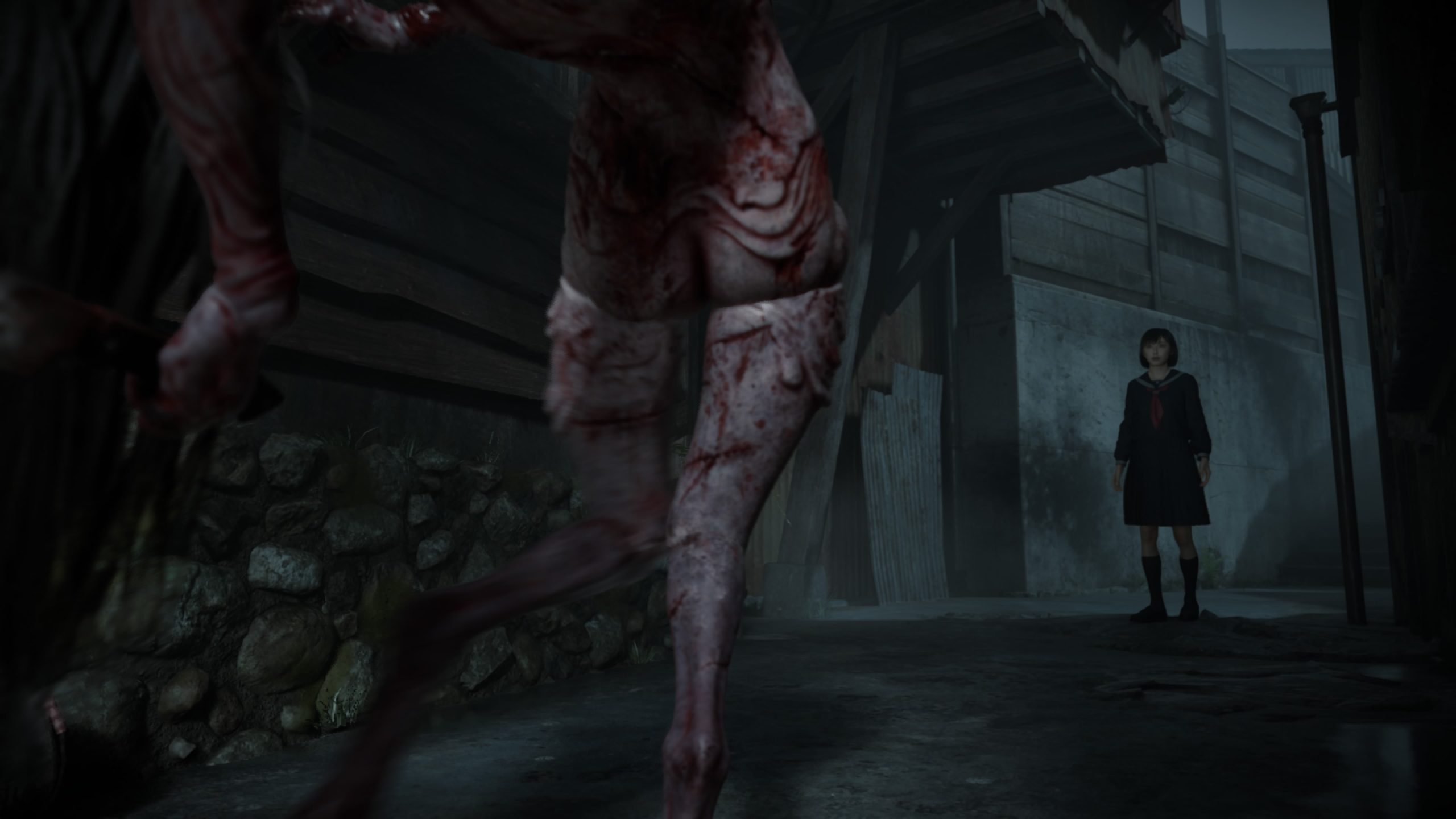
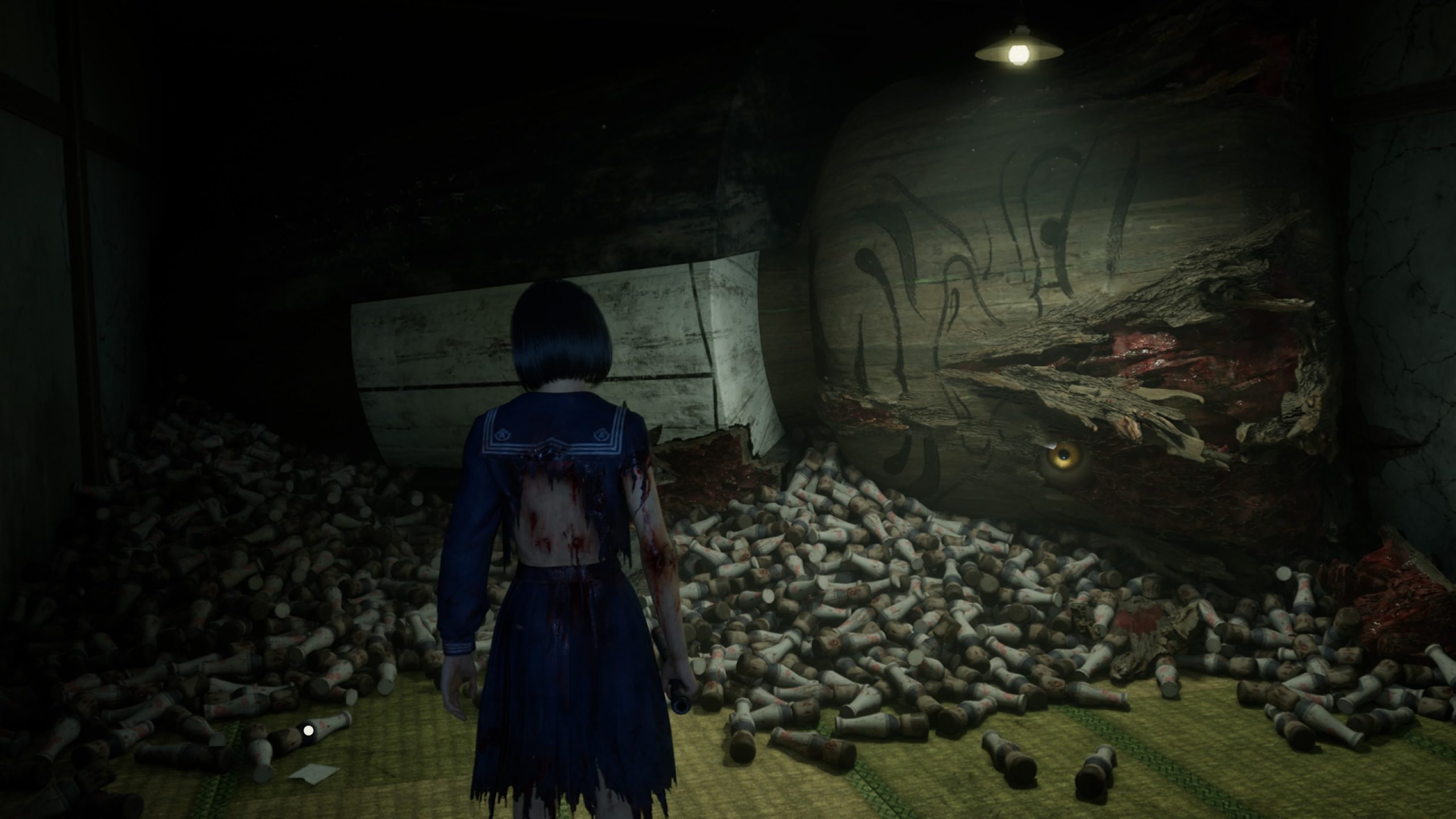
The body horror that makes up the vast majority of enemies is interesting in design and suitable for the franchise's visual grammar, but of the entire menagerie, only the mannequins truly managed to scare me, and the frequency of combat segments becomes frustrating after a few hours.
What do you do when there's nothing to do?
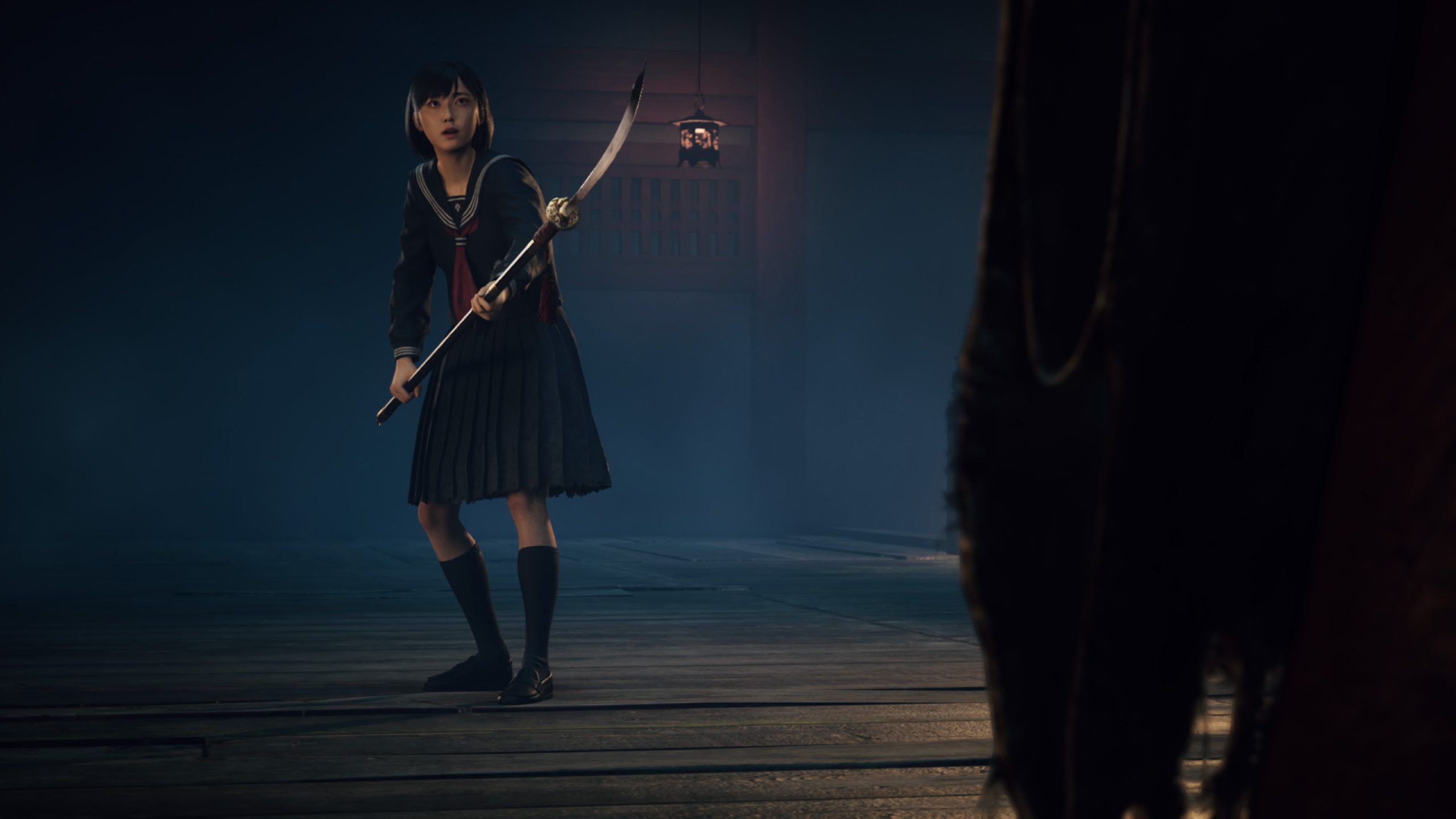
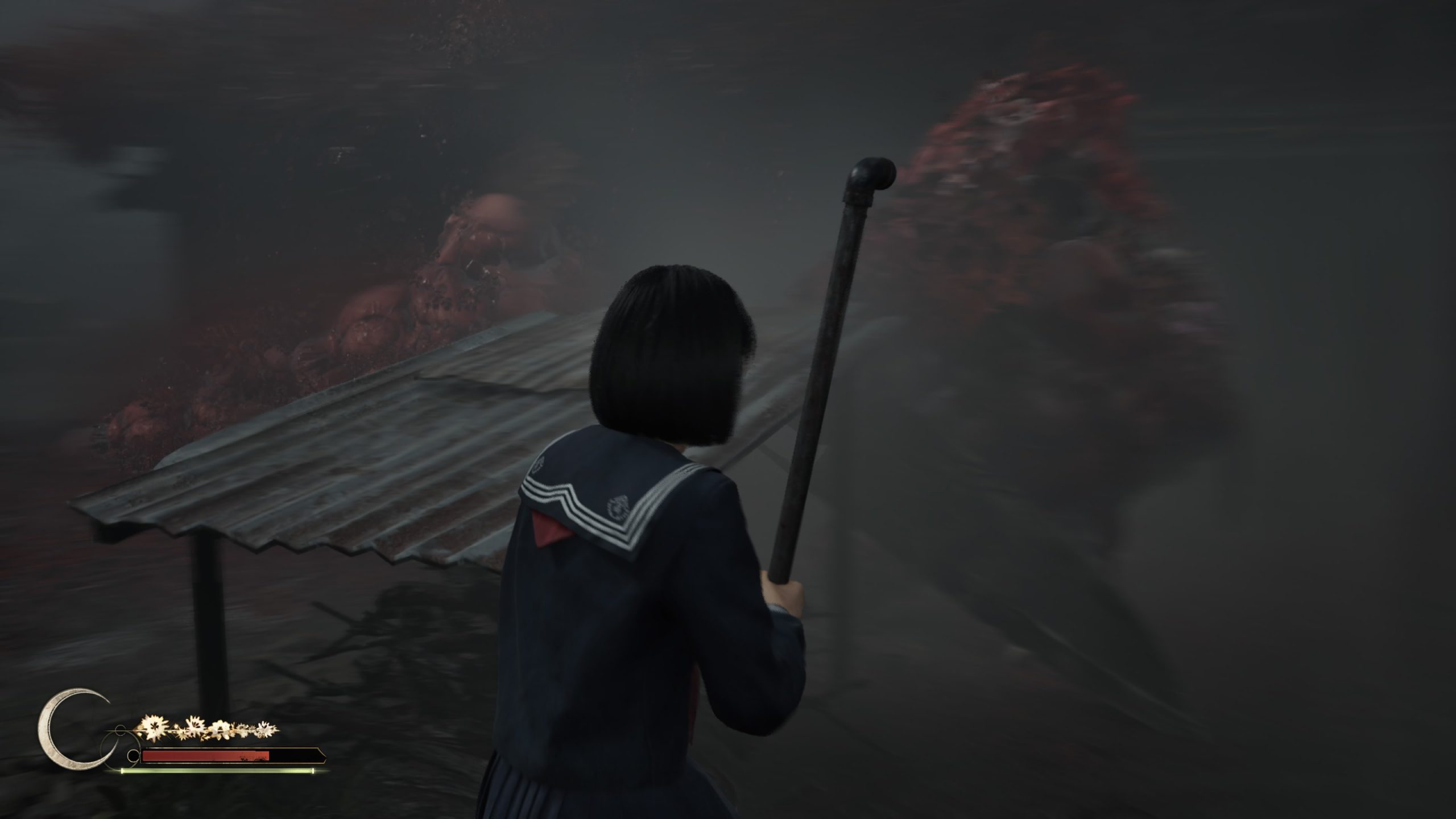
Yes, surprisingly, Hinako is capable of a fight. The fight, however, is rather slow, attempting a more lumbering form of the soulslike format and limiting your rotations with a stamina bar never sufficient for how much you'll have to dance until the end of the game.
Weapons range from a kitchen knife to a gigantic axe (in later playthroughs, they become increasingly phantasmagorical), have different speeds and durability, and can be repaired with consumable kits. You have two types of attack, and equipables, the so-called Omamori, offer passive bonuses with which you can build stronger builds for difficulty levels where you die in two or three hits. There's also a counter system, but overall the entire combat loop seemed to me the weakest aspect of the game, despite the abilities you acquire by the end that reduce the tedious work of smashing the heads of monsters that move syncopated and predictably.
Life imitates art, but the game beats life!
At the in-game altars that function as save points, you can sacrifice collected items to gain a kind of experience points with which you either buy Kinder Surprises with new Omamori, or improve your health bar, stamina, or mental stability.
But no matter how many buffs you stack, how much you min-max the few slots for these buffs, and how much you rotate your inventory to get the most heal per slot, it only prolongs the agony of a combat system used far too liberally in a type of game that, traditionally, isn't about that. The fights, often, seem to exist only to slow you down from getting to the more interesting parts.
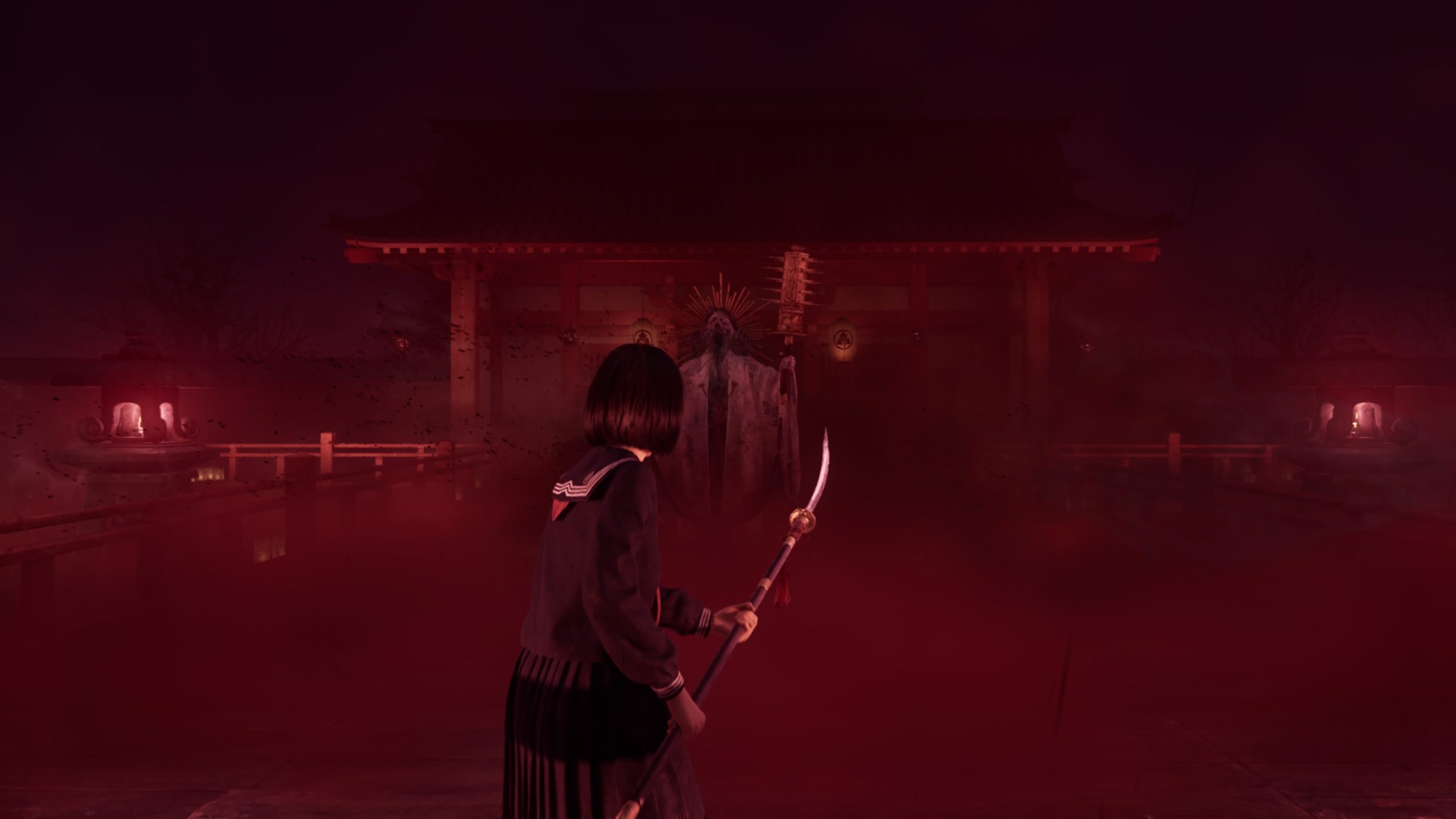
The initially limited inventory combined with the variety of resources and effects forces you to frequently make decisions and prioritise consumables in only a few slots, and weapons run out quite quickly in the more crowded levels and given the increasingly difficult monsters to defeat.
Fortunately, you can choose the difficulty of battles and puzzles in two different settings, and as repetitive and tedious as the gauntlet events seemed to me, where you can't even avoid the clumsy beating you're subjected to, the majority of the cerebral challenges were just as entertaining.
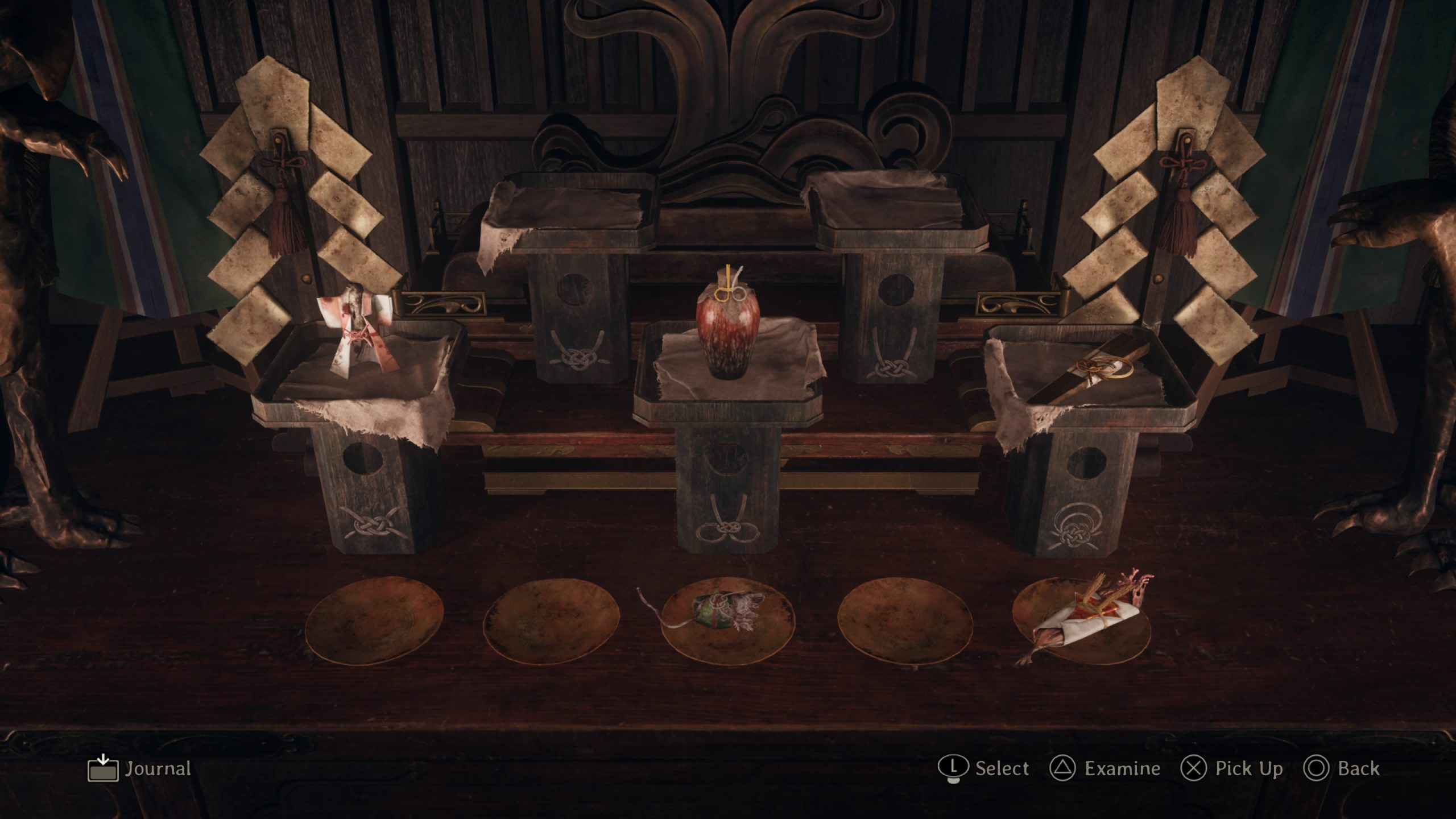
The difficulty doesn't change their objective; essentially, you have roughly the same thing to understand and apply across all levels, but the connections you need to make are more subtle as you raise the bar. You receive some clues, often verses that contain all the words you need to move forward, clearly indexed in your journal.
The same journal collects notes and collectibles from the game, an amalgamation of mini-stories and the usual assortment of apocalyptic declarations scattered throughout the abandoned town. It provides a background that is sometimes dense, sometimes intriguing, but which made me wish for a larger cast of characters to complement the reduced ensemble.
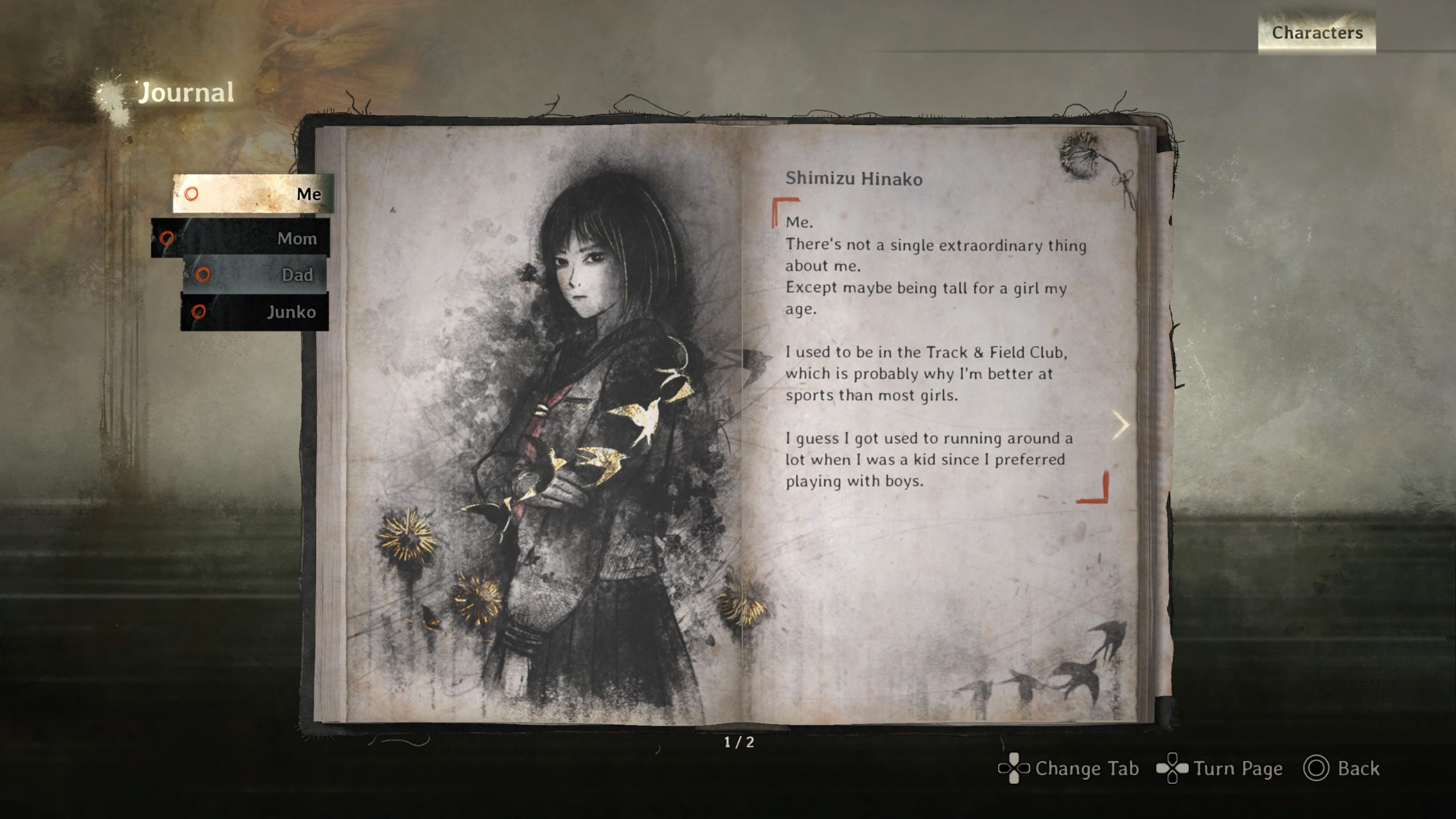
On the other hand, each playthrough recontextualises the established relationships, and the fact that you don't have too many pawns on the board allows you to focus on the connections between Shu, Rinko, Sakuko, and a mysterious man wearing a fox mask. Each of them presents themselves in one way when you first meet them and reveals their true intentions as you discover more information.
The Hill's Corolla of Wonders
Against the backdrop of renewed public interest in the franchise, due in no small part to the Silent Hill 2 remake, Silent Hill f outlines a modern and bold direction for an iconic IP. The world-building, design, art direction, and sound seemed flawless to me and represent, in tandem, all that is most refined and convincing in the AAA world.
It's hard for me to imagine anyone particularly enjoying the combat, but the difficulty permutations allow you to customise your experience and minimise the impact of the gameplay aspect you like less.
The writing is certainly complex and multi-layered enough for the series' standard, but perhaps not as subtle as some of its predecessors. Each revelation leads to a potential new ending in New Game+, with new places, objects, and consequences to face, but the story's pace is occasionally interrupted by long cutscenes that deliver exposition without tying it up with a bow.
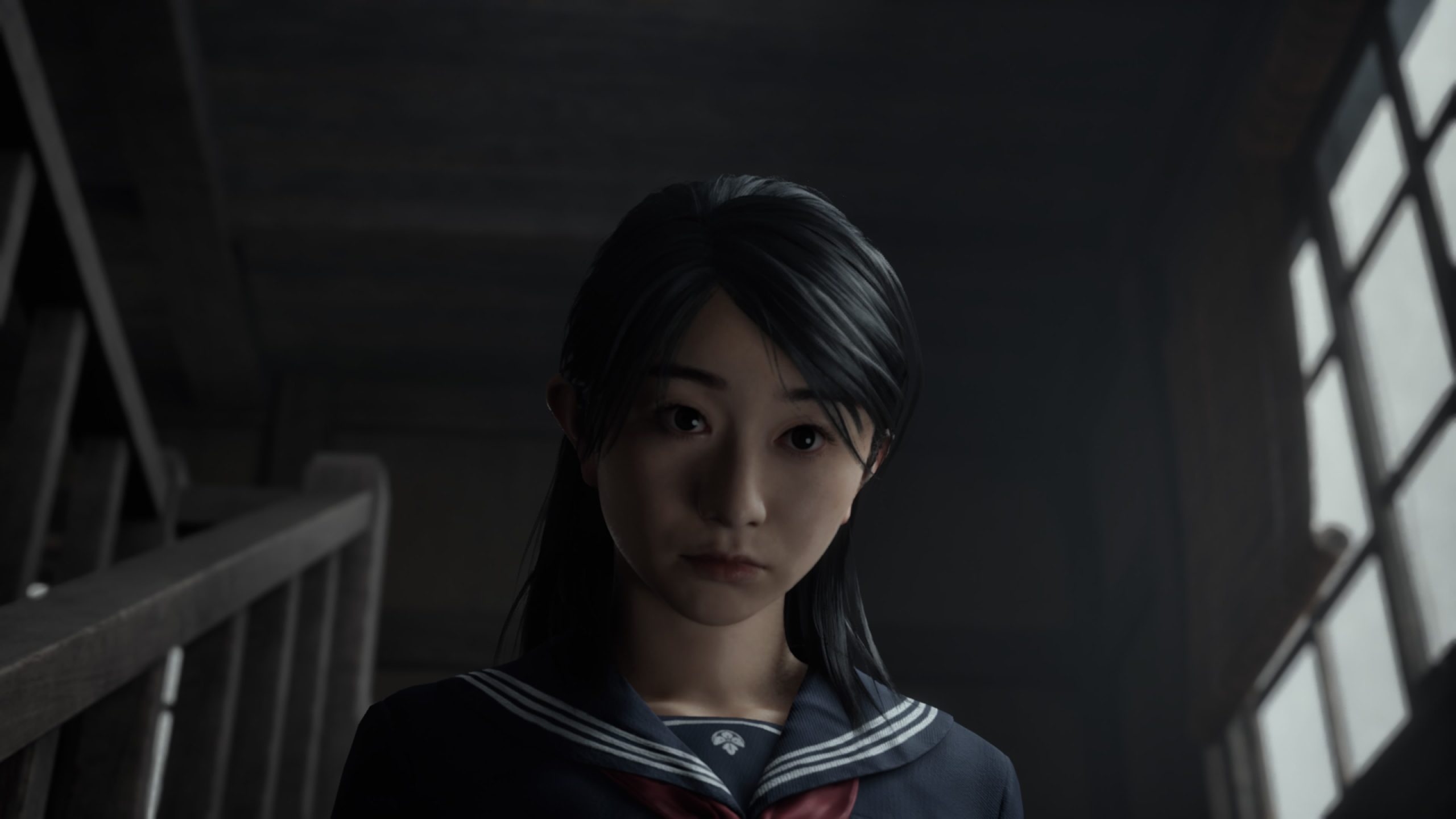
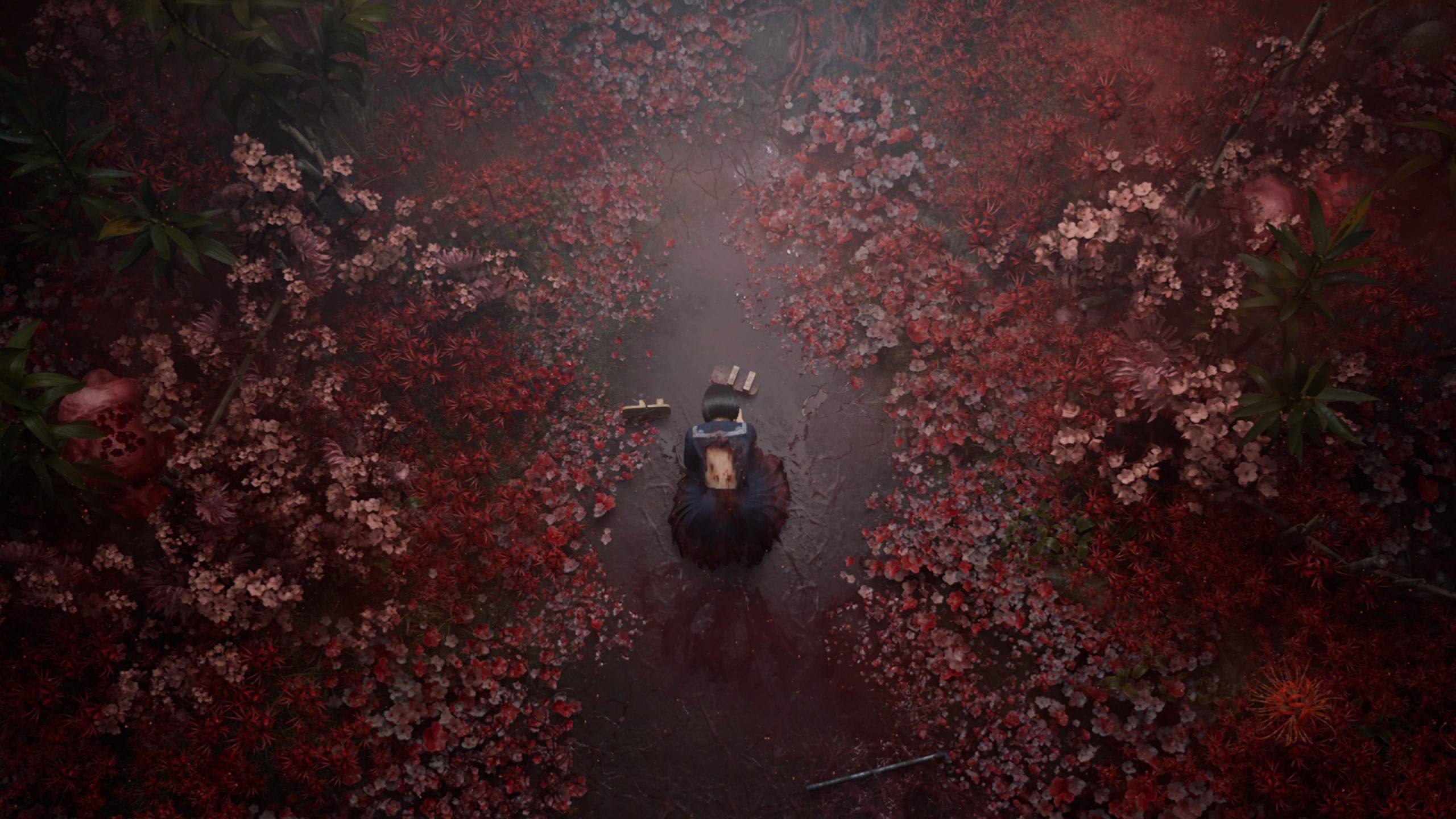
This doesn't mean that what it says isn't worth listening to, just that it's not always packaged in the most easily digestible form. Ultimately, Silent Hill f is a well-produced tragedy that tests new waters for the IP's internal organs. The courage of an endeavour with such a unique vision is admirable, even in light of the imperfections in its execution.
Thanks to CD Media SE for the review code.

Played on: PC
Release date: 25 September 2025
Developer: NeoBards Entertainment Ltd
Publisher: Konami
Plus
- Graphics and presentation are exemplary
- Exceptional sound design
- Elaborate story loaded with symbolism
Minus
- Clunky and repetitive combat
- Level structure can become tiresome
- Uneven pacing
0 votes
Scroll down here and stay on the page for at least 30 seconds to vote.
Pick a score from 0 to 10 (halves are allowed).